The email always reads the same: “Let’s organise something for the team before the end of the quarter.” And in Turin, whoever looks after people ends up weighing the same two options almost every time: an escape room in the centre or in San Salvario, or a hands-on workshop with a Maker, at the office or in their studio. They look like cousins. Both get people out of the building, both promise to “build the team”. They actually answer opposite needs, and picking one from the flyer is the surest way to get it wrong. This is not a list of activities. It is the uncomfortable criteria, the ones the decision really turns on.
Who gets left out (and nobody says so)
In an escape room the clock is the opponent, and you win by thinking fast, out loud and, in most rooms in Turin, in Italian. Colleagues who process slowly, colleagues whose Italian is a second or third language, anyone who dislikes locked doors or dim light, anyone who moves with a wheelchair or a cane, anyone who hates being tested in front of peers: for them the locked room is not a game, it is an afternoon to get through. And there is nowhere to go. Nobody will say “you were useless”, but the group notices, and so does the person.
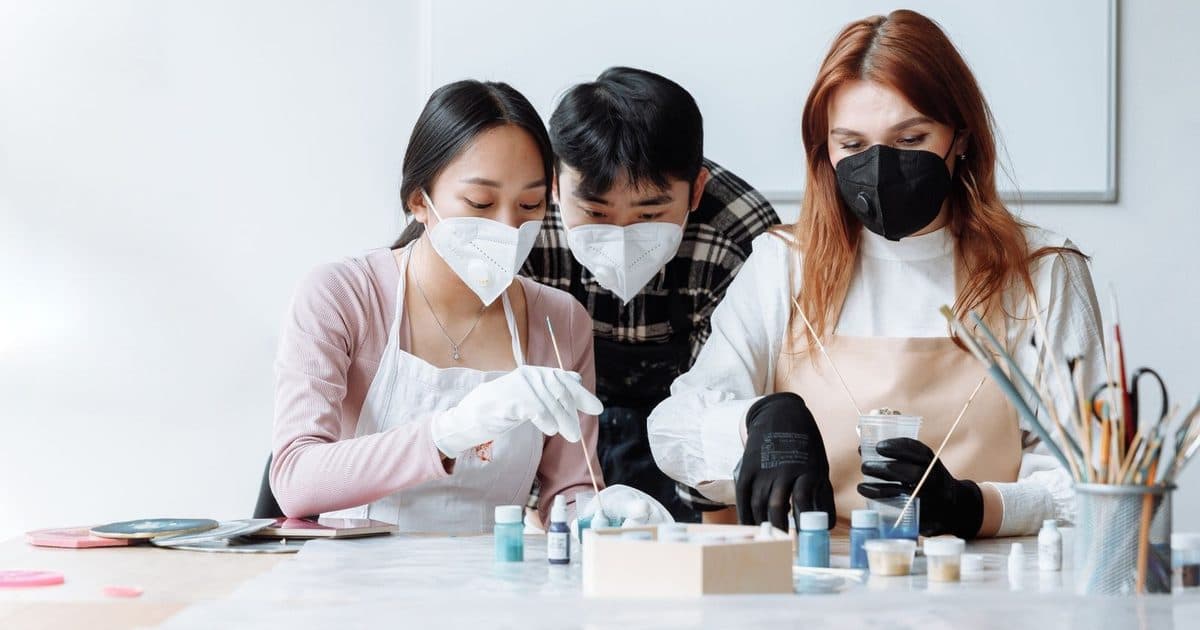
A workshop excludes too, just less visibly. Hands that shake, arthritis, eyesight that struggles with fine detail; an allergy to a material, such as the nickel in some alloys, dust or the scents in waxes; the dread of making something ugly in front of the boss. The difference is that the Maker can adapt on the spot: bigger tesserae in a mosaic, a different tool, a simpler piece for whoever needs it, without anyone noticing. The pace belongs to the individual, not the team, and there is no scoreboard at the end. That only works, though, if the Maker knows in advance. The brief has to describe the people, not just count them.
What is left on Monday morning
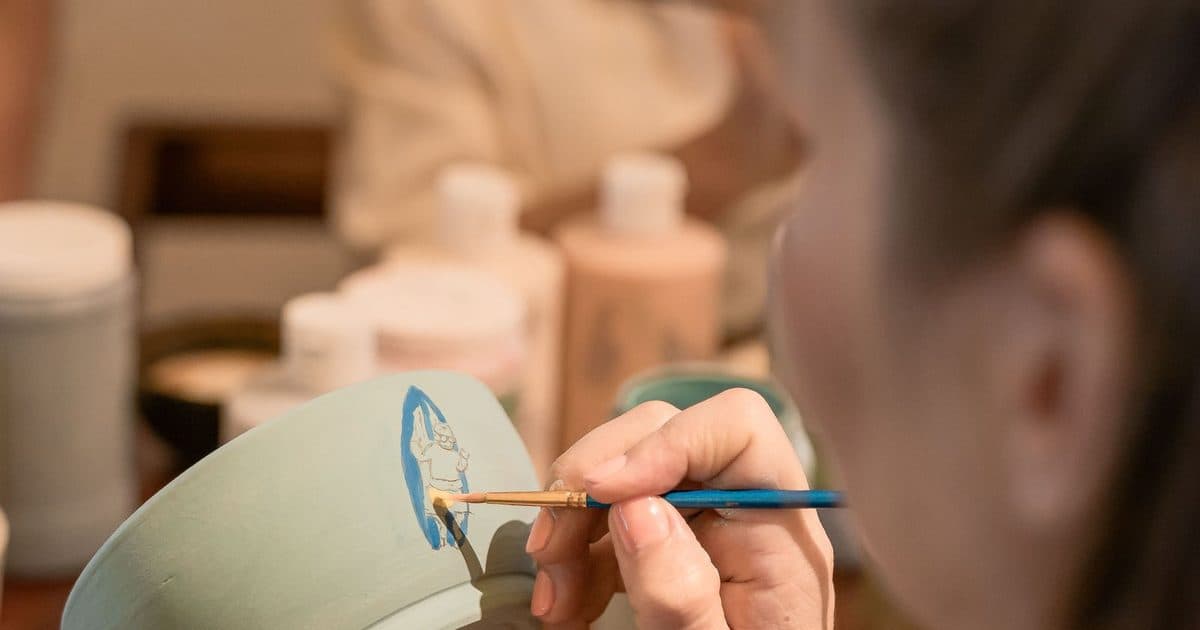
An escape room leaves a story and a group photo holding the room’s sign. It is a good story; it lasts a week of coffee breaks, then it wears out and the people who were not there stop asking. A workshop leaves an object, crooked, with a thumbprint where there should not be one, sitting on a desk or a kitchen table; and a gesture learned, which is the part no quote ever itemises. The object tells the day without anyone having to tell it, including to colleagues who were on holiday. Be honest, though: if the piece is a generic giveaway it ends up in a drawer like any giveaway. It lasts when the person made it with their own hands and when it is useful: a mug, a stitched notebook, a leather cardholder, a chopping board.
There is also what the company keeps. A dim room yields few usable pictures. A workshop yields hands, materials and pieces in progress, images you can use internally without embarrassing anyone, because no faces are needed. Ask for consent anyway, and ask the Maker to photograph the work rather than the people. On what makes an afternoon like this memorable, and therefore worth retelling, there is a dedicated piece.
The mixed group: the boss, the intern and the colleague who doesn’t speak Italian
An escape room stages the hierarchy. Someone takes charge in the room, and it is usually the person already in charge at the office. Sometimes that is revealing: the most junior colleague cracks the puzzle the manager was stuck on. Sometimes it is just awkward: the manager blocks everyone and the group lets it happen out of habit. If the team includes colleagues who work in English, verbal puzzles cut them out quietly. In a workshop everyone is a beginner at the same moment, the boss has no edge, and the only authority in the room is the Maker. Language weighs less because the technique is shown, not explained.
Two practical rules, whatever the craft. Set the tables in advance, mixing departments and seniority, because left alone people sit as they do in the canteen. When the technique calls for pairs, decide them beforehand rather than at random. For logistics, meaning format, space and last-minute no-shows, the guide on organising creative team building in Bologna applies word for word: the city changes, the problems do not.
Big group, short afternoon: logistics in Turin
An escape room scales by rooms: a large group splits into squads, in different rooms and often at different times, and team building turns into a tournament between departments. That may be exactly what you want, or exactly the opposite. A workshop scales by tables and by hands: a Maker can follow a certain number of people, and beyond that you need an assistant, a second Maker or an afternoon split into shifts. It can happen at your office, in a meeting room with protected tables, good light and a water point, or in the Maker’s studio. In Turin the studios sit in neighbourhoods like Vanchiglia, Aurora, Borgo Dora and San Salvario, and for a company around Lingotto or in the outer ring that is already a small outing: by tram, or on foot under the arcades, which becomes part of the afternoon rather than a cost.
On the quote, rather than comparing totals, understand what moves them. In a workshop the drivers are headcount, the material (silver and leather do not cost what paper costs), duration, office versus studio, how many people the Maker follows at once, and whether the object needs a second delivery, as ceramics do after firing. In an escape room the drivers are how many rooms you need and the time slot. They are two different cost structures, and comparing them at equal totals means comparing things that do not resemble each other.
When the escape room is right, and when the workshop is
- Choose the escape room if the group is small, homogeneous, knows itself well and wants adrenaline; if all you have is a late afternoon before dinner; if it is a sales team that loves to compete and knows how to lose; if no name on the list made you hesitate earlier.
- Choose the workshop if the group is mixed by age, language or role; if the goal is to lower the volume after a hard stretch, not raise it; if you are integrating new hires and want them to make something together rather than win something together; if you want a physical trace of the day.
- Do both, at different points in the year, if the team is big enough to hold both temperaments. It is the least elegant answer and often the right one.
A game measures how fast you are. A craft only asks you to stay at the table, and at the end you have something in your hands.
If the workshop wins, the real job for the organiser is finding the right Maker for that particular group, not just any Maker. On Handsome a company describes the event on the page for companies: how many people, where, what kind of group, what you want to remain afterwards. Handsome chooses a suitable Maker and stays your single point of contact, even when you want to add handmade gifts or gadgets for participants to the same event. The crafts available, from wood to leather to paper, are listed under what you can do.
Frequently asked questions
- Is a craft workshop or an escape room better for corporate team building?
- It depends on who is in the group, not on the activity. An escape room works for small, homogeneous, competitive groups with little time. A craft workshop works for groups mixed by age, language and role, when the goal is to make something together and take an object home. The deciding criterion is who would be left out: if a name makes you hesitate, choose around that person.
- Does a craft workshop work with colleagues who don’t speak Italian?
- Yes, and it is one of its advantages. The technique is shown with the hands before it is explained in words: the Maker demonstrates the gesture and repeats it at the table. In an escape room the puzzles are almost always verbal and in Italian, and anyone who does not master the language ends up watching.
- Can the workshop take place at our office in Turin?
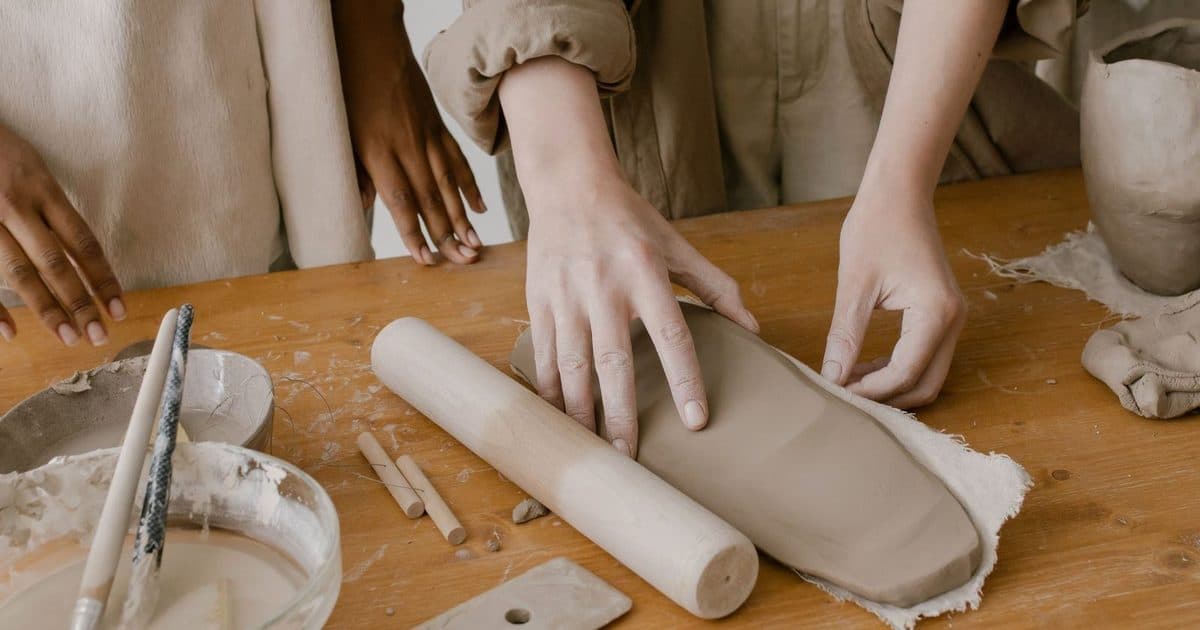
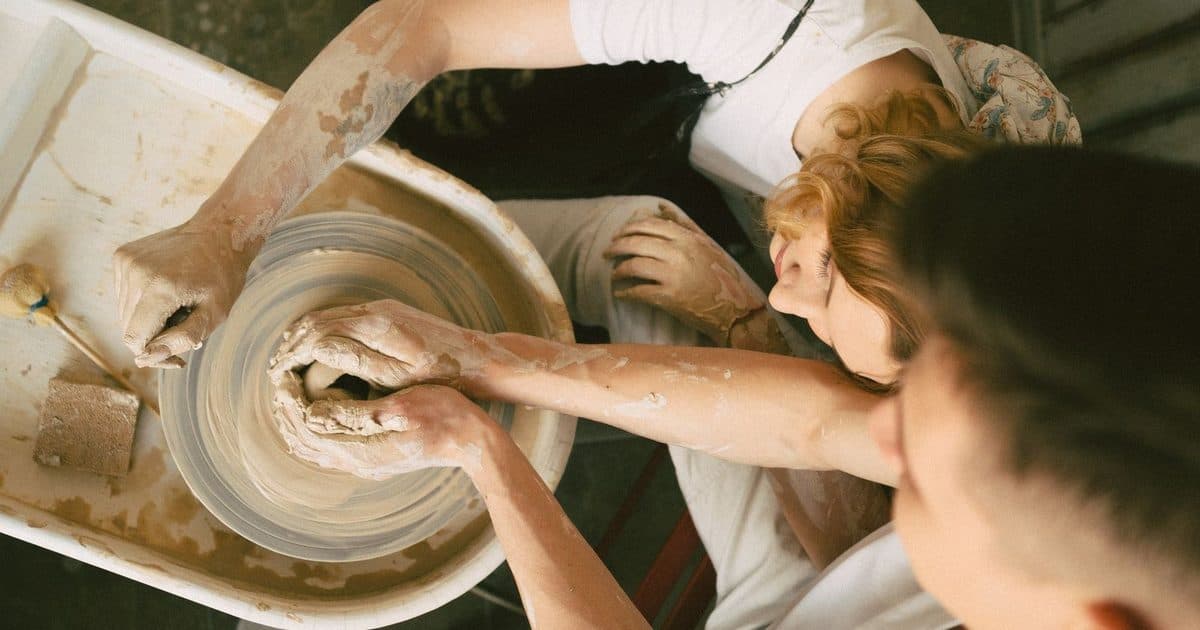
- Yes, with crafts that need no kiln or fixed equipment: leather, paper and bookbinding, wood on small formats, textiles, mosaic on small supports. You need protected tables, good light and a water point. The wheel and ceramics that must be fired require the Maker’s studio, which in the city you will find in neighbourhoods like Vanchiglia, Aurora, Borgo Dora and San Salvario.
- What drives the cost of a team-building workshop?
- Headcount, the material chosen, duration, the venue (your office or the Maker’s studio), how many people the Maker follows at once, and whether the object needs a second delivery after firing. Ask for a quote that lists these items: two proposals with the same total can be very different experiences.
- How does a company request work on Handsome?
- The company describes the event on the page for companies: people, city, date, goal. Handsome chooses a suitable Maker, coordinates materials and space and stays the single point of contact. Handmade gifts or gadgets for participants can be added to the same event.
One point of contact for Maker, materials and venue.
Tell us about the team and the date