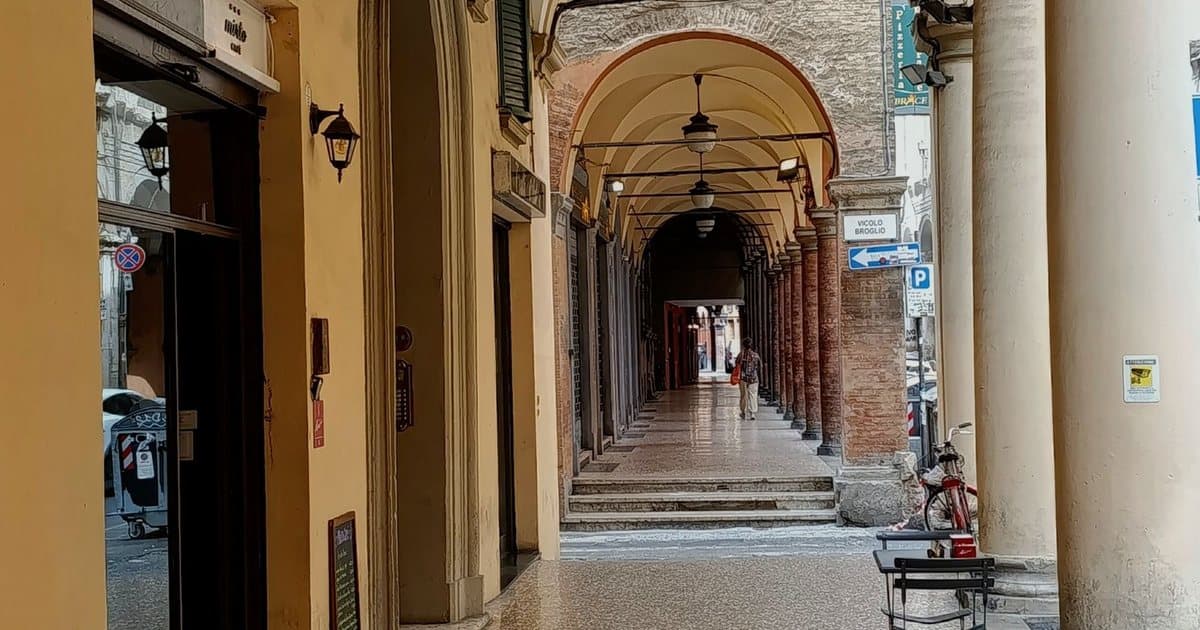
Milan describes itself in the language of fashion and finance, but the names of its streets say something else. A few steps from the Duomo you walk along via Orefici, via Spadari, via Armorari and via Speronari: goldsmiths, swordsmiths, armourers, spur-makers. In the Middle Ages the city's craft guilds were known as paratici, and written records of individual paratici survive from the fourteenth century onwards. Before it was a shop window, the centre was a list of workshops.
Manual work has moved several times since: outside the walls, along the canals, into the industrial sheds, then out into the province. This walk crosses five districts and asks the same question of each: how did it become a district of workshops, why did it stop being one, what is left to see?
The city that sells and the city that makes
A few hundred metres away begins the fashion Quadrilatero, and the arithmetic changes scale. In Cushman & Wakefield's Main Streets Across the World report of November 2024, via Montenapoleone came out as the most expensive luxury street in the world at 20,000 euros per square metre a year: the first time a European street had topped the ranking in thirty-four editions. In the following edition it slipped to second place, overtaken by New Bond Street in London. Where a ground floor is worth that much, it goes to whoever sells, not to whoever makes.
This is the Milanese paradox: the city the world associates with fashion has delegated the making to the outer ring and to the districts where space cost less. Between June 2025 and June 2026 active craft businesses in greater Milan fell by 2.6 per cent, 2,781 fewer out of 91,349 (Unione Artigiani, on chamber of commerce business-register data): many of those closures are owners who retired with nobody to hand the trade on to.
Brera: the academy that pulled the workshops in behind it
Brera takes its name from *braida*, a Lombard word for grassland outside the city. The Jesuits settled here in 1572 and stayed until the order was suppressed in 1773; the palazzo you see today was begun around 1615 to a design by Francesco Maria Richini. Then came the era that made the district: the Braidense library in 1770, the botanical garden in 1774, the Academy of Fine Arts in 1776, and the Pinacoteca, opened on 15 August 1809, Napoleon's birthday.
An academy on that scale brings a supply chain with it: frame-makers, gilders, restorers, colour merchants, fine-art suppliers. For a century and a half Brera was also a poor quarter, where painters shared a single room to work in; the Jamaica in via Brera, open since 1911, was that crowd's regular haunt, with Lucio Fontana and Giuseppe Ungaretti among the regulars. Bohemian Brera was born of low rents, not of a branding exercise.
Today the district is two things layered on top of each other. Since 2009 there has been the Brera Design District, a project by the Milanese studio Studiolabo, set up at the request of the local retailers' association and presented at the Fuorisalone of April 2010: it began by mapping some seventy permanent showrooms and now counts more than two hundred. Underneath, the galleries, antique dealers and framing and restoration workshops remain, most of them without a shopfront.
Isola: the district that lost its Stecca
A convenient explanation circulates about Isola: it is called the island because the railway isolated it. The chronology does not hold. The name already appears on the map of the Teresian land registry of 1720-23, where an isolated building in open country just outside Porta Comasina is labelled *Insola de Porta Comasina*: more than a century before the Milan-Monza railway of 1840. The tracks did the rest, though, and Porta Garibaldi station, brought into service in November 1961, sealed the cut.
The district grew from the mid-nineteenth century as a working-class area, home to people employed at Brown Boveri and Pirelli. Its oldest piece is the Fonderia Napoleonica Eugenia: in 1806 the viceroy Eugène de Beauharnais — hence the name — handed the complex to the Manfredini brothers, Milanese goldsmiths and founders, who turned it into a foundry. From 1852 it passed to the Barigozzi, bell founders, who in 1896 cast here the equestrian statue for the monument to Vittorio Emanuele II in piazza Duomo; it closed in 1975. The restored spaces now house a museum of the founder's art.
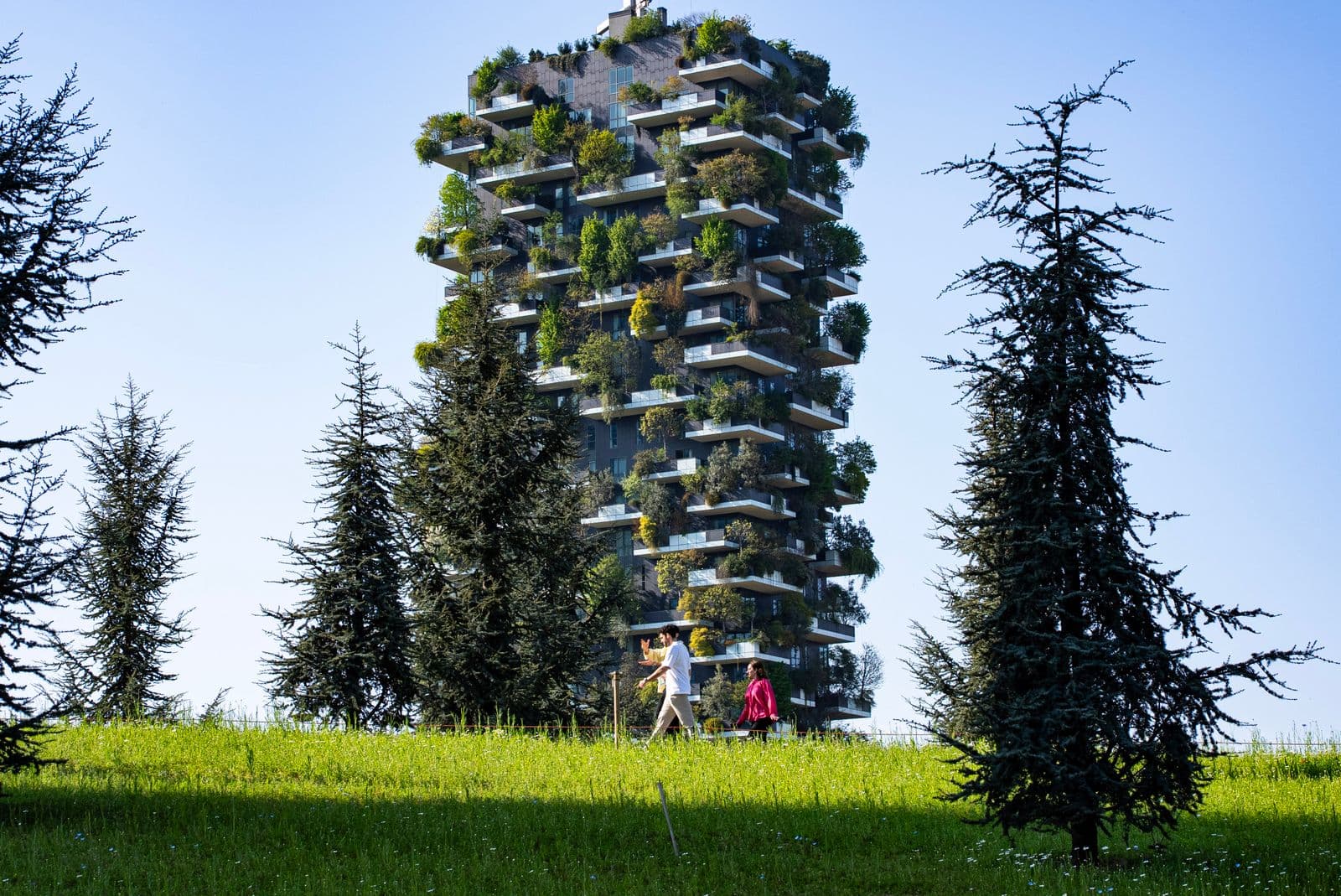
The episode that explains today's Isola, however, is the Stecca degli Artigiani: in the 1980s the main shed of the former TIBB factory, in via De Castillia, filled up with workshops, joineries and associations, and for twenty years it anchored the area. It was cleared on 7 April 2007 and demolished later that same month as part of the Porta Nuova development; the Bosco Verticale towers, inaugurated in October 2014, were built on the site. Stecca 3.0, opened in 2012, took the associations back in, not the workshops.
The tail of the story has a wry twist: ten years after the eviction, in April 2017, Isola made its debut at the Fuorisalone as the Isola Design District, in the shadow of the Bosco Verticale. It lost its artisans and gained a design district: two different things.
The Navigli: water that carried marble, then factories
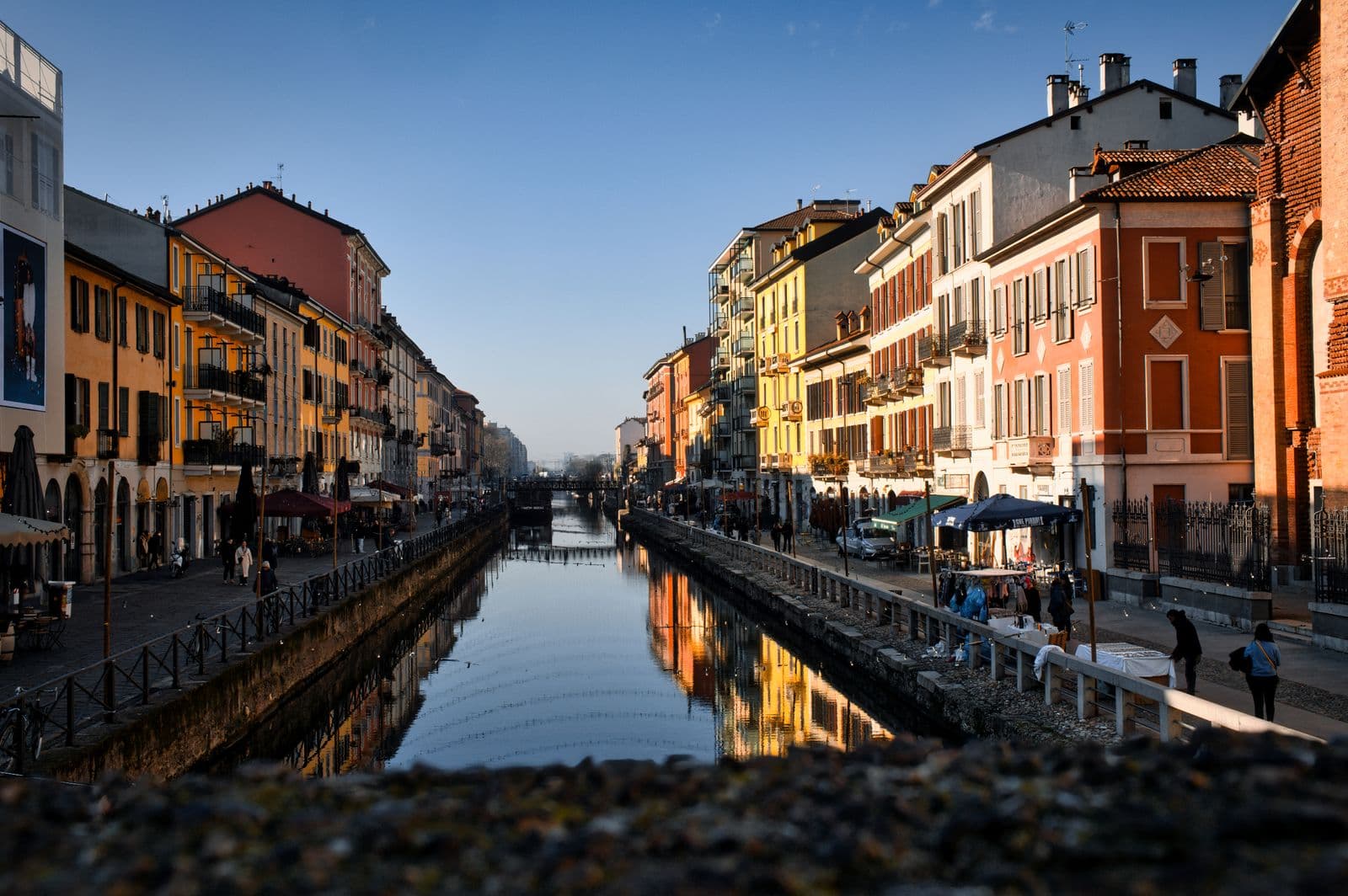
The Navigli are the infrastructure that made Milan a city of goods without a navigable river. Digging of the canal later known as the Ticinello began in 1177-1179; the widening started in 1257 by the podestà Beno de' Gozzadini made it reliably navigable from 1272. When the Duomo's building site opened in 1386, the marble from Candoglia reached the city on boats coming up the Naviglio Grande.
On the towpath stands the place that tells the story of local work best: the Vicolo dei Lavandai, with its public wash-house left almost intact, in use from the nineteenth century until the 1950s. The name is masculine for a precise reason: the washing was done by men, organised since the eighteenth century into the Confraternita dei Lavandai, who collected linen from wealthy households and washed it in the *fossètt* fed by the canal, kneeling on a small wooden bench called a *brellìn*.
Further south-west the same canal turns industrial. At San Cristoforo the ceramics and porcelain works started by Luigi Tinelli in 1833 passed in 1842 to Giulio Richard, who founded the Società Ceramica Richard in 1873 and acquired the Ginori manufactory of Doccia in 1896: Richard-Ginori was born. From the 1920s a small company town grew around the plant, with housing for workers and clerks, a school and health services.
Then Milan turned its back on the water: work to cover the inner moat began in March 1929 and lasted about a year, leaving in its place the ring road still known as the Cerchia dei Navigli. What survives is the Naviglio Grande and the Naviglio Pavese, the Darsena — carved out in 1603 by the Spanish governor Pedro Enríquez de Acevedo, count of Fuentes, who turned the Sant'Eustorgio pond into a harbour — and the antiques market held on the last Sunday of the month, with over 380 stallholders from viale Gorizia to the via Valenza bridge.
Filter by city and date to see straight away where places are open.
See the craft experiences availablePorta Romana: Boccioni's factories, a distillery and an Olympic village
Corso di Porta Romana is one of the city's oldest axes, and the arch that gives it its name was built in 1596, to a design by Martino Bassi, for the ceremonial entry of Margaret of Austria. But what matters here is the industrial Porta Romana: from 1907, between piazzale Lodi, viale Umbria and via Sannio, stood the Tecnomasio Italiano Brown Boveri, which built electric motors, transformers, trams and railway equipment on a 45,000-square-metre site linked by a spur to the Porta Romana freight yard. The factory is gone, the name is not: the metro station opened on 12 May 1991 is called Lodi T.I.B.B.
There is a famous portrait of that industrialising Milan: between 1909 and 1910 Umberto Boccioni painted *Officine a Porta Romana* looking out of the window of his home at via Adige 23. The canvas now hangs at the Gallerie d'Italia in piazza Scala.
The present is built on top of those factories. The Fondazione Prada, opened on 9 May 2015 in largo Isarco to a design by OMA, occupies a former early twentieth-century distillery. Behind corso Lodi, Cascina Cuccagna, a seventeenth-century farmstead where the Fatebenefratelli friars grew medicinal herbs for the Ospedale Maggiore, was granted in 2005 on a twenty-year concession to a consortium of associations and has been open to the public again since 2012. And the former Porta Romana rail yard, which hosted the Olympic Village of Milano-Cortina 2026, is to be converted into student housing.
Lambrate and via Ventura: sheds that changed trade
Lambrate takes its name from the river Lambro, and so does the object that made it famous. Ferdinando Innocenti built a factory here in 1933 making steel tubing and scaffolding couplers; bombed during the war and rebuilt, from 1947 it produced the Lambretta, which reached a hundred thousand units a year in 1950 and came out of the Lambrate plants until 1971.
In via Ventura another factory left its mark: Faema, founded in Milan in 1945 as Fabbrica Apparecchiature Elettro-Meccaniche e Affini, whose plants stood here. It made coffee machines — in 1961 it patented the brewing system of the E61 — and small domestic appliances, before moving out to Binasco. When production left, the sheds were not demolished: inside there are now studios, galleries, event spaces and shops.
That reuse is what turned Lambrate into a design address. From 2010 to 2017 the area hosted Ventura Lambrate, the Fuorisalone district curated by the Dutch agency Organisation in Design, which left the neighbourhood for other parts of the city after the 2017 edition. The district is gone; the reason it existed is not — high ceilings, proper power, courtyards where noise and dust bother nobody.
What to look for as you walk
The traces of manual work in Milan can be read with a handful of rules that hold across all five districts. Nothing is signposted: you have to know where to look.
- The street names in the centre: they record where a trade stood before rent moved it.
- Half-open doorways and courtyards: in Brera, on the Navigli and in Isola, the workshop almost never faces the street.
- The wide gates of former industrial plots in Lambrate and towards San Cristoforo: lorry-width means materials once came in there.
- Painted signs left on the walls: foundries, ceramics works, machine shops. In Milan, industrial archaeology is at eye level.
Milan stopped making things in the centre long before it stopped describing itself as a city of makers. It is in the districts around it that the description still has something to point at.
Not every creative district is a craft district: a design district lasts a week and brings visitors, while a workshop is a rent paid twelve months a year by somebody who works with their hands. In Isola the two followed one another ten years apart. And if the next step is putting your hands in a studio, logistics matter more than the district: that is the reasoning behind our guide to craft workshops in Milan by metro stop.
Frequently asked questions
- Which is Milan's craft district?
- There isn't a single one. The trades sat in the centre, where street names still record them, then moved to where space cost less: the balcony-access blocks of Isola and the Navigli, the former sheds of Lambrate, the industrial plots around Porta Romana.
- Can you still see craft workshops in Brera?
- Yes, but almost never in a window on the main street. Around the Academy of Fine Arts, founded in 1776, grew a supply chain of frame-makers, restorers and fine-art suppliers, and some of those workshops sit in inner courtyards.
- What was the Stecca degli Artigiani in Isola?
- The main shed of the former TIBB factory, in via De Castillia, which from the 1980s housed workshops, joineries, artists and neighbourhood associations. It was cleared on 7 April 2007 and demolished that same month as part of the Porta Nuova development; the Bosco Verticale towers, inaugurated in October 2014, were built on the site.
- How long does this walking route take?
- The five districts do not fit into a single day. Brera and Isola combine well in one morning; the Navigli and Porta Romana are worth half a day each; Lambrate is best kept separate, since it lies to the east.
When dates are open, places left and the final price are shown before you book.
See the Milan workshops page