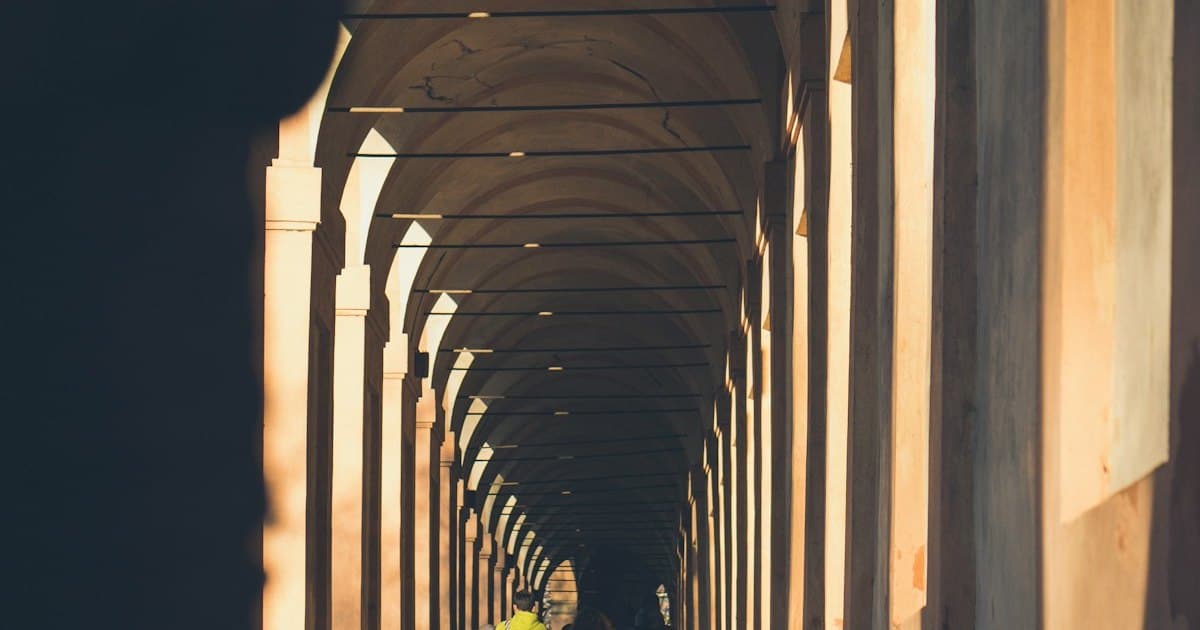
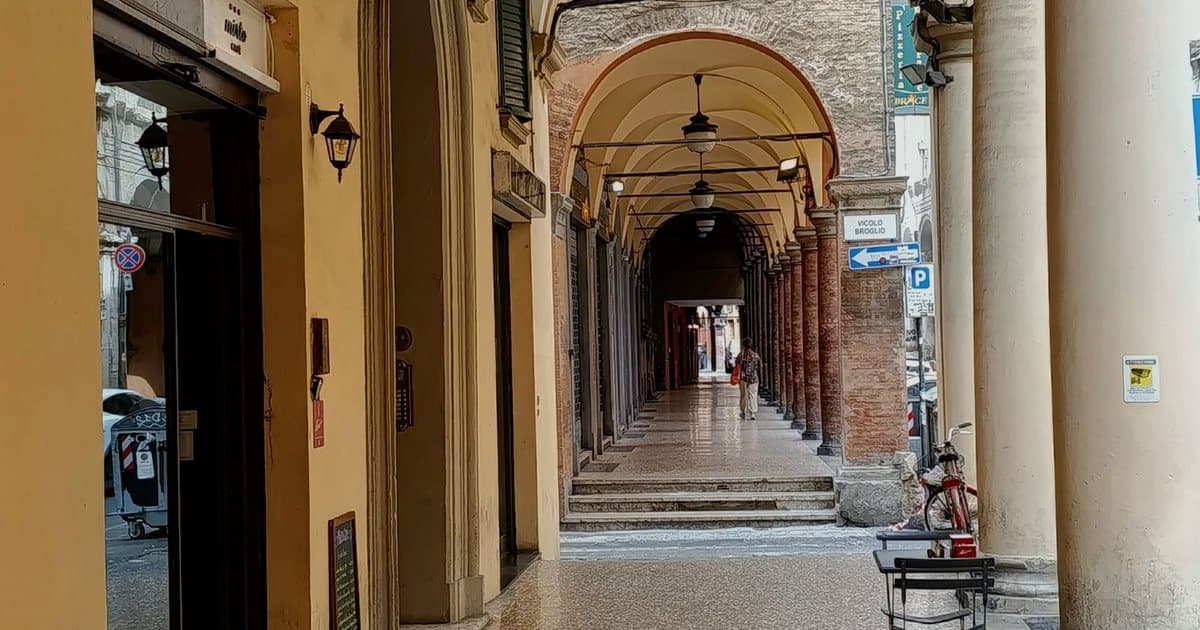
Bologna's porticoes have been on the UNESCO World Heritage List since 2021, but the inscription doesn't cover the porticoes in general: it covers twelve selected stretches. It's a distinction that changes how you walk through the city, because it tells you where you are and why that particular stretch was chosen. The Quadrilatero, the grid of alleys behind Piazza Maggiore, isn't one of the twelve components, but one of them opens onto it. And it's the place where the relationship between porticoes and trades is easiest to read, even now that most of those trades are gone.
What is UNESCO heritage here, and what isn't
The inscription dates to 2021 and was made under criterion (iv): Bologna's porticoes as an outstanding example of an architectural typology in continuous evolution. The site is serial, meaning it isn't one continuous line: it's twelve components, ensembles of porticoes and the built areas around them, selected — as the City of Bologna puts it on its dedicated site — from the city's 62 km of porticoes. In practical terms: almost all of Bologna's porticoes are still just porticoes, and only twelve ensembles are the UNESCO site.
- Santa Caterina and Saragozza
- Santo Stefano and Mercanzia
- Galliera
- Baraccano
- Pavaglione, Banchi and Piazza Maggiore
- San Luca
- University and Academy
- Certosa
- Cavour, Farini and Minghetti
- Strada Maggiore
- "Treno della Barca"
- MAMbo
Two details dismantle the idea of a purely medieval site. First: the obligation to build a portico enters the city statutes in 1288, but the inscribed series runs from the 12th century to the present, and the site's materials include wood, stone, brick and reinforced concrete. Second: two components are from the 20th century — the "Treno della Barca", the porticoed social housing of the Barca district, and the MAMbo area. This isn't a list of old things: it's a typology the city never stopped using.
The Quadrilatero: the street names are a register of trades
The Quadrilatero is the area enclosed by via Rizzoli, via Castiglione, via Farini and via dell'Archiginnasio. From the Middle Ages onward this was the city's commercial district, and the guilds — the Arti — were grouped street by street. You can still read it in the names, without any interpretive panels:
- Via Clavature, from the locks made by blacksmiths.
- Via Drapperie, from the shops of the cloth sellers.
- Via Pescherie Vecchie, from the fishmongers, who in 1286 had to move away from Piazza Ravegnana to make room for the square we know today.
- Via Caprarie, from the seat of the butchers' guild.
- Via Orefici, from the goldsmiths' workshops.
- Via Calzolerie, from the shops and the seat of the shoemakers' guild.
And you can also read it in what's no longer there. Spaderie, Pellizzerie, Cimarie, Zibonarie were streets with a name and a trade — swords, furs, fabrics, doublets — and those names have dropped out of the city's street map. One trade replacing another, here, isn't a recent phenomenon: it's how this area has worked for eight centuries.
What survives of the old craft trade, and what doesn't
Walk through the Quadrilatero today and you see one clear specialisation, and it's food: fishmongers, delicatessens, greengrocers, pasta shops, bakeries, Bolognese gastronomy. Non-food production left the grid a very long time ago. Calling every shopfront in the Quadrilatero an "artisan workshop" isn't accurate, and it isn't necessary either: what's left is already rare enough — neighbourhood businesses under the same sign for generations, inside a European historic centre.
There is a public criterion for telling the difference, rather than an impression. Emilia-Romagna regional law 5/2008 defines a historic shop as a retail business, a craft enterprise or or a food and drink establishment that has been operating continuously for at least 50 years at the same address; for establishments trading as an "osteria" the requirement drops to 25 years. In 2008 the City of Bologna set up a Register of historic shops and markets, which can be consulted online. If you want to know whether a sign is genuinely historic, that's where you check, not the plaque in the window.
Manual work you can actually watch being done, meanwhile, has spread out differently. Hand-rolled sfoglia stayed inside the centre because it's tied to food, and it remains the Bolognese craft that's easiest to see up close: if you want to know what actually happens in a session, we've written about what you learn in a sfoglina course in Bologna. The workshops that need kilns, presses, benches and floor space are almost all outside the four streets — a question of square metres and rents, not of a lost vocation. That holds for ceramics, bookbinding and goldsmithing alike, and if that's what you're after, how to choose a ceramics course in Bologna starts from exactly this problem.
The walking route, in about ninety minutes
A short route, entirely within the centre and almost entirely covered. No tickets, nothing to book.
- Piazza Maggiore, under the Pavaglione. You're inside the UNESCO component "Pavaglione, Banchi and Piazza Maggiore": the Pavaglione is the longest uninterrupted portico in the city and continues into the portico of the Archiginnasio, the historic seat of the University.
- Cut through Palazzo dei Banchi. The porticoed façade closing the square on its eastern side has archways: that's the way into the Quadrilatero, and the jump from monumental scale to narrow alley happens within ten metres.
- Via Clavature and via Pescherie Vecchie. The densest part. Look up at the signs and down at the stalls.
- Via Drapperie, via Caprarie, via Orefici, via Calzolerie. Four names, four guilds. The loop closes almost by itself, no map needed.
- Come out on via Rizzoli or via Castiglione. From here two more components are within reach: "Santo Stefano and Mercanzia" to the south-east and "Strada Maggiore" to the east. High, continuous porticoes that hold up in the rain.
In light rain the route works perfectly well, since the cover is nearly continuous. In real rain you want somewhere to go inside and stay: we've gathered the options in what to do in Bologna when it rains, with covered routes broken down by area.
Doing something with your hands, not just walking
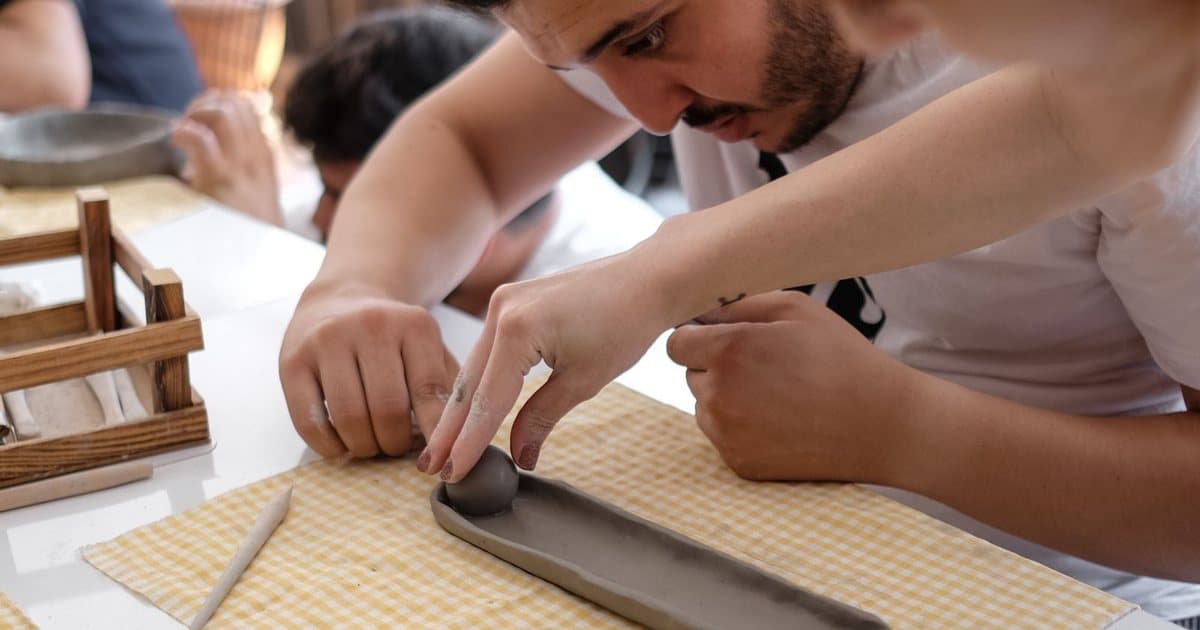
A loop of the Quadrilatero is over before lunch. If the Saturday is a long one, the thing that holds up best afterwards is a workshop: two or three hours with a Maker, and you leave with an object instead of twenty identical photos. Bologna has a high density of workshops, and one practical rule applies: weekday sessions are far easier to find than Saturday afternoons, which need booking a few days ahead.
On Handsome the figure you see is the figure you pay. That round figure already includes everything: nothing extra appears at checkout. You book with a 10 euro deposit on group workshops and pay the balance on site, directly to the Maker. Up to 3 days before the event, cancellation is free with a full refund. Handsome takes no commission on the workshop takings: the payment is credited directly to the Maker's account.
Frequently asked questions
- Are all of Bologna's porticoes UNESCO World Heritage?
- No. The 2021 inscription covers a serial site made up of twelve components, selected from the 62 km of porticoes in the city. Walking under a Bolognese portico therefore doesn't mean you're inside the UNESCO perimeter. The list of the twelve components is published on the City of Bologna's dedicated porticoes site.
- What are the twelve UNESCO components of Bologna's porticoes?
- Santa Caterina and Saragozza; Santo Stefano and Mercanzia; Galliera; Baraccano; Pavaglione, Banchi and Piazza Maggiore; San Luca; University and Academy; Certosa; Cavour, Farini and Minghetti; Strada Maggiore; "Treno della Barca"; MAMbo. Two of them are 20th-century, because the site covers porticoes from the 12th century to the present, reinforced concrete included.
- Is the Quadrilatero in Bologna a covered market or a district?
- It's an area of the historic centre, not a building with an entrance: the perimeter is set by via Rizzoli, via Castiglione, via Farini and via dell'Archiginnasio. Inside there are streets with food stalls and shops, and the area has been the city's commercial heart since the Middle Ages. The streets are freely walkable, but individual businesses keep their own shop hours.
- How long does the Quadrilatero take, and what do you actually see?
- The grid is small: a good hour is enough to walk via Clavature, Pescherie Vecchie, Drapperie, Caprarie, Orefici and Calzolerie without rushing. You see food stalls, neighbourhood businesses and the street names, which are a list of the medieval guilds. Non-food production left the area centuries ago: for that you need the workshops, and today they're almost all outside the four streets.
Markets in the city and workshops by Makers in the area.
Craft markets and workshops in Bologna