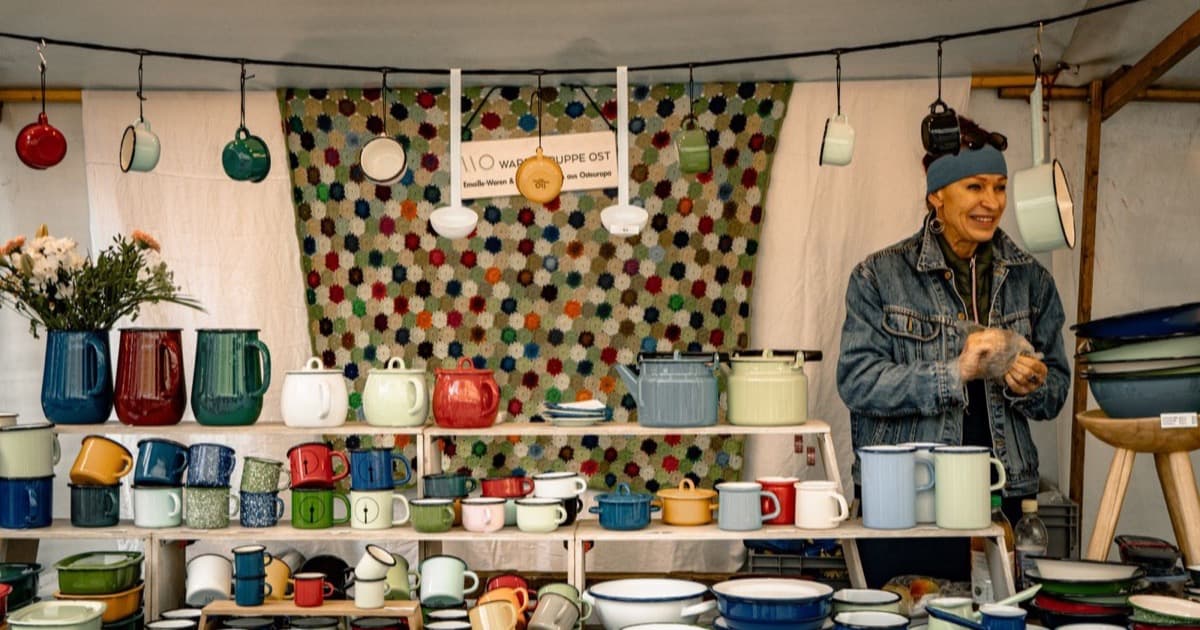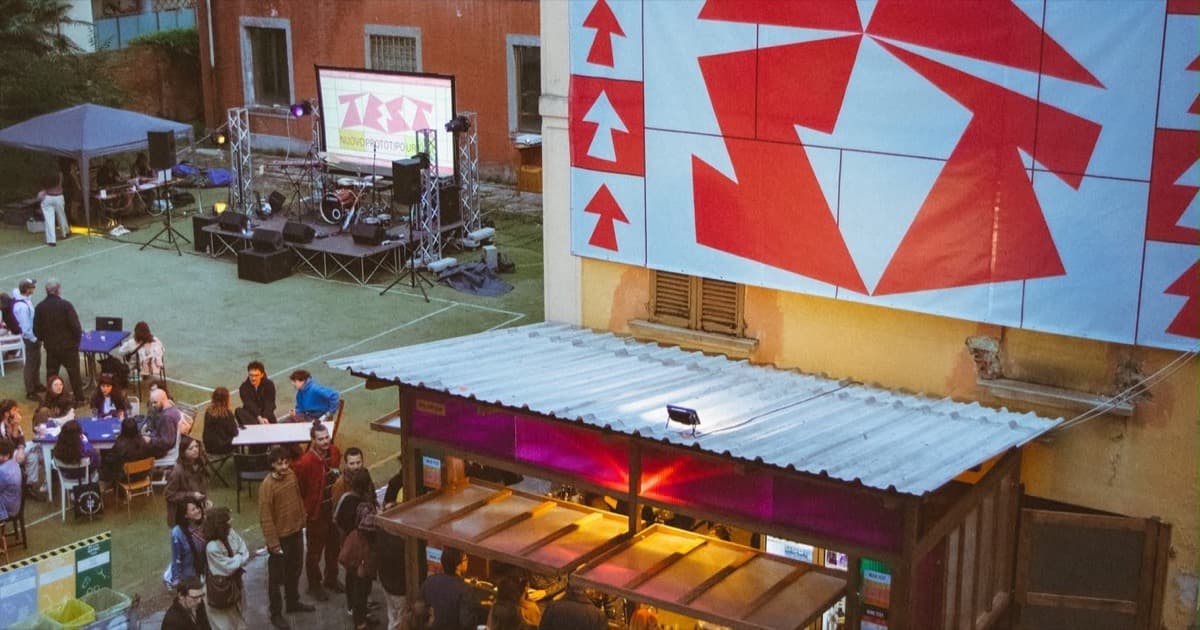
You don't sign up for Bologna's artisan markets: you apply. In almost every case the organiser opens an exhibitor call — an online form that closes weeks or months before the event — and then makes a selection. The city grants permission to occupy public space; the organiser decides which stalls will actually be there. That changes how you present yourself: you are not booking a spot, you are going through a selection.
Who selects the exhibitors
Two different worlds coexist in Bologna, and confusing them is the first mistake. On one side there are the markets and fairs covered by the municipal stall plan: there you deal with concessions, licences and rankings. On the other side there are curated artisan markets, run by associations, collectives or individual organisers inside a courtyard, a square, a cultural venue: there you deal with curation. The city has both souls — with a craft and trade tradition going back centuries, from the Quadrilatero onwards — but the two doors work by different rules.
In the curated world, the person reading your application is almost always one of these:
- Artisan associations and collectives, looking for consistency with the project's identity more than for sales volume.
- Independent event organisers, who think like programmers: they balance categories, price ranges and the ability to draw an audience.
- Host venues — bars, courtyards, cultural centres, festivals — which often hand the selection to an external curator.
On the administrative side, selling in public spaces in Emilia-Romagna requires one of two licence types: type A for a fixed stall, issued by the municipality where the stall is located, and type B for itinerant trade, issued by the municipality where the activity begins. For stalls that become available, the Region publishes the lists in its official bulletin every six months, with thirty days from publication to apply to the municipality (Emilia-Romagna Region).
What the application form actually asks
A serious call doesn't ask for much, but it always asks for the same things. Knowing what the organiser is looking for behind each field helps you answer better.
- Product photos. This carries the most weight. Three or four images on a neutral background tell the curator whether your stall holds up next to the others.
- Product category. It exists to avoid ten earring stalls in the same courtyard. If you work with several materials, state your main one.
- Description of your process. It separates those who make from those who resell: this is the point where curated markets are strictest.
- Tax status. VAT number, ATECO code, registration in the artisan business register, or a declaration that the items are your own creative work.
- Stall size and set-up. The curator is drawing a floor plan: give real dimensions, not the ones you wish you had.
- Social profiles and website. They get checked to understand how much audience you bring to the event yourself.
- Availability on the dates. Many markets run over several days, and partial availability weighs on the selection.
How far in advance the calls open
Much earlier than you would think. Timings vary from one organiser to another, but the recurring pattern is this:
- Christmas markets: the call usually opens between late summer and early autumn, because the exhibitor line-up has to be locked before buying any promotion.
- Spring markets: they move during the winter.
- Events inside festivals or cultural programmes: they follow the host organisation's calendar and can run many months ahead.
- Recurring monthly markets: they often keep an open list all year and call when a spot frees up.
Practical rule: if you are looking for a market for next month, you are late for nearly everything except last-minute replacements. Better to plan the season two or three months ahead, apply to several events and accept that some will say no.
Dates, open calls and how to apply.
See the markets in BolognaHobbyist is not Maker: where you stand
This is the distinction that kills the most applications. In Emilia-Romagna a hobbyist is someone who sells in public spaces occasionally and sporadically, in a non-professional form, and may sell used or new items of modest value that are not their own creative or craft work (Emilia-Romagna Region). In plain terms: if you sell what you make, you are not a hobbyist.
- The hobbyist card costs 100 euro and is valid for one year.
- It carries thirty stamping slots and must be shown while selling.
- It is issued by your municipality of residence, or by the City of Bologna if you live outside Emilia-Romagna.
- It can be issued no more than once a year and up to four times in total: it is a temporary entry door, not a way to work long-term without a VAT number.
Does a weekend cover its costs? The maths to do first
There is no threshold that works for everyone, but there is a method. Before saying yes, line up:
- Stall fee and any deposit.
- Extras on you: power, tables, gazebo, ground occupancy.
- Travel: fuel, parking, accommodation if needed.
- Working hours, counting set-up, event days and take-down, and putting a value on them.
- Stock to produce, and the share that will realistically go unsold.
On the other side, put down what the market actually gives back: the weekend's takings, but also the contacts collected, the orders that arrive afterwards and the bookings for your workshops. An event that breaks even at the till but fills two workshop dates is not a wasted weekend. An event that sells well but leaves nothing behind is worth repeating only if the numbers stand on their own.
On Handsome the call lives inside your dashboard
On Handsome the market publishes its own open call and the Maker applies from inside the portal: the profile, photos and details you already uploaded are reused, so the application takes a few steps. Open events are listed on the markets page and on the one dedicated to Bologna. When the organiser replies, the exchange stays tracked in your dashboard instead of getting lost in a private message thread.
Bring a bookable workshop to the market too
This is the lever almost nobody uses. If the market lets you run a demo or a short hands-on session, that session can be bookable online before the event: people arrive already paying, the stall keeps working anyway, and passers-by who see a session in progress stop to watch. It is exactly the logic described in the piece on Comunella Market.
On money the model is simple. Handsome takes no commission on the workshop revenue: the payment lands as a direct credit in the Maker's own Stripe account. The round figure the customer sees is the price paid — with nothing added on top — and Handsome invoices the Maker nothing: the only cost is the standard Stripe processing fee on the online payment. The credit on the Stripe account is immediate; the bank transfer leaves a few days after the event.
What you need at the market is already there: your public page with your calendar, so you can open bookings for the session before the stall is even set up, and QR ticketing for ticketed events, for when the market lets the public in with a ticket. There are also gift cards to offer anyone at your stall looking for a present: they are valid for 12 months on any workshop on the platform and work like a wallet, so if the experience costs less the remainder stays on the card.
Frequently asked questions
- Do I need a VAT number to do artisan markets in Bologna?
- To sell your own creations on an ongoing basis, yes: that is professional activity. In Emilia-Romagna a hobbyist may only sell used or new items of modest value that are not their own creative or craft work, so that status does not cover a Maker selling what they produce.
- How far ahead should I apply to a market?
- It depends on the event, but calls generally close weeks or months in advance. Christmas markets often open between late summer and early autumn, spring ones during the winter. If you are looking for a spot for next month, last-minute replacements are the only realistic route.
- Why do I get rejected even though my products are good?
- It is almost never a judgement on quality. Organisers balance product categories: if they already took three stalls in your category, the fourth is out regardless. Apply to several events and reapply for later editions.
- What should the application photos show?
- Three or four products on a neutral, well-lit background, plus one or two photos of your stall set up at a real event. Stall photos matter a lot: they tell the curator how you will look in the square, not just what you sell.
- Can I sell and run a workshop at the same market?
- Yes, if the organiser allows it. It is also the best way to cover your costs: bookings collected online before the event are certain revenue, while stall sales stay variable.
- What does Handsome take on booked workshops?
- Nothing on your workshop revenue: the payment lands as a direct credit in your own Stripe account. Handsome invoices you nothing at the end of the month: the price shown is the final price, with nothing added on top, and only the standard Stripe processing fee on the online payment applies.
Your own page and calendar, 0% commission on the workshop revenue, market applications from your dashboard.
Create your Maker profile on Handsome