If you are looking for an alternative to the usual aperitivo on a Saturday night, the practical question is not "what is there to do in Bologna", but "what starts after 6pm and ends in time for dinner". An evening craft workshop answers both: it is short, it keeps your hands busy for a couple of hours, and it ends with an object to take home instead of an empty glass. Two things are worth knowing before you book, and nobody writes them down: not every craft works in the evening, and most evening sessions close early.
Why it holds up better than another aperitivo
The aperitivo has a structural flaw: after forty minutes you have already said what you had to say, and the rest of the evening rests on ordering another round. A workshop removes that problem because it gives you something to do. For two people, it avoids the fixed face-to-face of a first date. For a group, it stops the table from splitting into two separate conversations, because everyone is looking at the same piece of material.
This is not brochure "experiential" language: it is simply that having your hands busy changes the kind of conversation you have, and that something is left at the end. And if the evening is the plan B for a day ruined by the weather, the reasoning is the same one we set out for rainy days: what to do in Bologna when it rains.
Which workshops actually work after dark
There is only one criterion, and it is not the craft itself: in the evening, what works is whatever finishes the same evening. Two hours is not much, and nobody wants to come back into the centre on Tuesday to collect a piece.
- Finished, and you take it with you: floral arrangements and terrariums, bookbinding and stitched notebooks, soap and solid cosmetics, candles, macramé and small-scale weaving, cold-assembly jewellery (setting, wire, beads), linocut printing, illustration and watercolour.
- Finished, but you wait on site: resins, glues and fixatives that need to set. It ends within the evening, but the last half hour is waiting: ask first if you have a table booked.
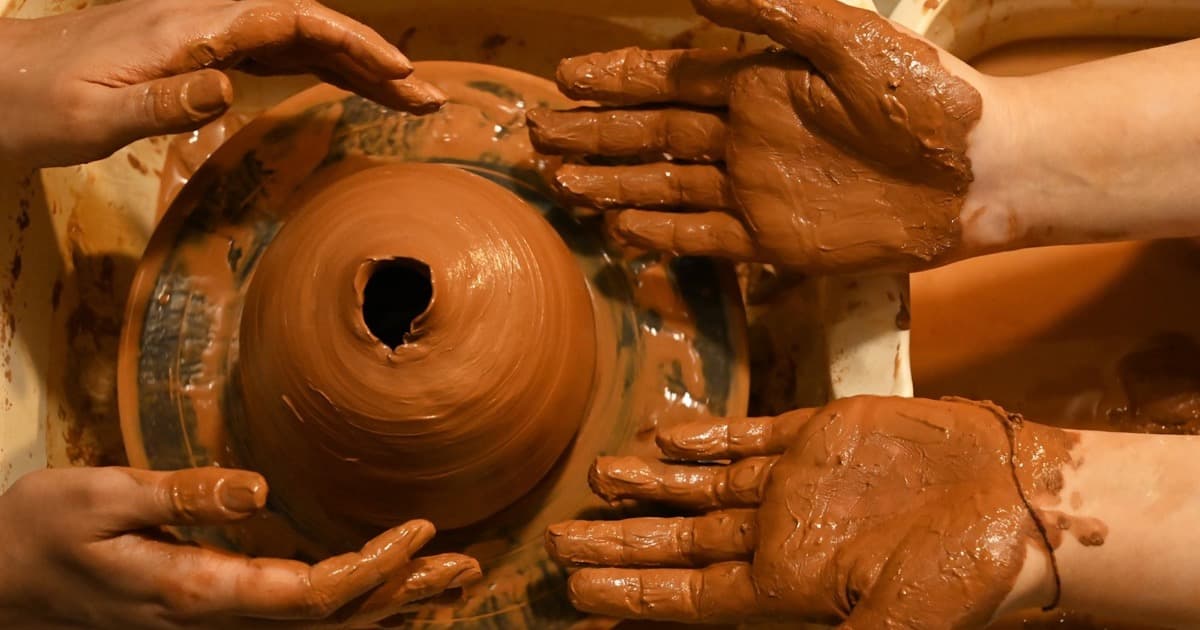
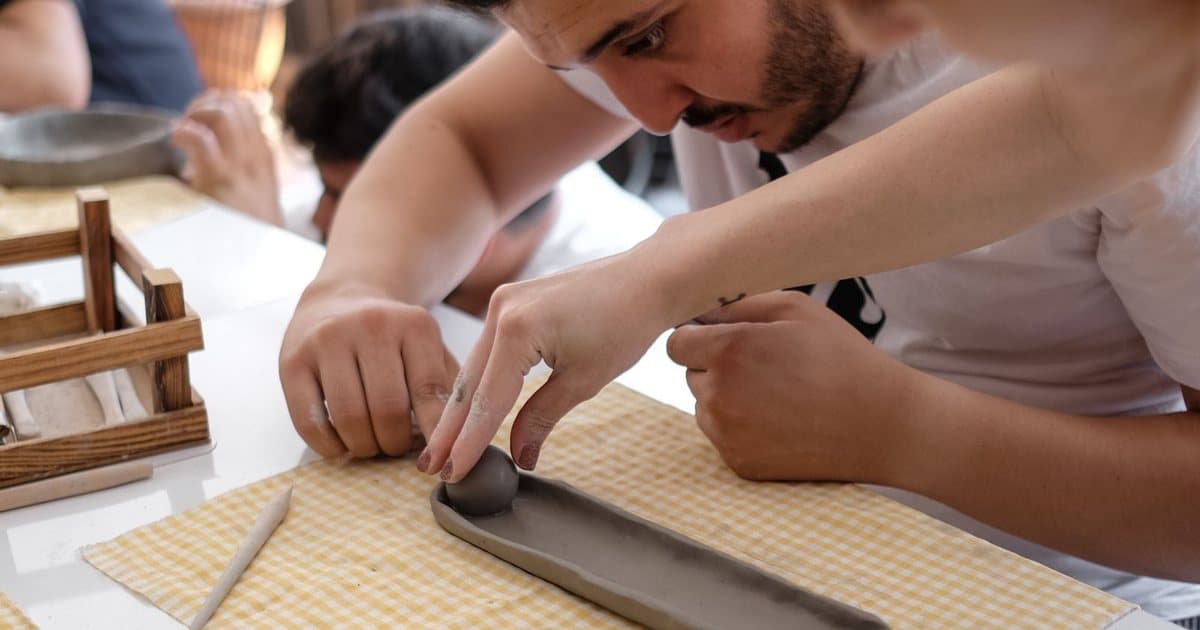
- Does not finish in the evening: ceramics thrown on the wheel or built from slabs. The piece has to dry and be fired, so you collect it days later or have it shipped.
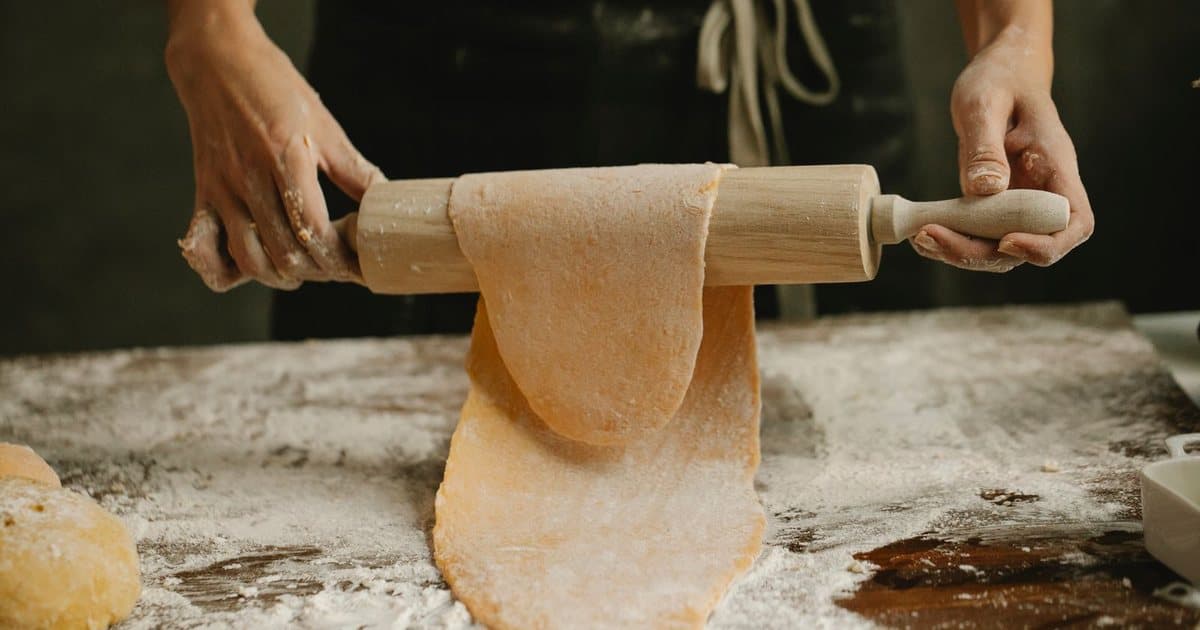
- Finishes at the table: fresh pasta, pastry, cooking. Here the workshop and dinner are the same thing, and the scheduling problem disappears.
Ceramics is among the most requested crafts, but choose it knowing the object arrives later: if you are interested anyway, we lined up the questions to ask in how to choose a ceramics course in Bologna, starting with the one about firing.
How it fits around dinner
This is the part people get wrong most often, especially when organising for several people. Three arrangements hold up:
- Workshop 6pm–8pm, dinner at 9pm. The right order. You leave with half an hour of margin to wash your hands, sort out your bags and reach the table without rushing.
- Short session 7pm–8:30pm, dinner straight after. This works at the weekend, when kitchens stay open longer. Check with the restaurant rather than assuming it.
- The workshop is dinner. Fresh pasta or cooking: you knead, you cook, you eat what you made. It is the only format that needs no fallback plan on timing.
If you would rather dinner itself be the workshop, in Bologna the short route is sfoglia: we wrote up what you actually learn in a sfoglina course, timings included.
The areas: centre, Quadrilatero, university district
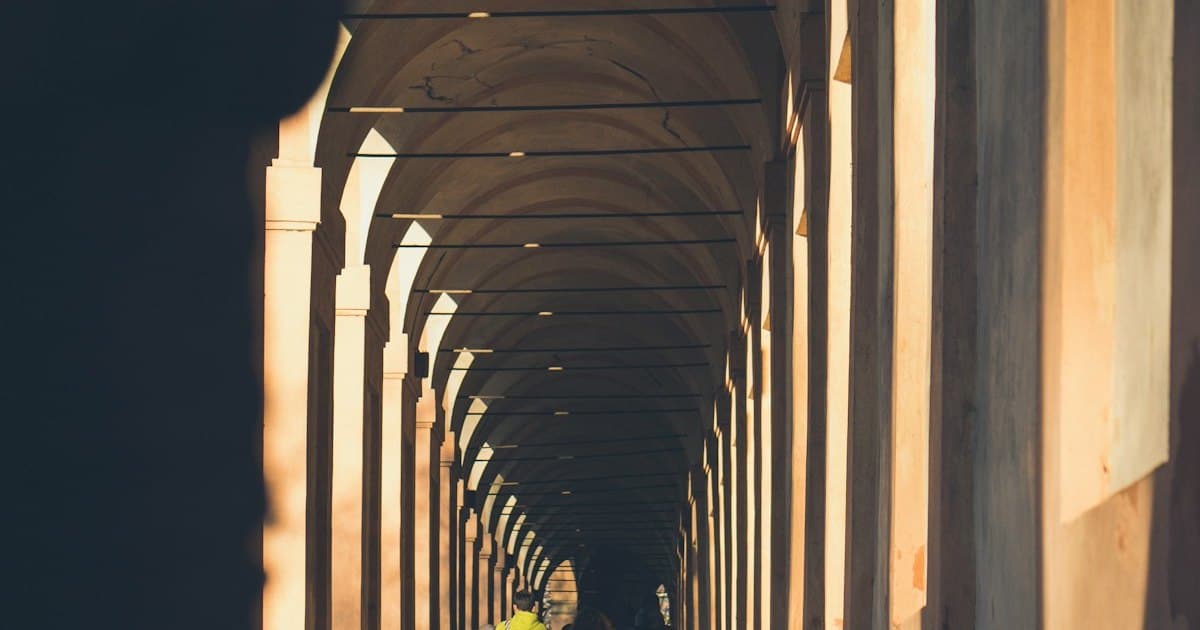
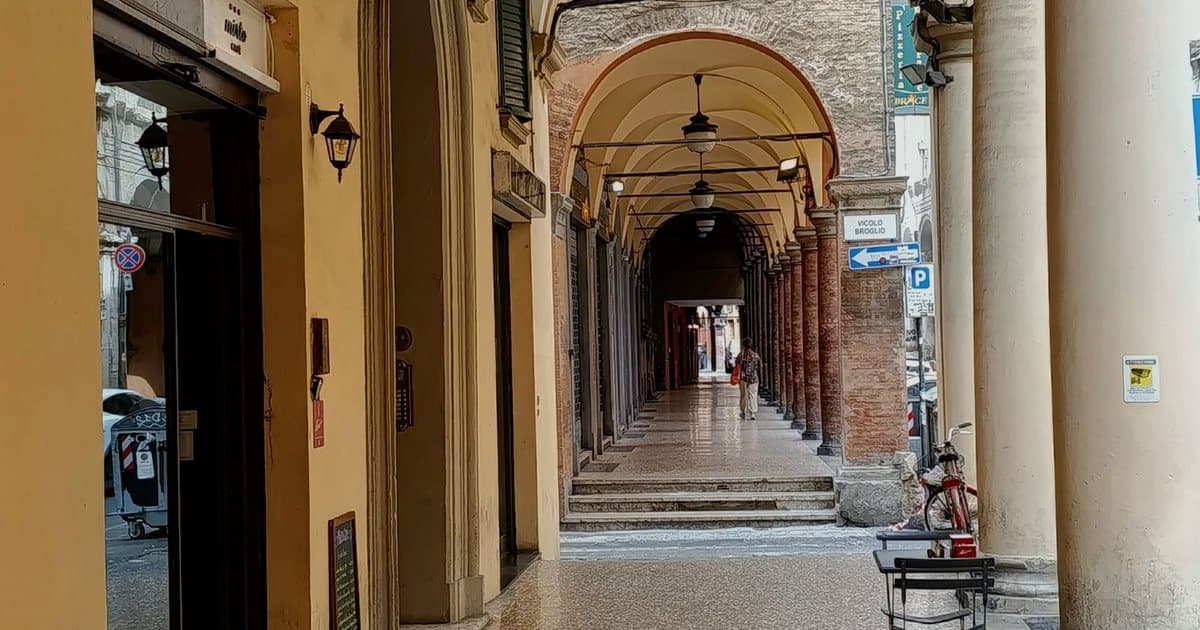
In the evening geography matters more than during the day, because after the workshop you have to move. One Bolognese advantage is that almost all of the centre can be crossed under cover: the porticoes of Bologna have been on the UNESCO World Heritage List since 2021 as a serial site of twelve components, covering a total of 62 km. After dark they are useful for a more mundane reason too: they are lit.
Centre and Quadrilatero
The Quadrilatero is the area of the historic centre with a craft, mercantile and commercial tradition going back to the Middle Ages: narrow lanes, trades handed down within families, shops selling the same goods for generations. In the evening, see it for what it is: the craft shops keep retail hours and by then they are closed. What remains is the area with the shortest distances between a workshop and a table, and the one where you do not need to plan the journey.
University district, via Zamboni
This is the quarter of the University of Bologna, whose origins identify it as the first university of the Western world, with 1088 as the conventional founding date of the Studium. What matters to you tonight is the consequence: it is the area that stays alive longest, and the one with the highest density of small spaces. Workshops with few places, which fill up quickly but often open midweek sessions.
Outside the centre
The larger spaces, the ones that can take a group of ten or twelve, are almost always outside the ring road. They are the right choice if there are a lot of you, provided you solve two things first: how you get there and how you get back. In the evening that is the variable that ruins group nights out, not the workshop itself.
What time it ends: tell the group first
Here some honesty is needed, because this is the point that causes the most confusion. The vast majority of evening workshops close by 10pm, and many earlier. These are not venues: they are working spaces, often inside residential buildings, with neighbours upstairs and a Maker who reopens the next morning. Nobody runs until one in the morning.
Translated: the workshop is the first part of the evening, not the whole evening. If you are organising for eight people, say so when you send the message to the group chat, otherwise half of them will turn up thinking it is the entire programme and the other half will already have booked a table for 8pm.
For group evenings built around a specific occasion, the timing and headcount problem is identical, and we already worked through it in a hen party in a Bologna workshop.
What it costs and how you book
The price is set by the Maker and depends above all on the material you take home: two workshops of the same length can cost very differently, and there is no city-wide price list. What to check on the event page is not only the figure, but the finishing time and what you leave holding.
On Handsome the figure you see is the figure you pay: all-inclusive price, with nothing added at checkout. You book with a 10 euro deposit on group workshops and settle the rest on site, at the end of the session. Handsome does not withhold commissions on the workshop takings: the payment is credited directly to the Maker's account. If the evening falls through, cancellation is free up to 3 days beforehand.
Frequently asked questions
- What is there to do in Bologna in the evening that isn't the usual aperitivo?
- An evening craft workshop is the most direct alternative: it lasts about two hours, usually starts between 6pm and 7pm, and ends with an object to take away. Floral arrangements, candles, soap, bookbinding, macramé, printing and illustration all work well, because they finish within the same evening. Dinner and drinks go afterwards, not before.
- What time do evening workshops in Bologna finish?
- Almost all by 10pm, and many earlier. These are working spaces, often in residential buildings, not late-night venues: treat them as the first part of the evening, not the whole evening. The finishing time is shown on the event page, and it is the first thing to communicate if you are organising for a group.
- Which workshops can be completed in a single evening?
- The ones where the object is finished when you walk out: terrariums and floral arrangements, candles, soap, notebooks and bookbinding, macramé, cold-assembly jewellery, linocut printing, watercolour. Wheel-thrown ceramics is not one of them: the piece has to dry and be fired, so you collect it days later or have it shipped.
- Can you do a workshop before dinner?
- Yes, and that is the recommended order. A 6pm–8pm session leaves half an hour of margin for a 9pm dinner. The mistake to avoid is the reverse: the first half hour of a workshop is the technical explanation and cannot be recovered, so arriving late after drinks means missing the part you need.
Markets in the city and workshops by Makers in the area.
Craft markets and workshops in Bologna