If you are looking for a tortellini class in Bologna, it is because you want to make them, not because you want to hear their history. So there is really only one question to ask before booking: how long will my hands actually be in the flour? Workshops differ a lot on this point, and the difference is not always visible in the event title.
Class or demonstration: how to tell before you pay
These are two different experiences sold with similar words. In a demonstration a sfoglina, the traditional pasta maker, works in front of a group, explains, passes a tortellino around so everyone can see it up close, and at the end you taste. It is pleasant and short, but you leave without having rolled anything. In a class you get a board, a rolling pin and your own ball of dough, and you make your own mistakes.
The signs that you are booking a real class are concrete, and they are almost always written in the event description:
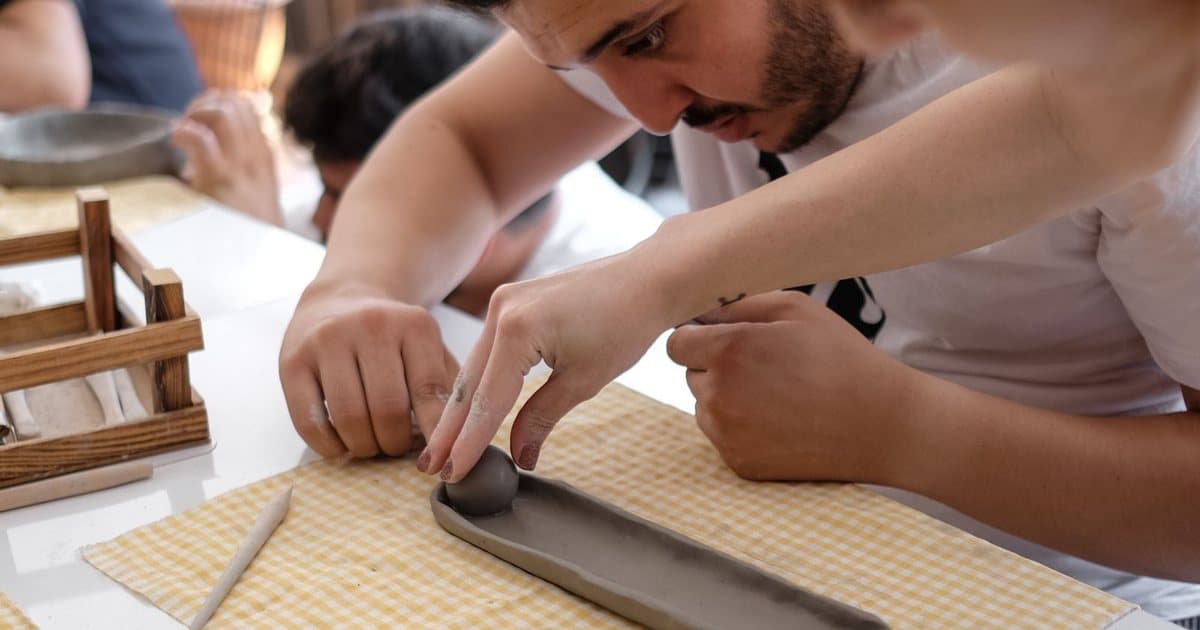
- One work station each, or shared between two people at most. If the group is large and stations are not mentioned, ask.
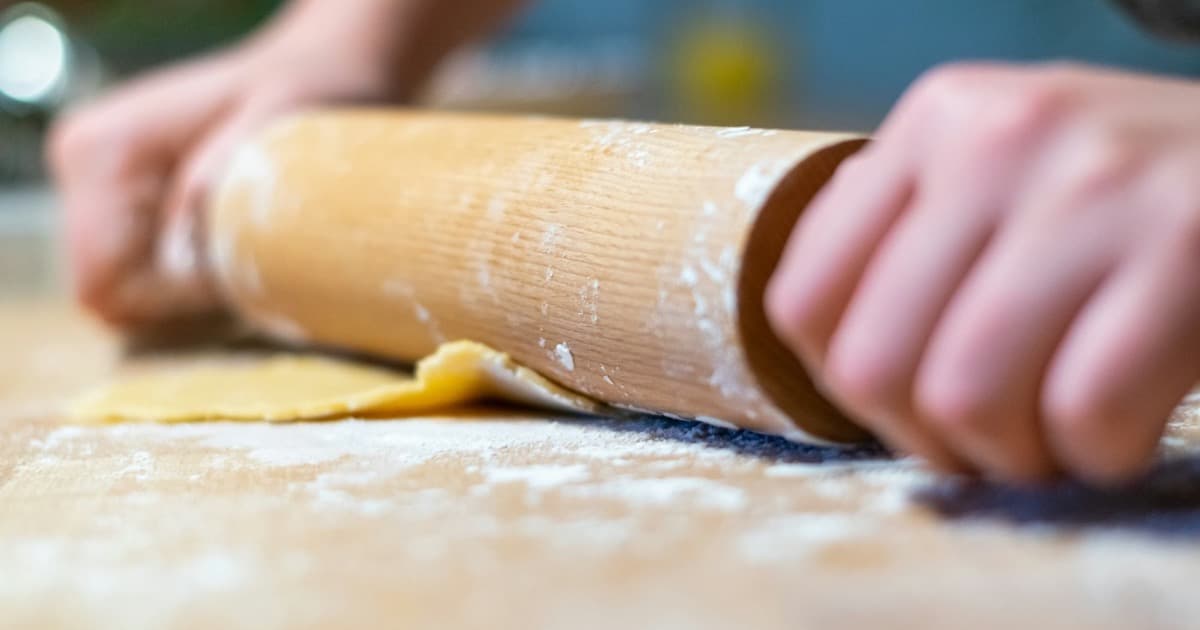
- The mattarello is named. If only the pasta machine is mentioned, you skip the most Bolognese part of the gesture.
- You take the raw pasta home. That is the sign you made it yourself, in quantity, not for show.
- It says what you will make: only tortellini, or tortellini and tagliatelle from the same dough. That changes how long you spend folding.
- The filling: if the Maker prepares it in advance, that is normal and there is a reason for it, which we get to below. But it should be stated.
If you are more interested in the craft behind the counter than in your own hour at the board, we covered that separately in what you actually learn in a sfoglina class.
The three things that will trip you up
Nobody turns up prepared, and that is fine. But knowing in advance where people stumble saves you time, and in a short workshop time is everything.
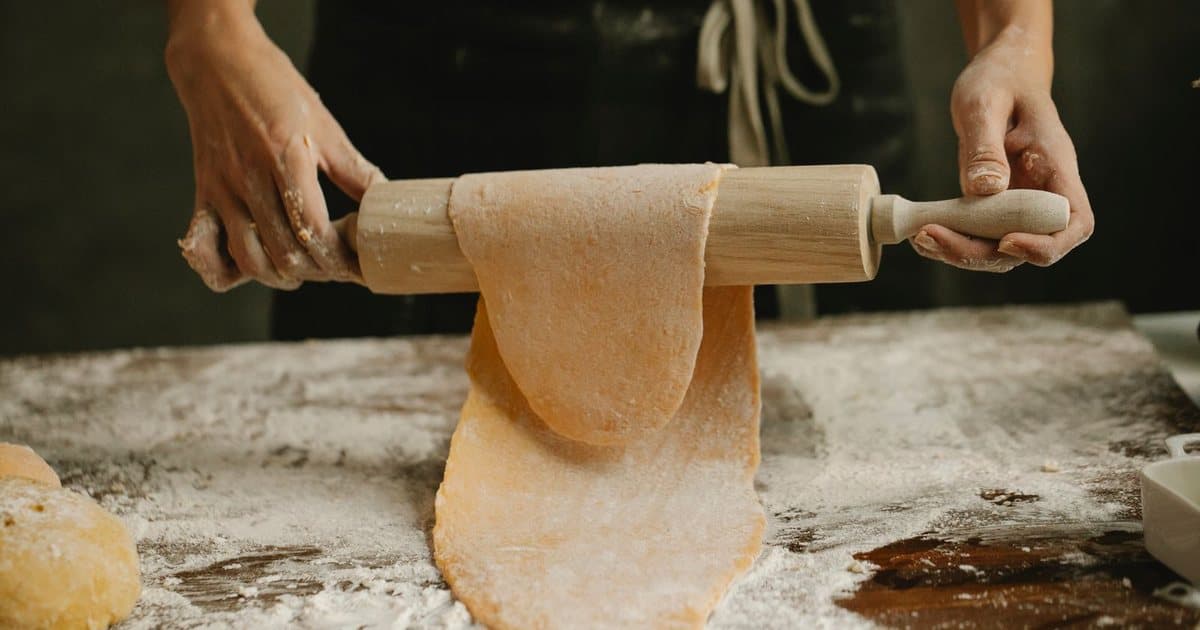
- The thickness. The sheet has to be rolled until you can see your hand through it from underneath. Almost everyone stops before that, because it already looks thin. This is the part that takes the most stamina: you do not push the rolling pin with your arms, you guide it with your body weight, rolling and turning the sheet constantly.
- The moisture. Sheets for tortellini are folded while still fresh. If they dry out, the edges crack and the tortellino opens in the water. That is why you work one piece at a time and keep the rest covered: it is the rule most often forgotten in the rush.
- The fold. A small square, a dot of filling, the triangle fold and the turn around your finger. You learn it by watching, not by listening. The first ten come out crooked, then your hand finds the rhythm and from there it is just a matter of repetition.
What to bring and what to wear
Very little, but that little matters. Apron, tools and ingredients are provided by the Maker: the event page states what is included, so check there before buying anything.
- Short nails and no rings: the dough is worked with palms and fingers, and rings tear it.
- Short or rollable sleeves, and clothes that can handle flour. Some always ends up on you.
- Hair tied back, if it is long.
- A rigid container or a flat tray, if you want to carry the tortellini home without crushing them. Many workshops give you one, but asking beforehand costs nothing.
- A charged phone: a few photos of the steps will genuinely help when you try again at home.
Fresh egg pasta you take away should be cooked the same day or frozen immediately, laid flat on a tray rather than piled up. If you have more hours around the city planned after the class, keep that in mind.
What a few hours cannot teach you
This is worth saying, because it is the reason some reviews sound disappointed. A short workshop does not make you a sfoglina: that is a trade, measured in years at the board. Three things are almost always left out.
- Speed. A sfoglina folds hundreds of tortellini an hour. You will fold far fewer, and that is fine: the hand only comes with repetition.
- The filling from scratch. The filed recipe requires it to rest at least 24 hours before use, so it cannot be made and used in the same lesson. If the Maker hands it to you ready, they are not cutting corners: they are following the recipe.
- The broth. Bolognese tortellini are served in meat broth, which simmers for hours. In a class you taste it, you do not make it.
The measurements you will hear mentioned
At some point during the lesson someone will bring up the numbers, and they are not making them up. The tortellino filling recipe was filed at the Bologna Chamber of Commerce on 7 December 1974 by the Dotta Confraternita del Tortellino together with the Accademia Italiana della Cucina: pork loin, prosciutto, mortadella, Parmigiano Reggiano, egg and nutmeg, with a mandatory rest of at least 24 hours (Bologna chronology, Biblioteca Salaborsa).
In 2008 the sheet, the texture and the shape were filed as well: each finished tortellino weighs about five grams, and the dough indicated by the Confraternita is ten eggs per kilo of flour, that is one egg per hundred grams (the filed recipe). These documents carry no force of law, but they are dated and can be consulted: they give you a reference point, not a verdict on your crooked tortellino.
Who to go with
It works in pairs and it works in groups, for a practical reason: while one person rolls, the other folds, and the rhythm never breaks. For a birthday or a hen party in a workshop you can ask for a dedicated date, so the board is yours and the group sets the pace.
It is also one of the few things that get better in bad weather: you are indoors for hours with your hands busy. If Saturday turns rainy, here are the other indoor options in the city.
How booking works and what you pay
On Handsome the price written on the event page is what you pay: the round figure you see is already everything, nothing is added at checkout. Handsome takes no commission on the workshop takings: the payment goes directly into the Maker's account.
You book with a deposit — 10 euros for group workshops — and pay the balance on site, on the day. Cancellation is free up to 3 days before the event. There is no single price list, because each Maker sets their own: what makes it vary is the duration, how many people are at the table, whether filling and tasting are included, and the venue where you work.
Frequently asked questions
- How long does a tortellini class in Bologna last?
- It depends on the format: workshops that stop at dough, sheet and folding are shorter than those that also include lunch or a tasting in broth. The exact duration is always shown on the event page, along with date, time and location, because the Maker decides it.
- Do I need to know how to cook to take a tortellini class?
- No, and beginners are the most common participants. No experience is needed: you need patience and a willingness to get your hands dirty. Almost everyone's first sheet comes out thick and their first tortellini crooked. The Maker corrects your posture, the flour on the board and the pressure on the rolling pin as you work.
- Do I take home the tortellini I made?
- In most workshops yes, and it is one of the reasons people go. Fresh egg pasta should be cooked the same day or frozen immediately, laid flat rather than piled up. The event page states whether the raw product is included and whether a tasting on site is also part of it.
- What is the difference between a pasta class and a demonstration?
- In a class you have a station, you mix the dough, roll the sheet with a rolling pin and fold your own tortellini. In a demonstration you watch a sfoglina work and taste at the end. To tell which one you are booking, check whether the description mentions a station per participant and pasta to take home.
- Can we do it as a group, or give it as a gift?
- Yes. For birthdays, hen parties or work teams you can request a dedicated date through private events. If it is a gift, the gift card is valid for 12 months on any workshop on the platform and works like a wallet: whoever receives it picks the date, and any leftover credit stays on the card.
Markets in the city and workshops by Makers in the area.
Craft markets and workshops in Bologna