The average Milan weekend lasts two days and is spent in five stops: the Duomo, the Galleria, the Castle, the Navigli, an aperitivo. It is also why so many people go home saying Milan didn't tell them much. The problem isn't the city, it's the itinerary. Milan is where Italian industrial design invented an identity for itself, and that identity isn't in the shop windows downtown: it is in a palace inside a park, in a studio left exactly as it was, in a distillery turned into a museum, and in the hands of people who still build objects.
What follows is a two-day itinerary built on one simple principle: alternate the design you look at with the design you make. Half a day inside a museum, half a day with dirty hands. It holds up for someone arriving by train on Friday evening, and for a Milanese who hasn't set foot in the Triennale in ten years — a far more crowded category than anyone admits over drinks.
The starting point is a stone's throw from the Duomo, and it isn't the Duomo
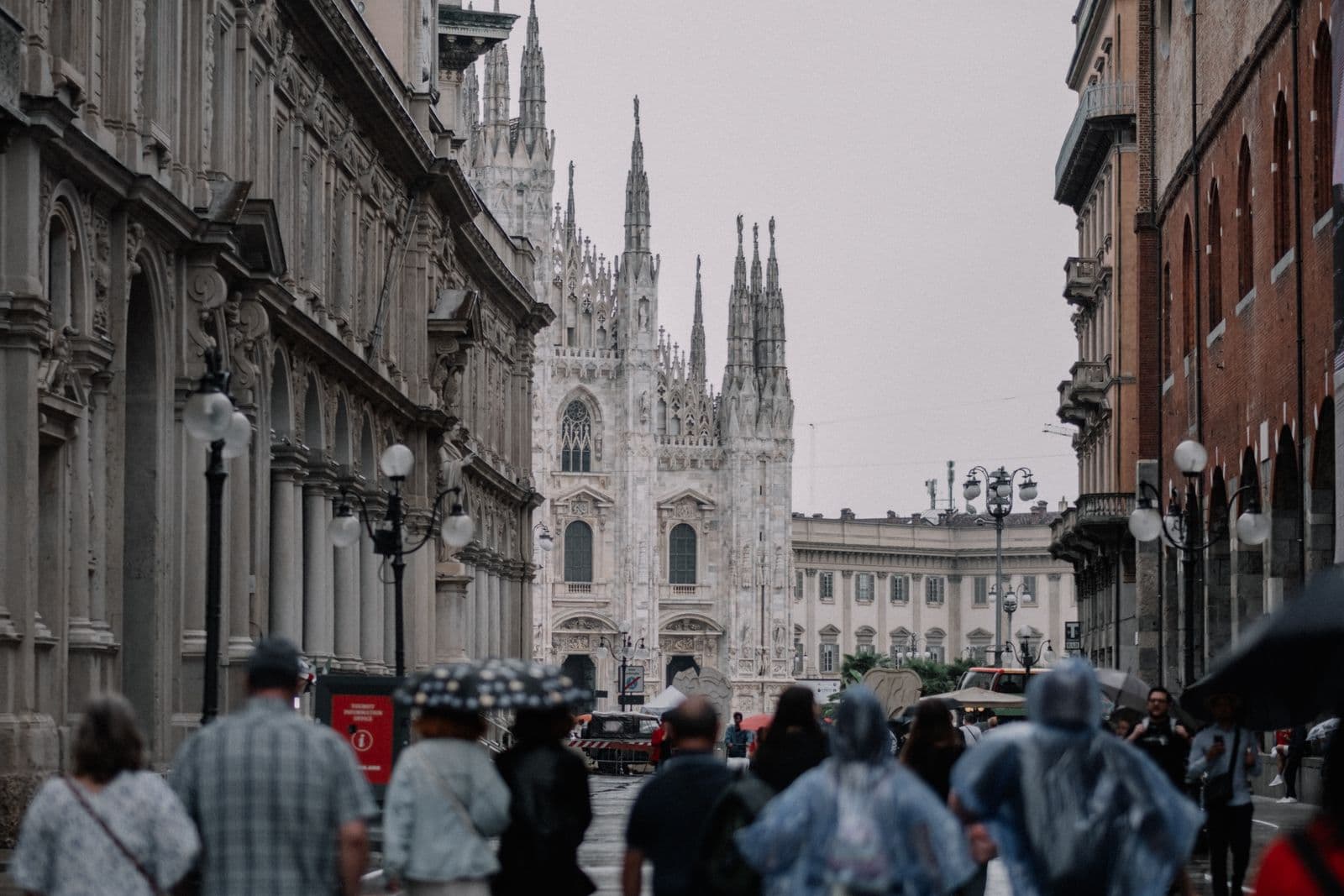
On the corner of Piazza del Duomo and Via Santa Radegonda stands a department store with a novelist's backstory. The name, la Rinascente, was coined by the poet Gabriele D'Annunzio: the company was registered on 27 September 1917, the shop reopened under its new sign in December 1918, and on Christmas night a fire destroyed it. Rebuilt, it was back on Piazza del Duomo in 1921: reborn, as advertised.
The reason this address opens a design weekend, though, is a different one: in 1954, from an idea by Gio Ponti and Alberto Rosselli, it was la Rinascente that established the Compasso d'Oro, the oldest award dedicated to Italian design. The department store ran the first four editions, from 1954 to 1957; from 1959 the organisation of the award passed to ADI, the Italian industrial design association, which took full ownership of it in 1967. Hold on to that date, 1954: it is the thread running through both days.
Saturday morning: the Triennale, where Italian design has a home
Start in Parco Sempione, inside the Palazzo dell'Arte. Giovanni Muzio designed it and it was built between the autumn of 1931 and the spring of 1933, thanks to a donation of five million lire made to the City of Milan in 1930 by Antonio Bernocchi together with his brothers Michele and Andrea. In 1933 the exhibition, until then held in Monza, moved here and switched to a three-yearly cycle: hence the name.
Inside is the Museo del Design Italiano, opened on 8 April 2019 in the space known as the Curva: roughly 1,300 square metres drawing on the Triennale's collection of around 1,600 objects. The display is not fixed, it is periodically re-read by new curatorial projects: anyone who came three years ago will not see the same thing. A good hour and a half is the right amount of time: you cross the collection without rushing and the morning stays alive.
Then Achille Castiglioni's studio, in Piazza Castello
A few minutes' walk away, at Piazza Castello 27, is the room that explains how an object comes into being better than any museum can. It is the studio where Achille Castiglioni worked from 1962 until 2002, the year he died, now looked after by the Fondazione Achille Castiglioni, established on 14 December 2011. You can only visit with a guide and only by appointment: booking isn't advice here, it is the condition for getting in.
The tour takes in the rooms of the studio: prototypes and models, technical drawings, the anonymous objects Castiglioni collected and took into his lectures at the Milan and Turin polytechnics, the meeting room. The anonymous objects are the twist: ordinary things, unsigned, used by a master to explain that designing isn't adding a style, it is solving a problem with what you have.
Saturday afternoon: the half day with your hands
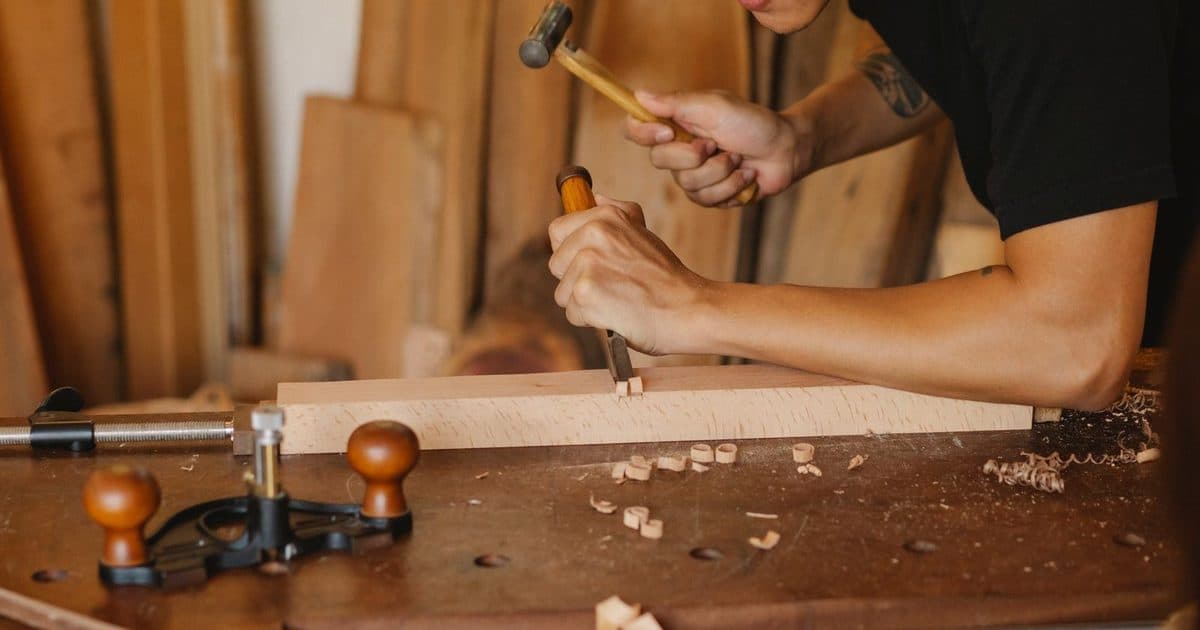
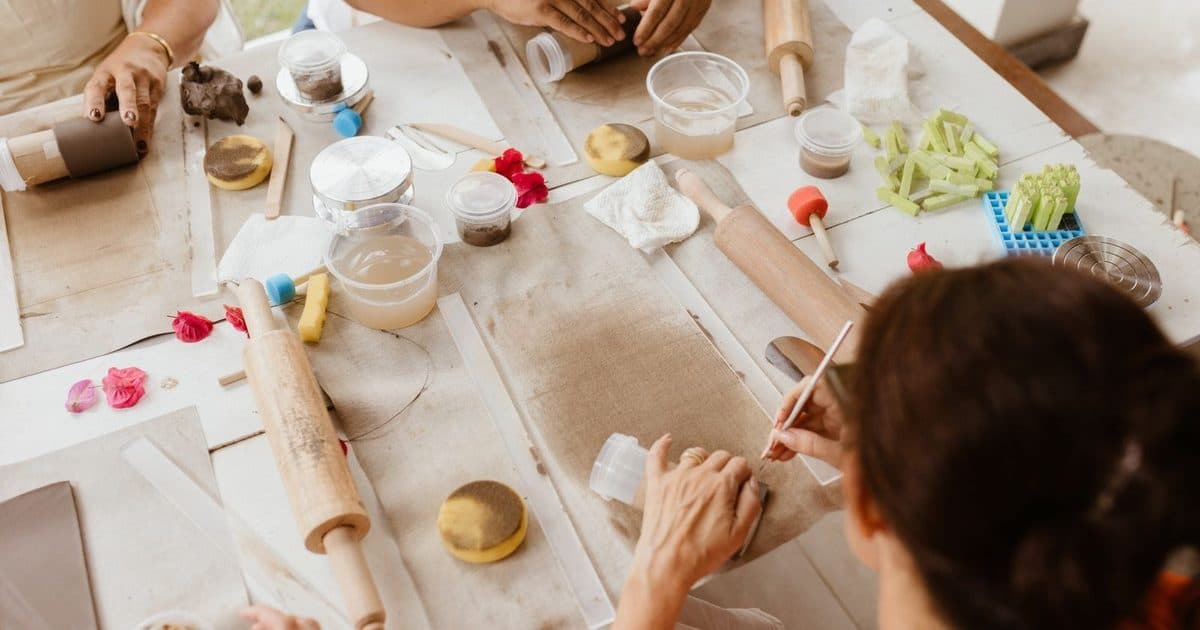
After a morning of objects behind glass, the afternoon exists to flip the relationship. A craft workshop usually runs two or three hours, which makes it compatible with an already full day: a wheel, a loom, a carpenter's bench, a needle, shears, clay. It isn't a course, it is a guided taste of the trade, where someone who does this for a living puts a tool in your hand and lets you get it wrong safely.
Before booking, the questions worth asking are always the same:
- how many people per session: under eight and the Maker can genuinely follow you, over twelve and it turns into a demonstration
- whether materials are included in the price or charged separately
- whether you take the piece home the same day: with ceramics almost never, because it has to dry and then be fired, so collection slips by weeks
- how long it really lasts, including the opening explanation and the clean-up at the end
- what level is required and the minimum age, if you have children with you
A note of honesty, given that this blog belongs to a workshop platform: on Handsome the classes are published city by city, and Milan is a page to keep an eye on rather than a ready-made certainty. If you don't find the craft you're after today, it is worth checking back later. For the evening: Brera for its lanes and small shops, Isola for courtyards and fewer tourists, the Darsena if you can live with a Saturday crowd.
The page updates whenever a Maker publishes a new date.
See the Milan workshops pageSunday morning: the objects that won the Compasso d'Oro
The ADI Design Museum opened in May 2021 in Piazza Compasso d'Oro, with entrances at Via Ceresio 7 and Via Bramante 42, inside a disused industrial site converted at Porta Volta. The building measures 5,135 square metres in total, around 2,400 of them given over to display, and it holds the Compasso d'Oro Historical Collection: more than 2,300 products and projects awarded or singled out since 1954. Opening hours follow the expansion works under way, so check them on the official website before you go.
The contrast with the Triennale is sharp, and it is exactly why both belong in the same weekend. The Triennale tells a story and reinterprets it; ADI puts verdicts on show: lamps, typewriters, chairs, packaging, trains and teaspoons a jury judged to be resolved. Walking through them decade after decade is the quickest way to grasp why in this country the word progetto means something rather different from the word style.
If you land on the last Sunday of the month, change the plan
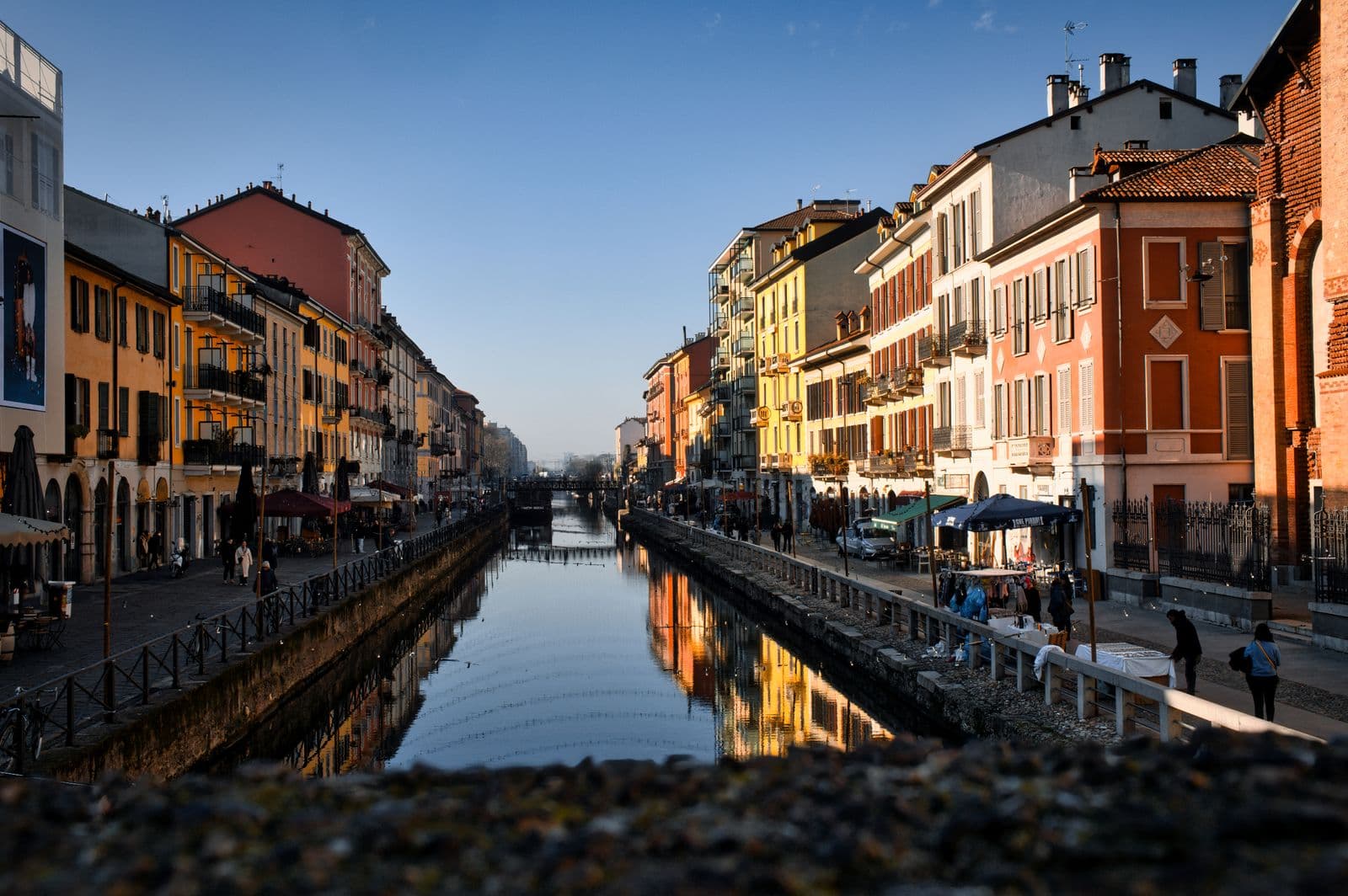
On the last Sunday of every month, along the Alzaia Naviglio Grande, the Associazione Naviglio Grande runs its antiques market: nearly two kilometres of stalls from Viale Gorizia to the Via Valenza bridge, more than 380 exhibitors and two side streets, Via Corsico and Via Paoli, given over to vintage. Furniture, clocks, porcelain, silver, jewellery, books, glass, radios, toys.
This isn't a folkloric interlude, it is the exact reverse of the museum: what sits behind a case at ADI you can turn over in your fingers here, open it, weigh it, maybe buy it. Go early, because by mid-morning the towpath becomes a single corridor.
Sunday afternoon: the factories Milan reopened
Milan has an under-told speciality: it doesn't demolish its factories, it rewrites them. Fondazione Prada in Largo Isarco, opened on 9 May 2015 to a design by Rem Koolhaas's OMA, is the most conspicuous proof: 19,000 square metres carved out of a 1910 distillery, where seven existing buildings coexist with three new structures, Podium, Cinema and Torre. The piece everyone recognises is the Haunted House, four storeys clad in 24-carat gold leaf.
The free alternative, on the other side of town, is Pirelli HangarBicocca, at Via Chiese 2: admission is free and the exhibition spaces open from Thursday to Sunday. The most famous permanent installation is Anselm Kiefer's "The Seven Heavenly Palaces": seven reinforced-concrete towers, ninety tonnes each, between 13 and 19 metres tall, built using the corner modules of shipping containers as construction elements. The name comes from the Sefer Hechalot, the Book of Palaces, a Hebrew treatise from the fifth or sixth century AD.
A third option: the Tortona district, grown up inside the former Ansaldo works, the disused steel plant the City of Milan bought and regenerated from the early 1990s. Here MUDEC, the Museum of Cultures designed by David Chipperfield, opened in 2015, the year of the Expo; a little further along, at Via Bergognone 34, BASE Milano opened in 2016 in converted spaces of the same complex.
Variants: rain, children, only half a day
- With children: the Leonardo da Vinci National Museum of Science and Technology, at Via San Vittore 21, in the former Olivetan monastery of San Vittore al Corpo. Founded on 15 February 1953, it holds around 21,000 objects, is Italy's largest science and technology museum, and runs a series of interactive laboratories built for children and families.
- If you want handmade work from another era: the Bagatti Valsecchi Museum, at Via Gesù 5. In the late nineteenth century the brothers Fausto and Giuseppe turned their own home into an interior inspired by the Lombard Renaissance, with carved furniture, ceramics, glass, antique arms and textiles: craftsmanship inside the setting it was made for.
- If you're interested in how people lived: Villa Necchi Campiglio, at Via Mozart 14, designed by Piero Portaluppi between 1932 and 1935, now a FAI property, with furnishings drawn up to measure.
- If you only have half a day: pick one museum, Triennale or ADI but not both, and keep the other three hours for a hands-on class. The memory that lasts is almost always the second one.
And if you land during Design Week
The Salone del Mobile was born in 1961 to promote Italian furniture. Over time a parallel programme of events spread across the city grew up around it, the Fuorisalone: together they make up Milan Design Week, in April. During those days the city runs at full intensity: installations in courtyards, showrooms thrown open, whole districts transformed.
For a Milanese: how to redo your own city
Living in Milan comes with one advantage and one problem: travel costs nothing, but the museums on your doorstep stay filed under one day. The resident's version is simpler: book the Castiglioni studio a month ahead, because it is the one stop that forces you to fix a date, then build everything else around it. Then add the hands-on class, the part nobody does in their own city and the one with the longest consequences: you leave a museum with a few shots on your phone, you leave a workshop with a lopsided object you made yourself and a realistic sense of how many hours it takes to make a straight one.
Frequently asked questions
- Can this itinerary be done without a car?
- Yes. Every stop is reachable by metro, tram and bus, and some are very close together: from the Triennale to the Castiglioni studio in Piazza Castello is a few minutes on foot. A car in the centre is more of a problem than a solution.
- How long do the Triennale and the ADI Design Museum take?
- An hour and a half each is a realistic estimate. If time is short, choosing one is better than rushing both: the Triennale periodically re-reads its own display, while ADI shows the products awarded or singled out by the Compasso d'Oro from 1954 to today.
- Does it work with children?
- Yes, with one substitution. The National Museum of Science and Technology at Via San Vittore 21 has interactive laboratories and is built for every age. For the hands-on class, ask the Maker about the minimum age: many crafts involve tools younger children can't handle.
- What is the best time of year?
- Almost any time, because most of the itinerary is indoors. The last Sunday of the month adds the antiques market on the Naviglio Grande. April, with Design Week, is the most intense and most expensive week: wonderful if that's what you came for, exhausting if you wanted a quiet weekend.
Filter by city and craft to see what's near you.
Browse all workshops on Handsome