Rome is Italy's city with the most tourists per square kilometer (12 million yearly just in the historic center) and the highest concentration of plastic experiences: 60-minute cooking classes, 'make your own pasta' tours, Colosseum guides selling non-existent workshops. This is a different guide. Five Roman districts where real masters still survive teaching in real ateliers. Curated for authenticity of artisan network, not ease of access.
1. Trastevere — Roman mosaic and gilding
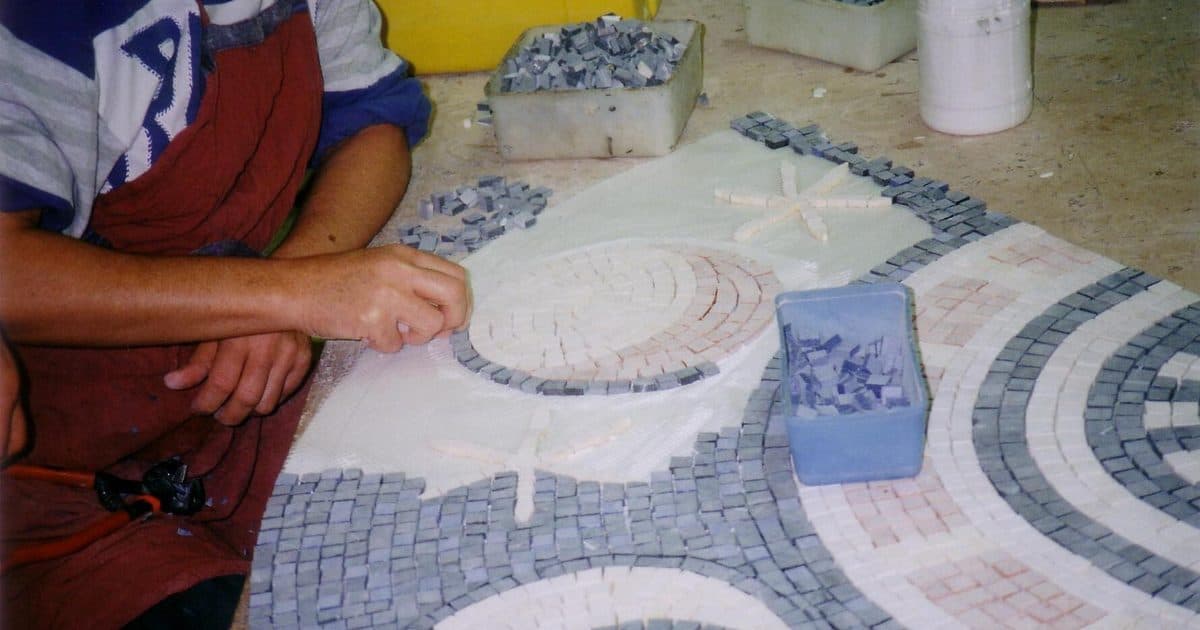
Trastevere has 2,000 years of mosaic (Santa Maria in Trastevere's floors date to the 12th century). Today the district still has 3-4 active mosaic masters teaching the ancient technique: marble or glass tesserae cut by hand, applied on mesh. Workshops last 3-4 hours; you leave with a small mosaic (15x15 cm) of your own. Trastevere is also a zone for gilders (gold leaf on wood, liturgical restoration). Budget €120-200.
2. Monti — Textile and contemporary jewellery
Monti is Rome's most 'Parisian' neighborhood: narrow, intricate, full of new shops reinvesting in ancient techniques. Here you'll find contemporary jewellery workshops (silver casting, ring making), small-loom weaving, natural dyeing. Younger masters (30-50 years old), minimal ateliers, small groups (max 4-6). Budget €100-180.
3. Pigneto — Printmaking, screenprint, traditional tattoo
Pigneto is Rome's emerging creative district since the 2000s. Artisan printmakers, screenprint workshops, traditional tattoo and applied illustration ateliers were born here. 2-3 hour workshops: tote-bag printing, poster screenprint, urban calligraphy lessons. More contemporary than 'traditional Italian' — suitable if you want something non-monumental. Budget €70-130.
4. Testaccio — Roman grandmother cooking + butcher
Testaccio is Rome's meat district (the former slaughterhouse still defines the neighborhood architecture). Here you'll find authentic Roman cooking workshops: cacio e pepe, amatriciana, coda alla vaccinara, abbacchio. 4-5 hour duration with market + cooking + lunch. Some workshops include a butcher's lesson (pajata cutting, Roman meat preparation). Budget €130-200.
5. Garbatella — Tailoring, restoration, artisan furniture
Garbatella is Rome's 1920s working-class neighborhood now hosting a quiet network of niche artisans: tailors still sewing with treadle machines, chair and wood restorers, cabinetmakers fixing 20th-century drawers. 4-5 hour workshops: tailored garment sewing, small wooden object restoration, upholstery lesson. Absolute peace, no tourists, '50s atmosphere. Budget €130-220.
Picking the right district for you
- Looking for ancient tradition and monumental technique → Trastevere (mosaic)
- Want modern jewellery or contemporary textile → Monti
- You're creative, love urban design, no folklore → Pigneto
- You're a foodie wanting real, non-touristy Roman cooking → Testaccio
- Want classic tailoring, furniture restoration, working-class vibe → Garbatella
How to get there
Trastevere and Monti are walkable from the historic center (15-25 min from the Pantheon). Testaccio is metro B (Piramide stop) + 10 min walk. Pigneto is metro C (Pigneto stop) or tram 5/14 from Termini. Garbatella is metro B (Garbatella stop) + 5 min walk. All zones are safe day and night.
When to go
Rome has year-round tourism, but secret districts have different cycles: April-June and September-October are ideal (mild climate, ateliers open). July-August workshops empty out: some close for holidays, others stay open with slightly discounted prices for client drain. December-January is OK in heated ateliers but some historic buildings (Trastevere, Monti) are cold.
Frequently asked questions
- Is central Rome chaotic for a workshop?
- The five districts listed are NOT in the chaotic center (Pantheon, Trevi, Spanish Steps). Trastevere and Monti have narrow streets but shops are in quiet courtyards. Pigneto, Testaccio and Garbatella are outside the historic center, with very few tourists.
- How much does an authentic Rome workshop cost on average?
- €70-220 per person for 2-5 hours, materials included. Pigneto is cheapest (€70-130), Testaccio and Garbatella in the middle (€130-220), Trastevere highest for rare disciplines like mosaic (€120-200).
- Can I book a Rome workshop the day I arrive?
- Only in less touristy districts (Pigneto, Garbatella). Trastevere and Monti sell out quickly in high season. Book 2-3 days ahead.
- Do Roman masters speak English?
- Trastevere and Monti yes, fluent. Testaccio varies (some Italian only). Pigneto and Garbatella: 50/50. On Handsome filter by 'language: English'.
Explore all Rome workshops
Mosaic in Trastevere, jewellery in Monti, cooking in Testaccio, screenprint in Pigneto, restoration in Garbatella.
Verified masters, real ateliers. €10 deposit, balance on-site.
Browse Rome workshops