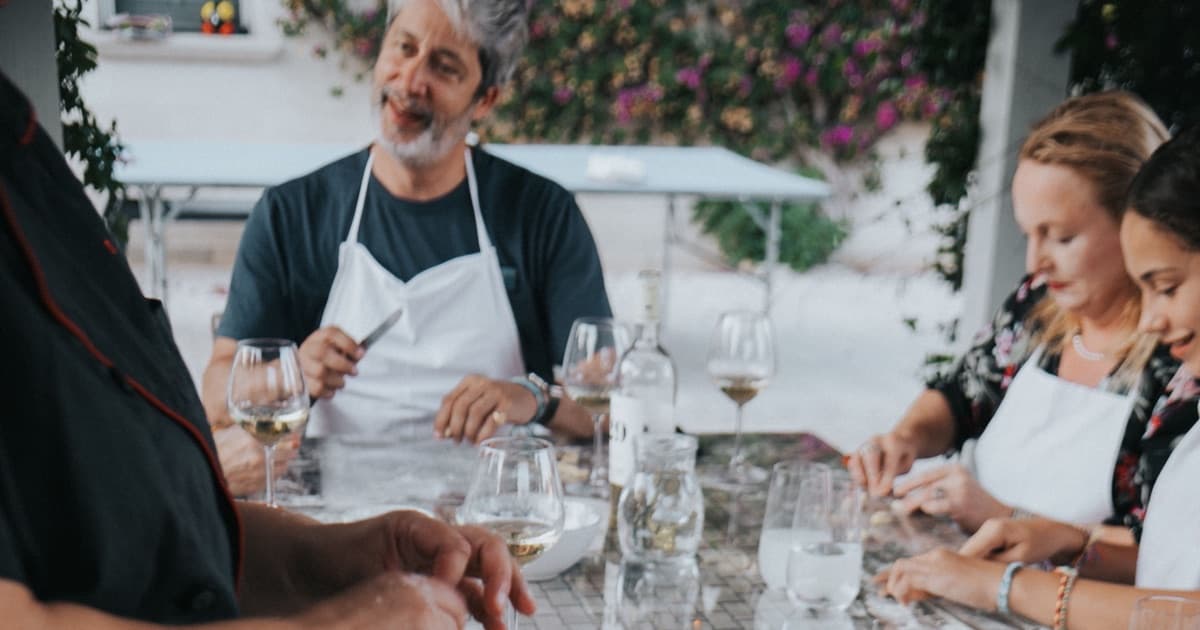
To thank its clients, a company usually chooses between dinner at a restaurant, with the long table and the speech halfway through, and a meeting at the stand during a trade fair, squeezed between appointments. Both work, but they share the same limit: the client stays a client, the supplier stays a supplier, and the conversation soon drifts back to price lists.
A weeknight in a craft workshop, organised by you and away from the fairs, shifts the roles for a few hours: people who usually meet on opposite sides of a desk find themselves at the same bench, their hands busy with the same thing. Here is how to prepare it, from the invitations to the day after.
Why away from the trade fairs
At a fair a client has ten appointments a day and their mind on the next meeting: an event held on those days competes with everything else. If fair weeks remain your opportunity, there is a guide on how to make the most of them in Bologna. Here we look at the evening you host yourselves, on an ordinary Tuesday or Thursday, when you are the only thing in your guests' diary.
Who to invite
Several audiences can share the same evening:
- Key clients: not all of them, the ones you want to build something with over the next few years.
- Long-standing suppliers: whoever has delivered your raw material for years is rarely thanked in public. Inviting them alongside your clients is already a message.
- Supply chain partners: subcontractors, carriers, engineering firms, people your clients know only as a name at the bottom of an email.
- Agents: they bring the clients from their areas and, at the bench, they are the ones who know them best.
- On your side: the owner, the account managers who look after the guests, and someone from purchasing or production who talks to suppliers every day.
As a rule of thumb, one host for every three or four guests: nobody is left alone at a table, and the evening does not feel like an internal meeting.
Invitations and RSVPs
- Date first, invitation second. With the date secured, three or four weeks' notice is enough for a weeknight.
- A phone call first, then the written invitation, with the date, time, address and two lines on what you will be doing. If there is clay to work or dough to knead, say so: anyone arriving in a jacket wants to know.
- A deadline for replies. The form asks for the exact number of participants, and materials and workstations are prepared for that number: if it changes, tell your contact at Handsome straight away.
- Diets and accessibility with the yes, to be written in the notes of the request or, if they come in later, sent to your contact.
The tables: mixing hosts and guests
The seating plan shapes the evening more than the technique does: if the hosts all sit together at the far end of the room, you have organised a dinner with an activity in the middle.
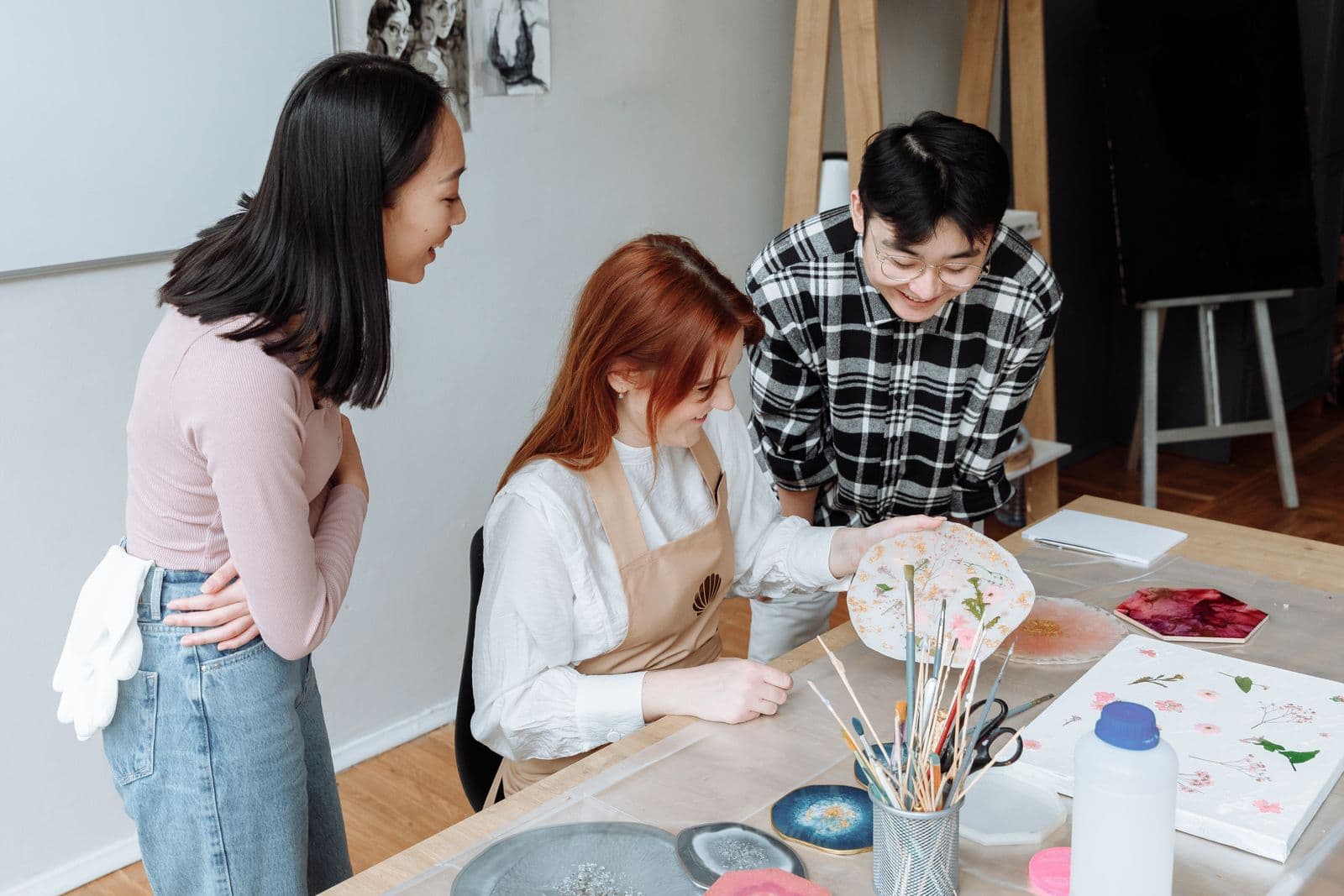
- The owner and account managers at the bench with their own clients, spread across the tables. You work side by side, not facing each other as in a meeting.
- Clients and suppliers at the same table. The client who buys the finished product next to the person who supplies your raw material: the supply chain behind what you sell becomes visible, without a single slide.
- Agents next to clients from other areas, so they meet new people.
- Competitors at different tables, and place cards with names. Two clients fighting over the same market should not share a bench, and nobody should have to look for a seat.
A technique that embarrasses nobody
Among colleagues you can laugh at a piece that came out crooked; in front of an important client or a supplier you barely know, you cannot. That is why the technique is chosen by one clear criterion: lots of watching, little doing, and the piece comes out well. The Maker shows the gesture and explains it, and the guest does the satisfying part without any risk.
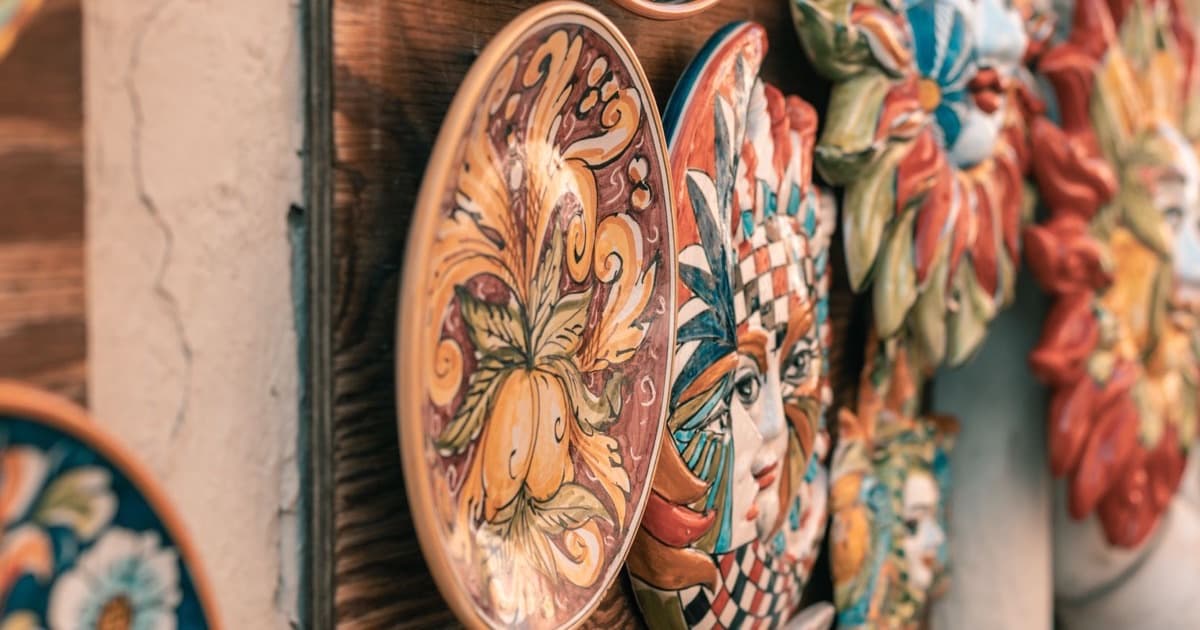
- Ceramics: decorating or glazing a piece that has already been shaped, a tile, a bowl, a plate, rather than starting from clay on the wheel. You work seated and calmly, and the result depends little on each person's skill. If that is what you want, say so in the notes.
- Cooking: pasta sheets rolled out together and eaten at the end: the most convivial way to close.
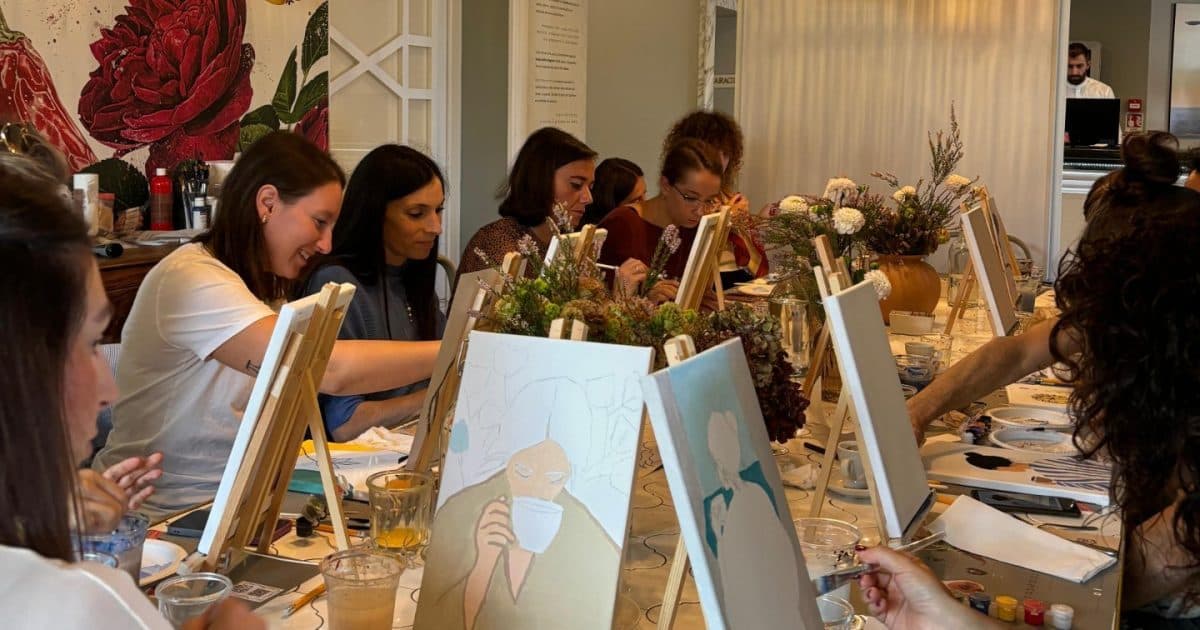
- Painting and drawing: a short guided piece on a simple subject, useful when space is tight. It is not one of the options in the form: write it in the notes or choose «Surprise me».
The form also lists weaving, leather, wood, glass blowing and jewellery, but not every area has workshops that offer them: in our reply we tell you what can really be done where you are. A wider comparison of objectives and techniques is in the guide to a company event in a workshop in Milan.
The host's role: five minutes, no selling
The owner opens the evening with a five-minute welcome: why you are there, who is in the room, a thank you to clients and suppliers. Then the Maker takes over. No sales presentation, no slides, no catalogue on the table: the value of the evening lies precisely in the fact that you are not selling anything.
- Account managers work at the bench, they do not wander round the room with a phone in their hand.
- The new product waits for the visit in the weeks that follow.
- Photos only with the guests' consent, and hands and pieces rather than faces.
- A toast at the end. If you would like to close with drinks or a dinner, write it in the notes of the request: in our reply we tell you whether it can be done in the same space.
The local craft as the story of the evening
For guests coming from elsewhere, the evening can also tell the story of the place where you work. Where there is a traditional craft, start there; otherwise, start from the technique the workshops in your area already offer. A few examples:
- Ceramics in Romagna: in Faenza, home of the International Museum of Ceramics, and in the province of Rimini, between Rimini and Misano Adriatico. To get an idea, see the workshops in the province of Rimini.
- Ceramics workshops elsewhere too: between Pesaro and Gradara, in Zola Predosa near Bologna, in Mestre, in the Verona area and in Sicily, in Santo Stefano di Camastra.
- Cooking and textiles: around Novara there are cooking workshops between Borgomanero and Cressa and, in Borgomanero, textile ones too.
If your company works with a material close to one of these techniques, mention it in the notes: we take it into account in the proposal.
After the evening: the piece that comes back
This is where a workshop has an advantage a dinner does not. Ceramics has to be fired, and the piece comes back a few weeks later: and that is a good reason to meet again. Once the pieces have been collected, the account manager takes the client's piece to them in person, or invites them to collect it at your company, with a visit to production. Suppliers get theirs at the next meeting.
- Ask how the fired pieces come back and decide in advance who collects them for everyone, and write it in the notes, so that weeks later nobody is hunting for their bowl.
- The next day, a short message: thank you, a photo of the table if the guests agreed, and a note that the piece is on its way.
- Then the visit. When the piece comes back, you pick up from there: business is for that occasion, not for the evening.
With cooking or painting, on the other hand, the evening ends there: the pasta is eaten together, the painting goes home. The reason to meet again is up to you, with a photo of the evening or an invitation to the next one.
How the request, proposal and payment work
- You fill in the request for companies: objective «Client event», number of people, at least two dates (up to four), time slot, city, indicative budget per person, type of experience and whether you already have a venue. If you do not, we find one together with the Maker.
- We reply within 24 hours and you receive the proposal within 2 working days: what you will do, date and time, number of people, what everyone takes home and the price per person, all included: materials, Maker and organisation. No commitment until you confirm.
- To secure the date you pay online the amount shown in the proposal, with your VAT number and SDI code (or PEC), and you receive the electronic invoice.
- For the whole organisation you have a single point of contact: Handsome. We take care of the Maker, the materials and the timing; you look after your guests.
If the evening takes place in the workshop itself, the guide to the craft workshop as a venue in Florence explains what to check first; for the items in the proposal, see how much a creative team building costs.
Frequently asked questions
- How many people do you need for a client event in a workshop?
- The request goes from 2 to 500 people. A relationship evening works even with around ten guests; with larger numbers, in our reply we tell you what can be done and where.
- Can we hold it at our own premises?
- Yes: in the form you state that you have a venue. You need a large, clear space, such as a meeting room or the canteen. If you would rather leave the office, there is the Maker's workshop, or we find a venue together with the Maker.
- How much does it cost?
- The proposal shows a price per person, all included: materials, Maker and organisation. In the form you choose an indicative budget band per person (40-60, 60-80, 80-120 or over 120 euros) and the proposal starts from there. To secure the date you pay online the amount shown and receive the electronic invoice. If you would also like drinks or a dinner, write it in the notes: in our reply we tell you whether it can be done.
- How far ahead should we ask?
- We reply within 24 hours and the proposal arrives within 2 working days, but it is worth starting at least six weeks ahead, to secure the date and send invitations calmly. For an end-of-year evening, ask between October and mid-November: the best December dates go quickly.
Objective «Client event», people, two dates, city and indicative budget: we reply within 24 hours and the proposal arrives within 2 working days.
Request a proposal for your client event