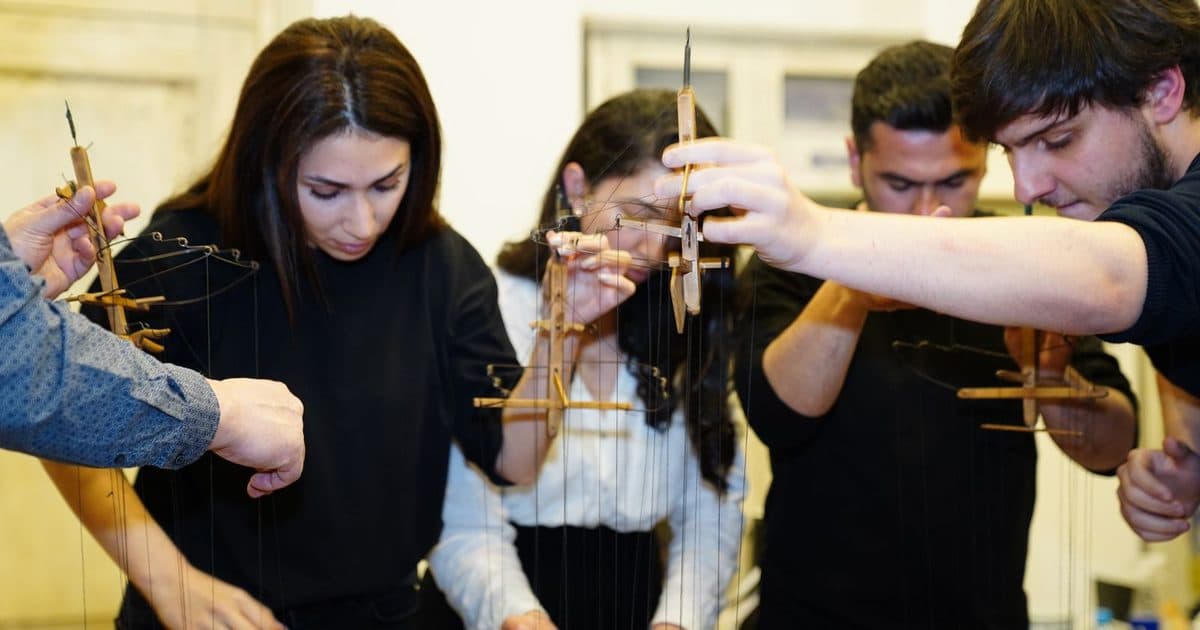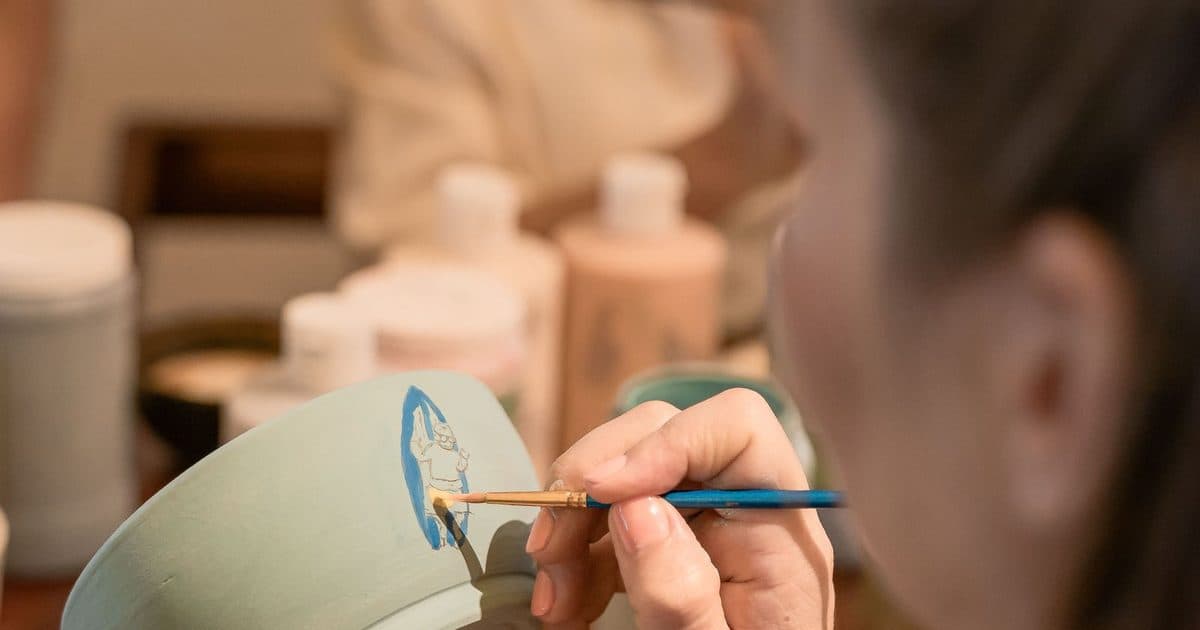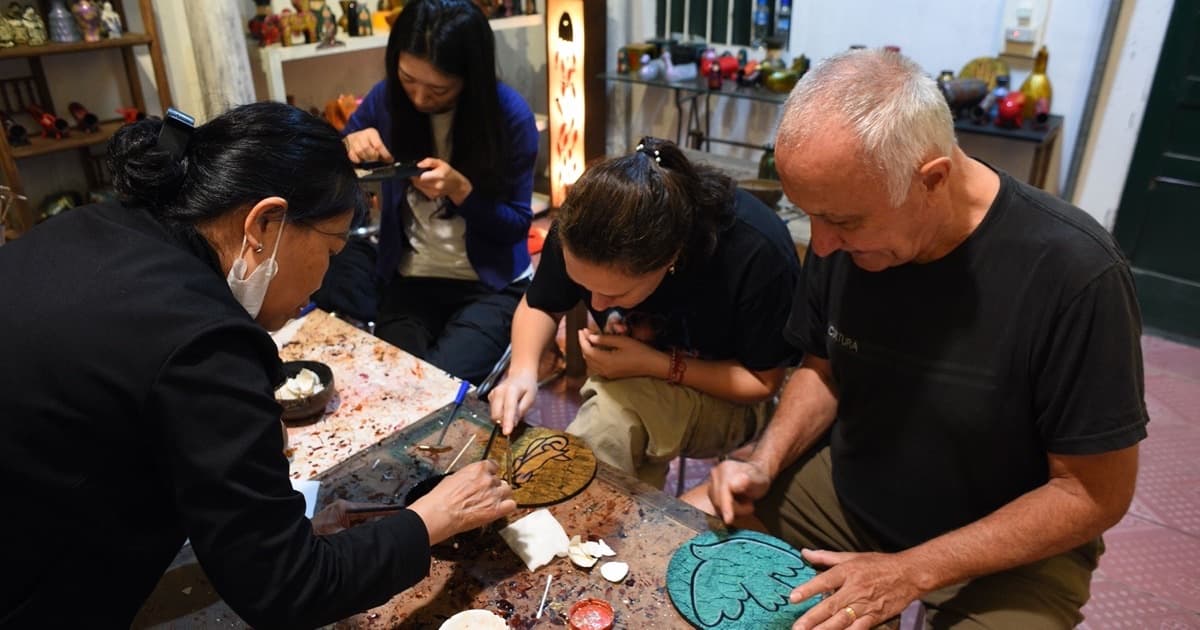
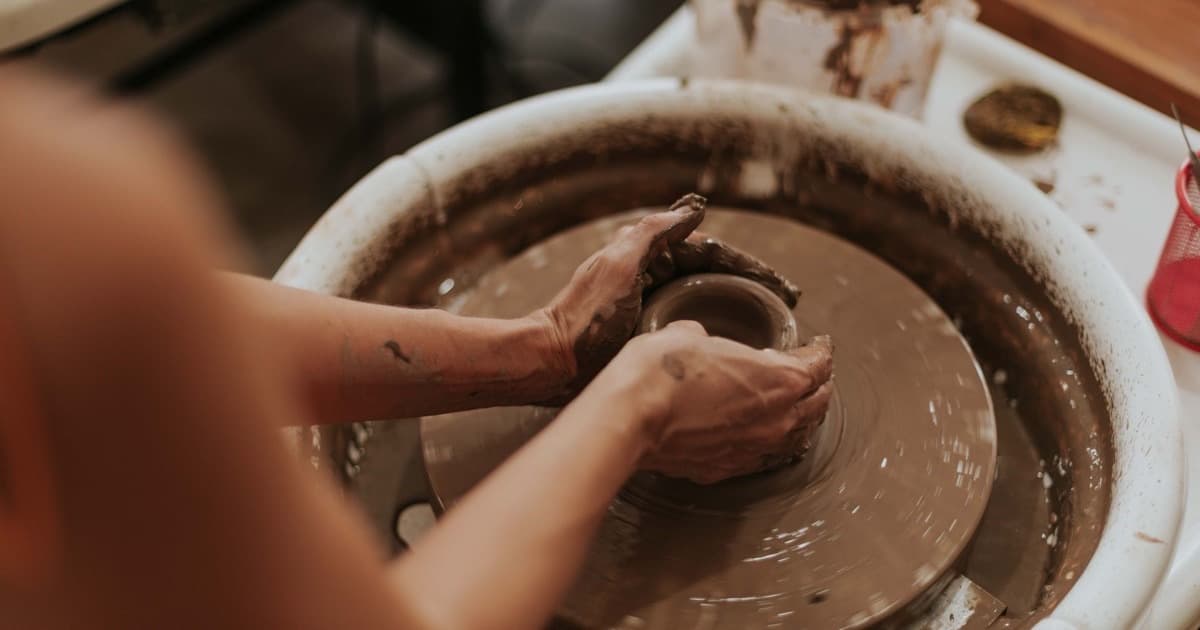
A craft workshop becomes experiential training, and not just team building, when three things are in place: a learning objective stated beforehand, a craft that makes visible the very behaviour you want to work on, and a debriefing led by someone from the company. If one is missing, it stays a pleasant time together: perfectly fine, but something else.
To put it honestly: half a day in a workshop does not teach anyone to give feedback or to handle mistakes. What it does is smaller and more useful: in a few hours and in front of everyone, it puts on the table things that in the office are spread over weeks. The change, if it comes, comes afterwards, back at the desk.
Training or team building: where the line is
The same ceramics session can be one or the other: what changes is what happens before and after. Team building has a relationship goal; training has a goal about a work behaviour, which is observed and discussed. Three questions to work out what you are organising:
- Can you say in one sentence what you want to train? «Working better together» is not enough; «how the team asks for help when it is struggling» is.
- Is someone from the company observing during the workshop? Not to judge, but to have precise facts to bring up afterwards.
- Is there real time for the debriefing? Not the last ten minutes, with everyone looking at the clock.
If the answer to any of them is no, you are organising team building, and it is right to call it that. For that case there are the guide to creative team building for HR and the comparison between craft workshop, escape room and cooking class.
What a craft makes visible
In the office a skipped step is discovered weeks later; at the workbench you see it within minutes. That is why a craft lends itself to experiential training for employees and managers: soft skills become actions everyone has seen.
- A step-by-step process you cannot skip: clay is wedged before it is shaped, wood is measured before it is cut. Anyone who rushes a step notices straight away.
- A mistake you can see and recover from: a crooked piece is right there, in front of everyone. You learn to say so, to ask and to fix it, or to start again.
- Timings that cannot be squeezed: clay has to dry, glue has to set, dough has to rest. No urgency makes them shorter.
- A quality standard: the Maker knows what a well-made piece looks like and says so. It is an outside reference, not something you negotiate in a meeting.
- Feedback from someone who knows how: short, concrete corrections, about the action and not the person.
- Instructions to pass on to a colleague: whoever has understood a step explains it to whoever is behind, and discovers how hard it is to explain well.
- Working within a constraint: the materials, tools and time are what they are. Creativity here means solving a problem within a limit.
Which technique for which objective
Each technique trains something different. It is not a rule, it is a starting point.
Ceramics: patience and dealing with mistakes
With clay almost everyone gets the first attempts wrong: the piece bends, slumps, has to be reworked. It is useful for talking about how the group treats mistakes, including with managers, who rarely get things wrong in front of colleagues. The work can be hand-building or slab work, sitting at the table; not every workshop has a potter's wheel, and the wheel requires a particular posture: if you are interested, say so in the notes and the proposal will tell you whether it can be done.
Wood: measurement and precision
In woodwork you measure twice and cut once: a millimetre wrong at the start shows at assembly. It works with technical, quality or project teams, for talking about specifications, checks and who verifies what before passing the work on.
Cooking: coordinating in shifts
In a kitchen people work in parallel: one makes the dough, one the filling, one the cooking, and each person's timing depends on the others'. It works well for people whose work is all about handovers: shifts, departments, sales and production. Diets and allergies go in the notes.
Weaving: rhythm and pattern
Weaving follows a pattern: a wrong pass shows a few rows later, when going back costs more. It trains rhythm, attention and reading instructions: useful for people who work on repeated processes, where quality means consistency.
Not every technique is available in every area. Ceramics is almost everywhere; for wood, cooking or weaving the proposal tells you what can really be done in your city. In the form you can choose several techniques, or «Surprise me». To get an idea of a session, have a look at the scheduled ceramics workshops.
Three roles, not one
- The company (HR, head of training or in-house trainer): states the objective beforehand, observes during the session, leads the debriefing. The proposal covers the Maker, the materials and the organisation, not a trainer or a facilitator, and that makes sense: the people who work there are the ones who know the context.
- The Maker: leads the craft part. Explains the technique, shows the action, corrects. They are not a coach: they are asked to teach their craft well, which is exactly the part you need.
- Handsome: chooses the right Maker, takes care of materials and timing, finds the space together with the Maker if you do not have one, and is your single point of contact.
Write the learning objective in one sentence in the notes of the request: it helps to choose the technique. A variation, such as explaining the technique to just one person per table who then passes it on to colleagues, also goes there: if it can be done, it is agreed beforehand and not on the day. And tell participants there will be a debriefing: nobody grades the pieces, nobody grades the people.
Half a day with a debriefing: a sample schedule
A format that works is half a day: morning (9 am to 1 pm) or afternoon (2 to 6 pm), as in the slots of the form. The schedule is there to adapt; the length of the workshop is given in the proposal.
- Opening, with the trainer: a few minutes. Why you are there, what will be observed, nobody is being assessed.
- Workshop, with the Maker: the longest part. Demonstration, first attempt, corrections, second attempt. Whoever is observing notes precise moments, not impressions.
- Break: hands washed, pieces on the table, where everyone can see them.
- Debriefing, with the trainer: first the facts from the table, then the bridge to work.
- Close: everyone writes down one thing they will try to do differently the following week.
On your own premises the debriefing is simple. If the workshop is at the Maker's studio, ask in the notes whether you can stay on to talk, or plan for a room nearby or a return to the office.
The debriefing questions
The workshop covers only the first step of David Kolb's experiential learning cycle, concrete experience. Reflective observation and abstract conceptualisation happen in the debriefing; active experimentation starts back at work. Some questions, from the facts to the job:
- «When the piece was not coming out right, what did you do: ask, keep trying, start again?»
- «Which step would you have liked to skip? Where does the same thing happen in our work?»
- «What were the Maker's corrections like? What made them easy, or hard, to accept?»
- «If you explained a step to a colleague: what was hard to explain?»
- «Which constraint annoyed you, and which one helped you decide?»
Two rules: start from what happened at the table, not from theory, and finish with something concrete. More than a creativity course for companies, it is a way to let the group see how it works.
How the request, the proposal and payment work
- You fill in the request for companies: people (from 2 to 500), two to four dates, city, indicative budget per person, technique and the objective «Creative training». In the notes, the learning objective and the space for the debriefing.
- Within 24 hours we reply and within 2 working days you receive the proposal: what you will do, date and time, number of people, what you take home and price per person, all-inclusive: materials, Maker and organisation. No commitment until you confirm.
- To secure the date you pay online the amount shown in the proposal, with your VAT number and SDI code (or PEC), and you receive the electronic invoice.
- You have a single point of contact for the whole organisation: Handsome. We take care of the Maker, the materials and the timing; you take care of the objective and the debriefing.
On price there is the guide on how to read a quote; what the research says about team building, if you need it to convince management, is in the article on creative team building in Milan.
Frequently asked questions
- Does Handsome provide a trainer or a facilitator?
- The proposal covers the Maker, who leads the craft part, the materials and the organisation; a trainer or facilitator is not included. The objective and the debriefing stay with the company: HR, the head of training or an in-house trainer.
- How many people does it work for?
- The request goes from 2 to 500 people. For training, whoever observes must be able to follow every table: with a large group you need more observers, or it is better to split it.
- How much does it cost?
- The proposal gives a price per person, all-inclusive: materials, Maker and organisation. In the form you choose an indicative budget band per person (40-60, 60-80, 80-120 or over 120 euros) and the proposal starts from there.
- Can we hold it on our premises?
- Yes: in a meeting room, the canteen or a large clear space, where the debriefing can follow without moving. Otherwise you go to the Maker's studio, or to a venue we find together with the Maker. For production areas or warehouses, check first with your health and safety officer.
People, two dates, city and an indicative budget: we reply within 24 hours and the proposal arrives within 2 working days.
Request a training proposal for your team