In many companies January is kick-off month: the results of the year just closed, the goals for the new one, who owns what. It is often a morning, or a whole day, of slides in a meeting room, and the moment to be together comes at the very end, when everyone's attention has already run out.
A kick-off works better if you treat it as an event in its own right, in two halves: a short plenary session in the morning on the year's goals and an afternoon in a workshop with a Maker. In the afternoon the same people who listened to numbers and priorities work side by side on something nobody already knows how to do. It is not the workshop tacked on after hours of presentations, one of the mistakes that keep coming back in company events: it is half the day, with its own time and its own space.
Why January (and February) is a good time
- The calendar is freer. December is full of Christmas dinners and parties; after the holidays, workshops too usually have more free dates.
- You stay indoors. With the cold and the short days, an outdoor activity is a bet on the weather. A workshop is not: you work somewhere warm and you do not need a plan B.
- Everyone starts again together. After the holiday break, a shared moment at the start of the year needs no excuse.
- The goals are fresh. Budget and priorities have just been decided: the plenary has something concrete to say, and the afternoon puts the people who will work on them at the same table.
Plenary in the morning, workshop in the afternoon
The logic is simple: heads in the morning, when attention is at its fullest, and hands in the afternoon, when sitting and listening gets harder. It also forces you to keep the plenary short: two well-prepared hours are worth more than a whole day of presentations.
A sample agenda
- 9:00-9:30: arrivals and coffee.
- 9:30-11:30: plenary. The closed year in a few numbers, the goals for the new one, who owns them. Ten minutes of questions at the end, no more.
- 11:30-12:30: small groups on the goals or open questions with management. You can also skip it.
- 12:30-14:00: lunch.
- From 14:00: workshop. The proposal sets the length: as a reference, people usually think in terms of two or three hours.
- Late afternoon: a short word from whoever leads the company or the team, and anyone who wants to stays on for a drink.
In the request, under time slot, choose «Afternoon (2 pm - 6 pm)» and in the notes say that there is a plenary in the morning and where it takes place. That way whoever prepares the proposal knows when the group is free and where it is coming from.
Four tips so the workshop does not become an afterthought
- The morning ends on time. If the plenary overruns, it is the workshop that pays: whoever presents knows that lunch is at 12:30, and any remaining questions are collected for later.
- Change room, or better still, change place. The workshop in the slide room, with the chairs just pushed aside, does not help. Another room, the canteen or the Maker's workshop mark the shift.
- No slides in the afternoon. No «quick update» halfway through the workshop, no laptop open on the table. If something needs saying, it gets said at the end.
- Tables are planned around the goals. Seat together people who will work on the same project this year but do not usually cross paths.
Where to hold it
If the plenary is held at your offices, the workshop can stay there too, in another space: a large meeting room, the canteen, a wide and uncluttered area. It is the most convenient format for large groups. For a warehouse or a production area, check first with your health and safety officer.
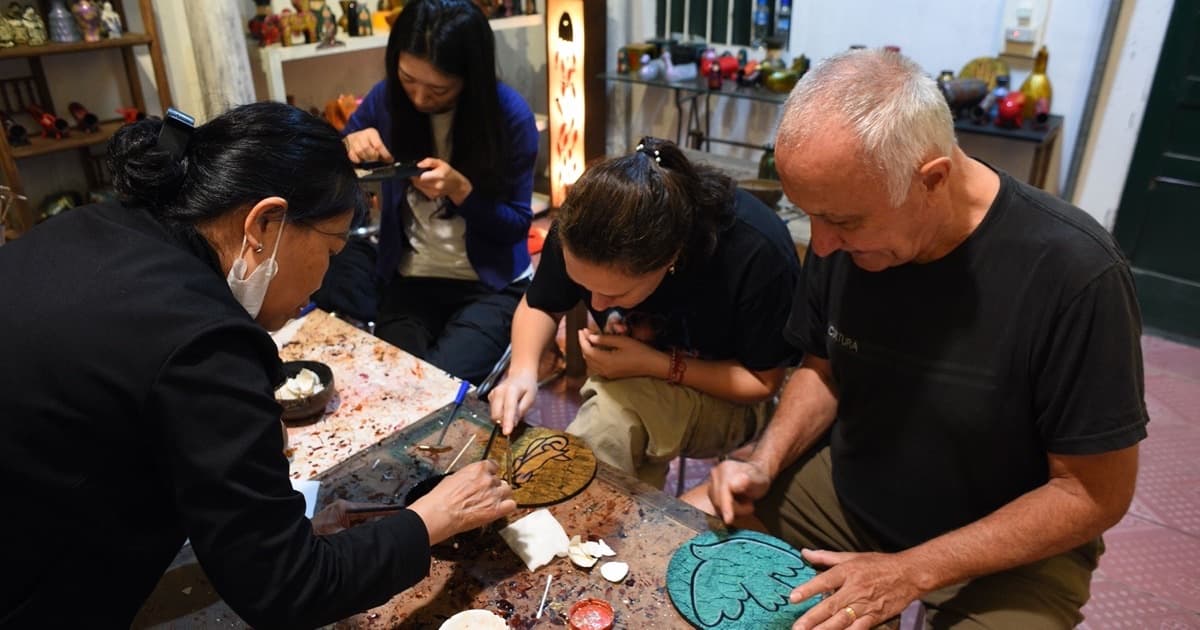
For smaller groups, moving to a Maker's workshop after lunch is the clearest way to change gear: real tools, materials within reach, no projector. If you do not have a suitable space, we find the venue together with the Maker.
What to make: take it home today, or a few weeks later?
This is the choice that weighs most on the day, and it is worth making before you fix the date.
Techniques you finish on the day
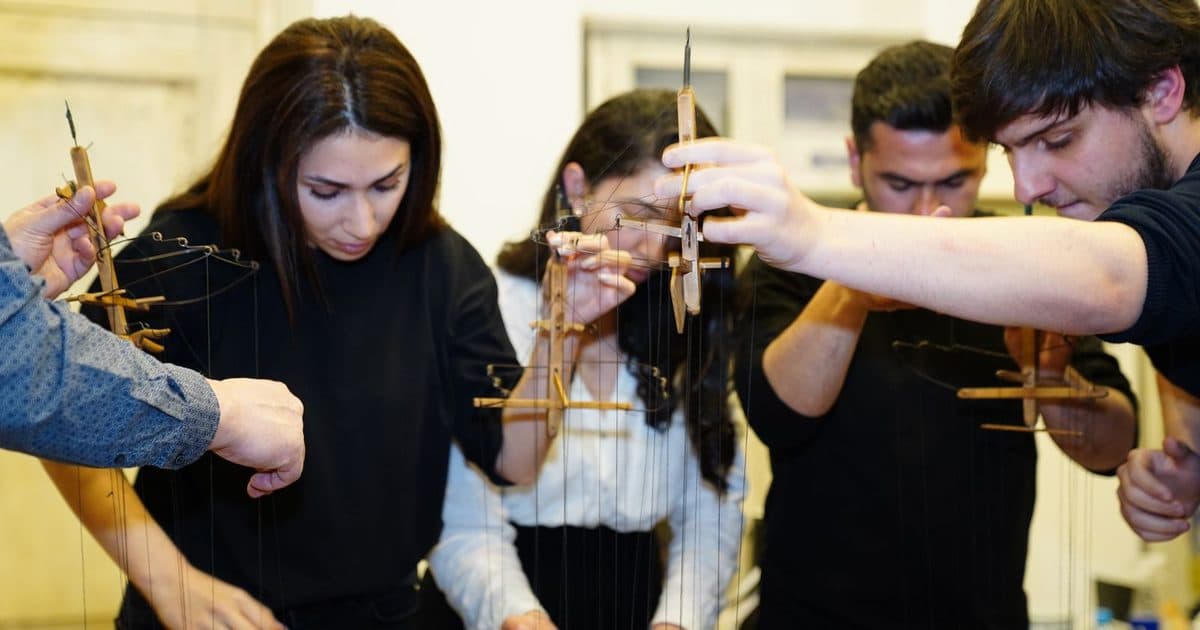
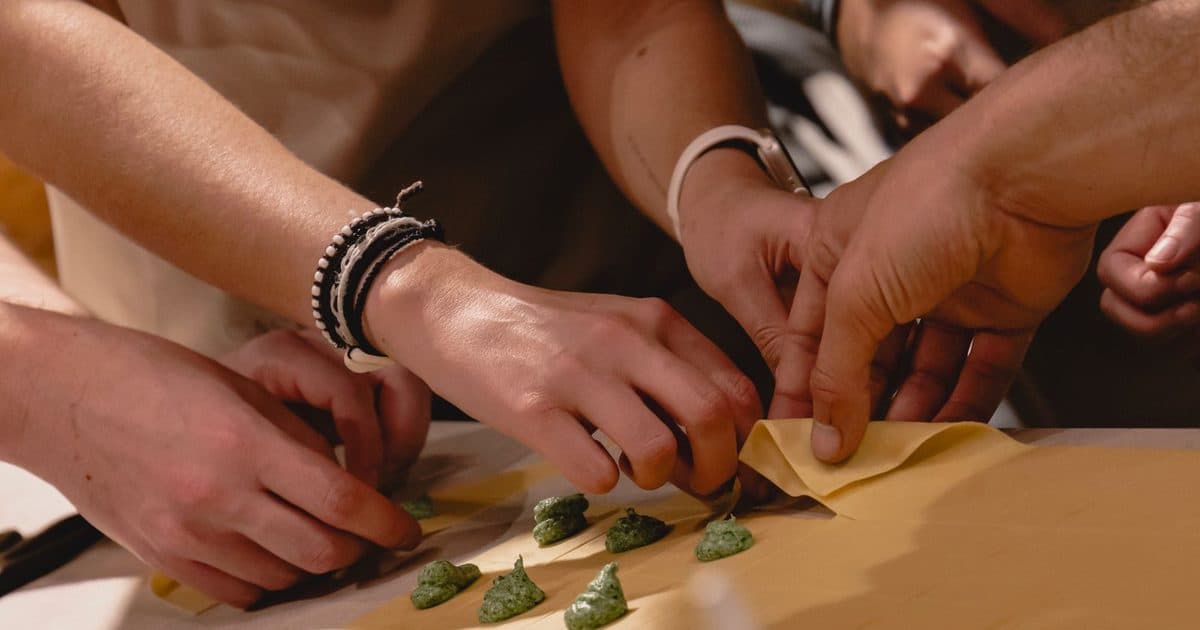
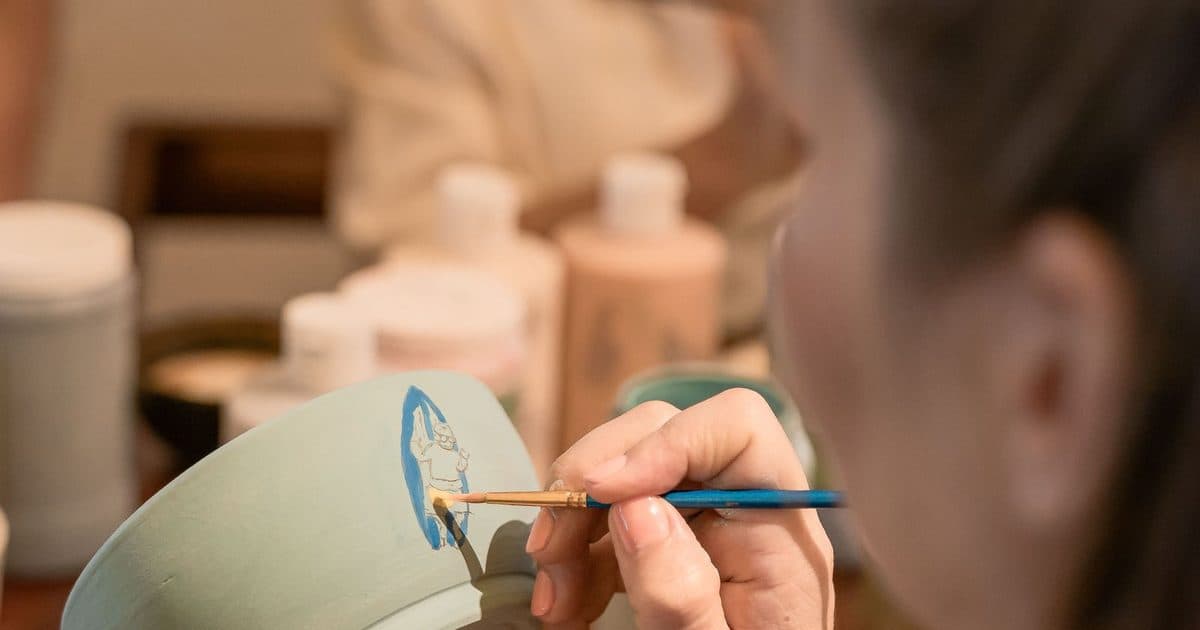
With cooking, weaving or painting the work is finished in the afternoon and everyone takes their own piece away. Cooking has an extra advantage at the end of the day: what you prepared gets tasted together. In the request you can also tick leather or wood. Every technique, though, depends on who is available in your area: in our reply we tell you what can really be done.
Ceramics, which comes back a few weeks later
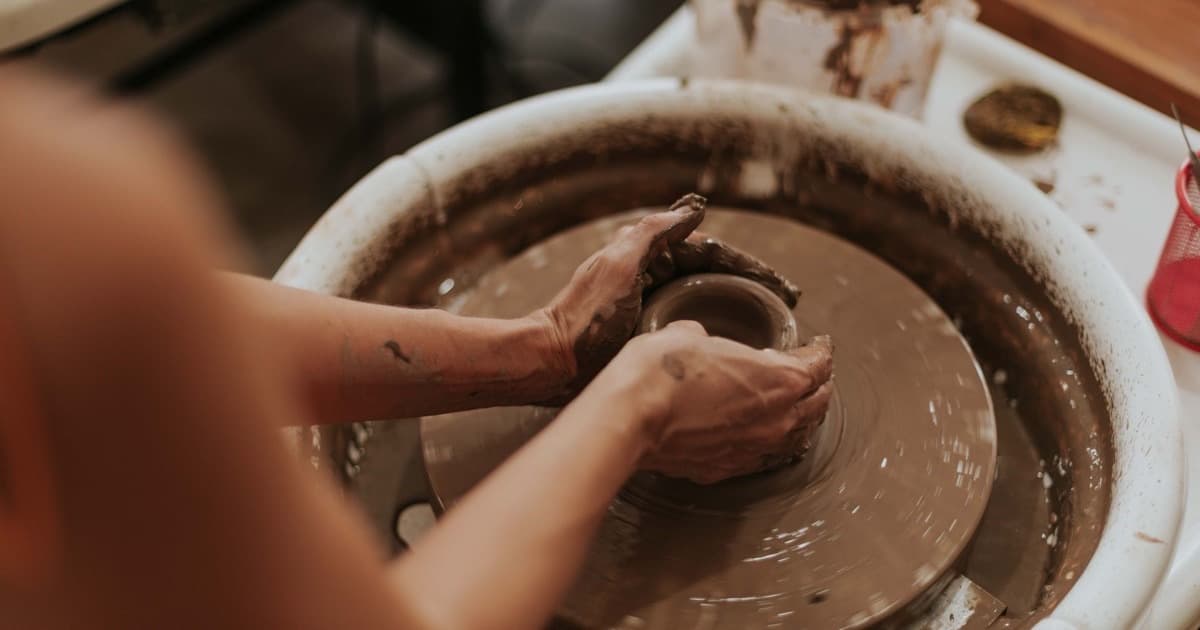
Ceramics is the technique you find most easily among Handsome's workshops, but it has its own timing: the piece has to dry and be fired, so it comes back a few weeks later. For a January kick-off this is not a drawback: handing the pieces out can become a second moment together, perhaps at the first check-in on the year's goals. The proposal says what you take home: with ceramics, also ask how and when the pieces come back.
In the request you can tick several types of experience, or «Surprise me», and «Team building» as the goal: the proposal starts from there.
The Christmas party moved to January
If you could not find a date in December, the Christmas party can move to January: the people are the same and the calendar is freer. Formats and ideas are those of the company Christmas party in a workshop; the only extra decision is whether to combine it with the kick-off, with the workshop in the afternoon and dinner in the evening, or to keep it as a separate evening.
When to ask for a date in January
Before the office closes for the December holidays. We reply within 24 hours and the proposal arrives within 2 working days, but around the holidays there are few working days: it is better to send the request before the office closes. Give two to four dates: with more options it is easier to find a Maker who is free.
- Avoid the first days after Epiphany (6 January, a public holiday in Italy), when part of the team may still be on leave: the second half of January and February give more room.
- Keep an eye on the proposal's deadline. The proposal says until when we hold the date for you: if the new year's budget still has to be approved, try to get the go-ahead before that day.
How the request, proposal and payment work
- You fill in the request for companies: people, two to four dates, city, time slot, indicative budget per person, type of experience and whether you already have a venue. In the notes, mention the morning plenary.
- Within 24 hours we reply and within 2 working days you receive the proposal: what you will do, date and time, number of people, what you take home and the price per person, all included: materials, Maker and organisation. No commitment until you confirm.
- To secure the date you pay online the amount stated in the proposal, with your VAT number and SDI code (or PEC), and you receive the electronic invoice.
- For the whole organisation you have a single point of contact: Handsome. We take care of the Maker, the materials and the timing: there is no need to contact anyone directly.
If this is the first event of this kind you are organising, the guide to creative team building for people in HR covers goals, budget and brief. For companies between Pesaro, Fano and Urbino there is also the guide to team building in Pesaro and Urbino.
Frequently asked questions
- Do you also organise the morning plenary?
- No: the plenary stays yours, with your content and your room. We organise the afternoon workshop: in the request choose the «Afternoon (2 pm - 6 pm)» slot and in the notes say where and until what time the plenary runs.
- How long does the workshop last?
- The proposal sets the length. As a reference, for a kick-off afternoon people usually think in terms of two or three hours.
- How much does it cost?
- The proposal states a price per person, all included: materials, Maker and organisation. In the request you choose an indicative budget band per person (40-60, 60-80, 80-120 or over 120 euro) and the proposal starts from there. To secure the date you pay online the amount stated and receive the electronic invoice.
- We are a large group: does it still work?
- Yes: the request goes up to 500 people. What changes is the format: a small group can go to a Maker's workshop, a large group usually works at your offices or in a large space. The proposal says how it is organised in your case.
- How far in advance do we need to ask?
- For a date in January, before the office closes for the December holidays: the earlier you ask, the more dates there are to choose from. We reply within 24 hours and the proposal arrives within 2 working days, with no commitment.
People, two dates, city and indicative budget: we reply within 24 hours and the proposal arrives within 2 working days.
Request a proposal for your kick-off