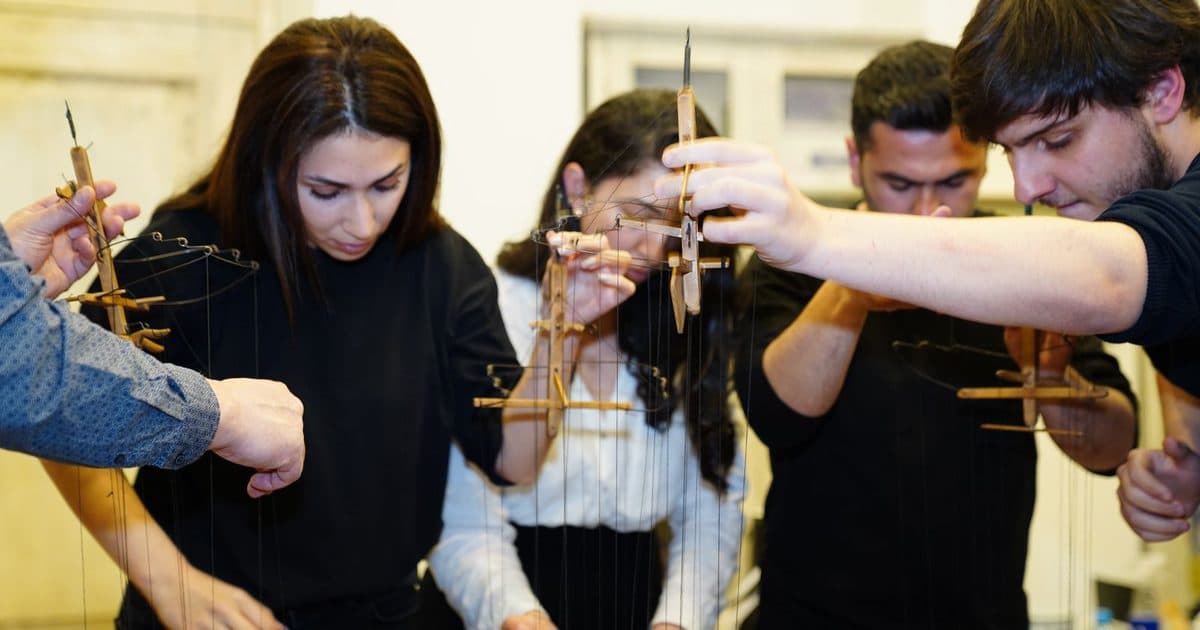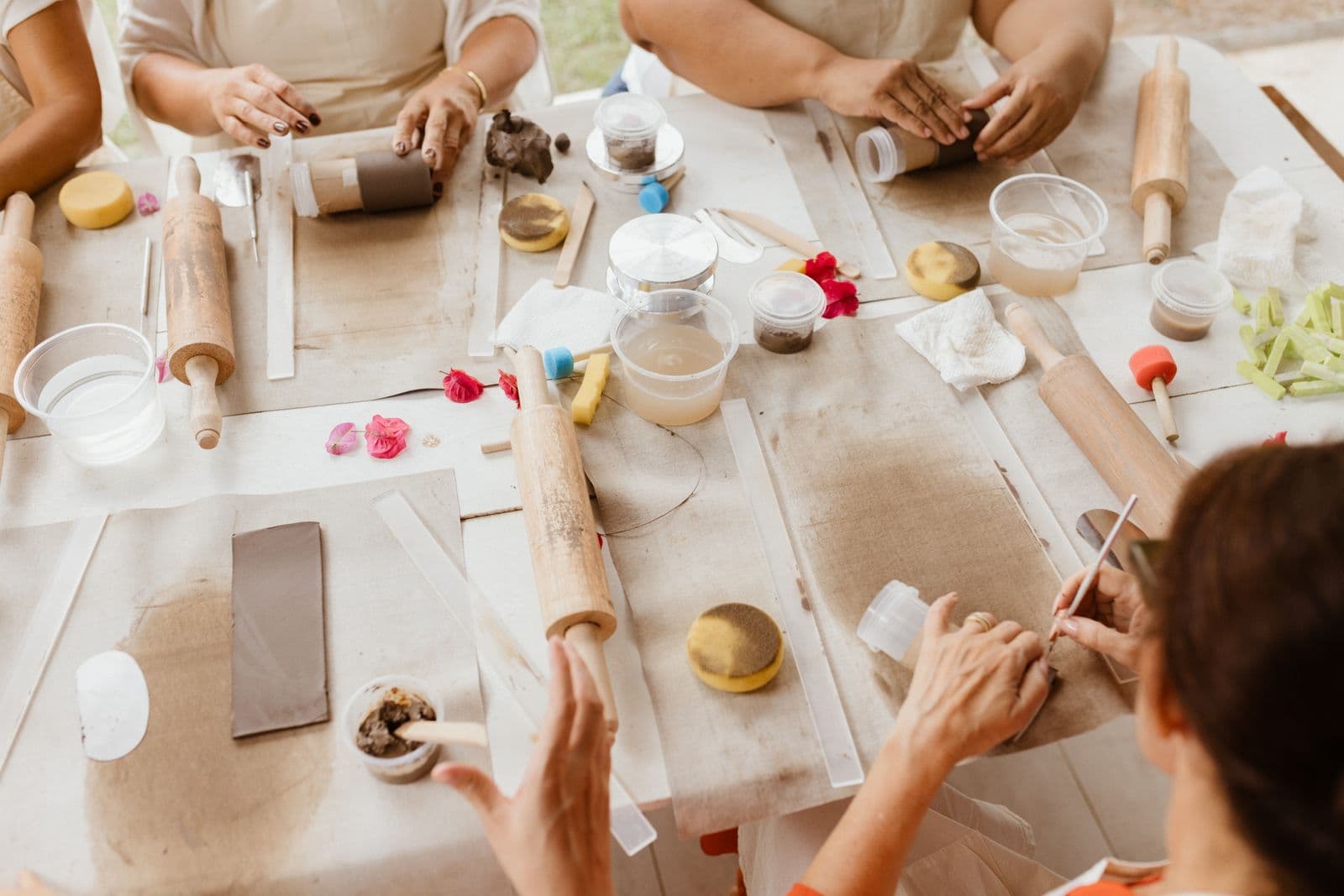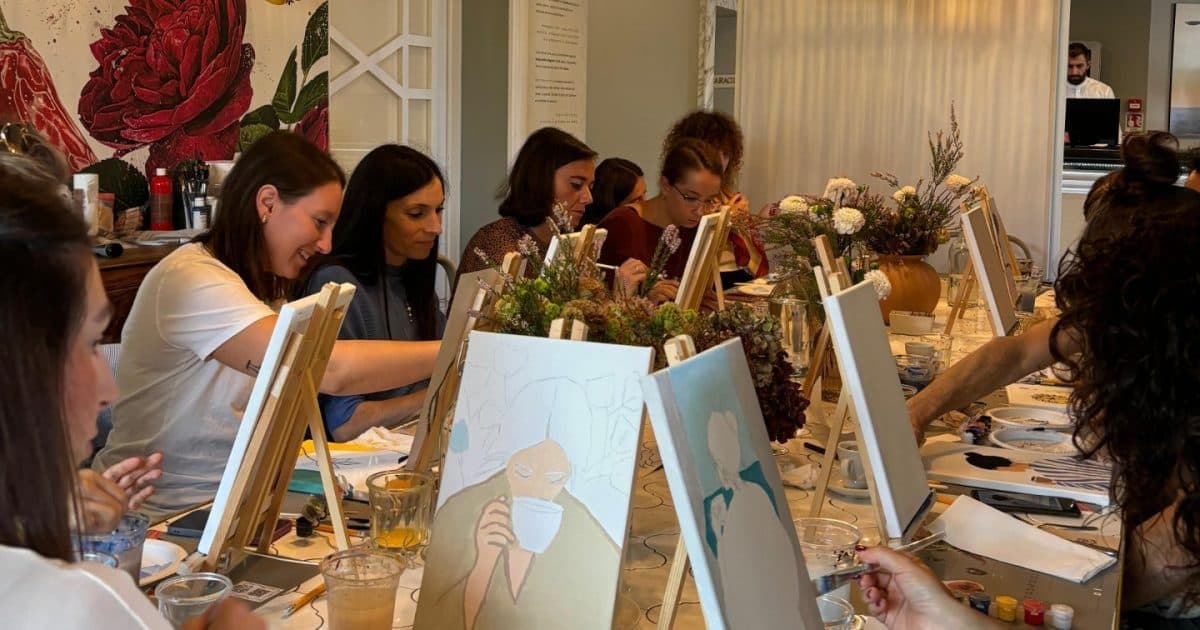

The request nearly always arrives in the same shape: this year we would like something other than the usual meeting room, maybe a craft workshop. In Milan, finding a space is not the problem. The problem is that a workshop is not a space: it is where somebody works every day, with their own tools, their own timings and their own physical constraints. Book it the way you would book a meeting room and you find out mid-afternoon that the numbers do not add up.
This guide is for the person who actually has to organise the thing: choosing the activity from the objective rather than from whatever is fashionable, understanding which Milanese constraints really matter, knowing what to ask before you raise the order, and recognising the mistakes that come round every year.
The objective comes before the craft
The criterion that makes the difference is not which trade looks most appealing, but what needs to happen to the people in those two or three hours. A team that has worked together for eight years and a group that met on Monday need opposite things, and the same activity will work beautifully for one and fail for the other. Three recurring objectives, three different ways of choosing.
Welcoming new starters
Here the activity exists to make people who do not know each other talk, and to make them talk without the filter of job titles. You need crafts where the first attempt works: if somebody falls behind and feels clumsy in front of new colleagues, you have achieved the exact opposite of what you wanted. Look for techniques with a low technical barrier and a complete result — candles and natural cosmetics, textile printing, bookbinding, decorating pieces that are already formed, fresh pasta — and ask the Maker to set up shared stations in pairs or at small tables, rather than one silent bench each. The background noise that rises after twenty minutes is the signal that it is working.
Closing the year
A year-end event has two jobs: to acknowledge what has been done and to leave something tangible behind. The group is usually larger, ages and skills are mixed, and it often runs into the evening. Crafts that end at the table solve two problems with one choice: you cook together and then eat what you made, and dinner stops being a separate line to slot in. If instead you want an object still sitting on the desk in January, plan for it from the start: it has to be something everyone finishes, not a piece begun that somebody else will complete.
A client you want to look after
The group is small and the risk is called embarrassment. Nobody wants to look foolish in front of an important client, nor to go home with a lopsided object they have to explain. Here the Maker's ability to tell the story matters more than the number of steps to perform: a demonstration done properly, one technical gesture the guest genuinely tries, a small piece that comes out well. Crafts with a high entry threshold — glass, silver, leather — work precisely this way: you watch a lot, you do a little, and that little counts.
The constraint that sets the schedule: does the piece go home today or later?
This question moves more than it looks like it should, and it has to be asked before you block the date. Some crafts finish within the session: leather, candles, textile printing, bookbinding, cooking. Others do not, for physical reasons. Ceramics needs drying and firing, so the piece shaped today comes back weeks later. Glass needs a furnace and controlled cooling, and it cannot be carried away warm.
That is not a flaw, it is a design input. Know it in advance and you can turn it into a second point of contact: the pieces arrive at the office weeks later and the event reopens by itself, with nothing more for you to organise. Do not know it, and you have thirty people asking where their mug is while you are trying to close the space. Put three things in writing: who collects, where they deliver, who pays for the shipping.
Milan logistics: what people forget
Milan moved its production out of the centre decades ago, and workshops follow the available spaces: inner courtyards, former industrial sheds, converted basements. Districts like Lambrate, where the Innocenti plant worked until 1993, or Bovisa, where the Politecnico campus opened in 1989 set the reconversion of the former industrial area in motion, are full of working spaces that look like nothing from the street. Excellent for atmosphere, awkward for getting a group through the door.
- Give people a meeting point, not an address. Many workshops sit in a courtyard, with no sign and an unnamed buzzer: a group that turns up together starts on time, a group hunting for a door trickles in and you lose the first half hour.
- Check the metro if anyone in the group needs it. Not every station has lifts and the picture changes from stop to stop: check it in advance on the ATM website or by asking ATM directly. That is a check the organiser makes, not something the person concerned should have to ask on the day.
- If you are thinking of a coach or a van for materials, look at access rules first. Milan has Area B, the low-emission restricted zone covering most of the municipal territory, and Area C, the charged congestion zone inside the Cerchia dei Bastioni. Hours, exemptions and permitted vehicles change over time: the source to check is the city council website, not a colleague's memory.
- Pick the time slot with traffic in mind. A workshop finishing at six o'clock releases thirty people into the worst hour of the city; an evening slot starting after office hours, or a half day that ends mid-afternoon, holds up far better.
- Ask where people eat. A workshop is a place of work, not a catering hall: dust, glues, glazes and food do not mix, and lunch often has to happen in a separate space or outside. Allergies and intolerances are declared when you book, not when you arrive.
- Tell people what to wear. One line in the invitation — closed shoes, nothing you care about, long hair tied back — prevents half the afternoon's problems. That is the organiser's job, not the Maker's.
- Look at the city calendar. During the April week of the Salone del Mobile and the Fuorisalone, spaces, hotels and people are all fought over: either book far ahead or choose another week.
What to ask before you confirm
There are eight, and they fit into one phone call. If any of them goes unanswered, it is not yet time to raise the order.
- How many people can work at the same time with a tool in their hands? A workshop's capacity is counted in working stations, not in square metres and not in chairs.
- Who leads, and with how many assistants? One Maker to twenty-five people means most of the group spends the time waiting their turn for attention.
- Does the piece go home the same day? If not: who collects it, where it is delivered, when, and at whose cost.
- Is the space accessible? Steps at the entrance, lift, door widths, toilet. If anyone in the group has mobility difficulties, this is checked in advance, not asked of them on arrival.
- Which tools and materials are involved — blades, flames, kilns, solvents — and what safety rules apply to participants? Is there public liability cover for the activity?
- Can people eat and drink inside, and in which part of the space? Can caterers come in, or do you need a second venue?
- By when do you need the final headcount, and what happens if we turn up four fewer or four more?
- Who is the point of contact for everything, and what details does finance need to pay (VAT number, electronic invoicing code or PEC)? Administration delays confirmations more often than dates do.
The mistakes that keep coming back
- Starting from the craft instead of the objective. Ceramics is fashionable, so let's do ceramics: then you discover the pieces arrive in January and the event was the Christmas gift.
- Counting places in square metres. A room that seats fifty lets far fewer people actually work, and the Maker knows that number because they see it every week.
- Putting only the start time in the calendar. You usually need a quarter of an hour for arrivals, ten minutes for the introduction and twenty for clearing up: leave them out and the activity pays for them.
- Bolting the workshop onto the end of six hours of plenary. Hands do not work once the head is finished, and the best activity in the world turns into a punishment.
- Asking for final numbers the day before. Materials are prepared per person and cannot be improvised: four extra kits have to be bought, cut and carried.
- Treating the workshop like a rented room. Somebody's work lives in there: tools have a place and they go back to it, and the group should be told that at the start, not at the end.
One point of contact, from objective to event
The part that steals most of an organiser's time is not choosing the activity: it is holding the pieces together. The workshop says one thing, the caterer another, procurement does not know who to ask, and meanwhile the date gets closer. With Handsome the route is different: you describe the objective, the number of people and the dates, and we handle the selection of the Maker, the brief, the materials and the logistics. There is no need to contact anyone directly, and the company has a single point of contact from start to finish.
The uncomfortable part deserves saying too. In Milan, Handsome's public catalogue is still being built: we do not promise a workshop round the corner for every craft on every date. For corporate requests we work from the brief, looking for the right person for that objective and that day, in the city or within a radius that makes sense for your group. If the answer for that combination is no, we say so straight away rather than after three weeks.
We select the Maker and handle every step: no direct contact needed.
Tell us about your company eventFrequently asked questions
- How many people actually fit into a craft workshop?
- It depends on the craft, not on the room: you count the working stations and the teacher's ability to keep an eye on all of them. In most workshops the number is lower than people expect. For large groups you work in shifts, run several Makers in parallel, or bring the Maker into a bigger space.
- How long does a company event in a workshop take?
- The material sets the length, not the diary. Many crafts wrap up in two or three hours, which also happens to be the window management approves most easily. A full day only makes sense if the object demands it: otherwise it is time the group spends waiting.
- Can the activity happen at our offices instead of the workshop?
- Often yes, and for large groups it is the simplest solution: the Maker brings materials and tools and sets up the stations at your place. The limits are physical: kilns, wheels and flames do not travel, so crafts that need them stay in the workshop.
- How far in advance should we move?
- For a year-end event, or for the week of the Salone del Mobile, months. Outside those periods, with two alternative dates and a settled headcount, the timeline shortens considerably. The slow variable is almost never the Maker: it is internal approvals and paperwork.
The Lombard catalogue is still being built: if the craft you want isn't listed yet, try again in a few weeks.
See the workshops in Milan