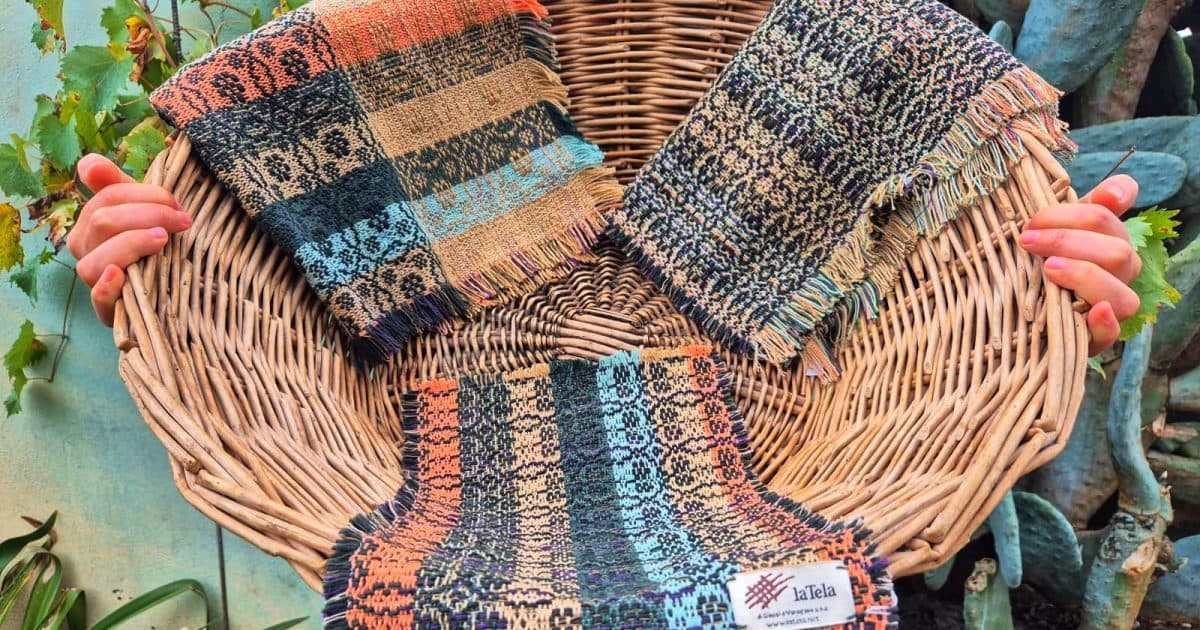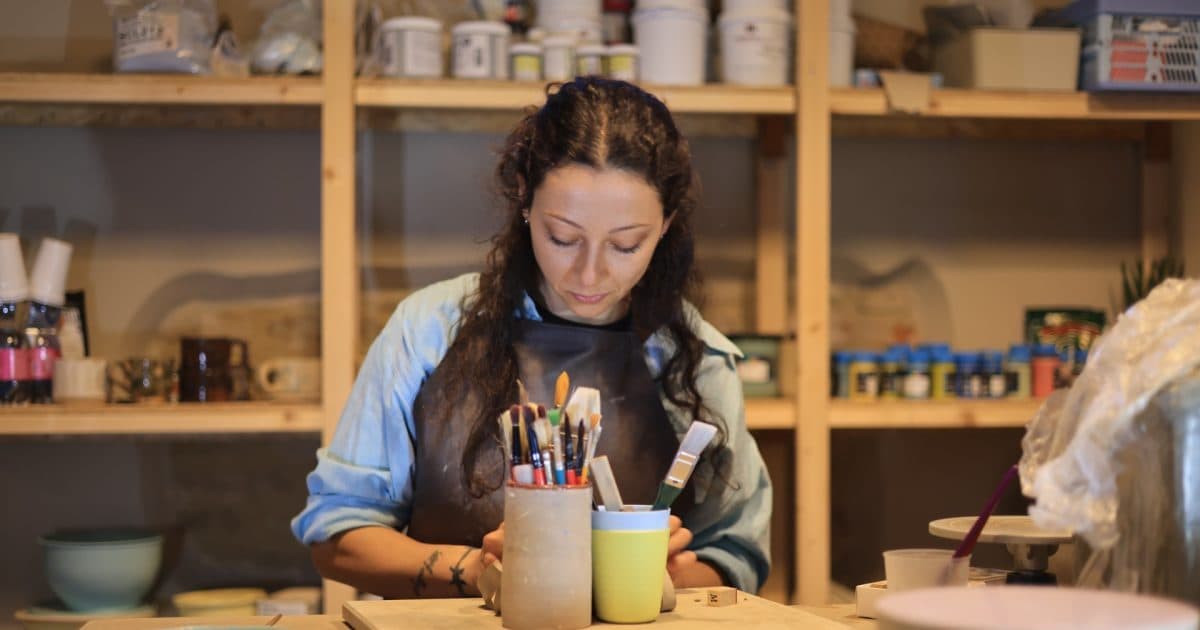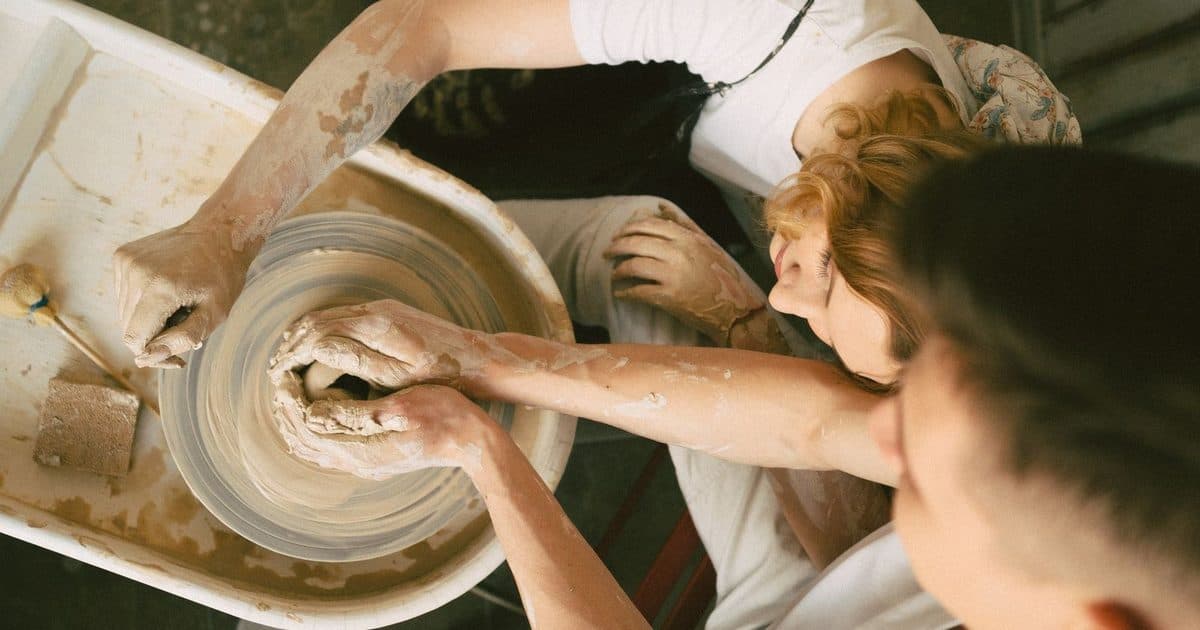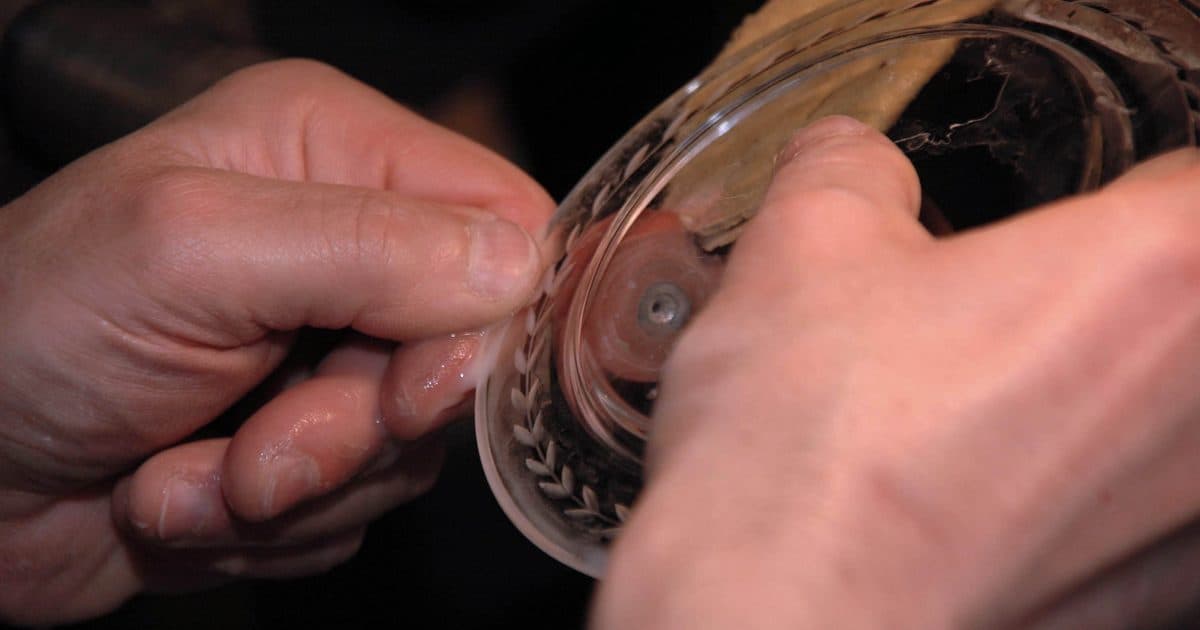
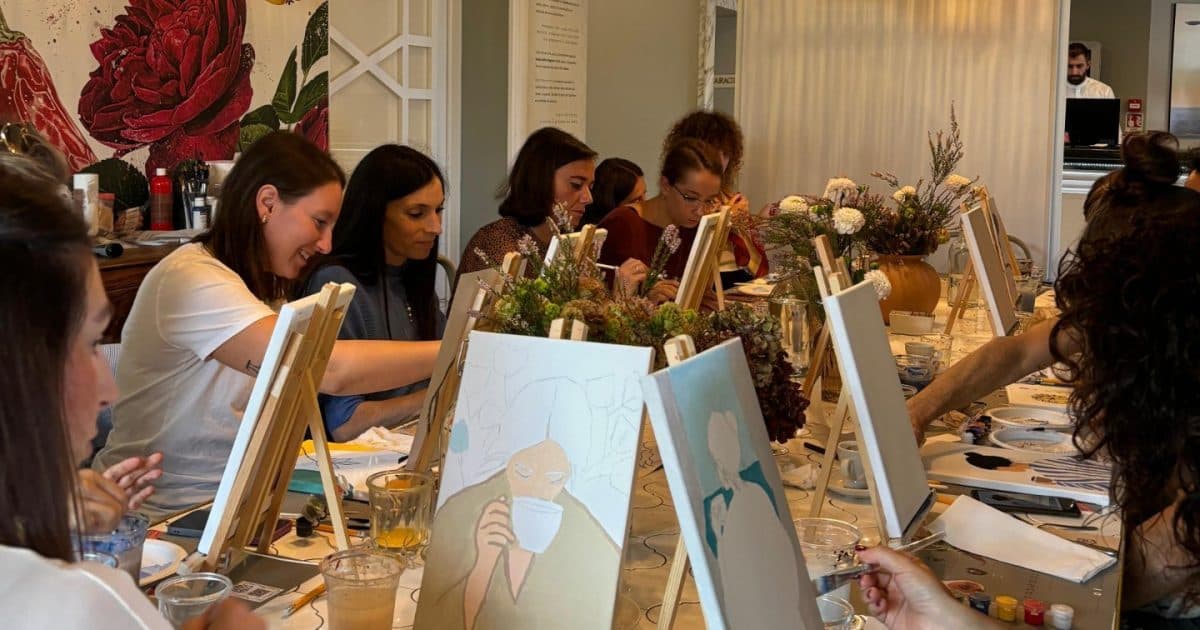
The question usually lands in an HR inbox in a single line: can we hold the company event inside a craft workshop in Florence instead of the usual hotel meeting room? The answer is yes, with one condition that shapes everything else. A working bottega is not a room for hire; it is a place where someone earns a living every day. Capacity is counted in bench seats, not square metres. The length is set by the material, not by the agenda. And the questions to ask before confirming are not the ones you would put to a hotel.
Florence has no shortage of rooms with a view, and that is not what a workshop competes on. What it gives, and what no meeting room can, is something to do with your hands and an object each person carries back to the office: a hand-stitched card holder, a sheet of marbled paper. In exchange the space has its own rules: tools that cut, glues that smell, a bench marked by years of work. For a corporate group that is the interesting part, as long as whoever organises it knows in advance how it works.
How many people, really
The number that matters is not how many people fit in the room but how many can work at the same time, each with a tool in hand, with the person teaching able to watch all of them. In leatherwork each participant needs their own stretch of bench, their own light and their own irons; in ceramics a place at the table or a wheel; in bookbinding a wide, dry surface. The Maker knows that number because they see it every week, and in a genuine workshop it is a small group: the same size that lets everyone finish their own piece without queuing for the scissors.
If your company is bigger than that group, the options come in order of simplicity. Split into shifts: half the group works at the bench while the other half follows a demonstration or has a drink, then they swap. Run several Makers in parallel, in the same bottega or in neighbouring workshops. Or turn the logic around: the Maker travels with materials and tools to a larger space, your own offices or a room hired for the occasion. The right choice depends on the headcount you actually have, and it should be settled before anyone falls in love with a shop window.
How long it takes and how it fits the day
Every craft has its own clock, and goodwill cannot compress it. A small leather object is cut, edged and stitched within a slot that sits comfortably inside half a day, and everyone leaves with it finished. Ceramics does not work that way: the shape is made in the workshop, but firing and glazing come later, and the pieces reach the office weeks afterwards. Marbled paper dries quickly and goes home the same day. Choosing the craft means choosing the format too: the slot before dinner, the half day with a break, or the full day only if the object justifies it.
Then there is the time it takes to get there, which in Florence is a chapter of its own. Much of the historic centre is a limited-traffic zone: the coach does not pull up at the door and the group moves on foot, pleasant if it is in the schedule. A good share of the workshops where people still work with their hands sits across the river, and from the hotel to the bottega there may be a walk with a bridge in the middle. The city's official visitor site, Feel Florence, is the place to check how to move around and reach the centre.
What to ask before you confirm
- How many bench seats there are and how many Makers will be with the group: this answer decides between shifts, parallel sessions and travelling out.
- What each person makes and takes away, and whether it leaves with them the same day or arrives later.
- Whether the workshop closes to the public for you, whether the working area is separate from the shop, and where coats and bags go.
- Access and facilities: many workshops in the centre are at street level but with steps at the door, and there is often a single toilet.
- Materials and safety: what is included, whether there are glues, dyes or dust, how allergies are handled, and which language the session runs in if some colleagues do not speak Italian.
- Who the point of contact is: who to write to about anything, who replaces the Maker if they fall ill, what happens if the headcount changes close to the date.
On price, it is more useful to understand what moves it than to ask for a figure over the phone. It moves with the number of people, the material (leather does not cost what paper costs), the length, whether the workshop closes exclusively for you, how many Makers work in parallel, travel, and the extras that complete the event: a drink afterwards, a personalised object with your logo for each participant. A serious quote lists all of them. To get a sense of what Florentine crafts offer, start with the guide to craft workshops in Florence and the one on Florentine leatherwork.
Who holds venue, Maker and materials together
If HR does it alone, this is the job: find the right workshop, check the space can take the group, agree date and slot, count materials, find a replacement if the Maker falls ill the week before, and line it all up with the caterer and the hotel. Those hours never appear on any quote, and they are why so many good ideas end up back in a meeting room.
With Handsome the route is different. You fill in a brief on the companies page with headcount, city, preferred date, objective and the crafts you are curious about; Handsome selects the right Maker in Florence, proposes the format that fits your number (in the workshop, in shifts, with several Makers, or travelling to your premises), handles materials and spares, and remains your single point of contact to the end. You do not need to contact the Maker directly. The reasoning in team building at your office or on the road, written for Rome, applies unchanged to Florence; and if the event doubles as a gift or a branded object for employees, it goes in the brief and becomes part of the same request.
A room is rented; a workshop is lent to you. The group feels the difference walking in, and talks about it months later.
Frequently asked questions
- Can a company event be held inside a craft workshop in Florence?
- Yes. A number of Florentine workshops that already teach the public also host corporate groups, in a reserved slot or by closing for the occasion. The condition is to take the space for what it is: a working studio with bench seats, tools and materials, not an empty room to dress. With Handsome, choosing the workshop and the Maker is part of the service.
- How many people can a craft workshop take?
- As many as there are bench seats: the people who can work at the same time with the person teaching able to follow all of them. In a genuine workshop that is a small group. For larger groups the options are shifts, several Makers side by side, or taking the Maker to a bigger space; the exact number and the recommended format are in the proposal you receive.
- How long does a company event in a workshop last?
- It depends on the craft more than on the agenda. A small leather object or a sheet of marbled paper is finished within a slot that fits in half a day; ceramics needs later firings and the pieces arrive afterwards. The most common formats are the slot before dinner and the half day with a break.
- Can colleagues who do not speak Italian take part?
- Yes, if you say so in the notes of the brief: Handsome takes it into account when choosing the Maker. Many Florentine workshops are used to an international public, but it is something to ask beforehand, not to take for granted.
- Who coordinates the workshop, the Maker and the materials?
- Handsome. From the brief on the companies page onwards, it selects the Maker, sets the format according to headcount, handles materials and spares and is the company's single point of contact. The HR contact does not need to reach or manage individual Makers.
Headcount, dates and objective: Handsome selects the Maker and stays your single point of contact
Tell us about your event in Florence