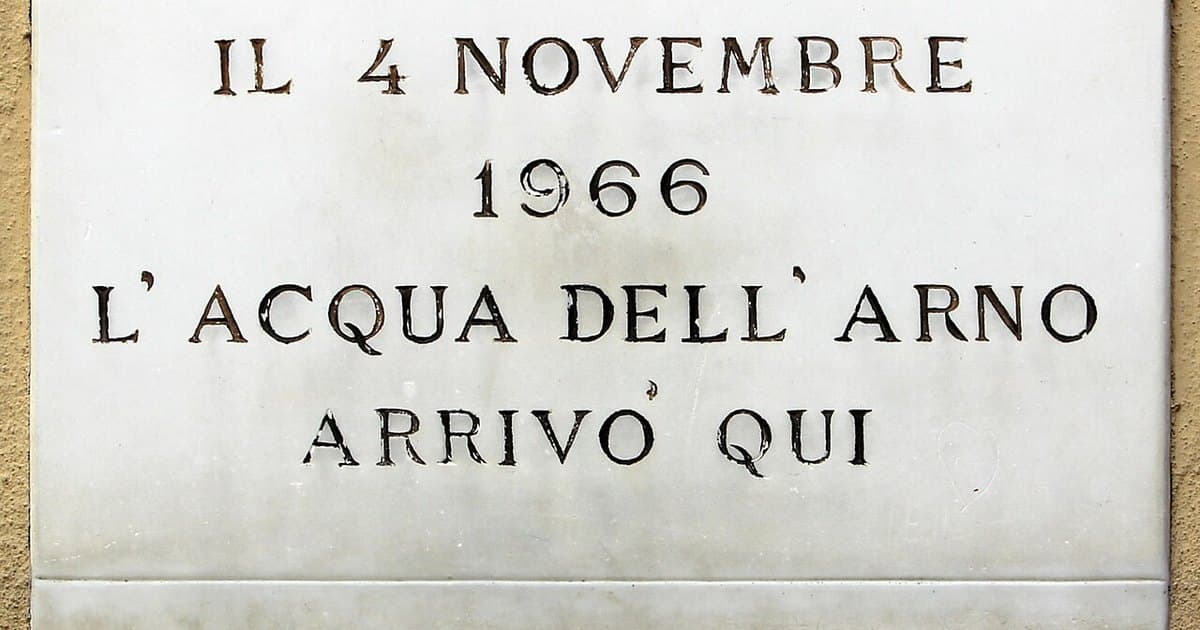
On 4 November 1966, when the Arno stopped rising, Florence had a problem nobody in the world knew how to solve: a million books covered in mud and heating oil, rotting while you looked at them. There was no manual. There was not even a profession.
What happened in the following months is the reason that today, when an archive floods anywhere on the planet, people know what to do in the first forty-eight hours.
The night
The Arno entered the city on the night of 3 to 4 November. At the National Central Library, which faces straight onto the river, water filled the basement and the lower floors. Those rooms held the stacks: newspapers, journals, doctoral theses, modern works.
And not only. Among the submerged material were around one hundred thousand volumes from the historic collections — the Magliabechiano, the Palatino, the miscellanies. Material that exists in no copy anywhere else.
The mud angels
They arrived without being called. Students, workers, artists, ordinary people from all over Italy and from abroad — Germany, France, the United States. For weeks they shovelled sludge, carried volumes out and laid sheets to dry in every heated space that could be found, from brick kilns to industrial drying rooms.
It is an image remembered for the enthusiasm and forgotten for the rest: those people were carrying out, without knowing it, the first mass-scale emergency conservation operation in history. Many decisions taken in those days became procedure.
What was invented there
- Triage by condition, not by value. You treat first what degrades fastest, not what is worth most: a wet incunabulum holds out longer than a twentieth-century newspaper.
- Freezing as a pause. A soaked volume brought to low temperature stops growing mould and waits its turn. It bought years on material that would have been lost in weeks.
- Controlled drying. Not in the sun and not on a radiator: temperature and humidity governed, because paper that dries too fast deforms and never lies flat again.
- Washing sheet by sheet. The binding comes apart, the sheets are treated one at a time, the book is sewn again. It is still the stage that sets everyone's timescale.
- The school. That worksite produced a permanent laboratory and, with it, a trade with a training path: the book conservator.
The numbers, sixty years on
This is where the story stops being moving and starts being instructive. On the National Library's material, over the years: more than 53,000 volumes restored and about 17,000 washed. Nearly 20,000 still await washing, mostly historic miscellanies. And over 4,500 items were lost, meaning beyond recovery.
On 4 November 2024 the library returned to consultation volumes damaged by the flood that had been excluded from circulation until then, within a programme covering thirty thousand of them.
Why this story concerns you too
Because it explains, better than any speech about the value of craft, what separates a handmade object from a mass-produced one: the first can be repaired, the second is replaced.
A hand-sewn book can be unstitched, washed and sewn again. A hot-glued book, once it comes apart, is finished. The same goes for shoes, for chairs, for ceramics repaired with lacquer. Repairability is a design decision, and it is made by whoever builds the object, not by whoever buys it.
Where to touch it today
- Florentine binderies: many run short courses where you sew a notebook by hand. Three hours are enough to understand why stitching holds and glue does not.
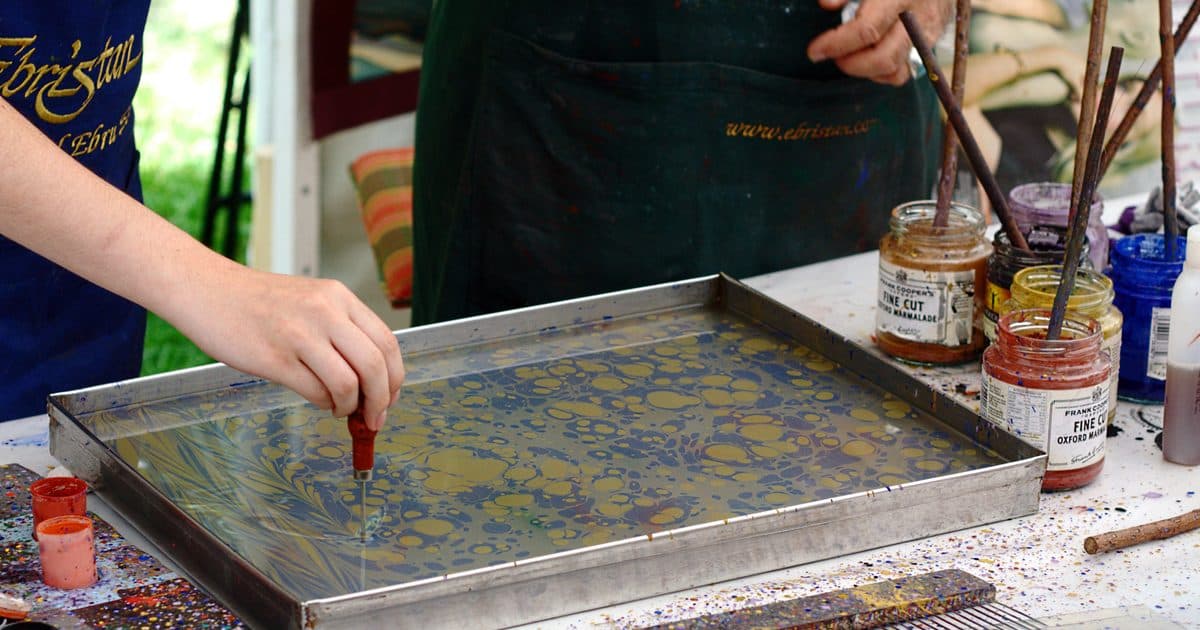
- Marbled paper workshops: the decoration that has accompanied Florentine binding for centuries, learnable in an afternoon.
- The Opificio delle Pietre Dure Museum, the shop window of the Florentine restoration institute.
- The National Library itself, which keeps consultable documentation on the flood and the recovery work.
The most direct way to understand that work is not to read about it: it is to sew one crooked notebook and realise how hard it is to make a straight one.
Frequently asked questions
- How many books were submerged in the 1966 flood?
- At the National Central Library of Florence, around one million bibliographic units, including some hundred thousand volumes from the historic collections: Magliabechiano, Palatino and the miscellanies.
- Who were the mud angels?
- Students, workers, artists and ordinary citizens who came from all over Italy and from abroad — Germany, France, the United States — and spent weeks shovelling mud and rescuing books and works of art.
- Is the recovery finished?
- No. More than 53,000 volumes have been restored and about 17,000 washed, but nearly 20,000 items still await washing. Over 4,500 were lost.
- Why was the oil worse than the water?
- Because ruptured heating tanks poured fuel into the wave. A merely wet book dries; one soaked in oil and mud has to be taken apart and washed sheet by sheet.
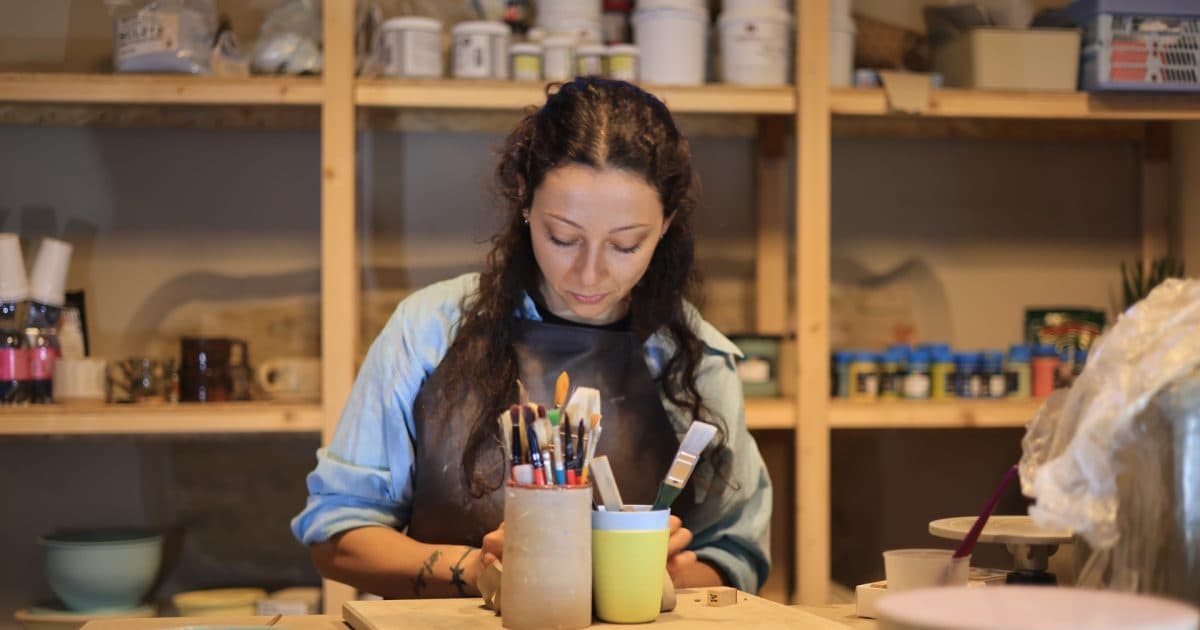
Binding, paper, clay: trades you learn with your hands.
See artisan workshops in Florence