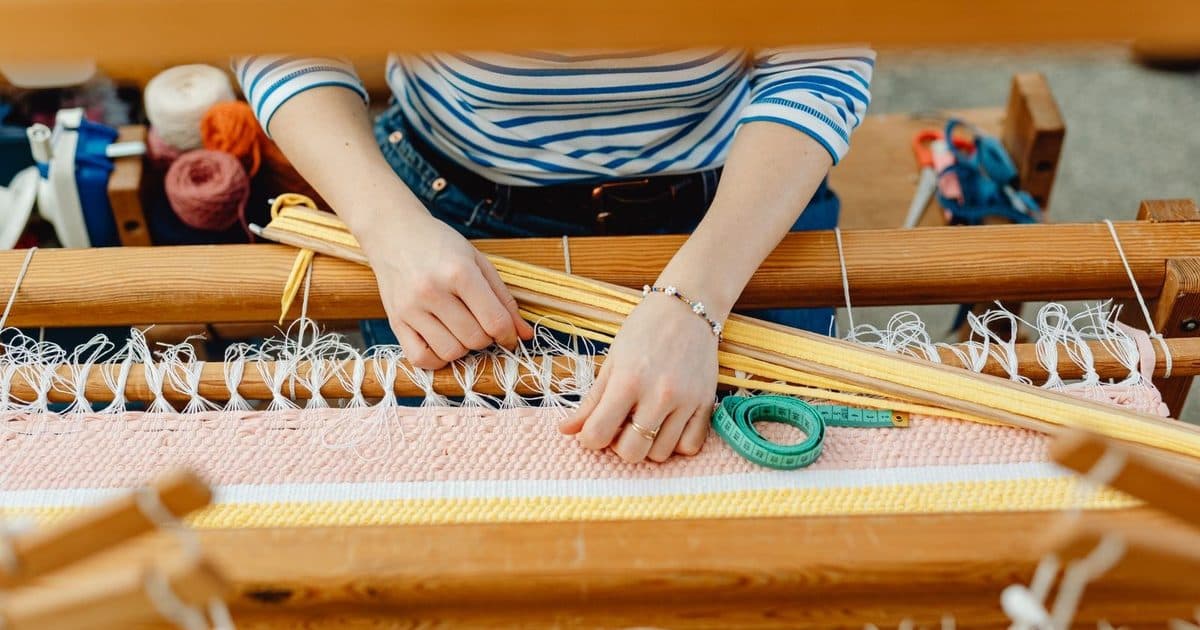
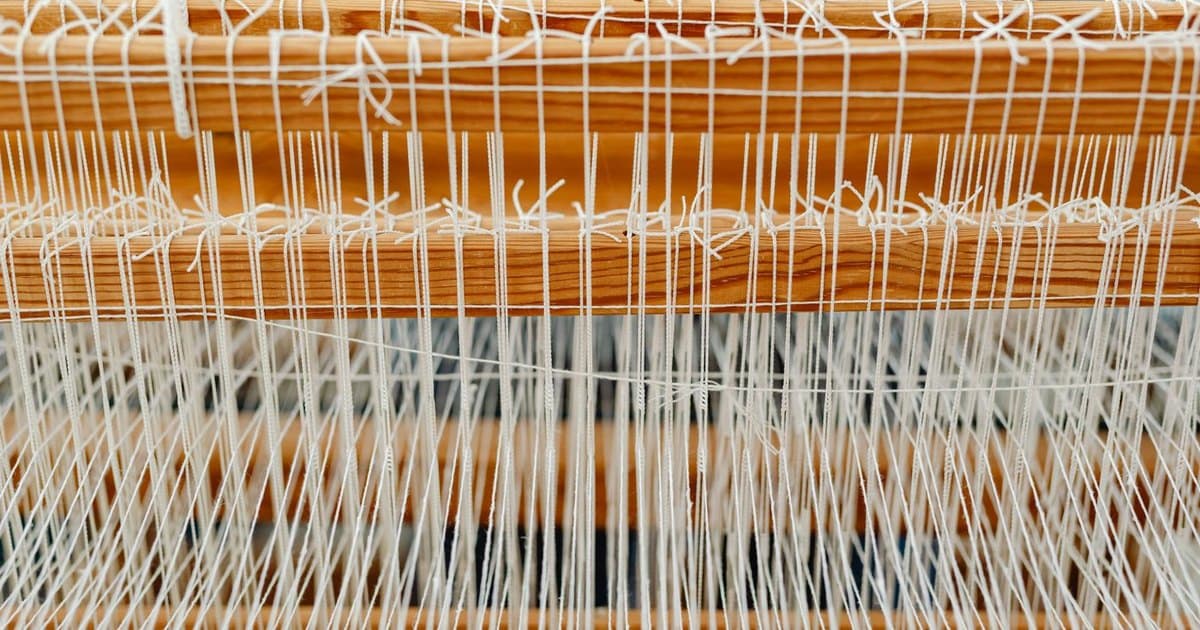
An eighteenth-century hand loom makes a few metres of cloth a day. An industrial machine makes hundreds in the same time. Put like that, the old loom is a problem to be solved. Except that loom produces a fabric the machine cannot make, and the reason is not romantic: it is technical.
In Florence, in Borgo San Frediano, six eighteenth-century hand looms are not in a museum. They work.
1786: a manufactory born from an agreement between families
The Antico Setificio Fiorentino began in 1786, when several Florentine noble families — among them della Gherardesca, Corsini and Guicciardini — pooled their household looms into a single manufactory. It was not philanthropy: it was an industrial decision of its time, concentrating tools, yarn and skilled hands in one place.
The premises are on via Bartolini, inside San Frediano, then the working quarter: dyers, tanners, weavers. In 2010 the manufactory joined the Stefano Ricci group, which kept it running rather than turning it into an archive.
Why a slow loom makes a better cloth
The difference is not nostalgia, it is thread tension. A modern mechanical loom works at high, constant tension: that is what lets it run fast. The cloth that comes off it is compact and regular, and under light it reflects uniformly.
A hand loom works at lower and slightly variable tension, because a person is governing it. The result is a fabric that is less regular and more alive: light enters and leaves it with small differences from one point to the next, and that is exactly what the eye reads as depth. On a damask or a brocade you see it from two metres away.
The warping machine drawn by Leonardo
Before weaving you must warp: prepare the lengthwise threads, all at the same tension and in the right colour order. Get it wrong and it cannot be fixed later.
The silk works uses an eighteenth-century warping machine built from a drawing by Leonardo da Vinci, the original of which is kept in the Windsor collection. Beside it stands an 1872 Benninger warper. Two machines a century apart, doing the same job, in the same room.
What comes off those looms
- Ermisino, the shot silk taffeta that changes colour with the angle of the light, because warp and weft are two different colours.
- Damasks and brocatelles, where the pattern comes from alternating glossy and matt wefts, not from printing.
- Filaticci and lampas for restoration: when a historic textile has to be made good, you need cloth made by the same technique, or the patch shows for ever.
- Passementerie: cords, tassels and fringes, which in the eighteenth century were a trade of their own.
This is the least known part: some of the work exists to put heritage back together. Palaces, theatres and collections need fabrics you cannot buy, because nobody makes them industrially any more.
Can you see it?
Yes, but it is not a museum with a ticket desk: access is by organised visits and experiences, booked in advance and limited in number, with dates on the manufactory's own site. Worth putting in the diary before the trip rather than hoping to walk in.
And if there is no date, San Frediano is still the right quarter to understand how Florence works when nobody is watching: ground-floor workshops, open doors, the noise of tools.
From cloth to hands
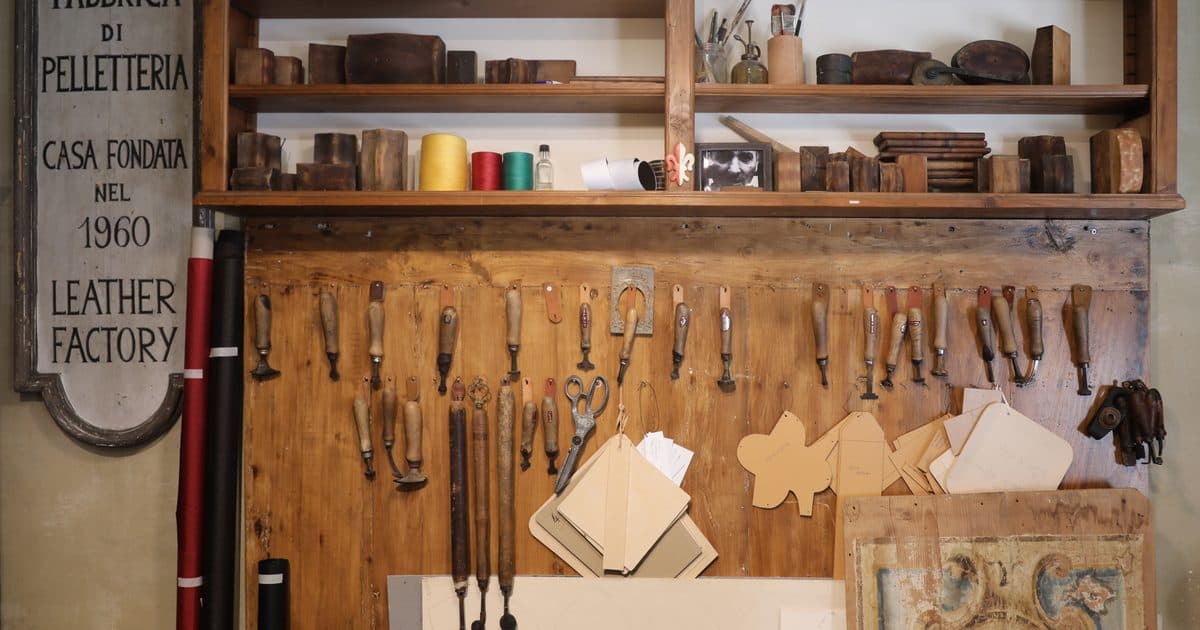
Watching a loom at work makes clear something labels never say: time is the most expensive raw material in any handmade object. Not the thread, not the wood, not the clay. Time.
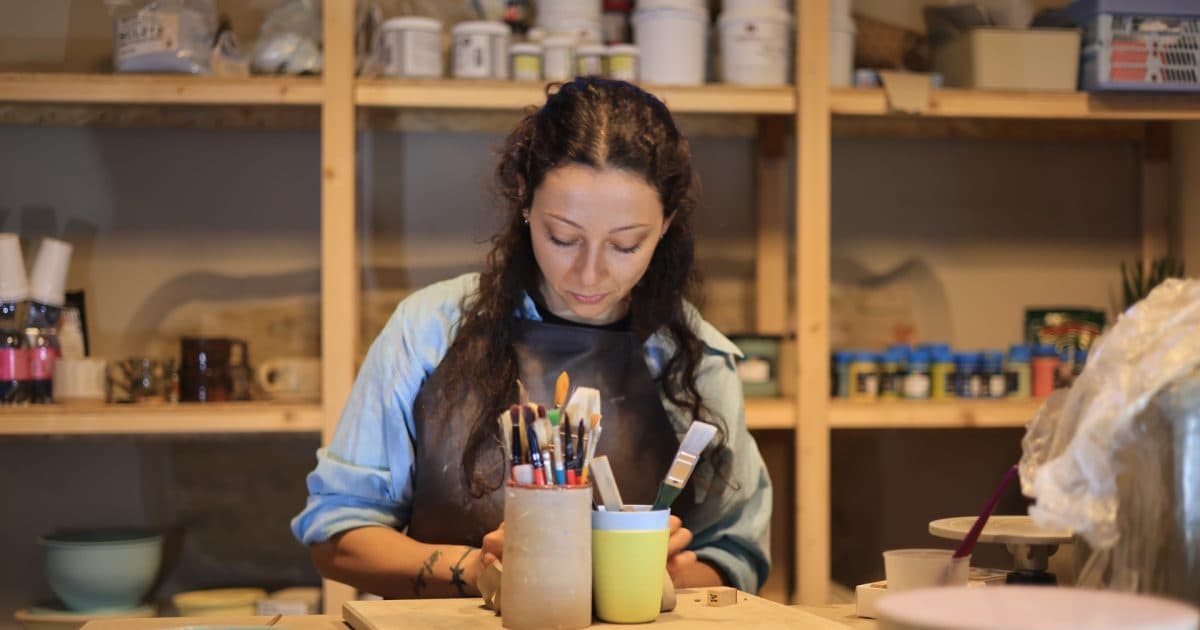
The quickest way to grasp it is to spend half a day behind a tool, get it wrong twice, and see how much you actually produce. Florence is not short of workshops that let you.
Frequently asked questions
- When did the Antico Setificio Fiorentino begin?
- In 1786, from the pooled looms of several Florentine noble families, among them della Gherardesca, Corsini and Guicciardini. Since 2010 it has been part of the Stefano Ricci group.
- How many antique looms are there?
- Six eighteenth-century hand looms and six nineteenth-century semi-mechanical looms, plus an eighteenth-century warping machine built from a Leonardo da Vinci drawing and an 1872 Benninger warper.
- Why does a hand loom make a different cloth?
- Because it runs at lower, slightly variable tension. The fabric ends up less uniform and reflects light irregularly, which is what the eye reads as depth.
- Can it be visited freely?
- No. It is a working manufactory: entry is by booked visits and experiences with limited places. Dates are on the official site.
Half a day behind a tool is worth more than ten shop windows.
See artisan workshops in Florence