From the train window, Prato looks exactly like its reputation: warehouses, chimneys, the signs of spinning mills and finishing plants, a city that works and does not pose for you. The picture is true, but it is only half of it. What the factories do by machine, someone in town still does by hand, and teaches. So the useful question is not what to do in Prato besides the museum. It is how much of the city's textile you can get your hands on in a single day.
The Museo del Tessuto is still the sensible place to start: it sits inside a former textile mill and tells the story of cloth, machines and trades with the care they deserve. But a museum, by definition, puts fabric behind glass. The day laid out here takes it back out: a morning at the loom, an afternoon with your hands in a dye bath, and in between the regenerated wool that is Prato's signature gesture. No experience required.
Morning at the loom
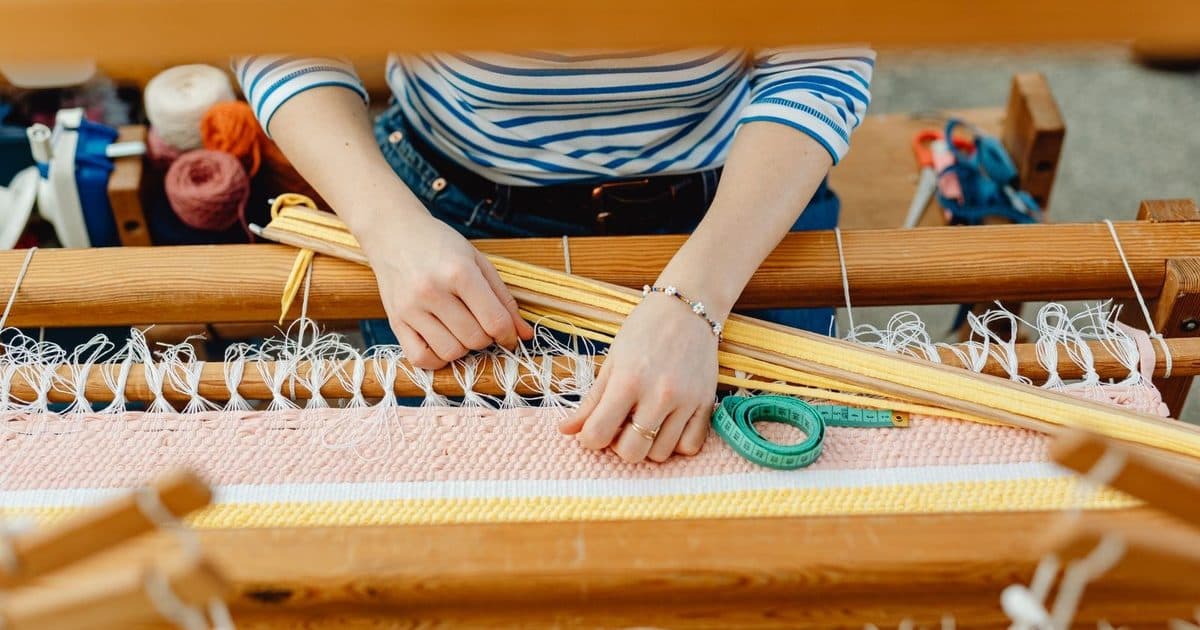
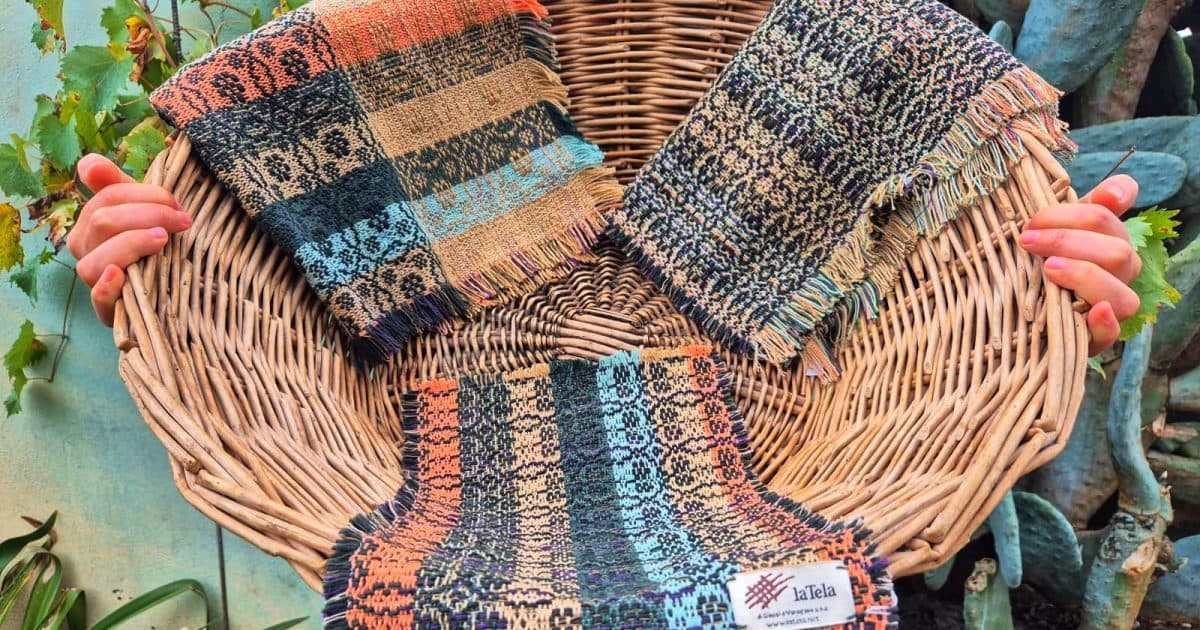
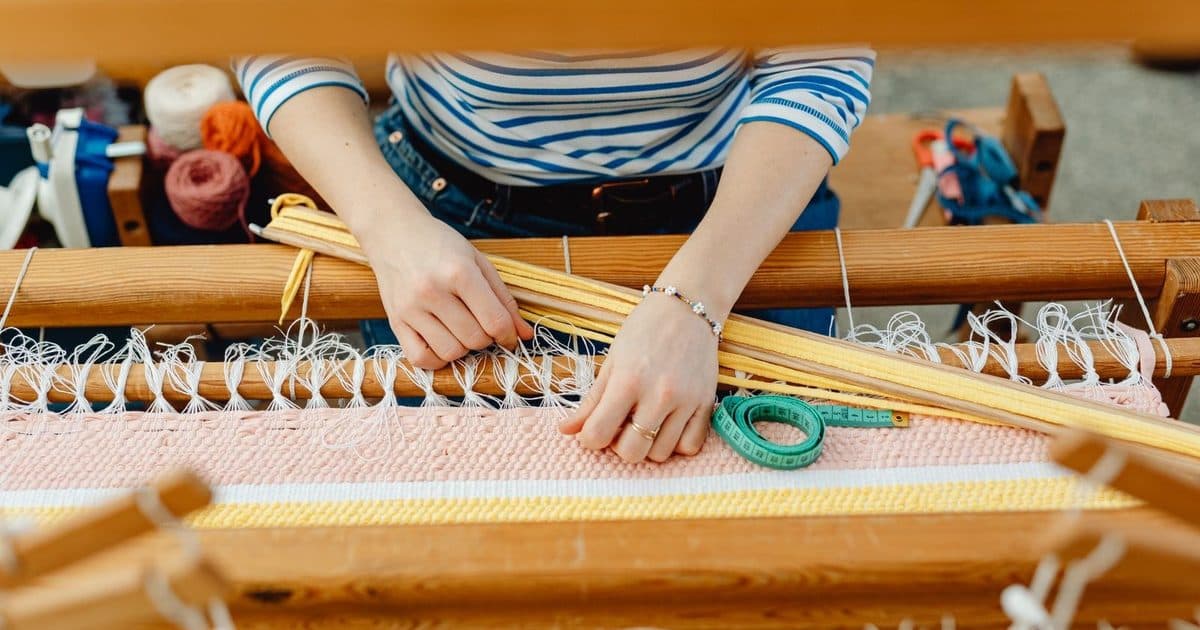
A loom is simple to understand and slow to master: warp threads under tension, a shuttle carrying the weft, a beater packing it down. In a beginners' workshop the loom comes with the warp already dressed, so you go straight to the gesture that matters. You learn to pass the weft, keep the edges straight, change colour without leaving gaps. By the end of the morning you hold something that fits in one hand: a coaster, a sampler, a small hanging. Small, but yours from the first thread to the last.
What makes a loom in Prato different is not the loom; it is the yarn running through it. Here the yarn can come from the people who spin it locally, and often it is regenerated carded wool, fibre that has already lived one life. Ask the person teaching you where the yarn comes from, how it was made, why it is that colour. That single question turns a morning of weaving into a piece of the city. If you would rather arrive prepared, our guide to loom weaving workshops for beginners explains what a first session is like.
Afternoon in the dye bath
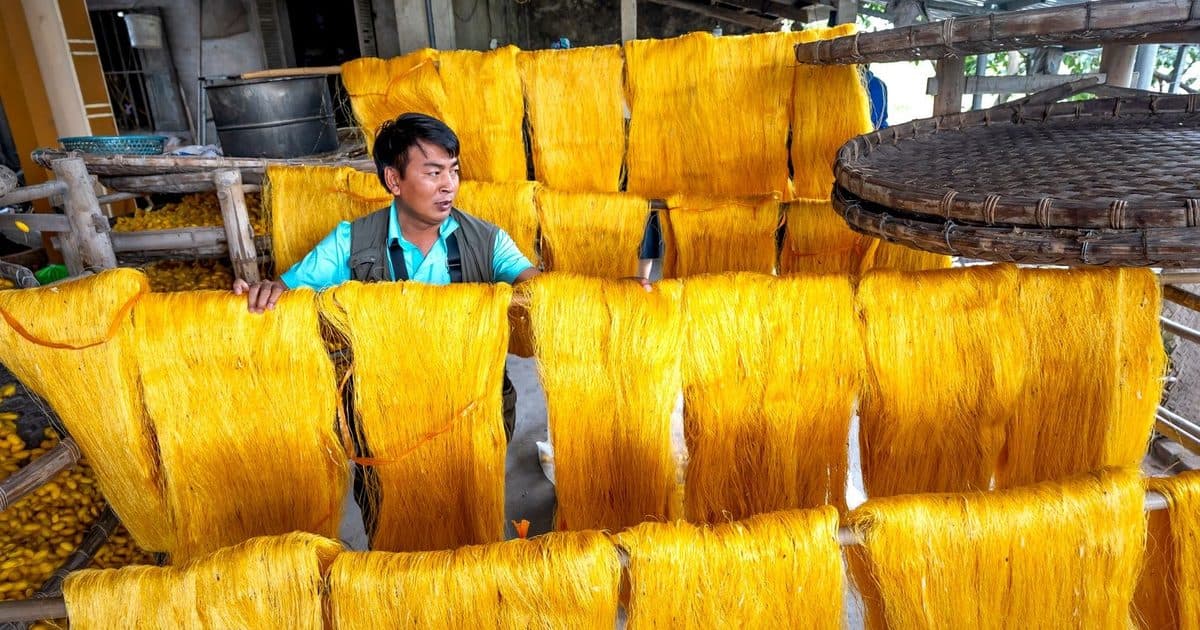
Dyeing is the opposite of weaving: less control, more waiting, more surprise. In a natural dye studio you work with baths made from plants, bark and kitchen scraps; you prepare the fibre with a mordant so the colour will hold, then submerge it and wait. What comes out depends on the water, the temperature, the time and the fibre itself: wool takes colour one way, cotton another. You go home with a skein or a length of cloth that nobody can reproduce exactly, not even you. If the studio also does botanical printing, pressing leaves and flowers onto fabric, we covered it in our piece on botanical printing and natural dyeing. Either way, ask beforehand whether the piece leaves dry or needs rinsing and hanging at home: anyone teaching will happily tell you.
Regenerated wool, the gesture that explains Prato
If one thing explains this city, it is this. Recycled wool starts from used garments and offcuts: they are sorted by colour, shredded, passed through carding to realign the fibres, and spun again. The clever part is the sorting. Separate the rags properly at the start and the new yarn already has the right colour, with no need to dye it a second time. In Prato this is everyday work rather than a slogan.
In a studio, regenerated wool shows up in different forms: as yarn on the loom or as a batt to be felted with hot water and soap, held next to virgin wool so you can feel the difference. Wet felting in particular is the easiest way in for anyone who has never worked a fibre: hands, hot water and a little patience are enough, and an afternoon produces a small pouch or a panel. No equipment is involved, which also makes it a good fit for anyone travelling with children.
- What is included: yarn, fibre, mordants, use of the loom. In textiles the material matters, and the listing should say so.
- What you take home right away and what still has to dry: a woven piece leaves finished, a dyed skein sometimes does not.
- How many people per loom: weaving is a gesture corrected up close, and a shared loom cuts into everyone's time.
- Where it happens: a working studio, with its smells and its noise, is worth more than a classroom.
- Who teaches: on Handsome that is a Maker, with a VAT number, or an Apprentice, and their public profile, linked from the listing, tells you what they do when they are not teaching.
Putting the day together
Prato is a short train ride from Florence and the centre is walkable, so logistics are the easy part. The hard part is the order. One sequence that works: museum first thing, while it is quiet, then the loom; or loom in the morning and dyeing in the afternoon, saving the museum for the end, when you can already tell a plain weave from a twill and the display cases start talking back. For getting your bearings between the old town and the walls, the Visit Tuscany page on Prato is a good place to start.
The most useful advice is to book before you travel: looms are few per session and dyeing dates follow whatever plants are in season. On Handsome, workshops are booked and paid online, with duration, seats, included materials and the finished object all written in the listing before you pay; if Prato has no date that suits you, Florence is close by and has its own craft workshops; our guide on how to choose the right workshop helps you compare listings.
In Prato you do not look at fabric. You pull it, soak it, get it wrong and do it again. It is the only way to understand why this city smells of wool.
Frequently asked questions
- What can you do in Prato in a day besides visiting the Museo del Tessuto?
- Put your hands into textiles instead of looking at them: a loom session in the morning, a natural dyeing or felting workshop in the afternoon, and the walkable old town in between. The museum is still the right starting point, but the day works best if at least part of it is spent in a working studio.
- Do I need experience for a weaving workshop?
- No. Beginner formats come with the warp already dressed on the loom and the teacher guiding every step: passing the weft, keeping the edges straight, changing colour. The finished piece is small but complete, and it goes home with you the same day.
- What do I take home from a natural dyeing workshop?
- A skein, a scarf or a length of fabric coloured with plant baths. Sometimes the piece is still damp when you leave and needs rinsing and drying at home: the listing says so, and if in doubt it is worth asking before you book.
- What is Prato's regenerated wool?
- Wool recovered from used garments and offcuts: sorted by colour, shredded, carded and spun again. Sorting means the new yarn already has the colour you want without a second dyeing. In a studio you meet it as yarn on the loom or as fibre for felting.
- Can I give a day like this as a gift?
- Yes. A Handsome gift card covers the whole experience and leaves the choice of date to the person receiving it, which for a dyeing workshop depends on the season and deserves an unhurried decision.
Loom, dye bath and regenerated wool: book and pay online, and the listing tells you what you take home before you pay.
Browse textile workshops on Handsome