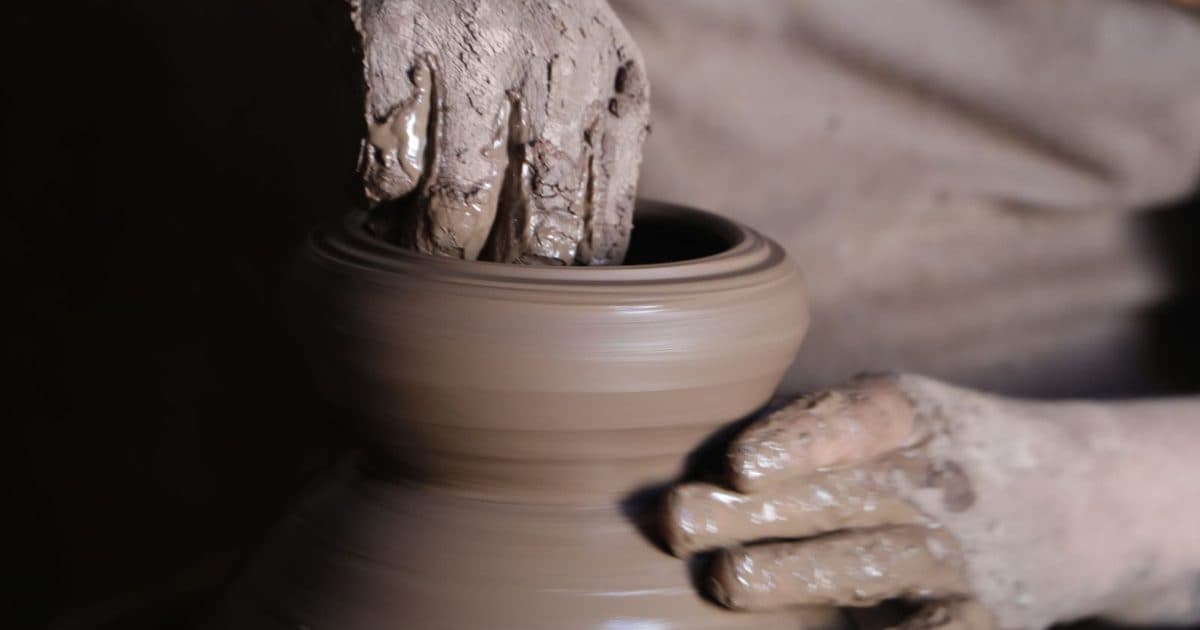
You've done Florence. You climbed the dome, queued for the Uffizi, bought the leather bag in the Oltrarno. Now you have a spare day and the urge to make something with your hands that genuinely belongs to this place. That something lives just south of the city, on the first hills of Chianti, and it's called cotto dell'Impruneta: the red terracotta of the big olive-oil jars, the garden urns and the floor tiles you've been walking on in every Tuscan house. You can try shaping it yourself, in a single session, with no experience whatsoever.
The short version, for anyone in a hurry: Impruneta terracotta can be tried in the workshops and kiln yards in and around the village that open their doors for hands-on clay sessions; you get there from Florence by regional bus or by car, as a day trip; and a single session produces a small, solid object that still needs firing and is then collected or shipped to you. The rest of this piece explains why it's worth the trip.
Why Impruneta clay is unlike any other
Cotto simply means 'fired' in Italian, and the clay dug between the Ema and Greve valleys is what makes this fired earth different. It is rich in galestro, a flaky marl that, once kneaded in, gives the body a structure nothing like the smooth throwing clays of a city studio. There is iron oxide in it, which is where the warm red comes from; there is calcium carbonate, which leaves the fired piece porous and breathable, the reason an Impruneta oil jar lets its contents breathe and a garden pot doesn't rot the roots. Above all, this terracotta survives frost without cracking, which is why the urns stay outdoors all winter. The encyclopaedia entry on Impruneta gives you the essentials; the Italian sources add that Brunelleschi wanted bricks from this very clay for the dome of Florence cathedral.
If you work it, you feel the difference before you see it. The body is gritty, sandy, with real substance; it doesn't glide like porcelain and it won't let you pull paper-thin walls. In return it stands up on its own, tolerates generous thickness and doesn't warp easily in the kiln. That's why the village tradition has always built by hand and in moulds, with coils and slabs, rather than on the wheel: the great jars are raised a strip of clay at a time, one ring over the other, with long pauses so the base can carry the weight. In one session you won't build a jar, but you'll use exactly the same gesture.
What you actually come away with from one session
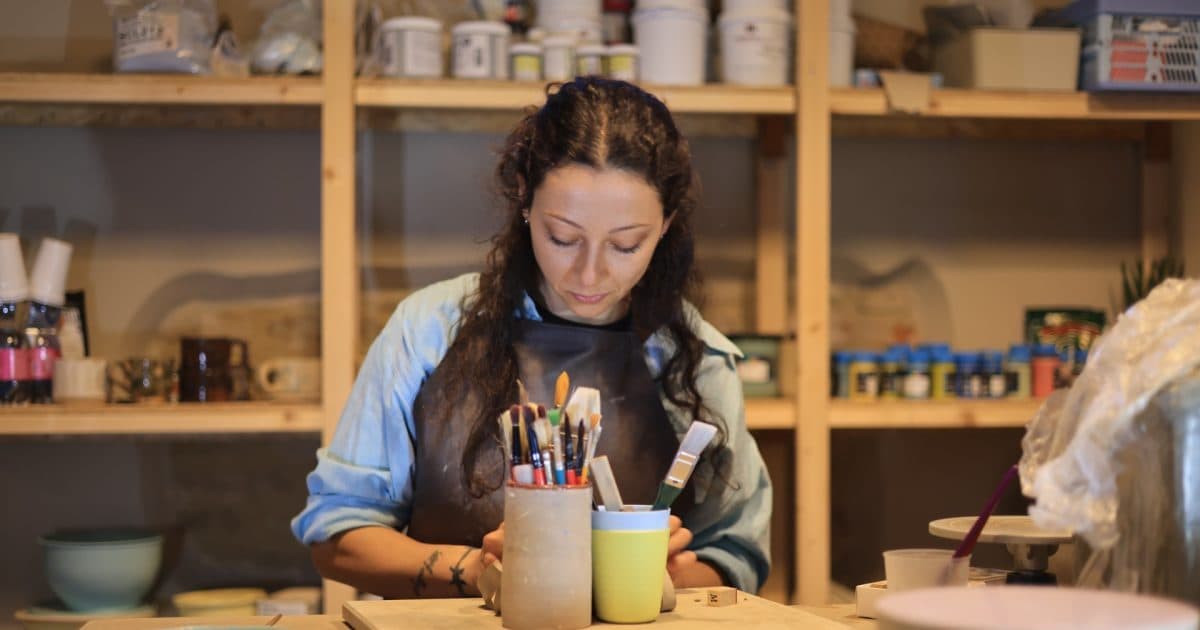
Best said upfront, so you don't turn up expecting to leave with a terrace planter: in a few hours of work, with a clay that wants to be pushed and pressed rather than coaxed, the honest result is a small object. A tile pressed with a leaf picked in the studio garden, a coiled bowl, a slab-built little pot with a stamped decoration, a nameplate or house number. They are the same forms the village has always produced, scaled down to fit in a suitcase.
- It starts with the clay itself: wedging, knocking the air out, learning how much water it takes before a slab cracks or slumps.
- Then the building: slabs for tiles, plaques and nameplates; coils for bowls and small pots; moulds for repeating a motif or a relief.
- The decoration, which in Impruneta cotto is almost always raised or incised: leaves, rope patterns, garlands, lettering. No coloured glazes; the clay is enough on its own.
- Your signature on the base, and then the piece stays behind: it has to dry slowly and go through the kiln, and that part the Maker does after you've left.
Getting to Impruneta from Florence
Impruneta sits on the hills just south of Florence, right where Chianti begins, and it's an easy day out. Without a car, take the regional bus that links the city to the village: the ride is short and already feels like an excursion, with olive trees appearing the moment the houses stop. By car, follow signs for Chianti or leave the Florence to Siena expressway at the Impruneta exit. For timetables, maps and what to see, the Visit Tuscany page on Impruneta is the most reliable place to start.
Build the day around the workshop rather than the other way round: arrive unhurried, walk the main square with its basilica, peek into the kiln yards where rows of jars wait for the oven, then step into the studio with your eyes already full of terracotta. In autumn the village holds its historic fair, the Fiera di San Luca, and the streets fill up; in summer the hills are at their best early in the morning. If you'd rather stay inside the city walls, our guide to craft workshops in Florence covers leather, mosaic, perfume and fresco.
What moves the price of a session
You won't find figures in this article, because they change from studio to studio and would mean nothing out of context. What you can compare is what's included: how long the session runs, how much clay you're given, whether firing is included, whether they ship the piece and who pays for shipping, how small the group is, and whether the session runs in English. A private session for a couple is priced differently from a group, and a studio that lets you take home more than one piece is offering more. On Handsome the price on the listing is all-inclusive: what you read is what you pay.
To weigh up your options, how to choose the right craft workshop explains where not to compromise; if you've never touched clay, what to bring and what to expect on day one saves you the classic mistake of the ring on your finger and the light-coloured jumper. Dates are on the workshops page, filtered by ceramics and the Florence area; cancellation rules are the same for everyone and worth reading before you book. If it's a present for someone who has already seen Florence, a Handsome gift card leaves the date open.
Impruneta clay won't be smoothed into submission: you have to talk it round. It asks the same of the people who have worked it all their lives.
Frequently asked questions
- Where can I try working Impruneta terracotta?
- In the workshops and kiln yards in the village and the countryside between Impruneta and Greve that open to the public for hands-on clay sessions. Not all of them do: producers working purely to commission generally don't take beginners. Bookable sessions in the Florence area are listed on Handsome, with dates, language and exactly what the price covers.
- Do I need any experience with clay?
- No. Beginner sessions use slabs, coils and moulds, techniques you pick up in the first few minutes. The wheel, where there is one, is an extra: the Impruneta tradition never needed it.
- Can I take my piece home the same day?
- No, and anyone who promises that is skipping the firing. Terracotta has to dry and then go through the kiln; you collect the piece later or have it shipped. Ask the Maker how that works before you book, especially if you're passing through.
- How do I get to Impruneta from Florence without a car?
- By the regional bus that connects Florence to the village; timetables and stops are on the Tuscan public transport operator's website and on the Visit Tuscany page for Impruneta. By car, follow signs for Chianti. Either way it's a day trip.
- How is Impruneta cotto different from a ceramics class in the city?
- The material. In town you'll usually work fine clays, often on the wheel and with glazes; in Impruneta you work a coarse, galestro-rich earth that is shaped by hand and stays its natural red. The gesture changes, the object changes, and so does the feeling under your fingers.
Dates, language and all-inclusive prices, with clear cancellation rules
Find ceramics workshops near Florence