The same script plays out every day: park the car, take the shuttle, tour the cave, drive away. Seventy-five minutes underground, then off home or to the coast. It is the most common way to experience the Frasassi Caves — and also the surest way to miss the best part, because what lies outside the ticket office is worth as much as what lies below.
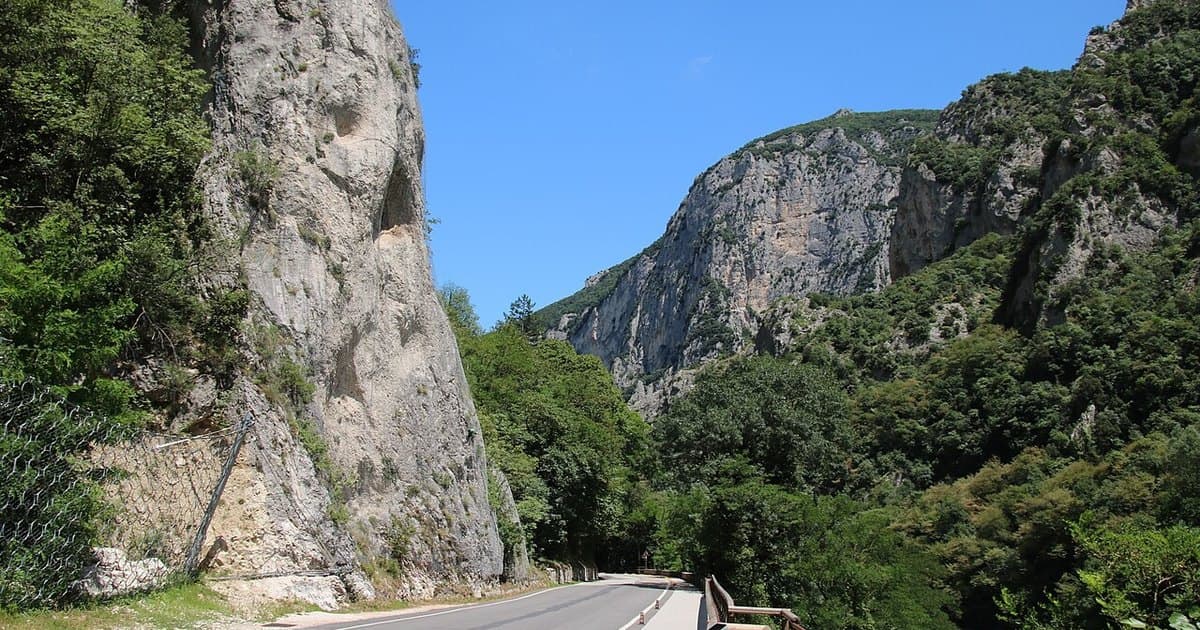
This is Genga, in the hills inland from Ancona, inside the gorge the Sentino river cut through the rock. Within a few kilometres you will find a temple built inside a cavern, a hermitage documented for a thousand years, a Romanesque abbey housing a fossil marine reptile, a walled village and the largest natural park in the Marche. All of it dug or built by hand: first by water, then by people.
The caves: what to actually expect
The discovery itself is a story worth telling. On 25 September 1971, cavers from the Gruppo Speleologico Marchigiano (CAI Ancona) noticed a crack in the mountain with a powerful draught blowing out of it: on the other side was an enormous void, christened the Grotta Grande del Vento, the Great Cave of the Wind. In 1974 part of the complex opened to the public, and it has become one of the most visited attractions in the region.
You can only visit with a guide, along an equipped route that takes about 75 minutes. Inside, the temperature is constant at around 14 degrees Celsius, summer and winter alike. The first chamber you enter, the Abisso Ancona, is a cavity so vast that — as the guides love to point out — it could hold Milan Cathedral. Then come stalactites, stalagmites, small lakes, formations that water has been shaping drop by drop over spans of time no human scale can hold.
The Valadier Temple and the hermitage in the rock
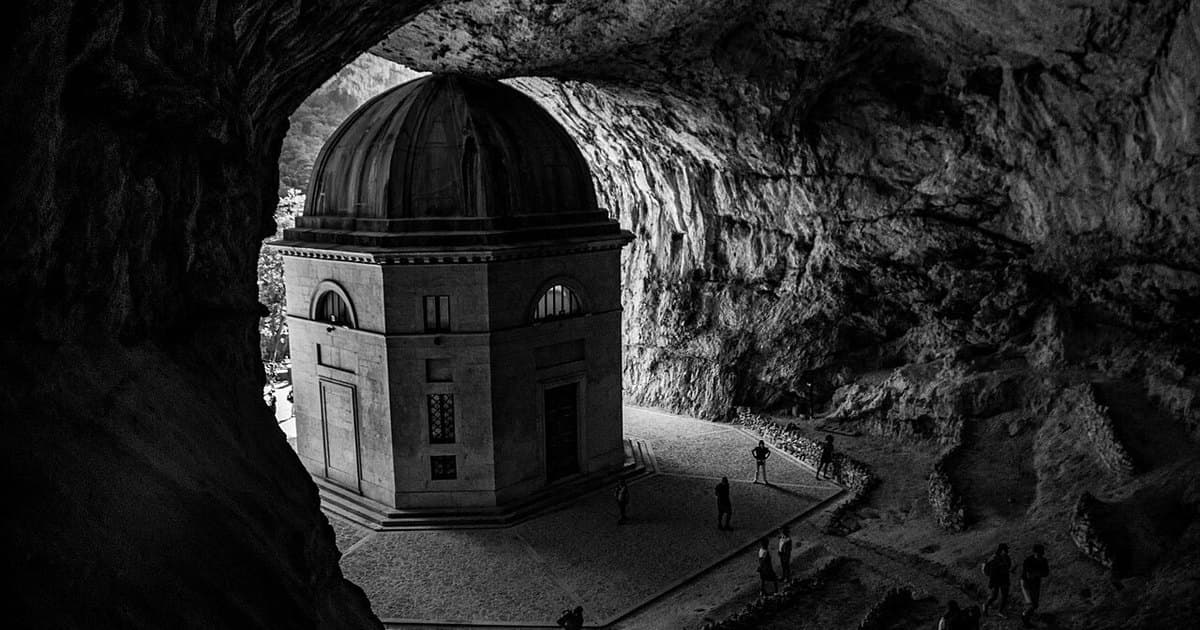
Here is the first thing hurried visitors miss. Just beyond the mouth of the gorge, an uphill path leads to the opening of a cavern. Inside it, set beneath the rock vault, stands an octagonal travertine temple commissioned in 1828 by Pope Leo XII — Annibale della Genga, born in these very parts. It is known as the Valadier Temple, after the architect to whom the design is traditionally attributed. It once held a Madonna and Child from the workshop of Antonio Canova: today the original is in Genga's museum, and a copy stands in the cave.
A few steps away, pressed against the cliff and partly carved into it, is the hermitage of Santa Maria infra Saxa: the first written records date to 1029, when it housed a monastery of cloistered Benedictine nuns. A thousand years of prayer inside a rock. Together, the temple and the hermitage tell the thread that runs through this whole territory: wherever nature opened a hollow, someone built inside it.
San Vittore: the abbey and the ichthyosaur
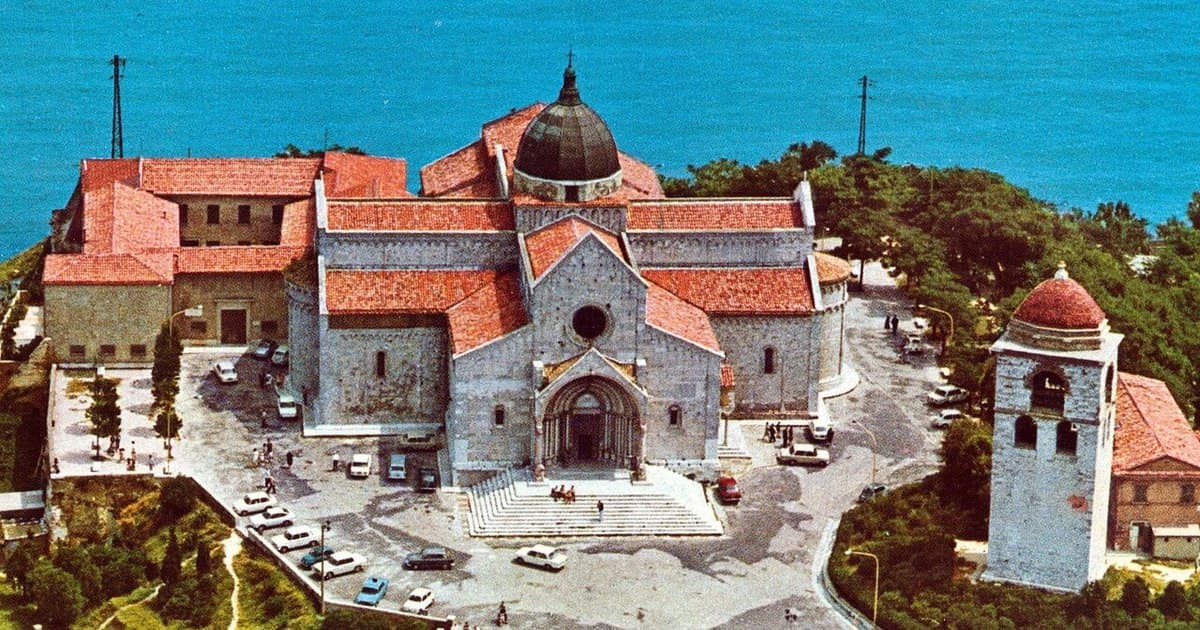
Back down in the valley, a short walk from the caves' ticket office, lies the hamlet of San Vittore. Here stands the abbey of San Vittore alle Chiuse, founded in the eleventh century: limestone walls, a Greek-cross plan, one of the most important Romanesque churches in the Marche, declared a national monument in 1902. Inside it is bare, silent, powerful. Five minutes here put the whole day back in order.
Next door, in the former Benedictine monastery, is the Speleo-palaeontological and Archaeological Museum: three floors explaining how the gorge formed and what lived here before humans did. The star exhibit is the fossil of an ichthyosaur, a marine reptile from the Mesozoic era found in 1976 at Camponocecchio. A reminder that this mountain was once a seabed.
The village of Genga and the Gola della Rossa
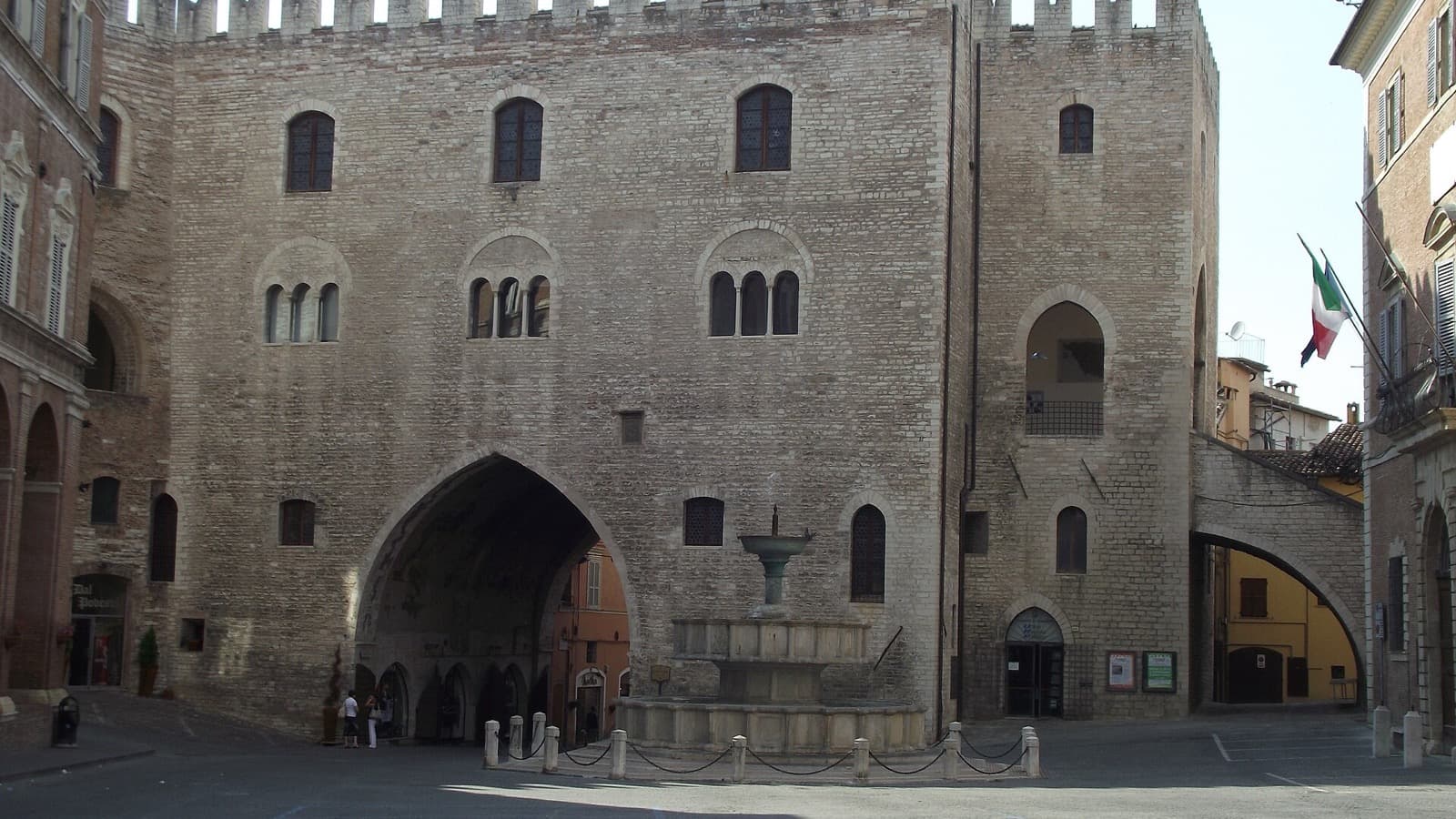
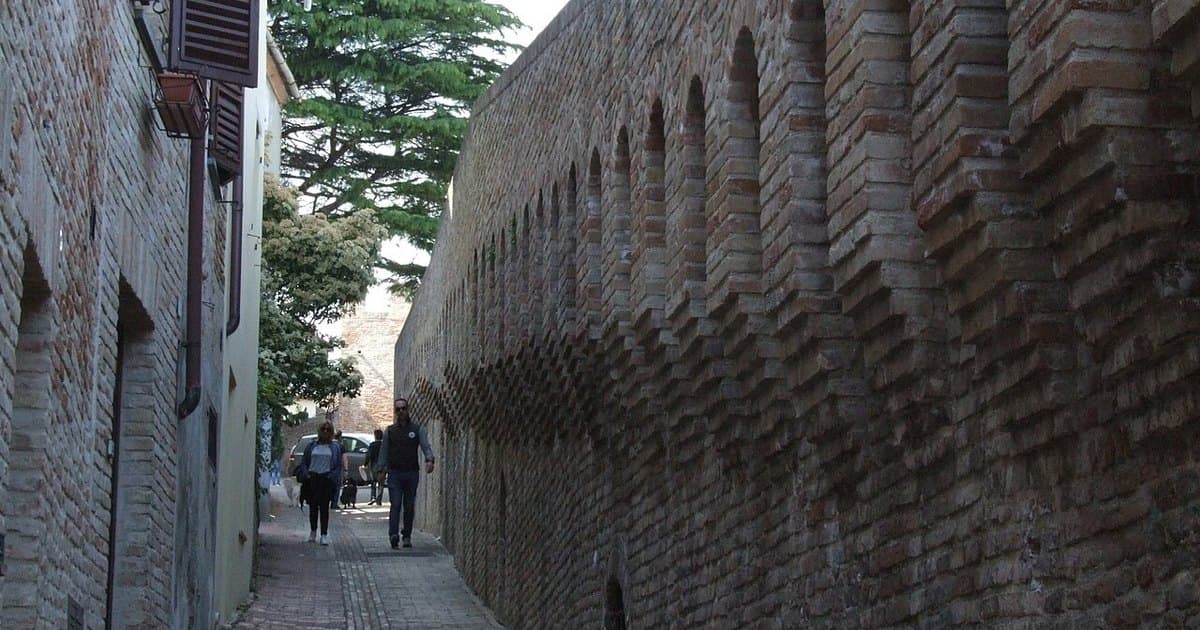
The main village, Genga, sits on a wooded hilltop: a compact medieval castle gathered within its walls, certified with the Bandiera Arancione (Orange Flag) by the Italian Touring Club for the quality of its welcome. It is small, quickly explored, and the exact opposite of the caves: after the underground cathedrals, narrow lanes and bare stone under the open sky.
All of this sits inside the Gola della Rossa and Frasassi Regional Natural Park, established in 1997: at around ten thousand hectares, it is the largest regional protected area in the Marche. If you have the legs and the time, there are trails above the gorge walls, birds of prey, dense woods. If you do not, simply drive the road through the canyon and look up: the Gola della Rossa and the Frasassi gorge are spectacular even from the car window.
How to plan the day
- Morning: guided tour of the caves, booked in advance in peak season.
- Lunch around San Vittore or in the village of Genga.
- Early afternoon: walk up to the Valadier Temple and the hermitage of Santa Maria infra Saxa.
- Afterwards: the abbey of San Vittore alle Chiuse and the museum with the ichthyosaur.
- If there is light left: the village of Genga or a walk in the Gola della Rossa park.
Seen as a whole, the day has a thread running through it: water carving the rock, monks carving the hermitage, stonecutters squaring the temple's travertine and the abbey's stone. This is a handmade territory in the most literal sense. And around the gorge, the working hand never stopped: people here still create things by hand, and if you want to take home something handmade, looking at what the area offers is the most direct way to take home something no cave can give you.
Frequently asked questions
- How long does the Frasassi Caves tour take?
- The tourist route is guided and takes about 75 minutes along an equipped path. The temperature inside is constant at around 14 degrees Celsius: bring a jumper even in summer.
- Can you reach the Valadier Temple on foot?
- Yes: an uphill path from the valley floor leads to the cavern that holds the temple and the hermitage of Santa Maria infra Saxa. Comfortable shoes are needed, but it is not a mountaineering route.
- Is the village of Genga worth a stop too?
- Yes. It is a small medieval castle village on a hilltop, certified with the Orange Flag by the Italian Touring Club, and quick to visit. Its museum holds the Madonna from Canova's workshop that once stood in the Valadier Temple.
- Are the caves suitable for children?
- The tourist route is equipped and considered easily accessible, so in general yes. Keep the cool temperature and high humidity in mind: layers and closed shoes help.