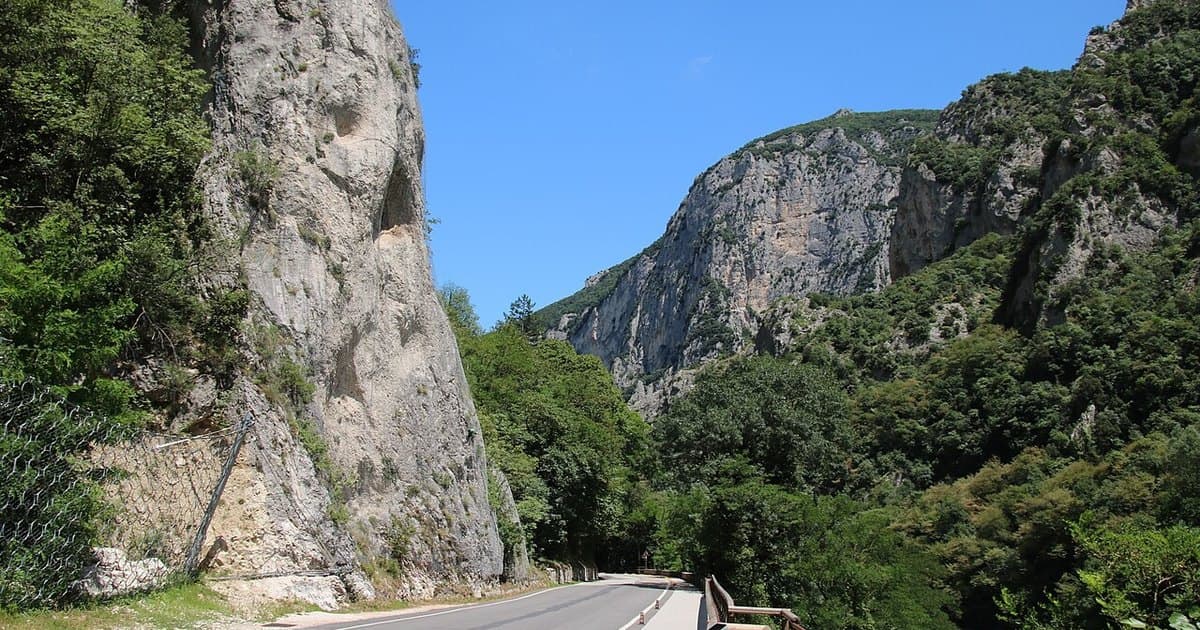
The Furlo gorge and Fossombrone sit a few kilometres apart, on the same road. That is why one day is enough: the morning inside a gorge carved by the river, the afternoon in a town with three court palaces and a collection of twentieth-century Italian painting. In between, the via Flaminia, which has run through this valley for more than two thousand years.
The gorge carved by the Candigliano
The Gola del Furlo is the cut the river Candigliano carved between Monte Pietralata, 889 metres, and Monte Paganuccio, 976. Limestone walls drop sheer to the blue-green water that ends up in every photograph. It has been a state nature reserve since 2001, covers more than 3,600 hectares and spans five municipalities: Acqualagna, Cagli, Fermignano, Fossombrone and Urbino. The gorge itself lies between Acqualagna and Fermignano; Fossombrone falls within the reserve's wider perimeter, about ten kilometres down the same road.
The name comes from the Latin forulus, the hole opened in the rock to let the Flaminia through. There are two tunnels. The first and older one is about eight metres long and a little over three wide: one cart at a time. The second was cut on the orders of the emperor Vespasian between 76 and 77 AD: 38 metres long, six metres high. It is not a fenced-off ruin, the road still runs through it.
What you can and cannot do
The reserve has a detailed set of rules, and it is worth reading them before you go: several things people take for granted are not allowed here.
- Swimming and boats of any kind are forbidden; the one exception is canoes and kayaks on an authorised stretch of the Candigliano.
- Zone A, under full protection, is closed to access: no hiking, no climbing.
- Flying drones requires authorisation.
- Camping and picnics only in designated areas.
- Climbing is allowed only at the site named in the regulations.
- Fishing is permitted only on the stretch provided for, and catch-and-release only.
Fossombrone, the city of three courts
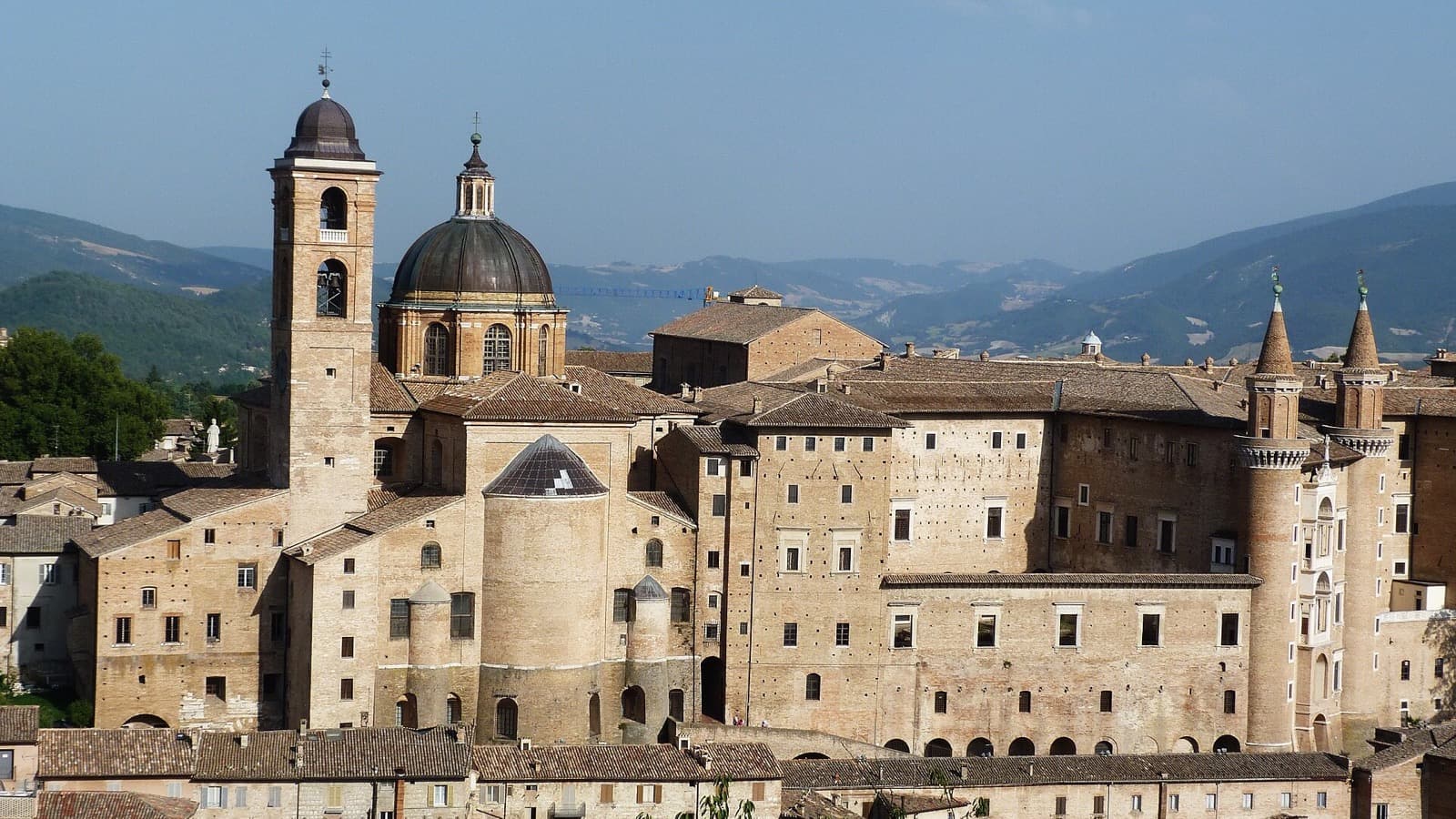
The nickname comes from three palaces, all within the old town: Corte Bassa, Corte Rossa and Corte Alta, built for the Montefeltro and Della Rovere families to spend the coldest months in.
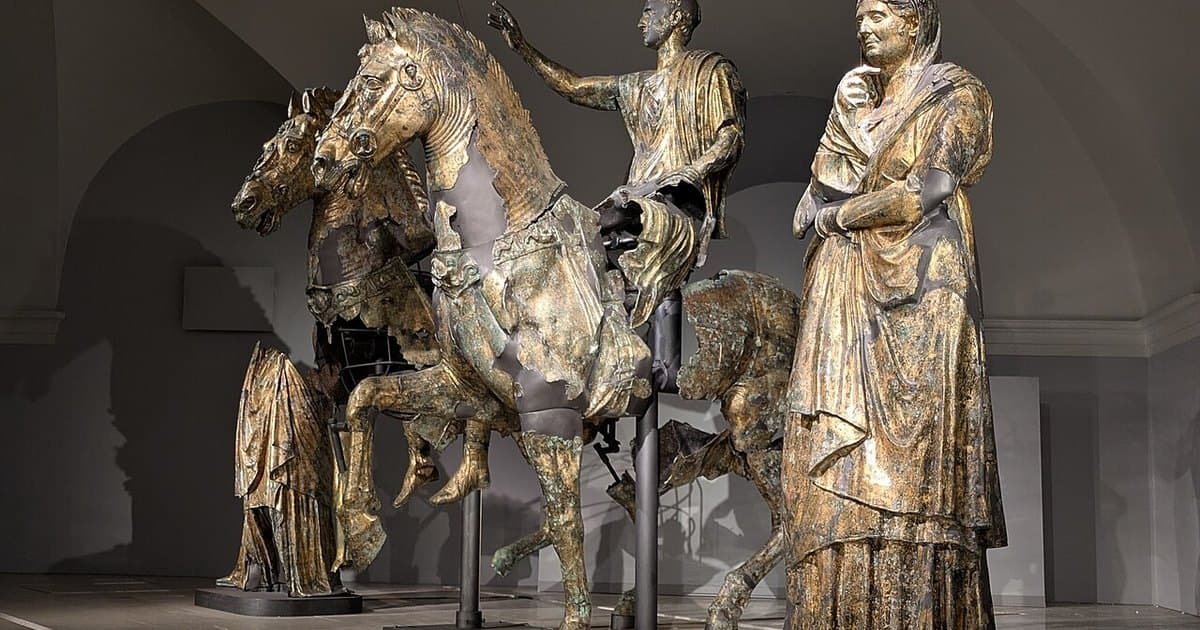
The Corte Alta is the old ducal palace. Federico da Montefeltro began building it in 1464 on top of existing medieval structures, and it grew over some thirty years: the hand of Francesco di Giorgio Martini is recognisable in the later phases. Under Guidobaldo I and Elisabetta Gonzaga it became the court's usual residence. Today it houses the Archaeological Museum and the civic picture gallery named after Augusto Vernarecci, founded in 1901, with paintings from the sixteenth to the nineteenth century.
The Cesarini gallery
It is a house museum, and it feels like one: the rooms are still those of the man who lived there. Over decades the notary Giuseppe Cesarini gathered twentieth-century Italian painting alongside ceramics, porcelain and glass. The first core opened in his own house in 1951; on his death in 1977 he left the building and the collection to the municipality of Fossombrone, and the gallery opened to the public in 1987.
The starting point was his friendship with Anselmo Bucci, a painter born in Fossombrone in 1887, one of the founders of the Novecento group and the man who gave it that name. Around his works the collection widened to Italian figurative painting of the last century.
The Marmitte dei Giganti
Just outside the centre, at San Lazzaro, the river Metauro runs through a ravine with vertical limestone walls. The water has scoured circular hollows into the rock, the marmitte, or giants' kettles, which give the place its name. You look at them from the bridge and the path along the bank.
One day, two halves
- Morning at the Furlo: stop along the Flaminia, the Roman tunnel, a stretch of the gorge on foot.
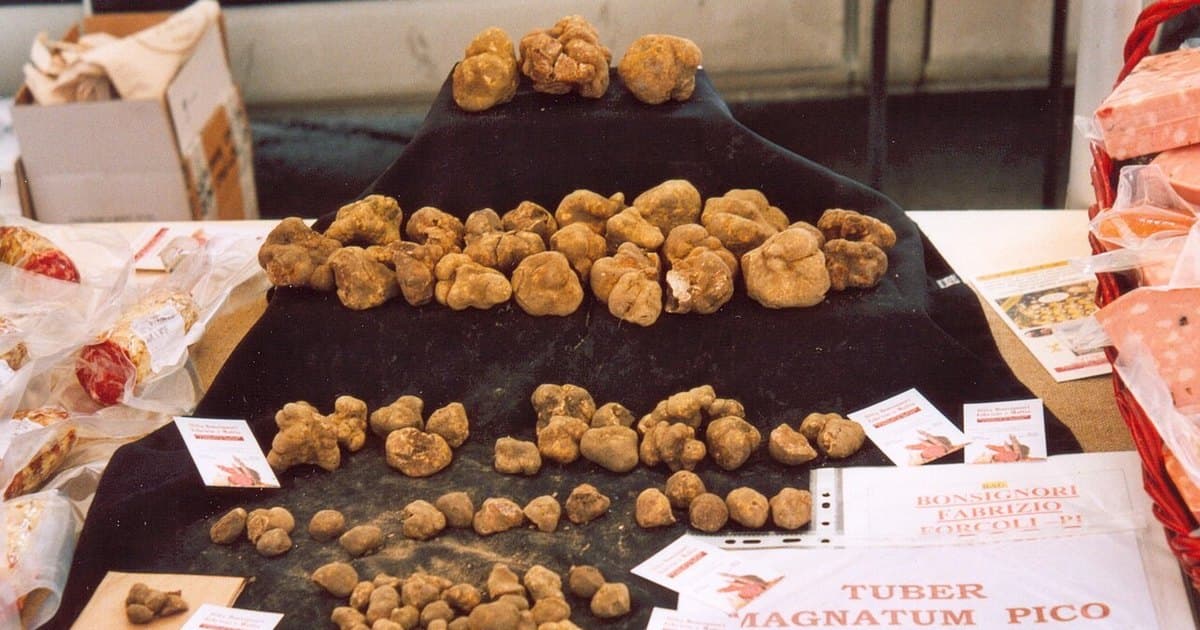
- Lunch along the valley. In autumn, in Acqualagna, the white truffle is not a tourist gimmick: it is the local economy.
- Afternoon in Fossombrone: Corte Alta and the Cesarini gallery. Two museums are plenty.
- Before heading back, San Lazzaro and the Marmitte dei Giganti, which look better in low light.
Why this valley still has its trades
What holds the day together is material: stone, water, a road. The limestone of the gorges is the same stone as the walls of the villages. The river turned mills and workshops long before it became scenery to photograph. And the Flaminia, laid out around 220 BC, carried goods and people for centuries: just outside Fossombrone, at San Martino del Piano, lie the remains of Forum Sempronii, the Roman town that grew up on that very road.
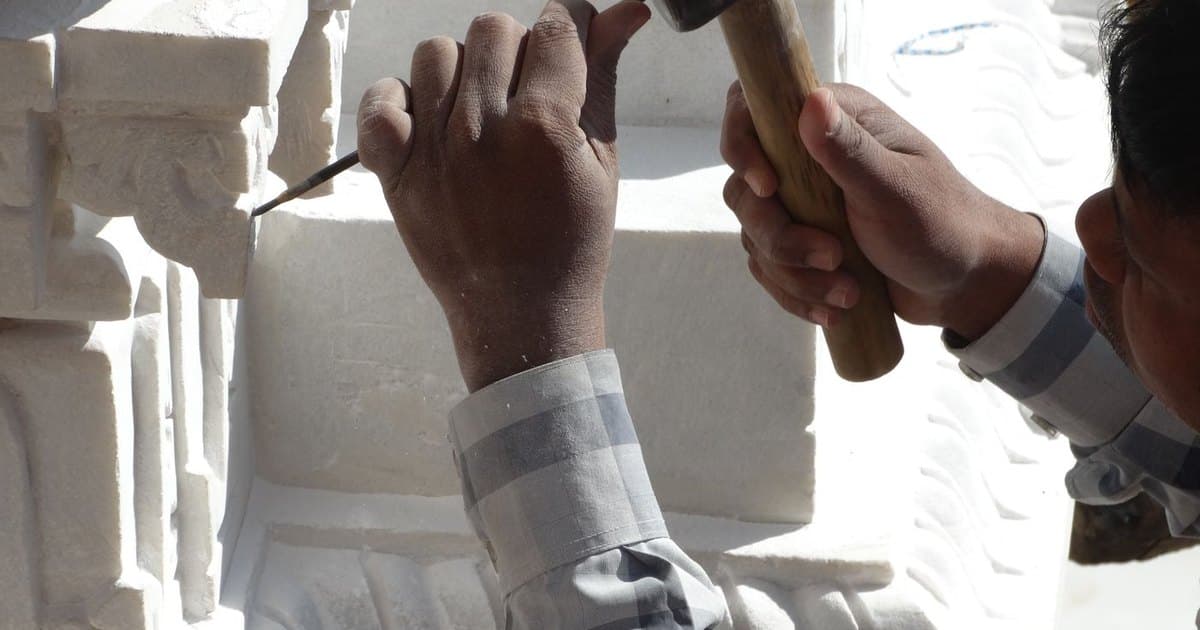
The trades never left. People working ceramics, wood or metal in this part of the Marche do it where those materials already were. Stepping into a workshop here is not an attraction built for tourism: it is somebody's place of work.
Frequently asked questions
- How long do I need for the Furlo and Fossombrone?
- A full day is enough by car: half a day at the gorge, the afternoon in town. If you want to walk the reserve's trails, give it two days.
- Can you swim at the Furlo or at the Marmitte dei Giganti?
- No. In the Furlo reserve swimming and boats are forbidden, apart from authorised canoes and kayaks on one stretch of the Candigliano. At the Marmitte, Fossombrone has issued a permanent bathing ban because of the risk linked to the dam upstream.
- Do you really drive through the Roman tunnel?
- Yes. The tunnel cut on Vespasian's orders between 76 and 77 AD is still part of the Flaminia's route. It is a road open to traffic, so take care if you walk it.
- Do I need to book the museums in Fossombrone?
- Better to call ahead. Entry also works on request and opening times vary with the season: the municipal tourist information point is the place to ask.