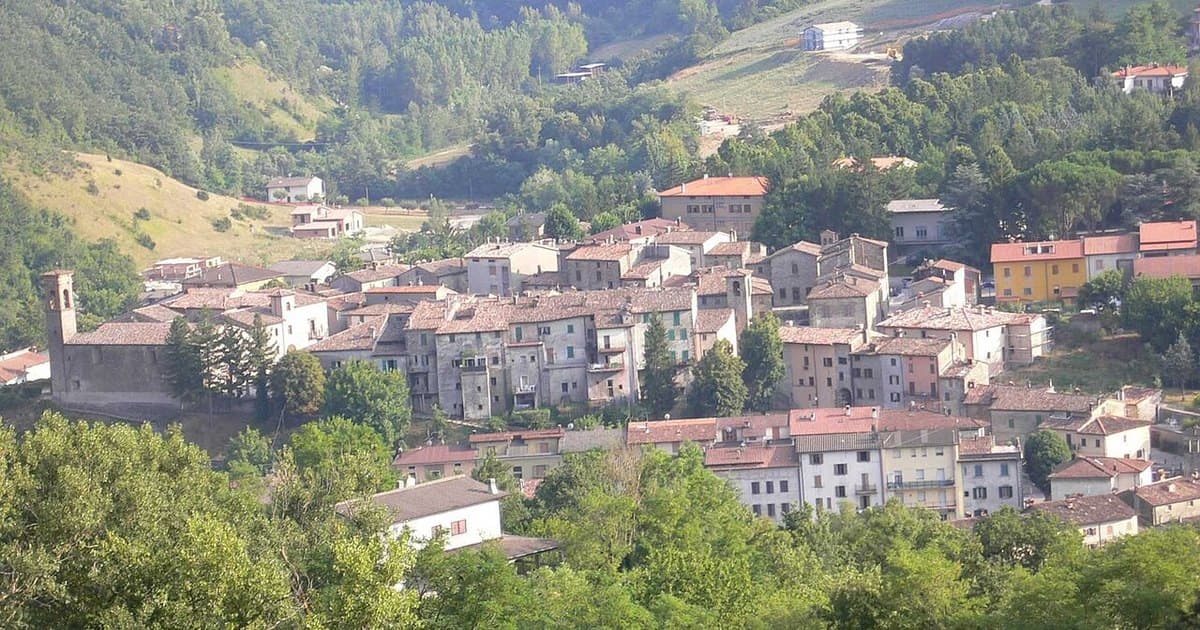
Acqualagna sits in the province of Pesaro e Urbino, on the via Flaminia, where the Burano river joins the Candigliano below the slopes of Monte Pietralata and Monte Paganuccio. For most people the town exists for one weekend a year: the white truffle fair, between October and November. It works the rest of the year too, because here truffles are not an event but a year-round trade.
This guide is for the other fifty weeks. What is harvested and when, how the hunter's work actually goes, why the price keeps moving, and what there is to do in town and nearby when the stalls are gone.
The truffle calendar, species by species
In the Marche the harvest periods are not set by tradition but by regional law no. 5 of 3 April 2013 and its calendar, which the regional council updates. Harvesting outside those windows is illegal. These are the four truffles that matter around Acqualagna.
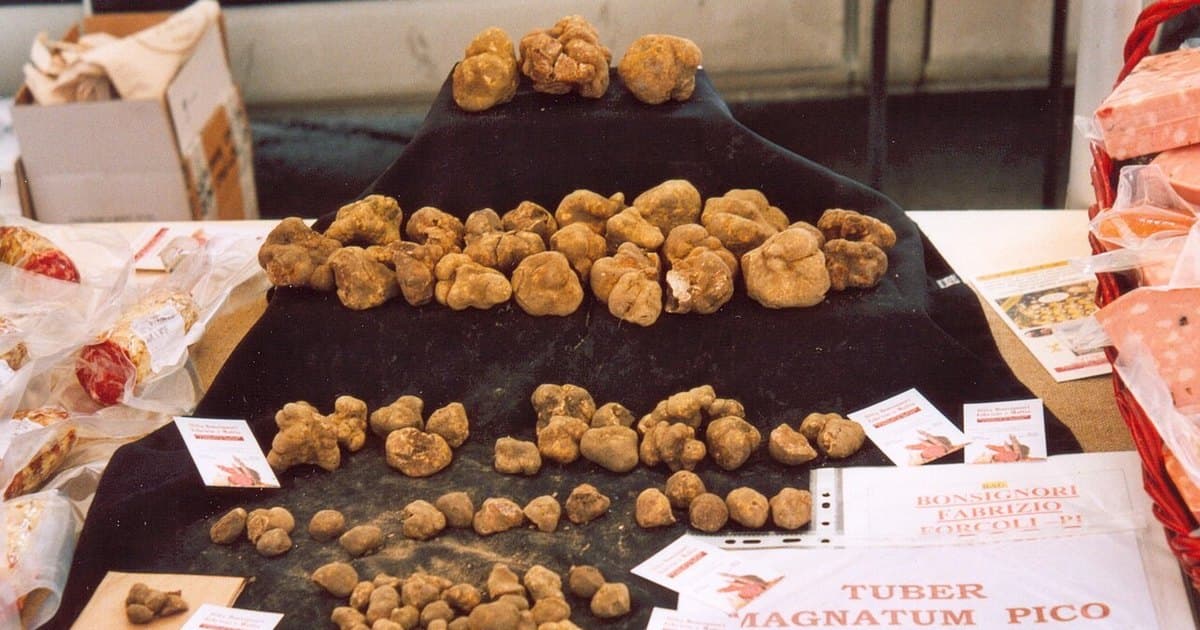
- Prized white truffle (Tuber magnatum Pico): 1 October to 15 January.
- Prized black truffle (Tuber melanosporum): 1 December to 15 March.
- Bianchetto, or marzuolo (Tuber borchii): 15 January to 15 April.
- Scorzone, the summer truffle (Tuber aestivum): 1 June to 31 August and 1 October to 31 December.
Lined up, those dates say something simple: there is almost always a truffle here, only the species changes. That is why the town built three events instead of one: the white truffle fair between October and November, the prized black truffle fair in February, and the summer black truffle fair on the first weekend of August.
One person, one dog, one vanghetto
Truffle hunting is not a stroll with your nose in the air. It is closely regulated, and the rules describe the job better than any adjective could.
- You need a licence, obtained by passing an exam; the minimum age is fourteen and it is valid across Italy.
- You go out with one or two dogs, no more.
- The only permitted tool is the vanghetto, or vanghella: between fifty and one hundred and twenty centimetres long, with a blade fixed to the handle.
- No digging at night.
- Turning over the ground indiscriminately is forbidden: you open the soil where the dog signals, you do not plough the wood.
The dog does the part a person cannot: it smells the fruiting body under the soil when there is nothing to see on the surface. Training takes a long time and the partnership lasts years. The digging, though, is done by the person, with the vanghetto, as tight around the truffle as possible, and then the hole is closed again. That is not etiquette: a ruined truffle ground stops producing, and whoever ruins it is working against next year's harvest.
Why the price changes every week
White truffles cannot be farmed to order: they grow where they want, when the year allows. And they last very little, so nobody can warehouse them waiting for the market to rise. The price is set by the rain of the previous months, the temperature, how much came out of the ground in the last few days, and the size and quality of each individual truffle. During the season the chambers of commerce record and publish quotations: checking them before you walk into a shop is the fastest way to tell whether a figure is in line. A price list that stays identical from January to December, by contrast, is worth a second thought.
Buying in town, and getting it home whole
The shops stay open outside fair season, and that is when you buy best: no crowd, and time to ask questions. Ask for the species by its proper name, because prized white, prized black, bianchetto and scorzone differ enormously in aroma and price, and in everyday speech they get muddled constantly. Ask when it was dug. Prefer a whole, firm truffle, and smell it: the aroma should reach you without effort. If you are buying jars and sauces, read the label and check how much truffle is actually in there and whether flavouring has been added.
The fair, with the dates
The 2026 edition is the 61st Fiera Internazionale del Tartufo Bianco. The days listed by the Comune di Acqualagna are 25 and 31 October, then 1, 7, 8, 14 and 15 November: not a single weekend, but several in a row. If you go, plan for it: the town is small, you will park a long way out, and early morning is the only time you can really talk to the people selling.
The town when the stalls are gone
On the square named after Enrico Mattei, under the arcade of Palazzo Conti that locals call le logge, is the Museo del Tartufo: a route in three sections — Discovery, Initiation, Rarity — that puts biology, myth and market together instead of reducing everything to a recipe. It belongs to the municipal museum network along with the birthplace museum of Enrico Mattei, born here on 29 April 1906 and later head of Eni, and the Antiquarium Pitinum Mergens. Opening hours are shorter off season: one phone call before you set off saves a wasted trip.
The Furlo, minutes away
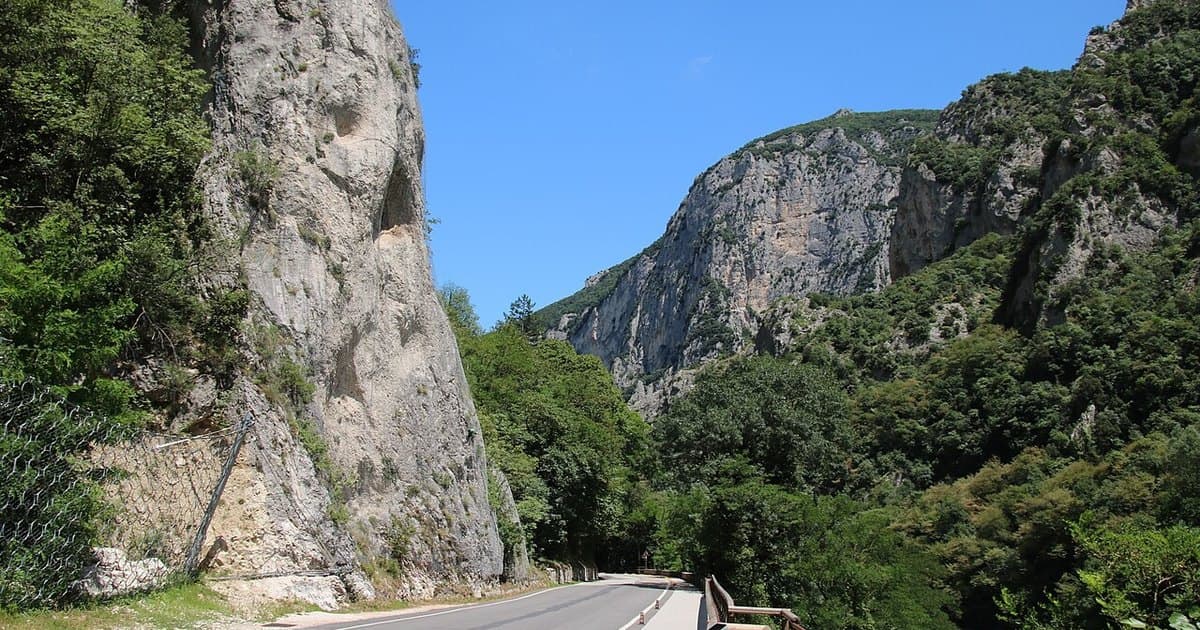
From Acqualagna it takes only a few minutes to reach the gorge the Candigliano carved between Pietralata and Paganuccio. The Gola del Furlo state nature reserve was established in 2001 and covers around 3,600 hectares across Acqualagna, Cagli, Fermignano, Fossombrone and Urbino. The road still runs through the Roman tunnel completed in AD 76 on the orders of Vespasian, beside a smaller and older one: this is the via Flaminia, and it is the reason the town grew up where it did. It walks well all year, and in winter the gorge gives more than it does in August.
Frequently asked questions
- When is the Acqualagna truffle fair held?
- In 2026 it is the 61st Fiera Internazionale del Tartufo Bianco, on 25 and 31 October and on 1, 7, 8, 14 and 15 November. The dates change every year: check them on the Comune di Acqualagna website before you travel.
- Can you buy truffles in Acqualagna outside the fair?
- Yes. The shops in town trade all year, and what you find depends on the month: prized white in autumn, prized black in winter, bianchetto between January and April, scorzone in summer.
- Do you need a permit to hunt truffles in the Marche?
- Yes. Regional law 5/2013 requires a licence obtained by passing an exam, with a minimum age of fourteen and validity across Italy. You may work with one or two dogs, the only permitted tool is the vanghetto between fifty and one hundred and twenty centimetres long, and hunting at night is forbidden.
- When is the best time to visit Acqualagna?
- It depends what you want. October and November bring the prized white truffle but also the crowds of the fair; February is the prized black truffle month and the town is quiet; summer brings the scorzone and easy walks in the Furlo gorge with the river right there.