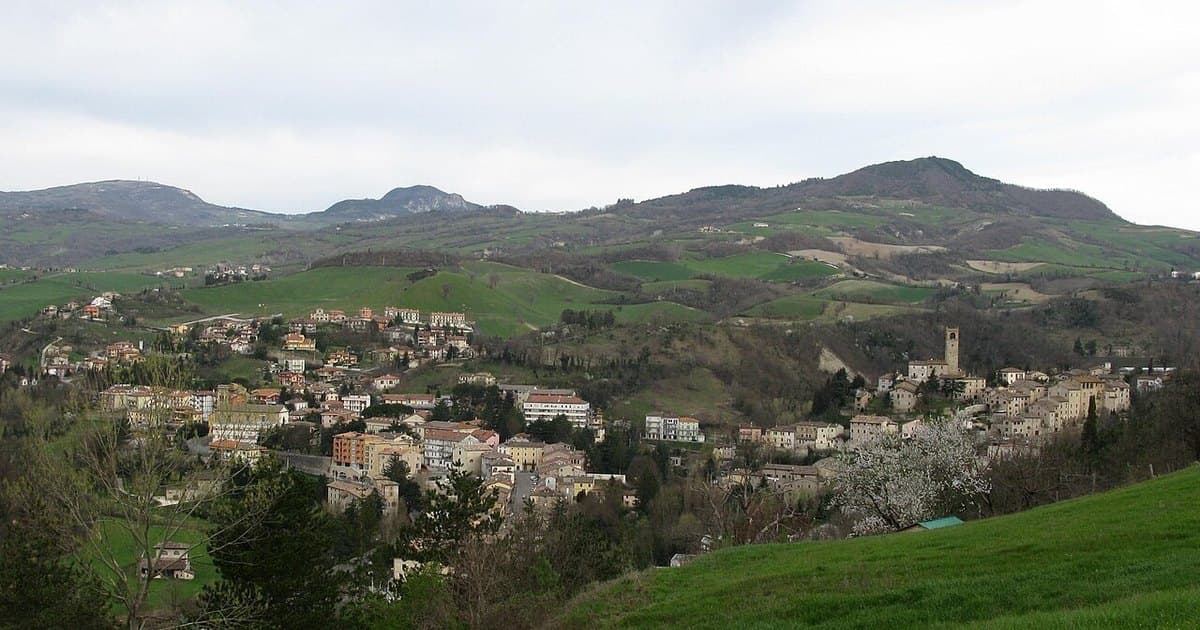
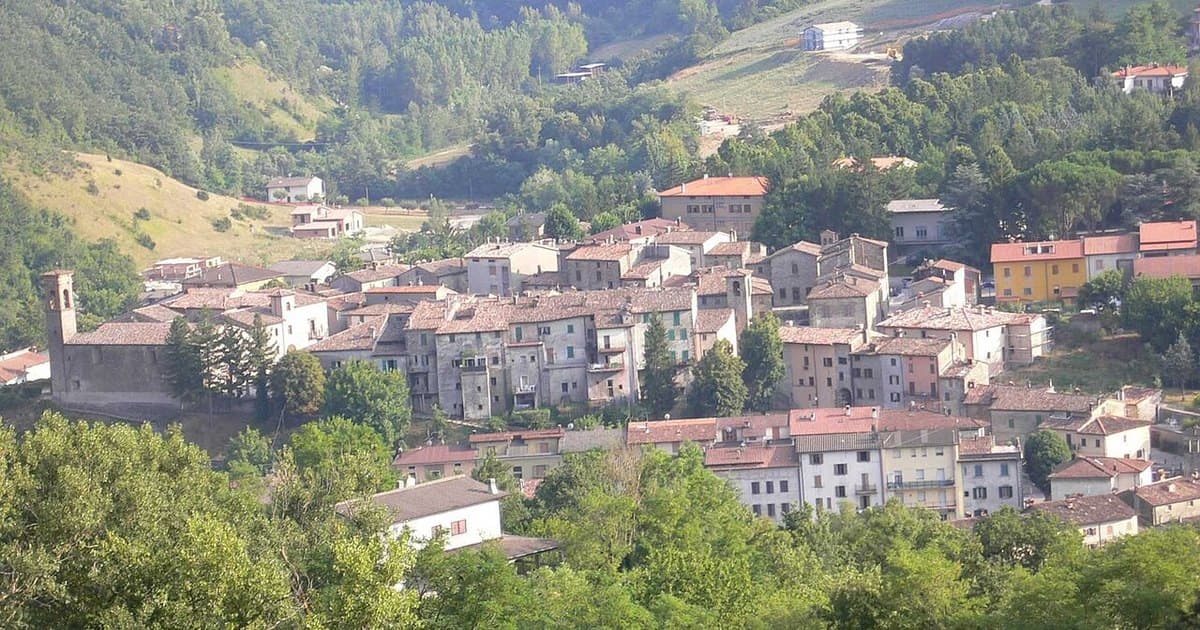
Apecchio sits just under 500 metres above sea level, in the province of Pesaro and Urbino, with fewer than two thousand residents and the bulk of Monte Nerone behind it. It is a small town that did something rare: it picked a craft and built its identity on it. That craft is brewing.
A town that gave itself a trade
Apecchio presents itself as Italy's Beer City, and it hosts the national association of Beer Cities, which brings together some twenty Italian municipalities with at least one craft or farm brewery on their territory. The word alogastronomia was coined here too: a neologism for the link between craft beer, quality local produce and place, the idea that beer deserves to be paired with food as seriously as wine always has been.
This is not only communication. In the upper Metauro valley the water comes from Apennine springs, and barley for malting and hops grow around the town. A brewery, in the end, is a plant that transforms water: everything else is dosage and time.
What craft actually means
In Italy the word is not free to use. Since 2016 the law says only beer made by small independent breweries, and not pasteurised or microfiltered during production, can be called craft. Small and independent has a precise measure: its own plant, no licence from anyone else, annual output no higher than 200,000 hectolitres. In practice: the beer reaches the glass alive, with the yeast still in it. That is why it changes over time and has to be treated as a fresh product.
The stages of a brew day
- Mashing: milled malt meets hot water and enzymes turn starch into fermentable sugars. Temperature decides how dry or how full the result will be.
- Lautering: the sweet wort is separated from the spent grain, the exhausted husks, which often go on to feed livestock at nearby farms.
- The boil: this is where hops go in. Early gives bitterness, late gives aroma. It is the window in which the brewer decides the character.
- Fermentation: yeast eats the sugars and produces alcohol, carbon dioxide and hundreds of aromatic compounds. Top or bottom fermenting is not a quality judgement, it is a family of yeasts and temperatures.
- Bottle conditioning: a little sugar and yeast go in, the bottle is capped and the bubble is born inside rather than injected. That is the reason for the haze at the bottom, and it is not a flaw.
Pairing with food works differently than wine
Wine mostly works through acidity, tannin and alcohol. Beer has two levers wine does not: hop bitterness and carbonation. Bitterness scrubs fat rather than fighting it, and the bubble lifts the bite and resets the palate. That is why beer often lands more directly with something fried, with an aged cheese, or with a dish out of the woods.
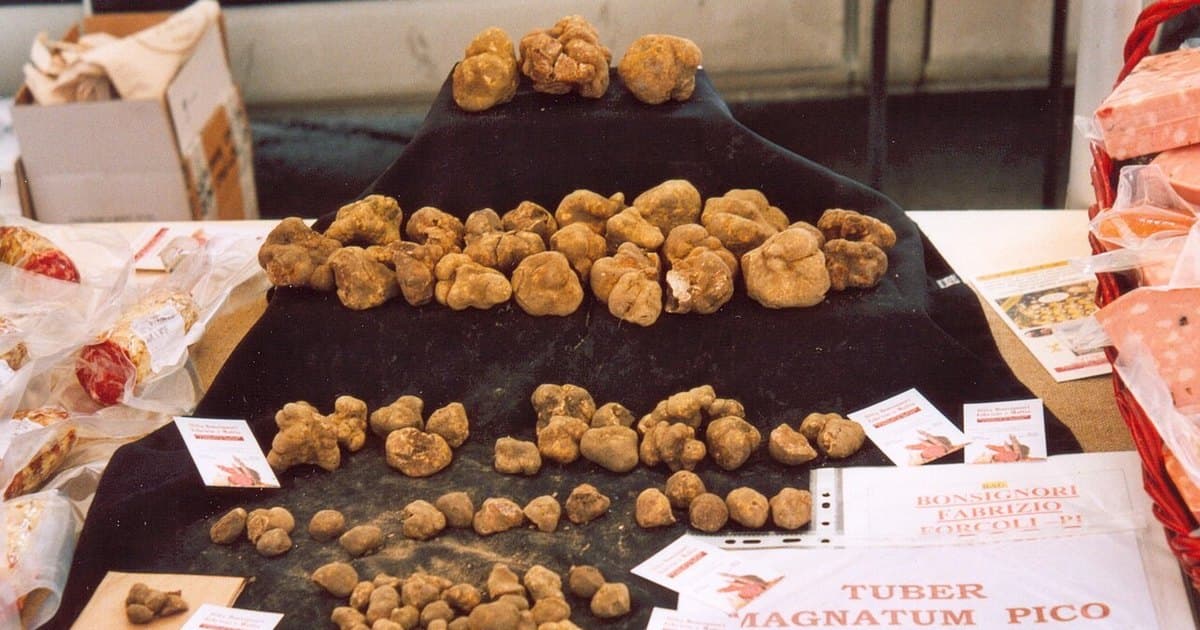
Here that has a practical consequence, because the local larder is built on truffle, mushrooms, meat, cheese and homemade sweets such as bostrengo. Truffles are found around Apecchio in four varieties across the year, prized white, prized black, bianchetto and summer black, and the town belongs to the national association of Truffle Cities. A toasted malty beer with black truffle, a dry, well carbonated pale beer with fried food: that is what alogastronomia means, and it was not invented by a press office.
Monte Nerone behind the town
Nerone reaches 1,525 metres and is among the highest peaks of the Umbrian-Marche Apennines, shared between Apecchio, Cagli and Piobbico. It is a limestone mountain, so it is riddled with holes: sinkholes, swallow holes and caves that have kept cavers busy for decades. In town, inside Palazzo Ubaldini, a museum holds over two thousand fossils and minerals collected on Nerone itself. It is the fastest way to understand why the landscape looks the way it does.
- The Fondarca Arch, what remains of the collapsed vault of a large cave, is reached from the rural hamlet of Pieia along a stretch of the Sentiero Italia.
- Routes on the massif run from easy walks to long climbs, and the beech woods hold their shade even at midday.
- The road up has a reputation among cyclists as one of the hardest ascents in Le Marche.
- In winter a small, family-sized ski area operates on the north-eastern slope.
When to go
In summer the Adriatic coast is crowded and hot; here you gain altitude and the air changes. That is when the town works best as a base: morning on Nerone, afternoon in the shade of the old centre, evening with something fermented in hand. Autumn changes everything, because white truffle season opens and the calendar tightens around the festival.
What to see in town
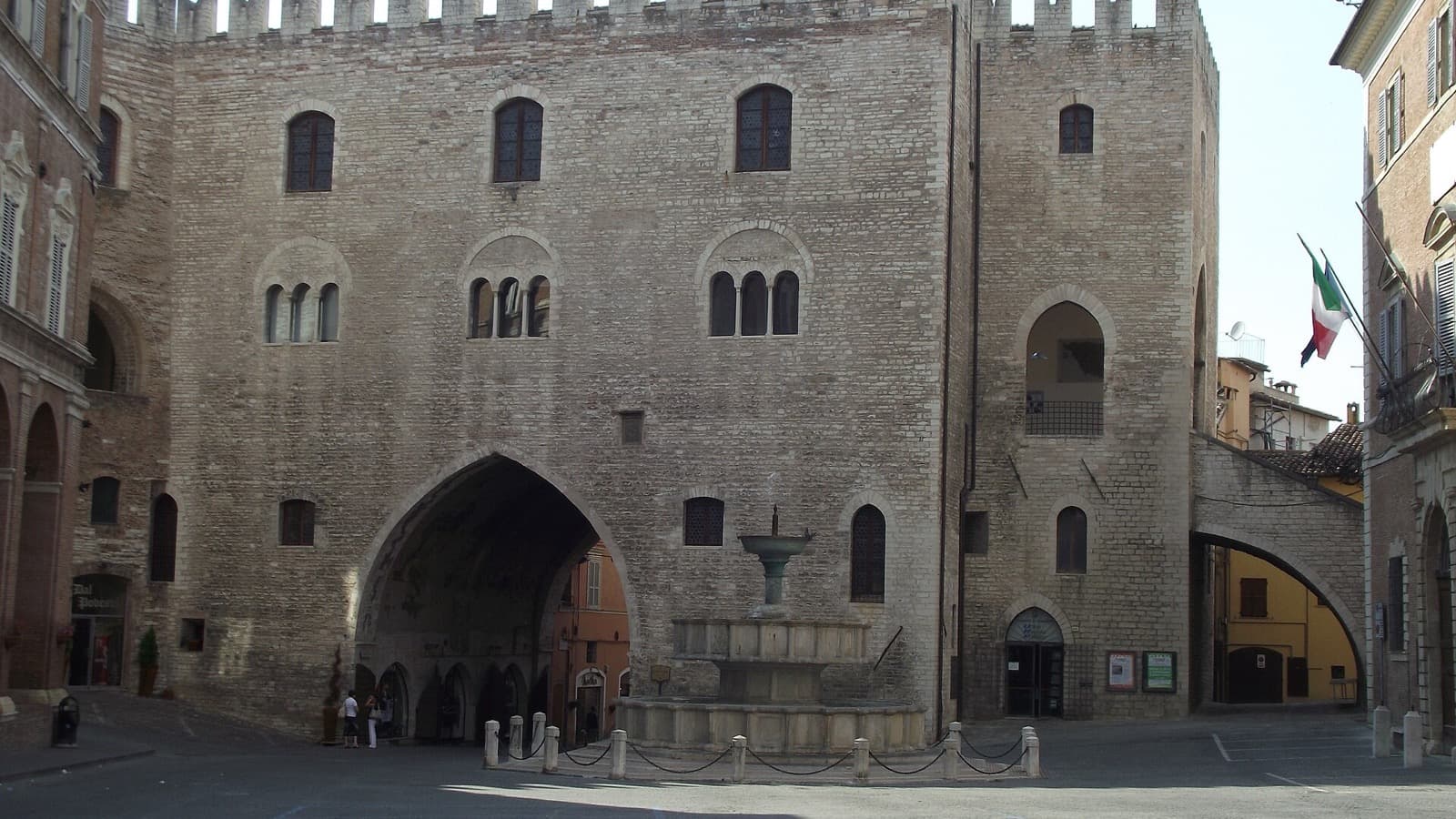
The centre is small and walkable. Palazzo Ubaldini, attributed to Francesco di Giorgio Martini, houses the G. Perugini theatre, the smallest in Le Marche, and the fossil museum. The medieval bridge is still there, along with traces of the Jewish quarter and its synagogue, and below run the two watercourses, Biscubio and Menatoio. The Touring Club Italiano has awarded Apecchio the Bandiera Arancione, the mark given to inland villages that also hold up on hospitality.
A place like this is made of trades you learn by watching them: people who malt, people who hunt truffles, people working wood, clay and cloth in the surrounding valleys. If you want to see the work up close rather than only taste the result, it is worth looking at what the Makers in the area are offering.
Frequently asked questions
- Why is Apecchio called the City of Beer?
- Because it built its identity around craft beer: it has breweries, it hosts the national association of Beer Cities, which brings together around twenty Italian municipalities, and it is where the term alogastronomia was coined, meaning the link between beer, local produce and territory.
- When is the beer and truffle festival held?
- The main event is Tartufo & Birra, the truffle market fair, traditionally on the first weekend of October. The 2026 edition is announced for 2 to 4 October. Always confirm dates on the municipality's official channels.
- What makes a beer craft under Italian law?
- Since 2016, only beer from a small independent brewery, with its own plant and annual output no higher than 200,000 hectolitres, that is neither pasteurised nor microfiltered during production, can be labelled craft.
- Is Monte Nerone suitable if you are not a hiker?
- Yes, if you choose the route well. The massif has short, easy walks, such as the one up to the Fondarca Arch from Pieia, alongside long and steep climbs. The mountain reaches 1,525 metres, so even in summer you want lugged soles and an extra layer in the pack.