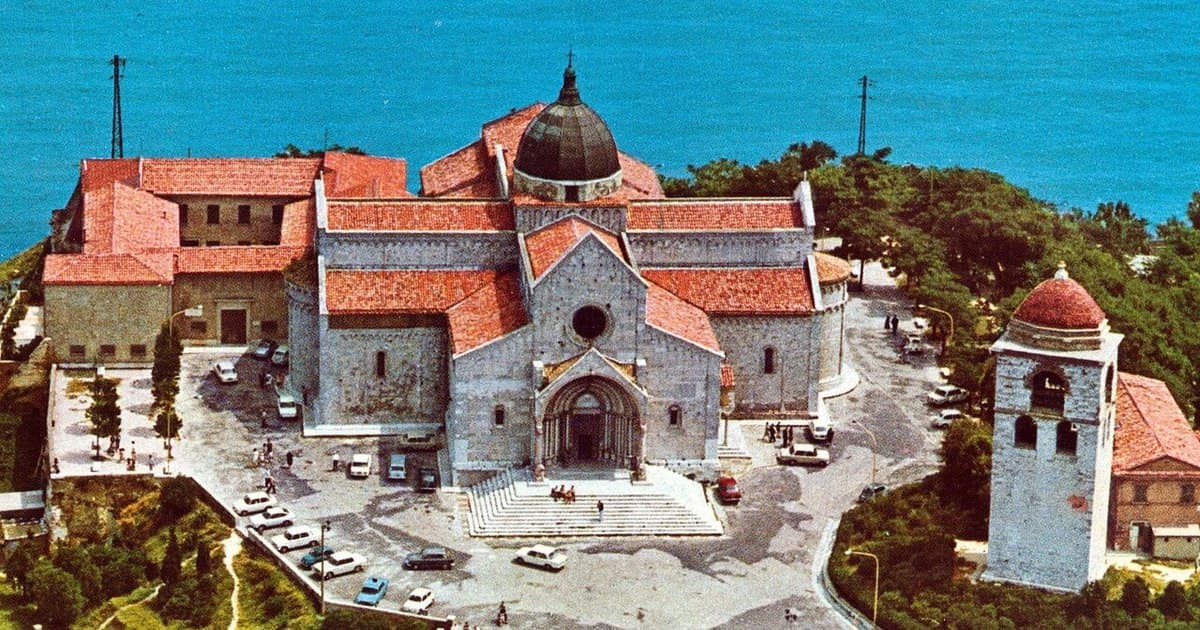
More than a million passengers pass through the port of Ancona every year. They board ferries to Greece and Croatia, step off cruise ships, drag suitcases along the quays. Then they leave. Almost nobody looks up at the hill looming over the harbour, where a Romanesque cathedral has been watching the sea for a thousand years. Ancona is the most crossed and least seen city on the Adriatic, and that is exactly why it deserves a full day.
The good news: you don't need to plan anything. Ancona's historic centre is compact, entirely walkable, and everything that matters sits between one hill and the sea. Here is a concrete itinerary, from morning to sunset.
Morning: climb Guasco hill, where it all began
Start from the top. San Ciriaco Cathedral stands on the summit of Guasco hill, on the exact spot of the acropolis of Ankón, the city founded in 387 BC by Greeks fleeing Syracuse. Beneath the cathedral's foundations lie the remains of a temple dedicated to Aphrodite, protector of sailors. Above, a Romanesque church with Byzantine influences, a Gothic portal and two red Verona marble lions guarding the entrance. But the real reason to climb up here, beyond the church itself, is the view: from San Ciriaco you overlook the entire port, and the city's geography snaps into focus in a single glance.
Ankón is Greek for elbow. The promontory Ancona sits on really has that shape: a bent arm wrapping around the natural harbour and sheltering it. It is because of this odd curve of the coastline that Ancona is called the city of two suns: here the sun rises over the sea and, something almost unheard of on the Adriatic coast, it sets over the sea too. From the hill you walk down towards the port through alleys and stairways, and it is the finest descent in the city.
Trajan's Arch, the marble gate on the harbour
At the bottom of the descent, on the ancient pier, stands a Roman arch you don't expect: slender, elegant, planted a few metres from the water. This is Trajan's Arch, erected in 115 AD and attributed to Apollodorus of Damascus, the same architect behind Trajan's Forum in Rome. The Senate dedicated it to the emperor who had enlarged Ancona's port at his own expense, making the sea route into Italy safer. Fourteen metres tall, with its unusually slim proportions it is among the best preserved Roman arches in Italy. And the setting is one of a kind: cranes, ferries and two thousand years of history in the same field of view.
The Mole Vanvitelliana: a pentagon on the water
Walking south along the harbour you reach one of the strangest buildings in Italy: the Mole Vanvitelliana, a pentagonal structure built on an artificial island that is itself a pentagon. Luigi Vanvitelli designed it as a lazaretto: the first stone was laid in 1733 and the works were completed in 1743. Almost twenty thousand square metres conceived to quarantine people and goods arriving by sea, defend the port and serve the city. Today it is Ancona's cultural centre: exhibitions, concerts, festivals. And it houses a museum that is worth the trip on its own.
The Omero State Tactile Museum is one of the very few museums in the world designed to be explored with your hands. Founded in 1993 by the Municipality of Ancona at the prompting of the Italian Union of the Blind, and recognised as a state museum by Parliament in 1999, it gathers faithful copies of sculptural masterpieces, from Greek classics to Michelangelo and Canova, alongside original contemporary works. Here the museum rule is turned on its head: you touch the art. Closing your eyes and reading a sculpture with your fingertips changes the way you look at art, whether you are sighted or not. Admission is free. If you believe hands can understand things as well as eyes do, this is your place.
Afternoon: the Passetto, the stairway and the fishermen's caves
In the afternoon, switch sides. The Passetto is the neighbourhood where Ancona stops being a port and becomes a cliff again. At the top stands the Monument to the Fallen of the First World War, in white Istrian stone, surrounded by a pine grove; from there a monumental stairway runs straight down to the sea, both the work of Ancona-born architect Guido Cirilli. In summer a lift runs too, but the stairway is half the pleasure: with every flight, the blue gets closer.
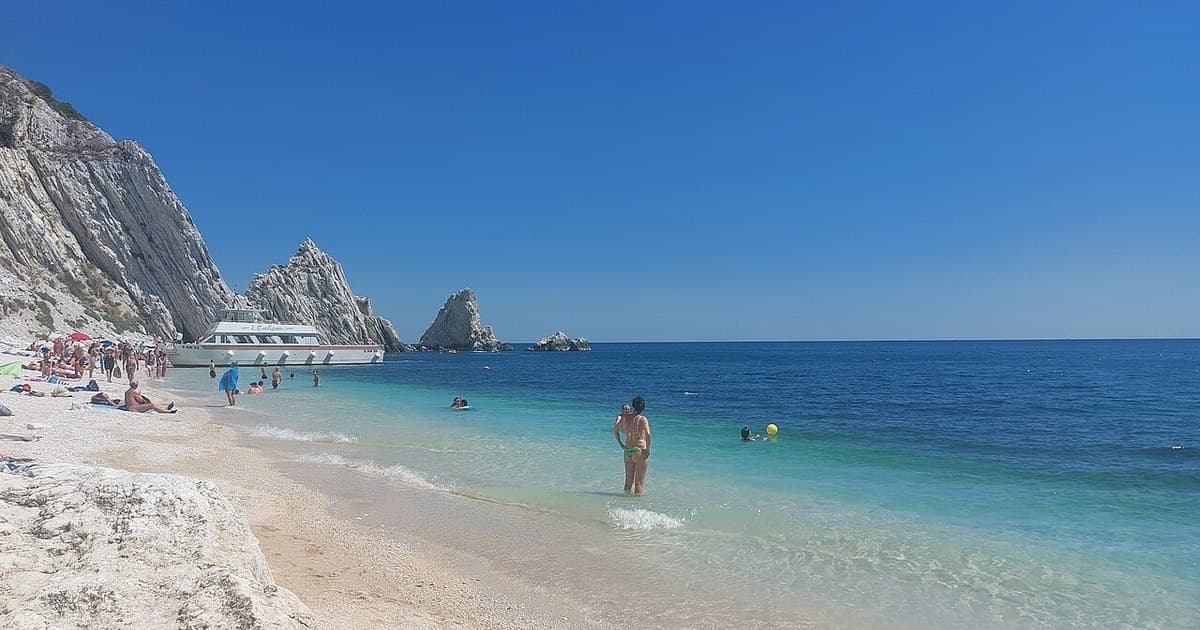
Down below, dug into the rock of the cliff, are the Passetto caves: around five hundred cavities that Ancona's fishermen carved by hand from the mid-nineteenth century until the 1960s, to shelter boats and gear. Today they have brightly coloured doors, and they are a piece of spontaneous architecture unique in Italy: no blueprint, no architect, just generations of hands carving space out of stone. It is the right place to understand something essential about this city.
A city that has always worked with its hands
Ancona is not a museum city: it is a city that makes, repairs and builds. It always has been, from the port's shipyards to the caves carved into the cliff. And it still is today: in the city and its surroundings, Makers keep workshops of ceramics, wood, textiles and paper alive, and every so often they open their doors to let visitors try the craft for themselves. After a day spent touching sculptures at the Mole and descending stairways cut into rock, testing your own hands is the most fitting way to end it.
Frequently asked questions
- Is one day enough to visit Ancona?
- Yes, for the essentials: San Ciriaco Cathedral, Trajan's Arch, the Mole Vanvitelliana with the Omero Museum and the Passetto fit comfortably into one day on foot. With an extra half day you can add the squares of the centre and a long stop by the sea.
- Is the Omero Tactile Museum suitable for everyone?
- Yes. It was created to make art accessible to blind and visually impaired visitors, but it is designed for everyone: you explore the works with your hands, the route is barrier-free and admission is free. It works wonderfully with children, because for once touching is allowed.
- I only have a few hours between ferries: what should I pick?
- From the port, Trajan's Arch is a short stroll away and San Ciriaco Cathedral is an uphill walk: together they tell two thousand years of the city's story. If you have more than three hours, add the Mole Vanvitelliana, which also sits by the harbour.
- How do I get to the Passetto caves?
- From the Passetto's Monument to the Fallen, the stairway leads down to the rocky shore; in the summer months a lift runs as well. Most caves are still in use by their keepers, so you admire them from outside while walking along the coast.