In Turin the corporate Christmas hamper lands in the office during the one week when nobody has time to open it. It sits by reception, then in the boot of a car, then in a cupboard where half of it waits for its best-before date. It is the gift nobody actually chooses: it gets ordered because it always has been, because the supplier sends a catalogue in October and because it asks for no decisions. This guide starts there and tries the route that is the most obvious in Turin and the least travelled: chocolate made by hand by the people who work it every day, personalised, ordered once and delivered wherever it needs to go. With the questions a purchasing office always asks: what can be ordered, in what quantities, and how far ahead.
The short answer first. In Turin a handmade corporate gift can take three shapes: an object, and here chocolate outperforms everything else; an experience in one of the city's workshops; or both inside the same box. Quantities work in thresholds set by the Maker, according to how they produce and how much you want to personalise, not by a price list. Lead times are counted in weeks, backwards from the delivery date, and for chocolate the production sits close to delivery because a fresh product does not wait in a warehouse. All of it can be handled through a single counterpart: the company sends a request from the corporate page, receives a written proposal and closes the order.
Why the hamper is the gift nobody remembers
A hamper has one merit: it takes a minute to order. Everything else works against it. It is anonymous, because the same supplier ships it identically to dozens of companies and the recipient recognises it at a glance. It is bulky, and a December office has no space to stack boxes. It arrives all at once, so anyone working from home or travelling finds it in January. And it says nothing: not where the company is, not who works there, not what anyone thought about the person opening it. When an item runs out, the supplier swaps it for another without telling you, and the gift you chose is no longer the one you hand over.
- It says where it comes from: a box of gianduiotti made by hand in Turin carries the city inside the parcel, no explanation needed.
- It gets eaten and remembered: something good is gone in days, but the story of who made it stays, and gets told in the next meeting.
- It fits in an envelope: handed over at a desk, posted to a home, kept in a drawer. No improvised storeroom.
- It carries the person's name: on the card, on the band, on the box. A hamper carries, at best, the supplier's logo.
Turin chocolate: what can really be personalised
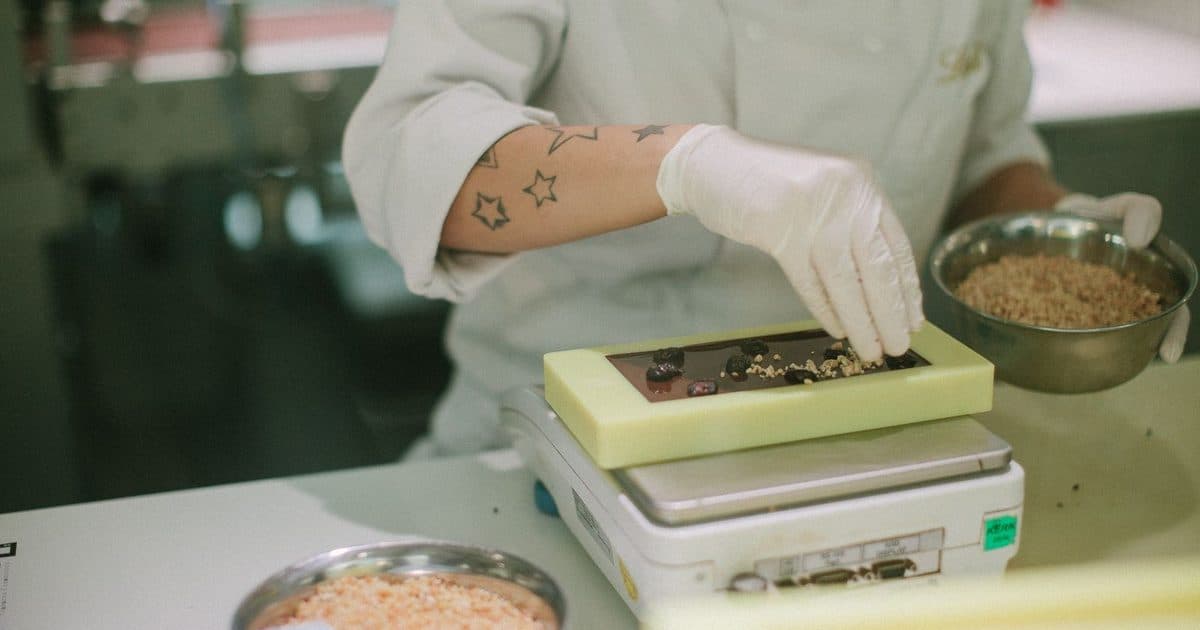
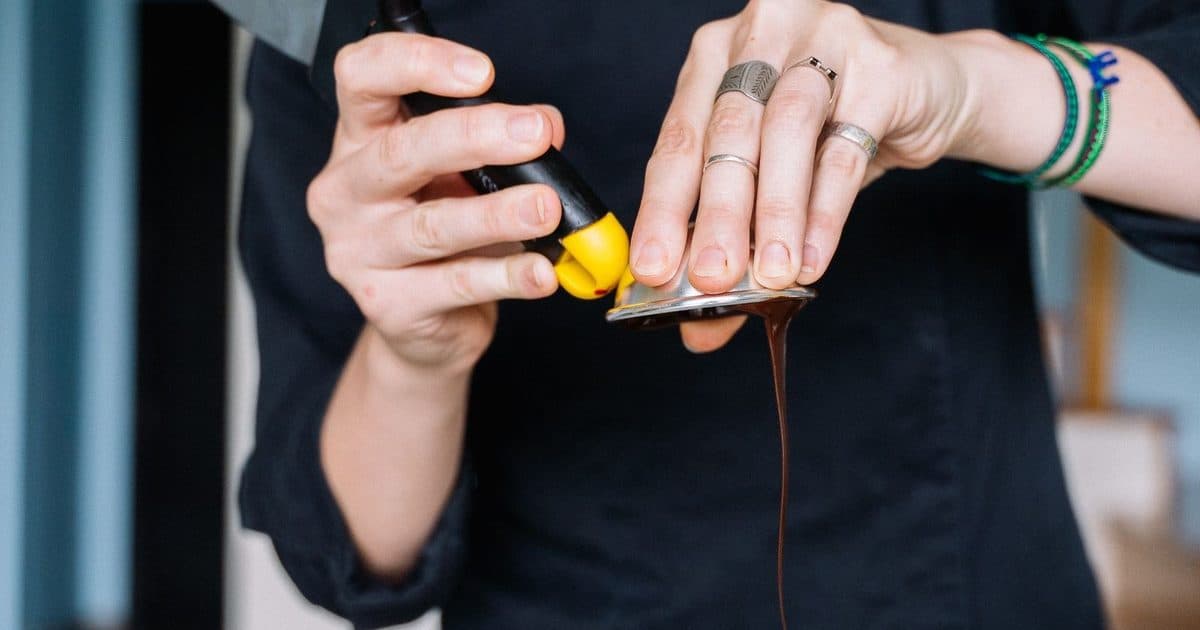
The gianduiotto is the chocolate that identifies Turin: cocoa, sugar and Piedmont hazelnut worked into a soft paste, cut into a small prism and wrapped in gold foil. In the city's workshops it is still shaped with a spatula, one at a time, which is why it suits a corporate gift better than any boxed assortment: it is small, recognisable to anyone, and it changes character with very little. Alongside the gianduiotto come bars, cremini, pralines with fillings the Maker makes in-house and spreads in jars. Every format has its own way of being personalised, and every personalisation has its own threshold and its own lead time.
The levels run from lightest to heaviest. First, the card: a small note with the recipient's name and a line written by the company, which the Maker slips into the box. Second, the box itself: colour, ribbon, a label with the logo printed or stamped. Third, the wrapper on each piece, in company colours or with an embossed mark, and this is where a printer enters the picture with its own minimum runs. Fourth, the product: a selection of flavours put together for the company, or a bar with the logo pressed from a dedicated mould, which has to be drawn, made and tested before production starts. The higher you go, the more time it takes and the more quantity matters.
Quantity thresholds: how a chocolate workshop thinks
A hamper is ordered by the piece, from stock: one or a thousand, only the total changes. A chocolate workshop thinks in batches. Below a certain quantity the Maker draws on the shop's normal production, and personalisation stays on the card and the box. Above that threshold the order becomes a dedicated batch: reserved tempering sessions, moulds tied up for days, cooling time, every piece wrapped by hand. That is the point where the unit price drops and the lead time stretches. Then there is the printer's threshold for printed wrappers and boxes, which the workshop does not control. And there is a ceiling: in December a single workshop has its capacity, because the shop also sells across the counter, and beyond that ceiling the order is split between several Makers. That is exactly the moment when having one counterpart makes the difference.
On price, it helps to know what moves it rather than asking for a figure blind. Quantity weighs, with the step change once you cross the dedicated-batch threshold. Ingredients weigh, because Piedmont hazelnuts and single-origin cocoa do not cost what industrial raw materials cost. Personalisation weighs, from a stamp on the box to a logo mould. The number of addresses and the delivery window weigh, because one shipment to head office and a hundred parcels to home addresses are two different jobs. And, if you add it, the code for an experience in a workshop slipped into the box weighs too. Two proposals with the same title can differ on just one of these elements, and a comparison only makes sense with everything else held equal.
December timing: plan backwards
Artisan chocolate has none of the hamper's preservatives. A handmade gianduiotto keeps for weeks, not months, and is at its best in the first days. That is why the Maker produces it close to delivery, and what you book in advance is not the box but the working week. In December the diaries of Turin's chocolate workshops fill up with the public walking in off the street, and the slot for a corporate batch has to be blocked before it disappears. Winter is on chocolate's side: cold protects shipments, while the enemy is the office radiator next to which parcels wait to be handed out.
- Fix the date the gift must be in people's hands, not in a storeroom: before the company party, or in the run-up to the holidays.
- Count backwards through delivery: one site, several sites, or the home addresses of remote staff.
- Block production: the Maker reserves the week and the pieces come out fresh just before delivery.
- Approve the artwork before, not during: cards, labels and printed wrappers have their own lead times and cannot be rushed.
- Send the full address list in one go, with a named contact per site who receives and signs.
One counterpart, not five workshops to chase
The typical picture for a Turin company: head office in the centre, a plant in the outskirts, a sales team based in Milan and clients scattered across Italy and abroad. Done alone, the gift turns into five quotes to compare, five delivery schedules, the logo file sent five times and five people to chase by phone while their shops are full of customers. With Handsome there is one route: from the corporate page you state how many people, an indicative budget per person, the city and a preferred date; you get a reply within 24 hours and a written proposal within 2 working days; Handsome picks the right Makers, coordinates production and deliveries and remains your single point of contact. The multi-site logistics are covered in employee Christmas gifts across several offices.
The chocolate does not have to sit alone in the box. A code to make your own gianduiotti in a workshop, with the Maker teaching tempering and cutting, turns the gift into an afternoon: what that looks like is in the guide to the chocolate workshop in Turin, and the code arrives as a gift card that leaves the date to whoever receives it. For the whole team there is the event version: the Maker brings the bench to your office and the Christmas party becomes a session of pralines made together. On the accounting side there is one rule: gifts to clients and gifts to employees fall under different regimes, and the form of the gift should be settled with your accountant before ordering, as the guide on craft experiences in employee benefit plans explains.
A hamper says the company remembered the deadline. A box of handmade gianduiotti says where the company is and who thought of you.
Frequently asked questions
- What handmade corporate gifts can be ordered in Turin?
- Chocolate made by hand in the city's workshops, with gianduiotti, bars, cremini and pralines personalised on the card, the box and the wrapper; workshop experiences in the form of a gift code; or both in the same box. For a whole team there is also an on-site event with a Maker. Everything is requested from a single page and answered with a written proposal.
- In what quantities can personalised artisan chocolate be ordered?
- The thresholds are set by the workshop. For small quantities the Maker draws on the shop's production and personalises the card and box; above a certain threshold they run a dedicated batch, with custom wrappers and moulds and a lower unit price. If the order exceeds what one workshop can make in December, it is split across several Makers and Handsome stays the single counterpart.
- How far ahead should a corporate Christmas gift be ordered?
- Think in weeks, counting backwards from the date the gift must be in people's hands. Chocolate is made close to delivery because it is fresh; what you book early is the Maker's working week and the lead time for printed artwork. The heavier the personalisation, the earlier the order needs confirming.
- Can it be delivered to several sites or to recipients' homes?
- Yes. The request states how the parcels should be distributed: one delivery to head office, several sites with a named contact each, or the home addresses of remote staff. The number of addresses affects price and timing, so it pays to send the complete list in one go.
- Who is the point of contact if more than one workshop is involved?
- Handsome. Even when several Makers produce the order, the company has one point of contact for the whole order, by email or WhatsApp, and never has to deal with the workshops one by one.
- Does artisan chocolate survive shipping?
- In winter, yes; the cold helps. The real risk comes afterwards: parcels should not be left by radiators or in a sunlit car while waiting to be handed out. Chocolate without preservatives keeps for weeks, so delivery should be set close to the moment it will be opened.
One point of contact, deliveries wherever they are needed. A reply within 24 hours, a written proposal within 2 working days.
Request a proposal for your Christmas gifts