Most people walk down Via San Gregorio Armeno, in the heart of Naples' old town, to buy. The windows run on without a break: figurines, stables, cork mountains and caricatures of the year's celebrities. You go in, you choose, you come out with a paper bag. This article answers a different question: where, on that street and in the alleys around it, a visitor can sit at a bench and shape a nativity figurine with their own hands, next to someone who does it for a living.
What you only understand once you step inside is that here the nativity scene is not a December affair. The botteghe work all year: in high summer they are making pieces for winter, in January they sort the moulds and repair the figurines customers bring back. It is an everyday trade, with opening hours, a stock of clay and a kiln in the back, and for a visitor who wants to learn that changes everything: you don't have to wait for Christmas. The story of the street is told in the entry on Via San Gregorio Armeno.
What a Neapolitan pastore is (and why the word matters)
In Naples every figure in the nativity scene is called a pastore, literally a shepherd, whether it is tending sheep or selling fish. In the traditional build the head, hands and feet are terracotta, modelled and painted; the body is a wire armature wrapped in tow, which lets the figure take any pose; on top go clothes sewn from real fabric. There are also figures made entirely of terracotta, modelled in a single piece and painted: the format most beginner workshops use. Its history is in the entry on the Neapolitan nativity scene.
- Benino, the sleeping shepherd: in popular tradition he is dreaming the whole scene.
- The zampognaro, the bagpiper who brings the music of the Christmas novena.
- The innkeeper with his laid tavern: the worldly side of the crib.
- The fishwife, the greengrocer, the chestnut seller: the trades of the alley with their miniature stalls.
- Ciccibacco on his cart loaded with barrels, and the Magi arriving in procession.
Buying it from the window or shaping it: what really changes
The figurine you buy is finished, and that is its virtue: you take it home, set it on the cork rock, it looks right. The one you shape is a different object. You learn why the face is so small and why it is done first, with the tip of a wooden tool, before the clay starts to stiffen. You learn that clay shrinks as it dries and that a piece left too thick can crack in the kiln. No shop window teaches you that, and it is what makes you look at every nativity scene differently afterwards.
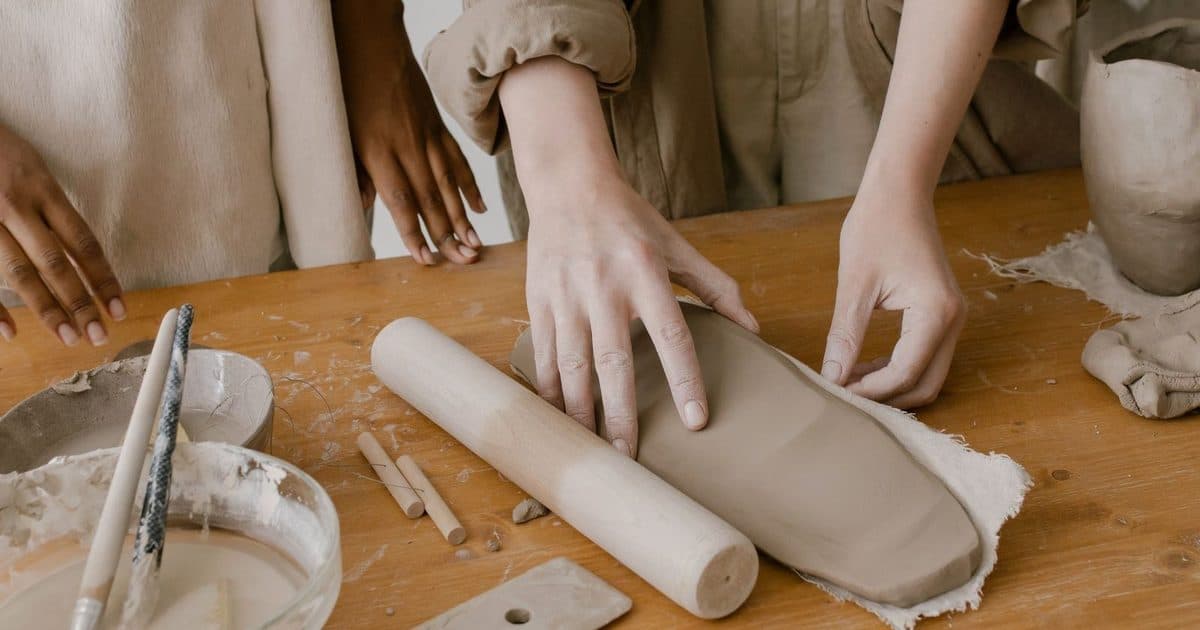
What a beginner actually does depends on what the Maker has chosen to teach, and there is more than one formula. Some have you model a small figure entirely in terracotta, starting from a lump of clay and a few wooden tools. Some work only on the face, the part where the Neapolitan hand shows. Some offer a painting session on an already-fired figure, the so-called bisque, using the traditional colours. And some teach you to dress a figure with a wire-and-tow body, stitching the fabric onto it. These are different workshops with different lengths: the listing says which, otherwise ask before you book.
What happens in the bottega, step by step
- You start by looking: the Maker shows finished figures, half-finished ones and the moulds, and explains where the clay comes from.
- You rough out the volume: from the lump comes the crude shape of the body, or the ball that will become the head.
- You go into detail with the tools: nose, eyes, mouth, the folds of the robe, the fingers. This is the slowest part and the one where the Maker steps in most.
- You let it dry, or move on to colour if the piece is already fired: skin first, then clothes, then the dark touches that give depth.
- You finish with the packing, a craft of its own in these shops: paper, straw and a figure that reaches home in one piece.
No experience is needed and you don't need to draw: the Neapolitan pastore has its own stocky proportions, and they forgive a lot. You need clothes that can get dirty, short nails if you are handling clay, and the patience to redo a nose more than once. Group size matters more than elsewhere, because the face is fine tool work and the Maker has to be able to reach your hands. The rest is the same as any clay workshop, summed up in our guide on what to bring to a pottery workshop.
When to go and how to book
In December the street is packed at every hour and the shops are selling far more than they are teaching: if you want a workshop then, book well ahead and accept the crowd; in exchange you get the street at full pitch. From January to autumn San Gregorio Armeno is calmer, the Makers have more time, and a visitor in spring or summer takes the nativity scene home out of season. With children, go by the listing: if the workshop suits a given age range it says so; if not, a painting session is shorter and less technical, as our guide to family-friendly workshops explains.
On Handsome you pick the city among the workshops published by Makers, read the listing and pay online, so your seat is confirmed before you travel. The price is moved by specific things the listing should state: whether clay and paints are included, whether firing is included, how long the session runs, how many people the Maker follows and whether you take the figure with you or it is shipped. Compare on those terms, as our guide on how to choose the right workshop explains; the cancellation rules are on the cancellations page. If it is a gift, the Handsome gift card covers the whole experience and leaves the date to whoever receives it.
A bought figurine tells the story of the shop. A shaped one also tells the story of the afternoon you learned that the face comes first.
Frequently asked questions
- Where can I learn to make a nativity figurine in Naples?
- In the workshops of Via San Gregorio Armeno and the alleys of the old town, where some Makers open their bench to visitors for sessions of a few hours. You book online: on Handsome you look for Naples among the workshops, read what the listing includes (modelling, painting or dressing) and pay for your seat before you arrive.
- Do I need to know how to draw or sculpt?
- No. Beginner sessions start from a lump of clay or from an already-fired figure to paint, and the Maker guides every step. What you really need is patience on the face.
- Do I take the figurine home the same day?
- If you paint a fired piece or dress a figure, yes. If you model clay for the kiln, the piece must dry and fire: it is collected later or shipped. The listing should say so; if not, ask before paying.
- Can I do this in summer, outside the Christmas season?
- Yes, and it is often the better time: on San Gregorio Armeno the workshops run all year, and off season they have fewer crowds and more time for you. In December they exist, but must be booked far ahead.
- Is it suitable for children?
- It can be, if the listing says so explicitly and gives an age range. Painting a fired figure is the easiest format for a child; modelling the face asks for fine motor skills not every young child has.
Clay, painting and nativity sessions published by Makers, with dates and seats confirmed online.
See workshops in Naples