On the Amalfi Coast the plan is nearly always the same: a boat in the morning, Positano and Amalfi seen from the water, back with salt on your skin and the feeling of having seen everything without touching anything. That's fine. Then comes the afternoon when the sea is rough and the ferries stop, or it's too hot for a deck, or you simply want to stay put and use your hands. That is the afternoon to go to Vietri sul Mare and paint a tile.
Vietri sits at the Salerno end of the coast, where the road from Amalfi runs out and the city begins. The houses are faced with ceramic, the parish church has a bell tower whose spire is clad in painted maiolica, and the shops selling plates, jugs and tiles follow one another along the main street without a gap. Buying a piece is easy. Sitting down in front of a white tile and learning from the inside how that language of colours works, the one that looks merely cheerful from a bus window, is something else.
Vietri's yellow and blue are a language, not a palette
Vietri ceramics are recognisable before you read the label because they follow precise rules. The ground is a white, opaque, slightly warm glaze. On top go a handful of colours used with confidence: a full yellow, a deep blue, a copper green, an orange that leans towards brick. The subjects come back with the regularity of an alphabet: a sun with a face, fish, lemons with their leaf, the coastline reduced to a few lines, farmers and fishermen, and the little donkey with a load on its back that everyone here calls the ciucciariello. Each motif has its own construction, a sequence of brushstrokes a decorator repeats without thinking and a beginner can pick up in an afternoon when someone shows it.
The rule that explains all the others is the technique: maiolica, which means painting on a glaze that is still raw and drinks the colour instantly, like blotting paper. You cannot erase, you cannot go over a line twice, you cannot blend at leisure the way you would on canvas. That is where the broad strokes come from, the outlines pulled in a single movement, the flat fields of colour, the line that looks naive and is in fact the only option.
What an afternoon in the studio looks like
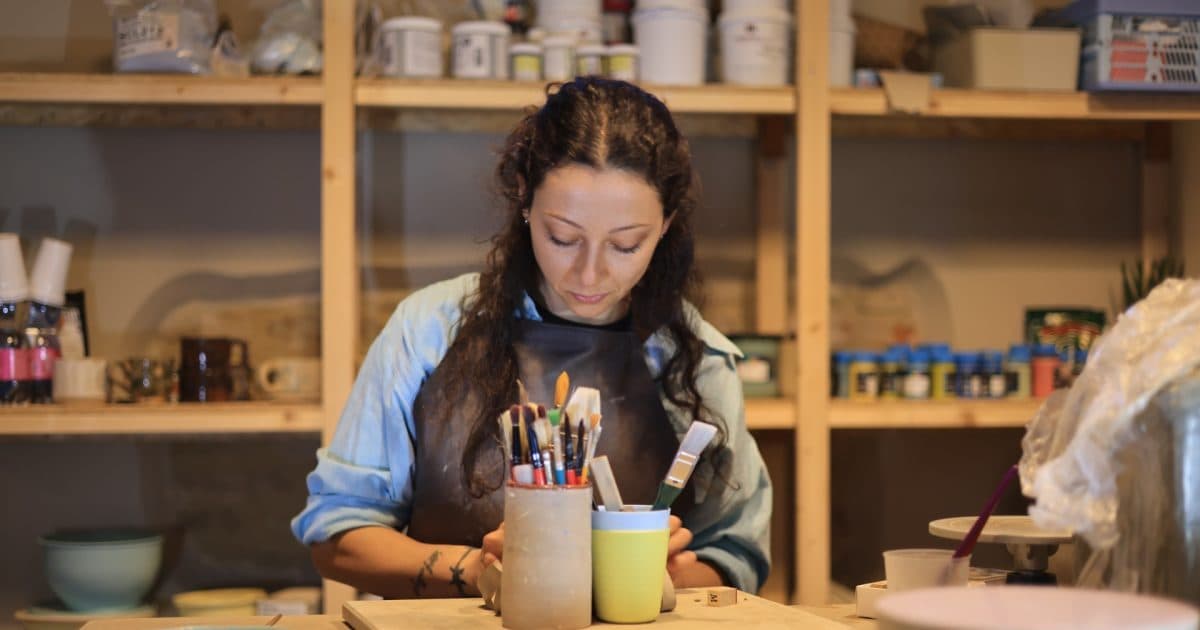
- You start by looking: finished tiles, the traditional motifs, the same subject in different hands. Whoever leads the session shows which strokes make a lemon or a sun and tries them on an offcut in front of you.
- You pick a subject. Almost every Maker gives the same advice: one motif, large, in the centre. It is the tile that will turn out best and the one that will make most sense on a wall at home.
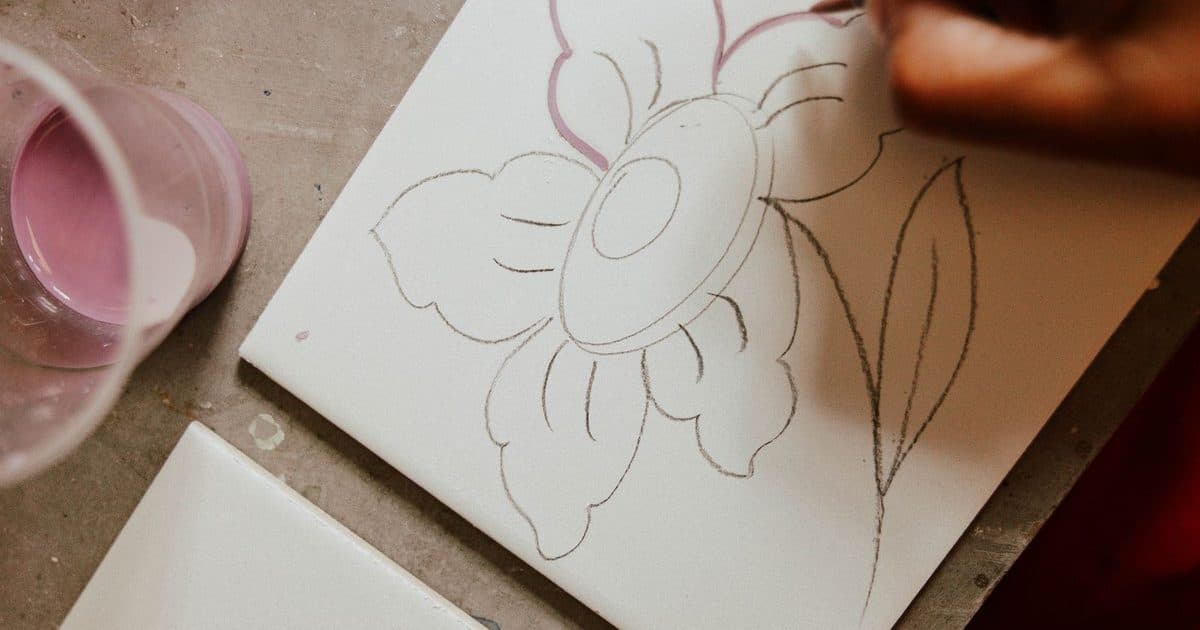
- The design is transferred with a light pencil or a pounce, the pricked card that leaves a dusting of charcoal on the glaze.
- You paint the fields of colour: yellow, green, orange. A loaded brush, one pass, no going back. This is where you make mistakes, and that's fine.
- You close the outlines in blue, which holds everything together and hides a surprising number of wobbles. This is the step where the tile changes character.
- You sign the back, set the piece to dry, and from there it goes to the kiln, which is the real author of the final colour.
How long does it take? A few hours, usually an afternoon, and the exact duration is on each workshop page together with what is included. Part of the time goes on looking and understanding, the longest part on painting, the last on cleaning up and talking about firing. You don't need to be able to draw; you need to accept that the first stroke will be crooked and keep going.
Fitting it into a day on the coast
Vietri sul Mare is easy to reach without a boat: it has a railway stop on the line through Salerno, the coastal buses start and finish there, and if you are staying in Salerno you can walk along the seafront. From Positano, Amalfi or Sorrento the logic is reversed: Vietri becomes a full-day trip, with the morning in the fishing quarter of the Marina and the upper hamlets such as Raito, where there is also a museum devoted to ceramics, and the afternoon at the table. The rest of the Amalfi Coast can wait for the next day's boat.
Before booking, read the listing the way the guide on how to choose the right craft workshop suggests: the size of the tile, whether firing and shipping are included, the language the session is run in, any minimum age for children, how many people share a table. What moves the price is the size of the piece, how many you paint, the firing, any shipping, and how much time the teacher can give each person. On Handsome the dates are published by whoever runs the studio, a Maker or an Apprentice who paints every day; you book and pay online, confirmation arrives at once, and the rules for changing your mind are the same for everyone, set out on the cancellations page.
A souvenir you didn't buy
The difference between the bought tile and the painted one is not the result: the bought one is almost always prettier. The difference is what you know afterwards. You know why the outline is blue, why the lemon has that leaf, why the colour you see is not the one you put down, because the kiln changed it. And the tile with the crooked lemon ends up in the kitchen, behind the hob or next to the house number, where every so often someone asks who made it. It works as a present too, for anyone travelling to the coast with someone else: a gift card covers the workshop and leaves the choice of date to whoever receives it.
On raw glaze a brushstroke cannot be corrected: that is why Vietri's colour is bold and its line is broad. It isn't naivety, it's the rule of the material.
Frequently asked questions
- Where can you paint your own Vietri ceramics on the Amalfi Coast?
- In Vietri sul Mare, the town at the Salerno end of the coast, where ceramic studios work along the main street and in the hamlets above it. Some open to visitors with tile-painting or small-object decoration sessions. On Handsome the dates are published by the people who run the studio and booked online; the listing states duration, what is included and how the piece gets home.
- How long does a tile-painting workshop take?
- A few hours, usually an afternoon: an introduction to the traditional motifs, transferring the design, the painting itself and cleaning up. The exact length is on the workshop page, because it changes with the size of the piece and the number of pieces you paint.
- Do I take the tile home straight away?
- If it is painted in maiolica, on raw glaze, no: it has to be fired and is delivered afterwards, by collection or by post. Some studios instead offer cold-painting on an already-fired tile, which you take away the same day but which is not maiolica. The listing should say which route the workshop takes.
- Do I need to be able to draw?
- No. Vietri's motifs are built to be repeated with a few strokes, and the design is transferred onto the glaze with a pencil or a pounce. What you need is to accept that a stroke cannot be corrected and keep going: most imperfections disappear under the blue outline and inside the kiln.
- How do I get to Vietri sul Mare without a car?
- Vietri has a railway stop on the line through Salerno and is served by the buses that run along the coast. From Salerno you can also walk along the seafront. Starting from Amalfi, Positano or Sorrento, allow for the journey and treat Vietri as a full-day trip.
Dates published by the people who actually paint: duration, what's included and how your piece gets home, all before you pay.
Find ceramics workshops