Type “pizza making class Naples” into a search bar and the results speak a different language from the one in your head: multi-week programmes, full days at the oven, diplomas, placements in a working pizzeria, enrolment forms. You wanted an afternoon with your hands in dough, before or after a walk down Spaccanapoli, and instead you are reading a syllabus. The search engine is not wrong. The word “course” covers two products that have almost nothing in common, and neither bothers to explain the other. This guide separates them, says who each is for, and shows how to tell them apart from a listing before you pay.
The pizzaiolo school: what it promises and who it is for
A professional school trains people who want to work in a pizzeria or open one. The programme covers flour strength, hydration, managing fermentation at different temperatures, running a wood-fired oven, stretching discs over and over until the movement becomes automatic, and then the part no enthusiast asks about: ingredient costs, setting up the bench, the rhythm of service, the food-hygiene training Italian law requires of anyone handling food. Days are long, and at the end there is a certificate and sometimes a trial period in a partner pizzeria.
The cost is that of a vocational programme, because that is what it is: weeks of a professional’s time, ingredients in service quantities, an oven kept hot all day. Comparing it with an afternoon experience makes no sense. They answer two different questions, and the school’s question is: “do I want to do this for a living?”
- You need the school if you want to be hired by a pizzeria and show up with a certificate and real oven hours behind you.
- You need it if you plan to open a place and must learn to run the bench, not just the dough.
- You do not need it if your goal is to understand the movement, eat what you made and go home knowing what to change in your own oven.
The short experience: what actually happens
A properly made Neapolitan dough needs a long rise, longer than any short class. That is why a serious host has already prepared the dough balls the day before, and the first thing you do is touch them: you feel how soft they are, how they give under your fingers, and you understand why the dough you rushed at home could never turn out like this. Many formats also have you mix a small batch from scratch, to take the method home and bake it tomorrow.
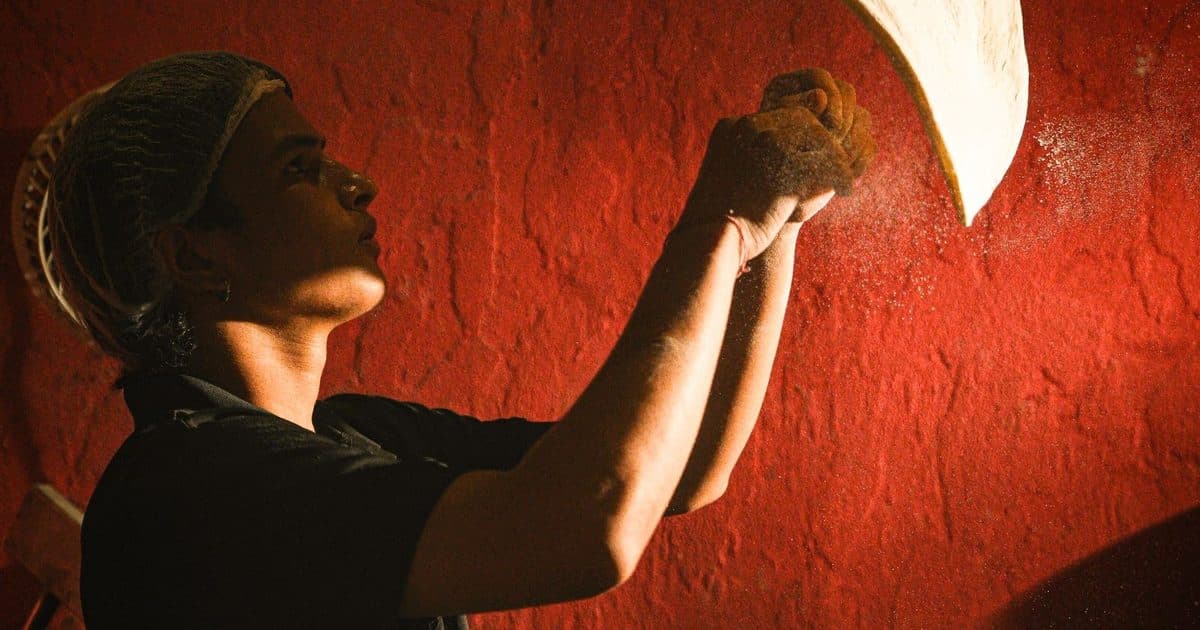
Then comes the part you are there for: stretching by hand, fingertips pushing the air from the centre out to the rim, the disc passing from one palm to the other, the “slap” that widens it without tearing. It is a movement you can watch in a second and get wrong twenty times, and the whole value of the workshop lies in the person who corrects you on the twenty-first. Toppings follow, sparse by tradition, then the bake, which in a Neapolitan oven is over sooner than you expect. At the end the pizza is yours and you eat it at the table. What you take home is the feel of a correct dough under your fingers, the reason the rim puffs up, and the tricks for compensating a domestic oven that never reaches those temperatures: a complete process with your own hands, which is the very definition of a craft workshop.
How to tell which one you are looking at
- Duration: the school is measured in days or weeks, the experience in hours. If the listing talks about “modules”, it is the school.
- Vocabulary: “certificate”, “internship”, “job placement” belong to the vocational path. “Mix, stretch, top and eat” belongs to the experience.
- Requirements: a school may ask for a minimum age, documents or prior experience. An experience asks at most that you flag allergies and show up in short sleeves.
- The ending: a school ends with an exam or a practical test. An experience ends at the table.
The price of a short experience is best read through what moves it. Duration counts, and so does how many people the instructor follows (a crowded table halves the corrections that reach you). What is included counts: drinks, enough ingredients for more than one pizza, dough to take away, translation for a mixed group. The venue counts too, because working at the oven of a real pizzeria outside service hours does not cost the same as a room fitted out for teaching. Two experiences with the same title can be very different things, and it is the same reasoning behind how to choose the right craft workshop for you.
Why do it in Naples, next to someone who does it for a living
The art of the Neapolitan pizzaiuolo is inscribed by UNESCO on the list of intangible cultural heritage, and the entry does not celebrate a dish but a practice: the movement, the oven, the relationship between the person at the bench and the people watching. That is why a few hours in Naples carry a meaning that gets lost elsewhere. You are not learning a recipe from a generic chef who “also does pizza”; you are watching the hands of someone who stretches that disc every day, in front of a public that judges a crust the way other places judge wine. Neapolitan pizza has written rules: it is a trade, not a variation.
On Handsome the experience is run by someone who genuinely does the job, registered as a Maker or an Apprentice, with a name and a face on the listing. Workshops are searched by city, booked and paid online, with the cancellation terms written before you pay rather than after. If you are looking for a present for someone heading to Naples, the gift card covers the experience and leaves the date to them, as explained in gifting a craft workshop.
One afternoon does not make you a pizzaiolo, and that is fine. It gives you a movement, a reference taste, and the certainty that the problem at home was never the recipe.
Frequently asked questions
- What is the difference between a professional pizzaiolo course and a Neapolitan pizza experience for enthusiasts?
- The professional school lasts days or weeks, trains people who want to work in or open a pizzeria, and ends with a certificate. The enthusiast experience lasts a few hours: you hand-stretch dough balls that have already proved, top, bake and eat your own pizza, and take home the movement and a feel for the dough. For a visitor or a home cook it is almost always the right choice.
- Can you make the dough from scratch in a few hours?
- You can mix it, but you cannot let it rise: Neapolitan dough needs a long proof, which is why the balls you stretch and bake were prepared in advance. Many workshops have you mix a small batch to bake at home the next day, so you see the whole process even if you do not finish it there.
- Do I need to know how to cook?
- No. The short experience is designed for complete beginners: the host explains, demonstrates and corrects, and hand-stretching is learned by getting it wrong in front of someone who puts your fingers back where they belong.
- What changes the price of a pizza experience in Naples?
- Duration, how many people the instructor follows, the ingredients and drinks included, whether you can take dough or pizzas away, the venue and whether the session runs in more than one language. The Handsome listing states what is included before you pay.
- Can I gift a Neapolitan pizza experience to someone travelling to Naples?
- Yes. With a Handsome gift card you give the experience and leave the choice of date and workshop to the recipient, so you do not have to guess the right slot in their trip.
A few hours, hands in the dough, and you eat the pizza you made. Book and pay online.
Find a Neapolitan pizza workshop in Naples