Search “cannoli class Palermo” and you find, under one and the same title, products that have almost nothing in common. In one you walk the markets with a guide, listen, taste, and at most watch someone pipe ricotta into a shell in front of you. In the other you tie on an apron, roll the dough, wrap it around metal tubes, fry it, push sheep’s milk ricotta through a sieve, and at the end eat what you made. Neither format is wrong. What goes wrong is booking one while believing you bought the other: that is how people come home from Palermo with a photo and clean hands. This guide keeps them apart and tells you which one suits you.
The confusion has a simple cause: the sales copy uses the same nouns. What changes are the verbs, and you have to go looking for them. “Taste”, “sample”, “learn the secrets” describe an experience in which somebody else does the work. “Knead”, “roll”, “fry”, “fill” describe a class. When the verbs are missing, the title alone will not tell you what you are looking at.
The tasting walk: what actually happens
The format is a walk. You meet at a landmark, cross the street markets of the old centre, stop at a few stalls and pastry counters, and at each stop something arrives to eat: a cannolo filled on the spot, a slice of cassata, a piece of marzipan fruit, perhaps chickpea fritters to cut the sweetness. The guide explains where the recipes come from, why the ricotta is made from sheep’s milk, what separates a shell fried this morning from one fried yesterday. Your hands stay clean, and after a few hours you have a mental map of the city and its palate. It suits people in Palermo for a short stay, anyone getting their bearings on their first day, and groups travelling with relatives who would rather not stand at a worktop. It is an excellent choice if the goal is to understand and to taste. It is the wrong one if the goal is to go home able to make a cannolo.
The hands-on class: what your hands actually do
A class happens in a fixed place, a kitchen or a workshop, and the person running it does this for a living: on Handsome they are listed as a Maker or an Apprendista, and the listing spells out what you make and what you take away. The rhythm is set by the resting times of the doughs, which is why these sweets sit well together in a single session: while the cannoli dough rests you shape the marzipan, while the marzipan dries the shells go into the fryer, and the ricotta is worked last, because filling happens only at the very end. It is the difference between a course and a craft workshop: a whole process carried through with your own hands.
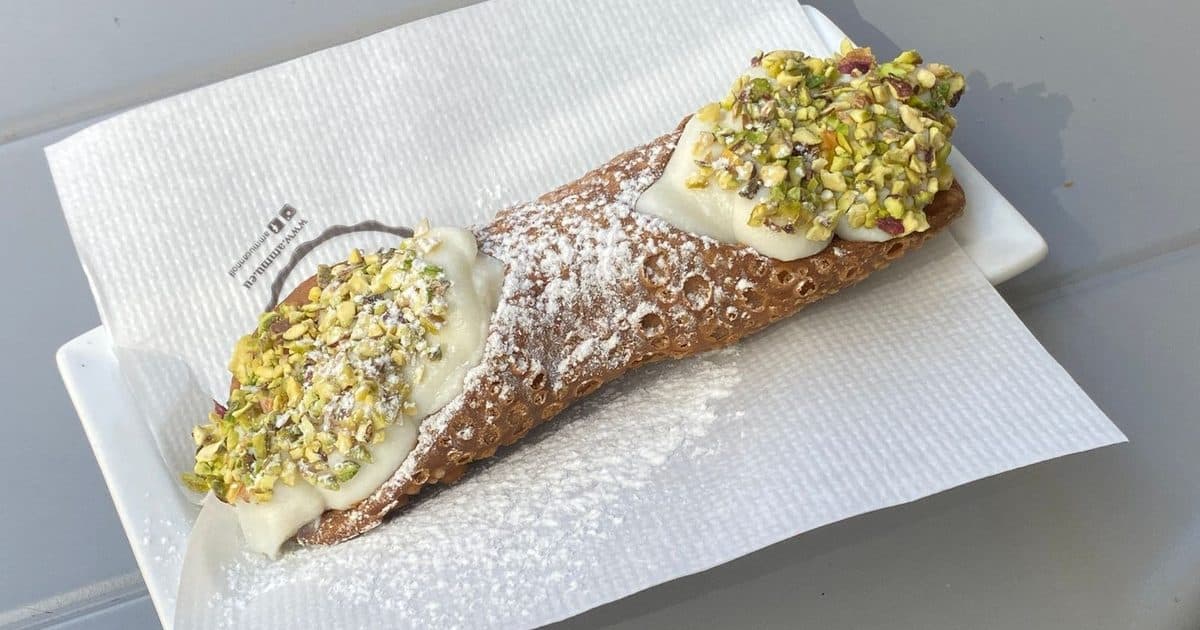
You start with the shell, the part almost nobody knows how to make. The dough is plain: flour, a fat, a splash of wine or vinegar, sugar, sometimes cocoa for colour. You knead it, let it rest, roll it thin, wrap it around the tubes and seal the seam. Then you fry, and frying is where you learn what no tasting walk can pass on: why the surface blisters, how hot the fat should be, the moment the shell has to come out. The sheep’s milk ricotta, drained and sieved into a smooth cream, is sweetened and flavoured; the shell is filled only once cold and only when it is about to be eaten. Everything else is decoration. History and regional variants are covered in the encyclopedia entry on cannoli.
Cassata is the sweet a short class has to handle honestly. Made in full it needs sponge, worked ricotta, green-tinted marzipan, icing and candied fruit, with resting times that a session of a few hours cannot contain. Serious classes teach a reduced version or a single stage: whipping the ricotta and filling a small mould, rolling the marzipan and lining it, decorating with candied fruit. A listing that promises a complete cassata in one morning is cutting corners.
Marzipan fruit, by contrast, involves no cooking and is pure handwork: almond paste shaped into prickly pears, pears, oranges and chestnuts, then painted with food colouring and left to dry. It is the part best suited to children and to people who have never cooked, and the easiest to carry home, since it dries quickly and travels well. The Italian name, frutta martorana, points to the Martorana convent in the heart of Palermo; the entry on frutta martorana tells the rest.
Who should book which
- Book the tasting walk if you are short on time, if it is your first day in the city, if you are travelling with people who do not want to cook, or if the context interests you more than the technique.
- Book the class if you have half a day free, if you want to make cannoli again at home, if you are travelling with people happy to get their hands dirty, or if you want a gift that outlasts a single bite.
- Do both if you are in Palermo for a few days: the walk first, to work out what you are after, then the class, once you already know the flavour you want to reproduce.
- Skip the class if you have a serious allergy to milk, tree nuts or gluten: marzipan is pure almond, ricotta is dairy, the shell is flour and frying. Some Makers adapt the programme, but ask before paying.
How to read a listing before you book
The first clue is the place: a walk names a meeting point in a street or a square, a class gives an address with a kitchen. The second is the verbs. The third is the line about what you take home: on a walk, what you ate; in a class, the recipe, the technique and often a box of marzipan fruit or empty shells to fill later. The fourth is group size: at a pan of hot oil the teacher can only follow a handful of people at a time, and a large group means some watch while others do.
On price, it helps to know what moves it rather than comparing figures blind. Duration counts, as does how many preparations are included, the quality of the ricotta and the almonds, whether a meal is part of it, and how many people the teacher follows. Listings with identical titles can be very different experiences for these reasons, as our guide on how to choose the right workshop explains. On Handsome you look up Palermo among the workshops, read what is included, and book and pay online, so your place is confirmed before you travel.
Tasting a cannolo tells you what it is made of. Frying one tells you why it is made that way, and from then on you never eat one the same way again.
Frequently asked questions
- What do you actually learn in a cannoli class in Palermo?
- In a hands-on class you learn to make the shell from dough to fryer, to work sheep’s milk ricotta into a smooth cream, and why the filling goes in only at the last moment. Most classes add marzipan fruit and one stage of a cassata. On a tasting walk you learn to recognise a good cannolo, but you do not make one.
- How long does a Sicilian pastry class last?
- Usually a morning or an afternoon: the resting times of the doughs are used to move the other preparations forward, and at the end everyone eats what they made. A complete cassata needs longer rests, which is why short classes teach a reduced version or a single stage.
- Is it suitable for children?
- The marzipan fruit almost always is: it is shaped and painted, with no heat involved. Frying the shells is not, and careful Makers keep children away from the pan during that step. The listing states a minimum age; if it does not, ask before booking.
- I have a food allergy. Can I take part?
- It depends on the allergy and on the teacher. Almonds, dairy, eggs, gluten and frying are at the heart of these sweets, so not everything can be substituted. Write before paying: some Makers adapt the programme, others will honestly tell you no.
- Can I give it as a gift?
- Yes. A Handsome gift card covers the whole experience and leaves the choice of date to the person receiving it, the hardest thing to guess on someone else’s behalf for a trip to Palermo. Changes and cancellations follow the rules on the cancellations page.
Hands in the dough, shells you fried yourself, ricotta you pushed through the sieve. Read what is included, then book and pay online.
Find a cannoli and Sicilian pastry class in Palermo