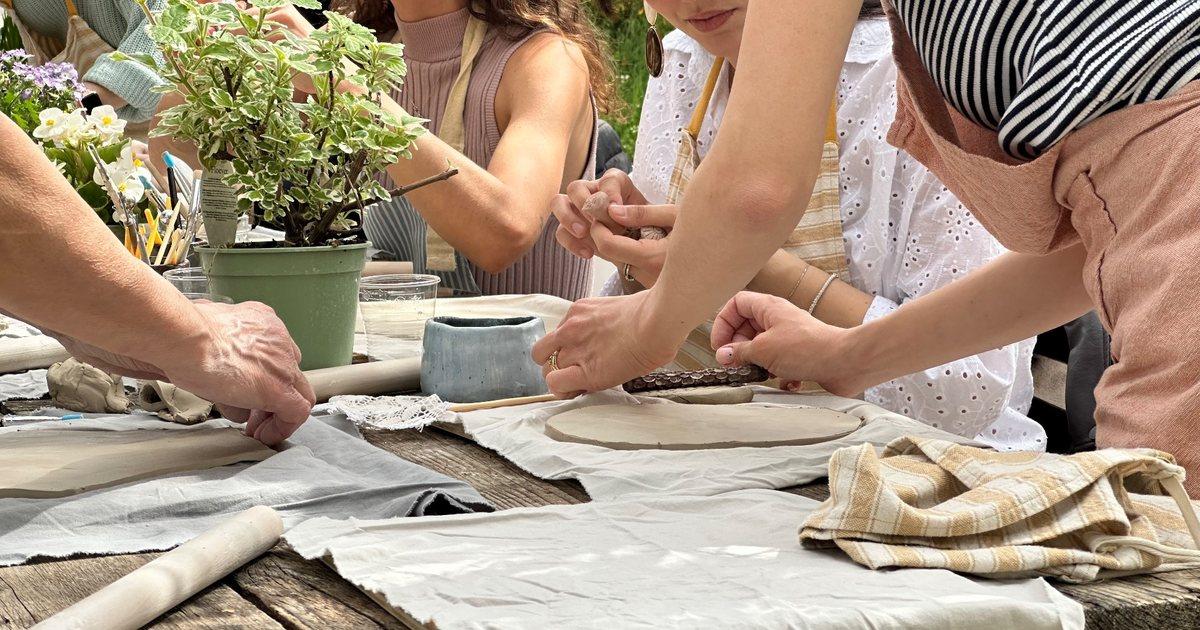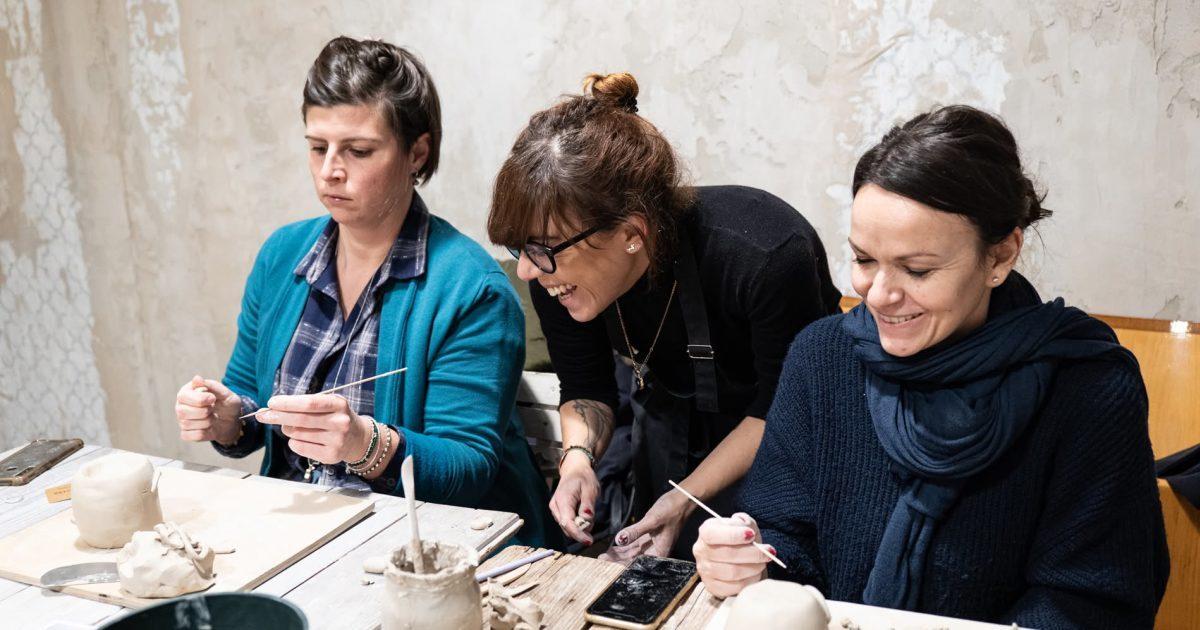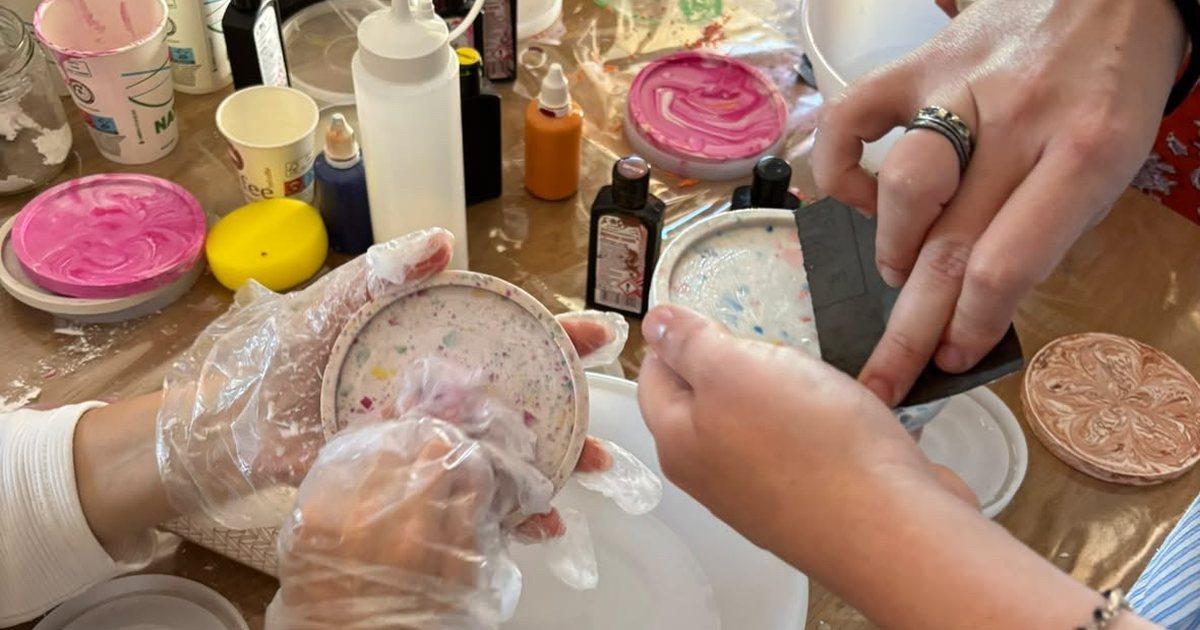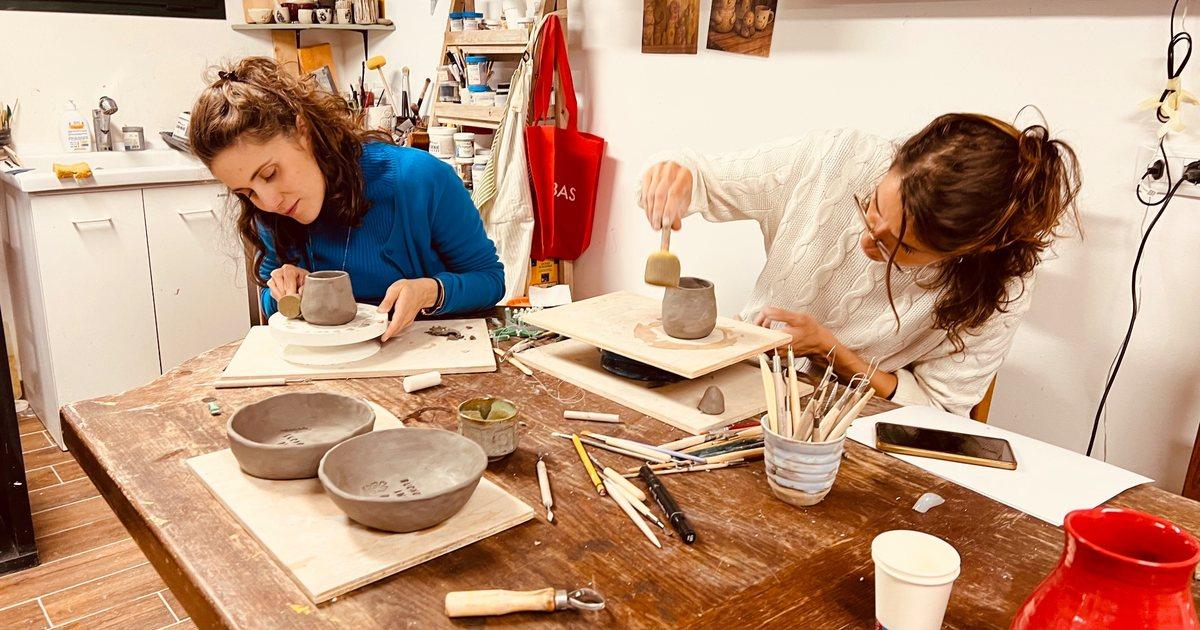
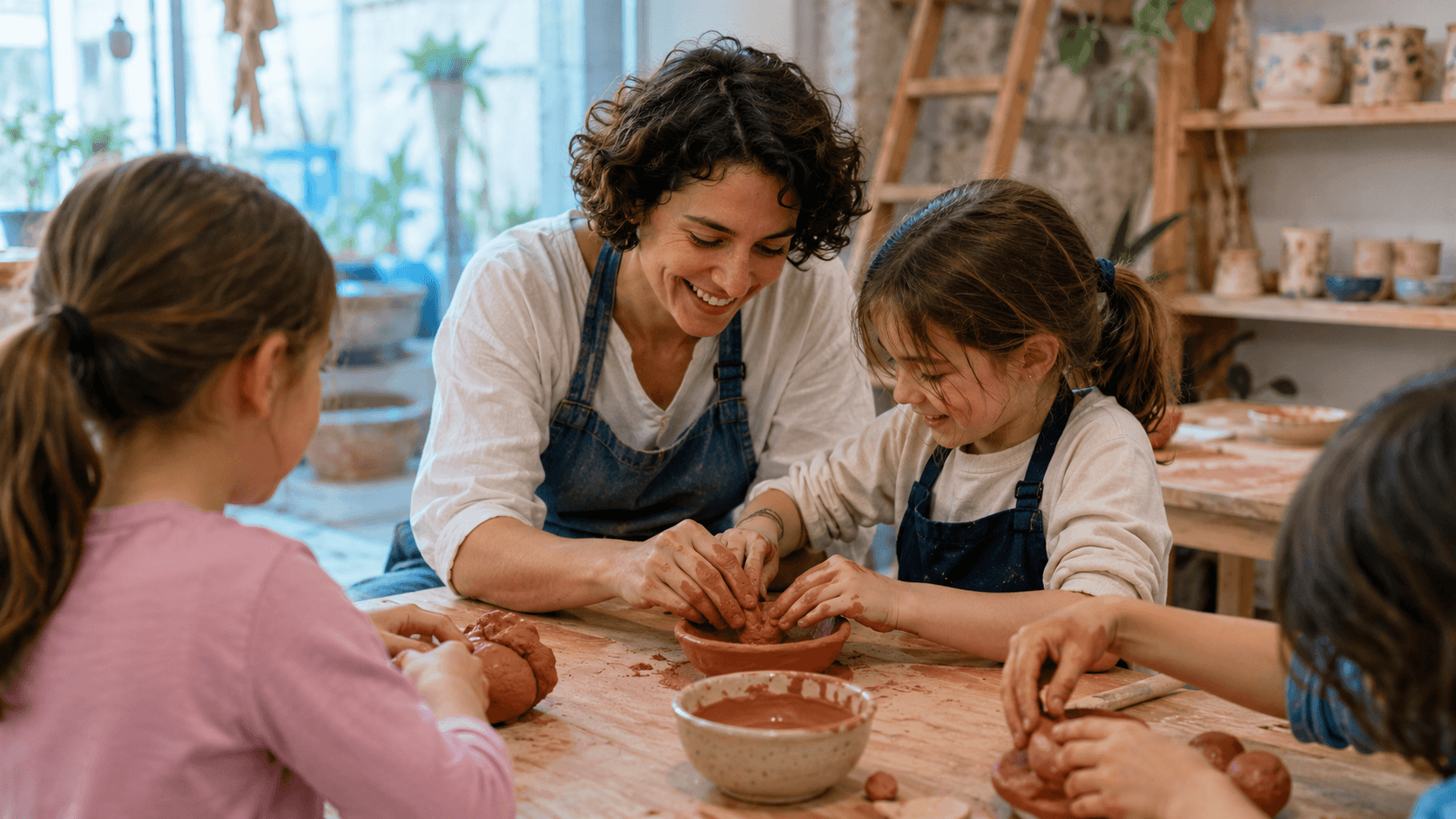
In the Italian market for experiential workshops, the "family" segment accounts for 28% of the total (Confturismo, 2024 estimate) but it is also the most underserved: 92% of artisans do not offer workshops explicitly designed for children, leaving the field to cultural centres and play centres of average creative quality. Yet a real artisan who runs a good kids' workshop has huge advantages (relationship + authenticity) and prices higher than average (€40-70 per child vs €15-25 at the centres).
The right ages for each craft
- Ceramics (handling clay): 4-6 years simple, 7+ full version with an assisted wheel
- Painting and drawing: 3+ years with non-toxic materials, 6+ mixed techniques
- Cooking (cold doughs, biscuits): 4+ years with supervision, 8+ more complete recipes
- Textiles (macramé, small loom): 7+ years, as fine coordination is needed
- Simple leatherwork: 8+ years with supervised tools
- Woodworking: 9+ years with hand tools (hammer, sandpaper), avoid electric saws until 12+
- Glass fusing: 8+ years if the kiln is at a safe distance (not glassblowing, which requires 14+)
- Cosmetics and candles: 6+ years for soaps, 8+ for candles with hot wax
Duration and pace: 45-90 minutes, never more
A 5-year-old can manage 30-45 min of active concentration, a 10-year-old 60-90 min. Beyond that, the experience deteriorates (noise, distraction, frustration). Set it up like this:
- 3-6 years: 45 minutes with 1 break for a snack/free drawing
- 7-10 years: 75 minutes, 1 short break
- 11-14 years: 90 minutes, 1 optional break
- Mixed adult+child "family" workshops: 90 minutes max
Safety: what you CANNOT delegate
- Professional liability insurance that EXPLICITLY covers minors (some policies exclude them by default: check)
- A release form signed by the parent or guardian BEFORE the start
- An accompanying adult present in the studio for every child under 8
- Sharp edges protected, hot objects (kiln, irons) kept at a guaranteed physical distance
- Materials certified non-toxic (paints, glues, glazes): read the CE EN71-3 label
- No food, to avoid allergy risks: ask about allergies in the booking form (on Handsome there is a 'notes' field)
Pricing kids' workshops
- Single child: €35-65 per child (group of 4-6 children)
- Family package 1 adult + 1 child: €70-110 (the adult helps, they don't work separately)
- Private birthday party (8-12 children + cake): €450-800 per event (1.5-2h)
- Weekly summer camp (5 morning sessions): €180-280 per child, ideal for July-August
How to manage children's group dynamics
- Always start with 5 min of "round of names" + what you will do today: children need predictability
- Split the workshop into 3 clear phases: introduction (5 min), work (30-50 min), finishing and photos (10 min)
- Materials ready on individual tables before they arrive: zero waiting = zero chaos
- A visible "timer" (sand or digital) helps keep things contained
- Leave a final 15-minute margin for tidying up + saying goodbye to parents, don't rush to close
Sign up free on Handsome
On Handsome you can mark your workshops as "family-friendly" + "kids-only" + "suitable for ages X-Y": parents filter specifically for this. Free sign-up for life, no Handsome commission, 100% of the deposit to the artisan. 15 minutes to have your profile online with a dedicated focus on children.
Frequently asked questions
- Do I need to be a certified educator to run workshops with children?
- No, in Italy no certification is required for experiential workshops of under 4 hours. It is different for summer camps or formal after-school programmes, which require specific qualifications (a degree in Education Sciences or equivalent qualifications).
- If a child gets hurt or breaks something, who is liable?
- Your professional liability insurance covers damage to third parties if it is caused by your negligence. If it is the child's fault, the parent is liable. The signed release form helps make this clear in advance.
- How many children can I accept in a workshop?
- The recommended ratio is 1 artisan to 6-8 children (depending on age). Above that, you lose control of the group and the teaching quality. If you want larger groups, work in tandem with another artisan (see our article on running workshops together with another artisan).