The show closes for the day and the same scene plays out in every hotel between the port and the station: a room, the stand bag tipped out on the bed, a person deciding in seconds what flies home tomorrow and what stays in the bin. That is where a promotional item is actually judged, and the judge is not the person who ordered it. It is the person who received it, tired, with a carry-on that is already full.
In Genoa the textbook case is the Genoa International Boat Show, held in September, which turns the city into one long trade stand: exhibitors come from across Italy and abroad and leave by plane or train with the same luggage they arrived with. The logic holds for any fair or congress in the city. A visitor takes away only what fits in the bag and seems worth the space. Everything else gets left behind, whatever it cost.
What ends up in the suitcase and what ends up in the bin
The recipient's test is brutal and honest. An object survives the evening cull if it passes at least one check: it is useful right away, on the trip or as soon as they get home; it is good-looking enough to stay on display; it tells where it came from, and therefore who gave it. The branded pen fails all of them, and so do the glossy notepad, the plastic lanyard, the USB stick nobody may plug into a company laptop any more, the rolled poster. They were chosen for unit cost, never for the moment they are received.
- A hand-stitched leather luggage tag with the visitor's initials stamped on the spot: it goes home attached to the suitcase, where your logo will be seen in every airport.
- A coaster in Ligurian slate: the right weight, unbreakable, and it stays on an office desk for a long time.
- A keyring with a sailor's knot tied in rope: it takes almost no space, makes sense at a boat show, and can be finished in a few movements in front of the person receiving it.
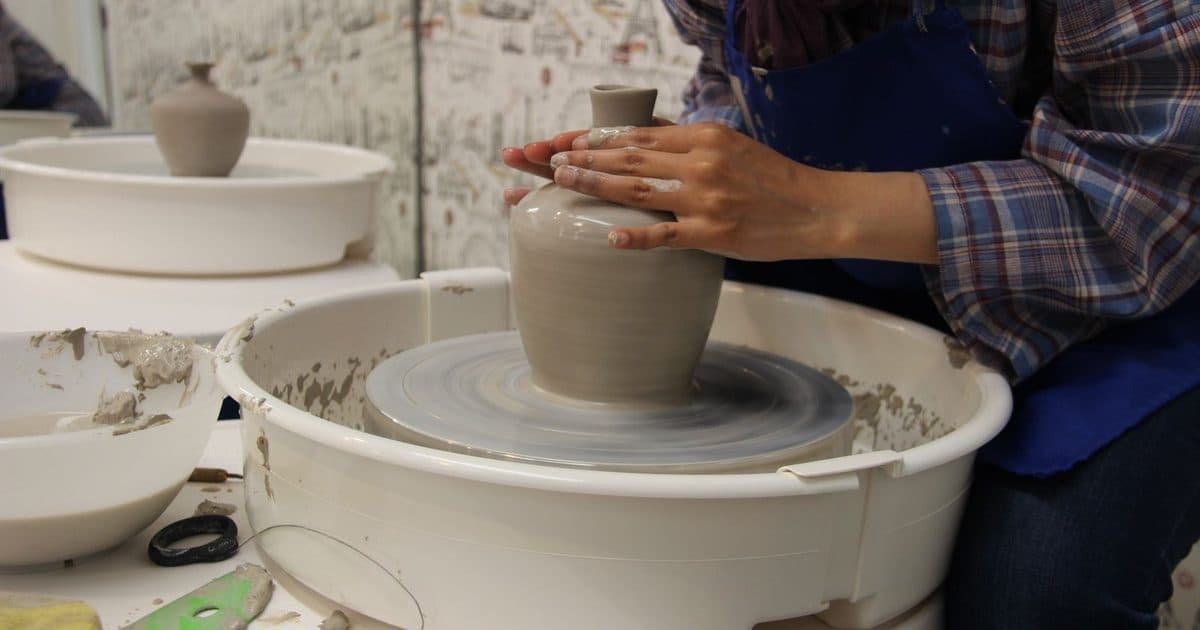
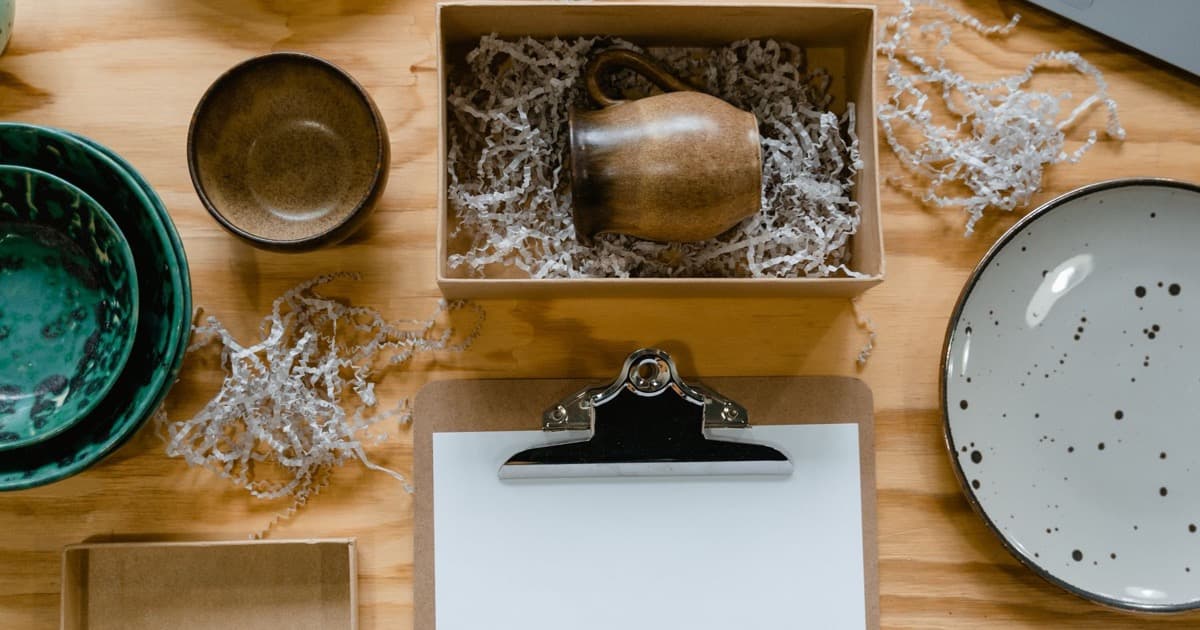
- A small ceramic bowl packed for hand luggage: it speaks of the coast where it was fired and ends up in a kitchen, not in a drawer.
- A hand-bound notebook with a printed cover: it gets used during the show itself, for notes at the next stand.
- A hand-printed cotton tote with a proper pattern, not just a logo: it becomes the bag every other giveaway goes into, the only one anybody sees.
Why something made in Liguria holds up better
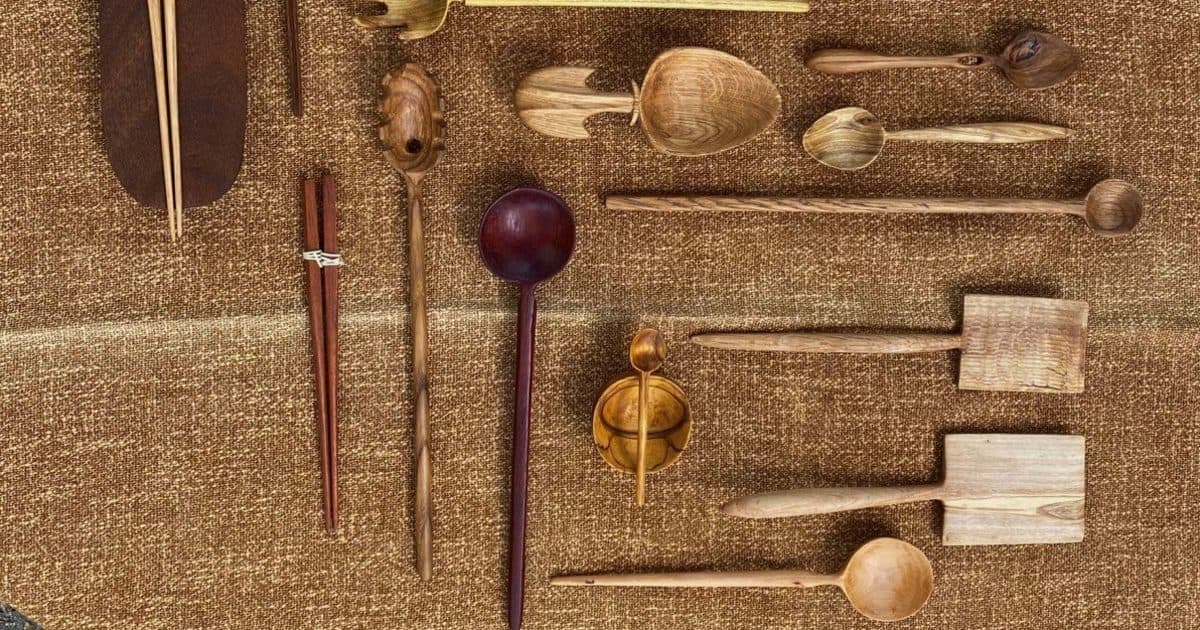
A giveaway made by hand in Liguria has an advantage no catalogue can copy: the material has a reason to be there. Rope and knots belong to the life of the port, slate is the roofing stone of the eastern Riviera, ceramics come out of the kilns along the western coast, and leather and cloth pass through the same hands that work for boats and sails. What the visitor holds is a piece of the place, and that is the story they tell back at the office. The logo rides on top of it for free.
Lead times and batches: how a workshop thinks
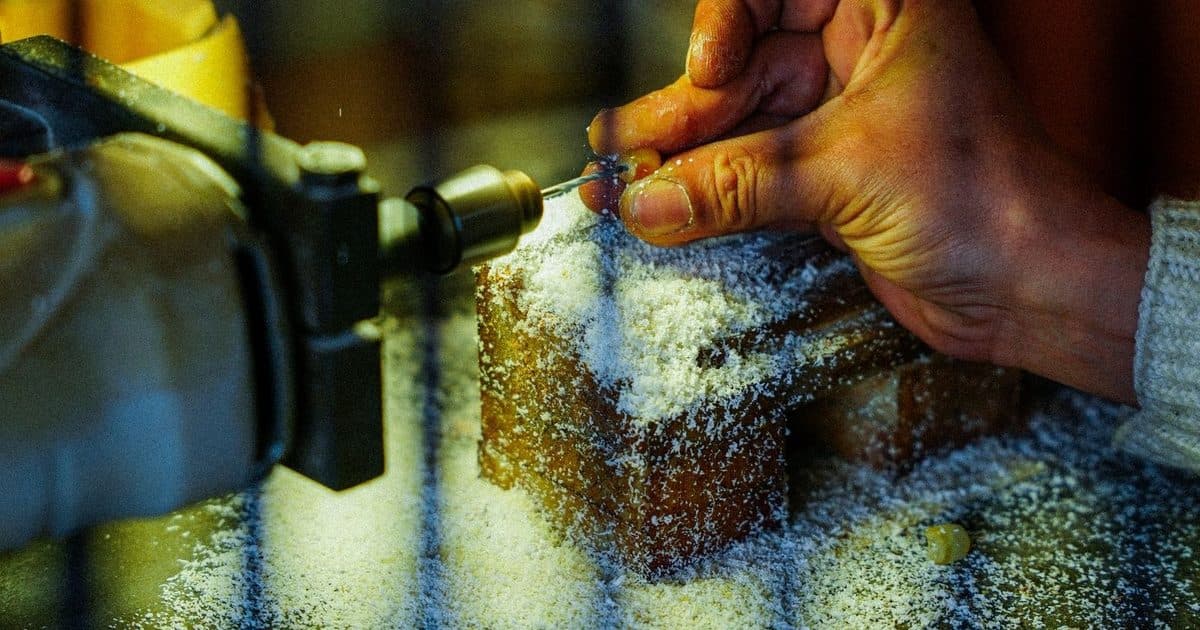
A craft workshop does not run a production line; it works in batches, and lead time depends on a few variables worth knowing before you ask for a quote. The number of pieces: every workshop has a daily capacity and beyond a certain point has to bring in more hands or stagger deliveries. Personalisation: stamping a logo into leather needs a die that is made once, engraving slate is a pass per piece, marking ceramics has to happen before firing and cannot happen after. The material, which for some crafts is ordered and waited for. And the calendar: if the show is in September, August is a month when many Italian workshops slow down, and that is something to know in spring, not in July.
On batches the rule is simple: a few pieces allow variations, many pieces demand uniformity. On a stand that runs over several days you can plan a basic giveaway for walk-ups and a finer one for the meetings in the diary: the passer-by gets the rope knot, the person who sits down to discuss a contract gets the bowl in its box. Price, as a result, has no fixed value: it moves with the material, the quantity, the depth of personalisation, the packaging, the delivery address and the date. A serious quote arrives when the request contains all of that; without it, you get an estimate that will change.
One point of contact coordinating several makers
The practical problem with handmade giveaways is that they are rarely made by one person. One Maker works leather, another slate, a third ceramics, and none of them quotes or asks for the logo the same way. For whoever is organising the stand that means three conversations and three delivery dates to line up, in a language that may not be yours. That cost appears on no quote, but it exists, and it is paid by the person who already has a trade show to run. It is the same knot faced by anyone ordering corporate gifts from different craft districts.
Handsome acts as the single point of contact. The company sends one request, with quantities, dates and a rough idea, and receives one quote covering all the Ligurian Makers involved. Each workshop makes its share and deliveries are aligned to set-up day. The logo is sent once, in the right format, and adapted to each material by the person working it. The path from request to delivery is set out on the companies page.
The giveaway does not have to be an object at all. A Maker present at the stand for a time slot, pressing initials into leather or tying the knot in front of the person receiving it, stops foot traffic better than any screen: the visitor stays at the counter and meanwhile someone on your team gets to talk. For the most important contacts met at the show, a gift card valid for a workshop in their own city arrives later, once the fair is a memory, and stretches the contact out by weeks. That, too, goes through the same request and the same point of contact.
You do not recognise the right giveaway at the stand. You recognise it the evening after, when someone decides to make room for it in the suitcase.
Frequently asked questions
- What should we hand out at a trade stand in Genoa instead of a branded pen?
- Something small, useful and made by hand in Liguria: a leather luggage tag with stamped initials, a slate coaster, a rope keyring with a sailor's knot, a small ceramic bowl, a hand-bound notebook. They fit in a carry-on and are tied to the place, so they get kept instead of binned.
- How far ahead of the show should handmade giveaways be ordered?
- It depends on quantity, personalisation and material, and the right time to ask is as soon as your stand dates are confirmed. For a September show that means spring, because handmade production works in batches and many Italian workshops slow down in August. With Handsome one request covers every Maker's lead time.
- Can a handmade giveaway carry our company logo?
- Yes, but the method changes with the material: in leather it is stamped with a die, on slate it is engraved, on ceramics it is applied before firing, on cloth it is printed. You send the file once, as a vector, and each Maker adapts it to their own process.
- What makes the price of a handmade giveaway go up or down?
- Material, quantity, depth of personalisation, packaging, delivery address and date. That is why a quote is built on a complete request rather than a general question.
- With several makers involved, who do we deal with?
- Only Handsome: it coordinates the Makers, aligns deliveries to your set-up day and is your single point of contact from request to delivery, by email or WhatsApp.
One request, one point of contact: Handsome coordinates the Ligurian Makers and delivers on set-up day.
Request a quote for your stand