
Walk out of a Verona exhibition hall at closing time and the bins tell you how the day went better than any report: tote bags with logos, pens, notepads, lanyards, plastic corkscrews still sealed in their bags. The people who spent the day walking the aisles do their sorting on foot, somewhere between the exit and the car park, and whatever fails the cut never reaches the car. That is where this guide starts: what to put on your counter at Vinitaly, Marmomac or Fieracavalli so that it gets taken home, and how to get it into the hall by set-up day.
Why a printed giveaway is worth less in Verona than elsewhere
Verona's fairs draw a specific crowd. Vinitaly brings buyers, importers, sommeliers and wine writers whose job is to judge a product by where it comes from, whose hands made it and how well it holds up over time. Marmomac fills with architects and stone workers who can name a marble by touch; at Fieracavalli everyone handles leather every day. This is an audience that speaks the language of provenance, and an object out of a catalogue, identical to the one on the next stand, has nothing to say to it. The rule holds for every date on the Veronafiere calendar. Before ordering, ask whether the object is useful, whether it's good-looking enough to stay in sight on a desk or in a cellar, and whether it says where it comes from, and therefore who gave it. A printed freebie usually fails every one of those; a piece made by a Maker from the area, with a card saying who made it and from what, almost always passes them all.
Limited run: what it actually means for a stand
Limited run isn't a label. It means the quantity is fixed before the Maker starts producing and is never topped up: pieces are numbered by hand, they resemble each other without being identical because they come off the same bench and not the same mould, and each one travels with a card describing the technique, the workshop and the material. On the stand you are not handing a pen to whoever walks past: you are giving away something that runs out, and you say so. The person receiving it understands they were chosen, and the card gives your company a story to tell later. In Verona the materials have a reason to be there, which is what makes the run believable:
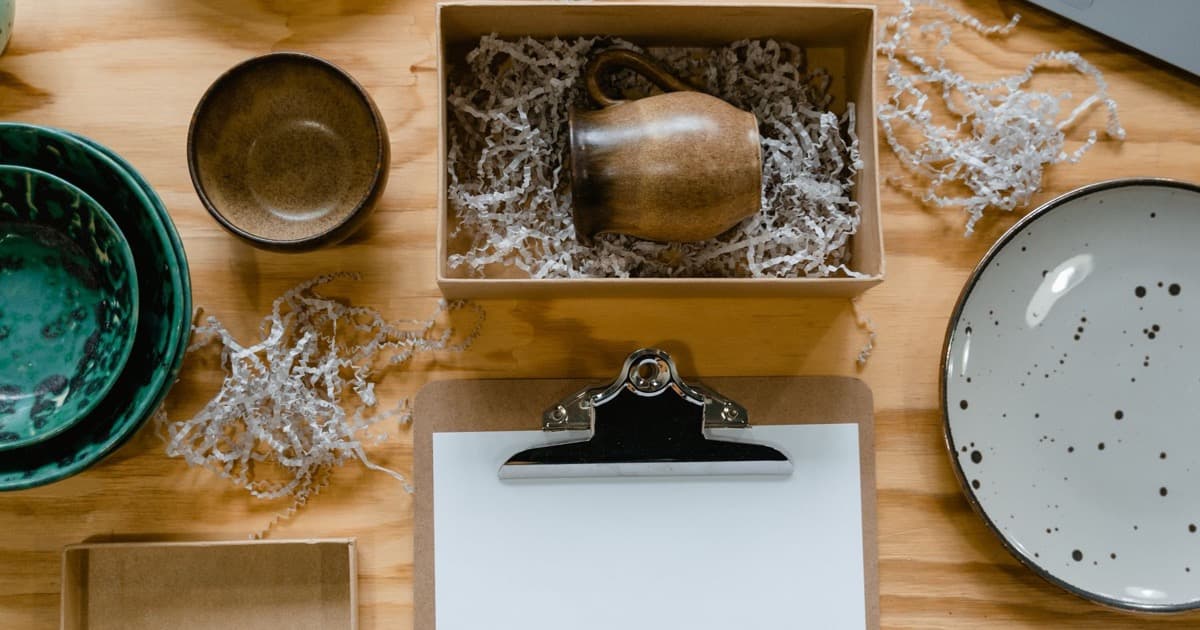
- Ceramics: a small plate for the glass or a hand-glazed bottle coaster, with the logo cut into the clay before firing.
- Leather: a bottle collar or a corkscrew sleeve with the logo hot-stamped, which at Vinitaly goes straight onto the tasting table.
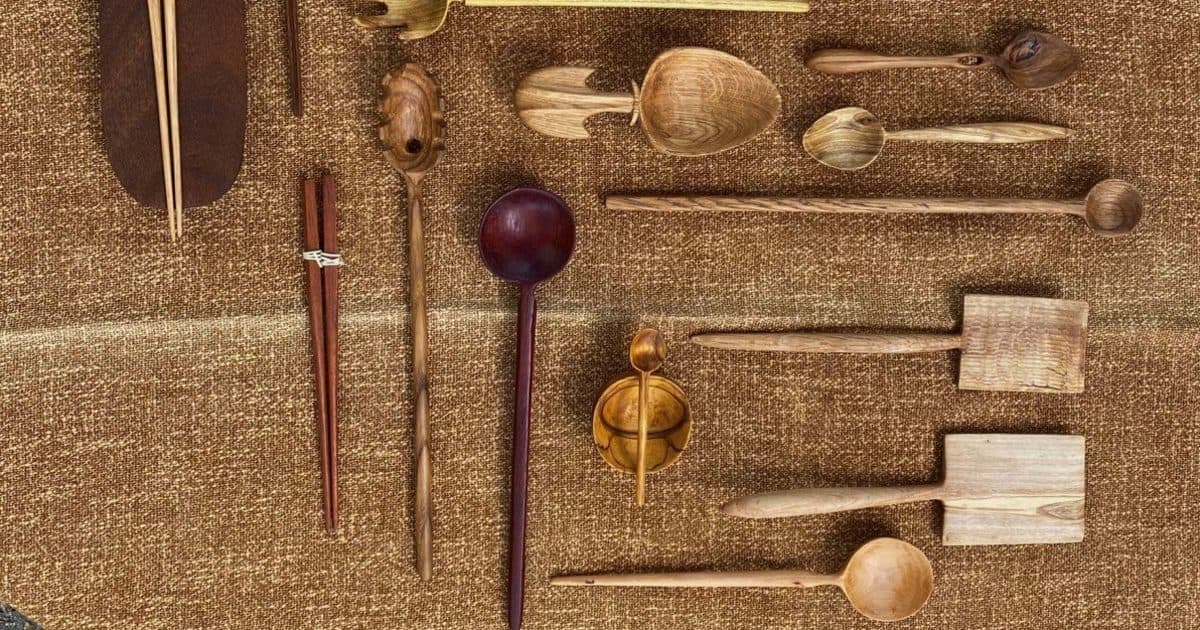
- Wood: a turned stopper in olive or vine wood, a drip ring, a bottle marker: they fit in a pocket and clear airport security.
- Stone: a coaster in Lessinia stone or Verona red marble, the same material that fills the halls at Marmomac.
- Paper: a hand-bound tasting notebook, in use from the day after the fair.
Timing and delivery: count backwards from set-up day
The date that matters is not the opening but set-up day, when the stand builder is on site and can receive the boxes. You count backwards from there, and every material has its own rhythm: ceramics go through the kiln more than once and must dry between firings; hot-stamped leather needs a die with your logo, made before anything else; turned wood has to be finished and oiled without rushing; a hand-bound notebook waits for the glue to set. Before the run you need a sample to sign off: if the logo is wrong, you find out then, not in Verona. In practice the sequence looks like this:
- Brief: fair, hall and stand number, set-up day, quantities per tier, the object you have in mind, logo as a vector file.
- Proposal: materials, production times and delivery date at the hall, in a single quote.
- Sample: one finished piece to approve, with the logo applied exactly as it will be on the run.
- Production and numbering: the run leaves the studio with the Maker's cards already in the packaging.
- Delivery: the boxes reach the stand on the day and in the time slot agreed with the stand builder.
Delivering to a fair is not delivering to an address. During set-up there are supplier-only gates, vehicle passes and time slots. The label has to carry the fair, the hall, the stand number and the exhibitor's name as it appears in the catalogue, plus the mobile number of whoever is physically there: the stand builder, not the marketing office back at head office. Ceramics, glass and stone are packed for a pallet, not for a courier ringing a doorbell. If the stand has a lockable storeroom, the box goes in until opening; otherwise you agree the handover with the stand builder, or with the team's hotel in town the evening before.
One counterpart for Makers, quantities and delivery
A handmade gadget rarely comes from one pair of hands, and whoever runs the stand already has a builder, a printer, a caterer and the fair itself to deal with: adding a potter, a leatherworker and a wood turner, each with their own quote, deposit and delivery date, is usually what kills the idea. With Handsome for companies there is one counterpart: you describe the fair, the stand, the quantities and the object you have in mind, and Handsome selects the right Makers by material and production capacity, fixes the batches, has the sample made, coordinates numbering and cards and lines up deliveries with set-up day. You approve one proposal and find the boxes in your stand. Handsome's Makers have public profiles with their studio, techniques and reviews, so you can browse the profiles.
The gadget doesn't have to be an object, either. For the buyers you closed an order with at Vinitaly, a gift card valid on a craft workshop works in a studio near their home, on a date they choose, and arrives as a code rather than a box. The same method applied to another city is in our guide to handmade gadgets for trade fairs in Genoa; if the team stays in Verona an extra day, there's a queue-free itinerary that ends in a craft studio.
At a fair the gadget is judged by the person who receives it, on foot, between the hall exit and the car park. It's worth giving them something they don't feel like leaving behind.
Frequently asked questions
- What should I put on my stand at a Verona trade fair instead of the usual promotional item?
- A piece made by hand by a Maker from the area, in a numbered limited run, with a card saying who made it and from what material. At Vinitaly the objects that work are the ones that end up on the tasting table: a small ceramic plate, a leather bottle collar, a hand-bound notebook.
- How far ahead of the fair do I need to order a handmade limited run?
- The slowest material in the run sets the pace, with the sample approval and the delivery to the hall counted in. Ceramics and wood need more steps; leather and paper are quicker, but the logo die has to be made first. Write as soon as your stand is assigned and the set-up day is known.
- Can the gadgets be delivered straight to the stand?
- Yes, during set-up days, with a label carrying the fair, hall, stand number and exhibitor name as listed in the catalogue, plus the mobile number of whoever is on site. Handsome agrees the day, the time slot and packaging suited to fragile pieces with the stand builder.
- What makes the price of a limited-run handmade gadget go up or down?
- The material, the size of the run, the kind of personalisation, the packaging with the Maker's card, and how much time there is. An order closed early leaves room for the sample; one closed right before the fair narrows the choice to whichever studios still have space in their calendar.
- With several Makers involved, who does the company deal with?
- Only Handsome: it takes the request, selects the Makers, coordinates production and delivery and is the company's single point of contact, by email or WhatsApp. No workshops to deal with one by one.
Tell us the fair, the stand and the quantities: we come back with one proposal and a sample to approve.
Ask for a proposal for your stand