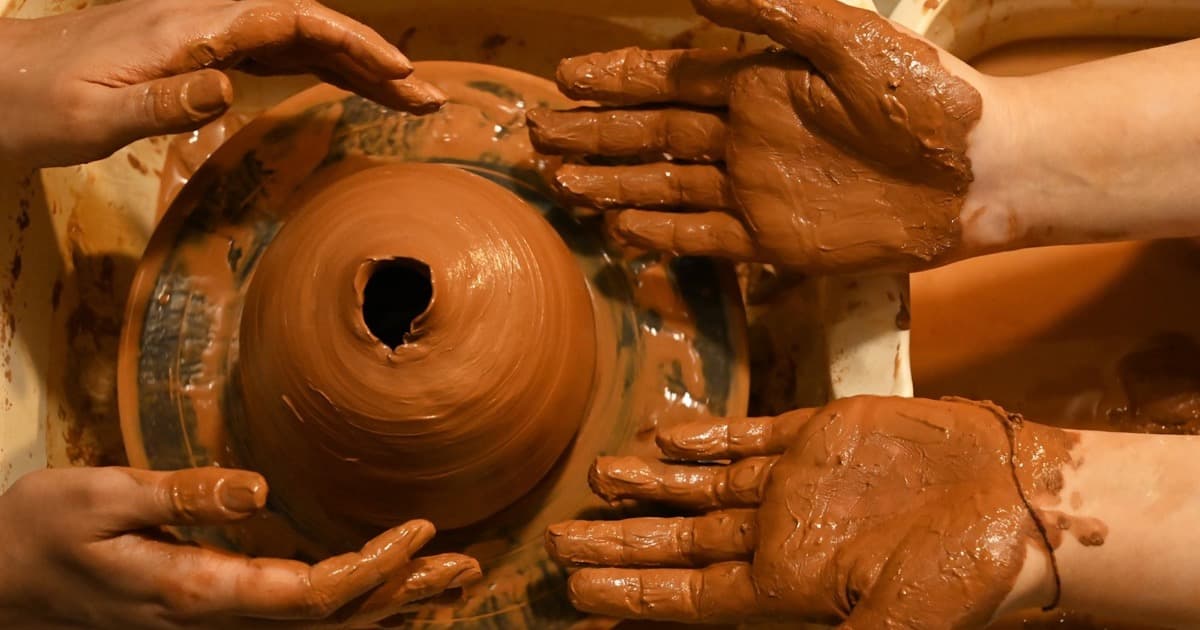
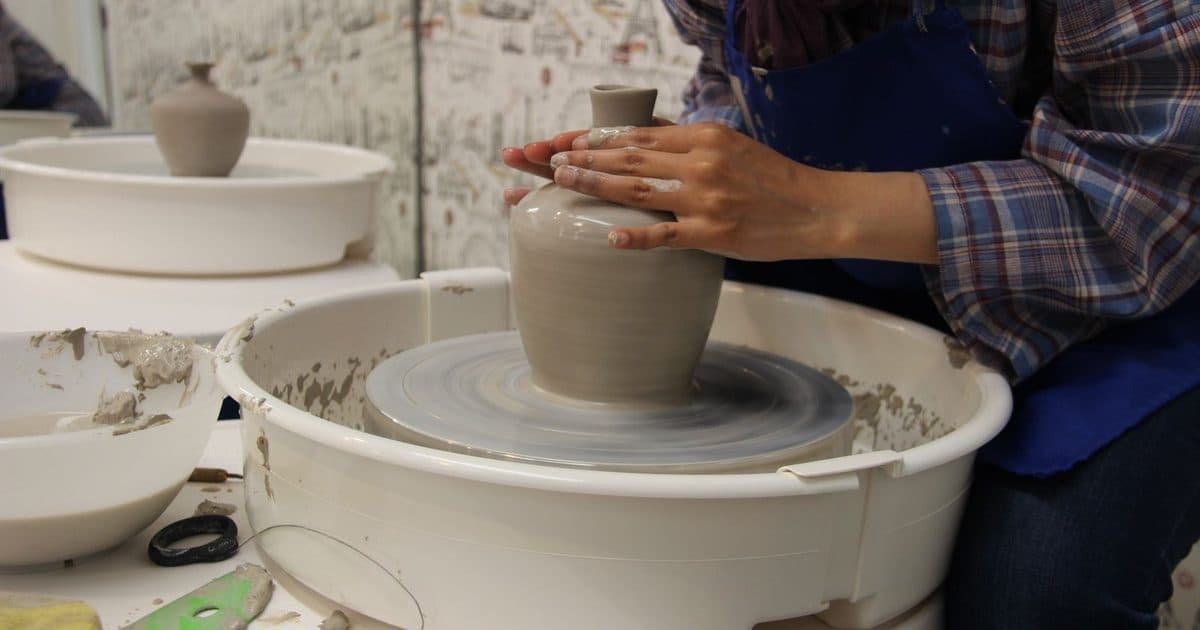
Booking a first pottery class in Genoa usually happens late in the evening, phone in hand, staring at two listings. One says wheel and shows a bowl rising between muddy hands; the other says hand-building and shows a slightly crooked mug with fingerprints in it. They are two different experiences, not two levels of the same one, and people who pick at random often leave convinced that clay is not for them. It was. The format was the problem.
The short answer, if this is genuinely your first time: hand-building almost always gives you back the object you pictured, while the wheel gives you back a gesture you will not forget and an object that makes its own decisions. If you want to walk home with something recognisably yours, start with your hands. If you want to know what centring clay feels like and can accept that your first bowl may come out low, thick, or not at all, book the wheel. The rest is about working out which of those two sentences sounds like you.
What actually happens on the wheel the first time
The potter’s wheel has one flaw no photo shows: before you can raise any shape you have to centre the lump of clay, and centring is learned through the body, not through instructions. Early on the clay wobbles, the walls flare open and the form you were lifting collapses in a blink. That is not your mistake; it is the normal stage, and a good teacher knows it so well that they will often keep their hands over yours for the first few minutes. The satisfaction, when it comes, is enormous. It just comes after the frustration, almost never before.
In a session of a few hours a beginner typically finishes one small piece, rarely more, often with the Maker stepping in at the decisive moment. The pieces are squat, with generous walls, and that is fine: a thin wall is the reward for months of practice, not for one afternoon. If a listing promises tall vases in a single meeting, it is optimistic. For an honest preview of day one, the guide on what to bring and what to expect at a pottery workshop covers the practical side.
Hand-building: coils, slabs and pinch pots
Working clay without a wheel is a different pottery, with its own rules, rather than an easier version of the first. The pace is slow and reversible: if a wall bothers you, you take it off and rebuild it, which the wheel never allows. Control stays in your hands the whole time, and that changes the mood of the room: people talk, look at each other’s pieces and make mistakes without drama.
- Coiling: ropes of clay stacked in a spiral and welded together with your fingers. It allows tall, organic forms from the very first go and is the route for anyone who wants a vase or a jug.
- Slab building: clay rolled out like pastry, cut into shapes and joined. This is how mugs, plates and anything with clean geometry get made.
- Pinching: a ball opened with your thumb, the walls thinned between your fingers. The most immediate of all, ideal for bowls and small containers.
Concrete criteria for choosing
- Length. The wheel needs time even to be sampled: in a short session, centring eats almost everything and a finished piece becomes unlikely. Hand-building adapts to any length.
- Frustration tolerance. How do you react when something fails on the first attempt? If it fires you up, the wheel will give you a wonderful evening. If it deflates you, the pinch bowl that comes out as you wanted is the one that will bring you back.
- What you want to take home. On the wheel the object is a consequence; by hand it is the goal. If the class is a gift, hands are the choice with fewer unknowns.
- How many people per wheel. Wheels are few and take up space: in a large group, each person’s time on the wheel shrinks. Check the listing for the group size and how people take turns.
- What actually comes out of the kiln. Either way, the piece does not go home with you the same day: it has to dry, be fired once, be glazed and fired again. Sometimes a piece cracks. Look for the line about collection, timing and what happens if a piece does not survive firing.
Ligurian maiolica from Albisola, even for beginners
West of Genoa, in Albissola Marina and Albisola Superiore, pottery is a village trade: you see it in the shop signs and in windows displaying plates and jugs where other towns display clothes. The technique that made this stretch of coast recognisable is maiolica: fired clay coated in an opaque white glaze and painted with metal oxides, very often in the blue that on Ligurian plates looks like the sea. For a beginner this matters for a practical reason: decorating is a stage of its own, done sitting down, with a brush, on a piece that has already been fired. It asks for neither a wheel nor strength. Some classes offer it as a second session, others as a standalone experience where you paint a ready-made plate. If the wheel-or-hands choice is making you anxious, this is the third road. It also changes how you see your raw piece: the squat bowl from the wheel is not the result but the base for a glaze that forgives a lot. To see what a painted plate can become, the Savona ceramics museum is a short train ride from the city.
How to read a listing and book
On Handsome, workshops are filtered by city and discipline: pick Genoa and Ceramics, then compare listings against the criteria above rather than against the photos. The things that move the price are always the same — length, number of pieces, whether firing and glaze are included, how many people the teacher follows, whether there is a second decorating session — and two classes with the same title can be very different experiences. The logic in how to choose the right craft workshop applies: decide first what you want to keep, then look for who offers it. Whoever runs the class is registered as a Maker or an Apprentice; payment is online and your place is confirmed immediately. If the class is a present, a gift card leaves the wheel-or-hands decision to the person receiving it, the hardest part to guess on someone else’s behalf.
The wheel teaches you to let go; your hands teach you to insist. The first time, pick the lesson you need most.
Frequently asked questions
- For a first pottery class, is the wheel or hand-building the better choice?
- If you want to go home with an object that resembles what you had in mind, hand-building is the safer choice: coiling, slabs and pinching are reversible techniques you can control from the first attempt. If what you mostly want is to try the gesture, and failing does not put you off, the wheel is more intense and less predictable. Neither is a lower level of the other.
- How long does a first pottery class in Genoa last?
- It depends on the format: there are single sessions of a few hours and courses spread over several meetings. The stated length includes arrival, the briefing and cleaning up, so hands-on time is shorter. On the wheel a short session risks being used up by centring; by hand any length works.
- Do I take my piece home the same day?
- Almost never. The clay has to dry, be fired once, be glazed and fired again: technical timings that do not depend on the teacher. The listing tells you when and how to collect the piece and what happens if it does not survive the kiln. If that line is missing, it is the first thing to find out.
- What is Ligurian maiolica, and can I try it without knowing how to build?
- Maiolica is pottery coated in an opaque white glaze and painted with oxides before the final firing; in Albisola and along the coast west of Genoa it is the reference tradition. Decorating happens on a piece that has already been fired, sitting down, with a brush: no wheel and no experience required.
- What if I have to cancel?
- The conditions are shown before you pay: there is a window in which cancelling entitles you to a refund, after which the place stays booked because clay and kiln time have already been planned for you. The rules shared by every booking are on the cancellations page.
Filter by city and discipline: the listing states length and what's included before you pay; look for firing and collection in the description.
See pottery classes in Genoa