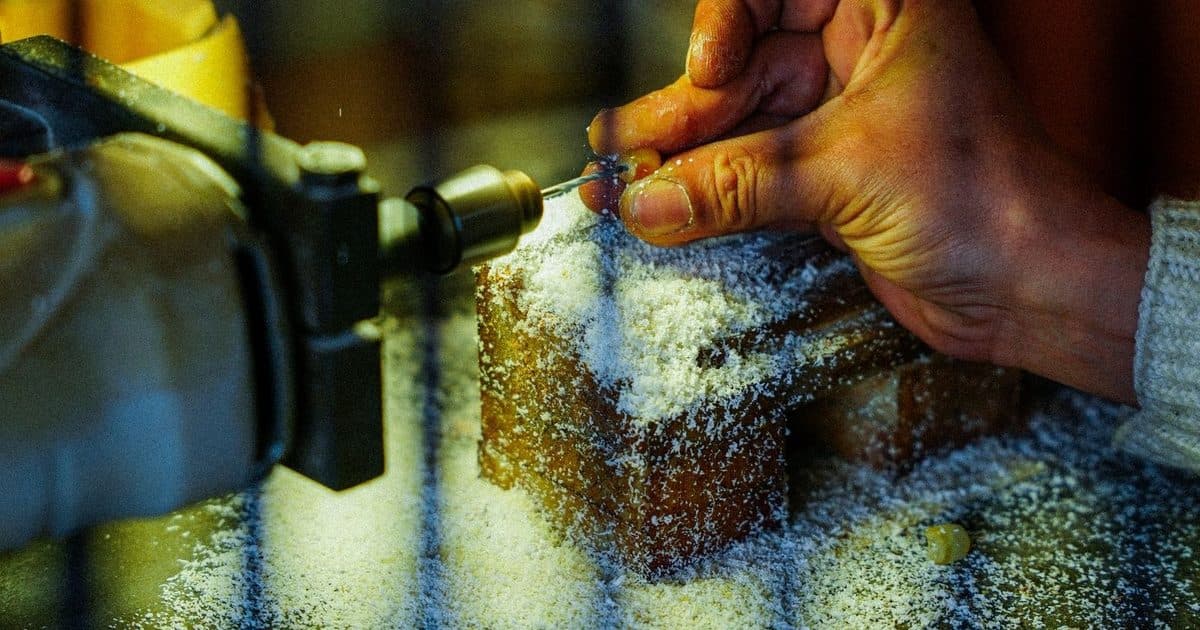
Search for a jewellery course near Genoa and the listings throw around filigree, chasing, repoussé and bench work as if everyone already knew what separates them. Most people don't: filigree and chasing are opposite ways of handling silver. They call on different hands, produce different objects, and fill afternoons that have almost nothing in common. Book without knowing and you may find yourself holding a hammer when you wanted tweezers, or the other way round.
The best place to understand the difference is up the Stura valley behind Genoa, in Campo Ligure, the village Italy identifies with silver filigree. The workshops line the streets of the old centre, the Museo della Filigrana holds wirework from well beyond Liguria, and the technique passes from one generation to the next inside the same families. From Genoa it is an easy day trip, by car or on the train that climbs towards Ovada.
What filigree actually is
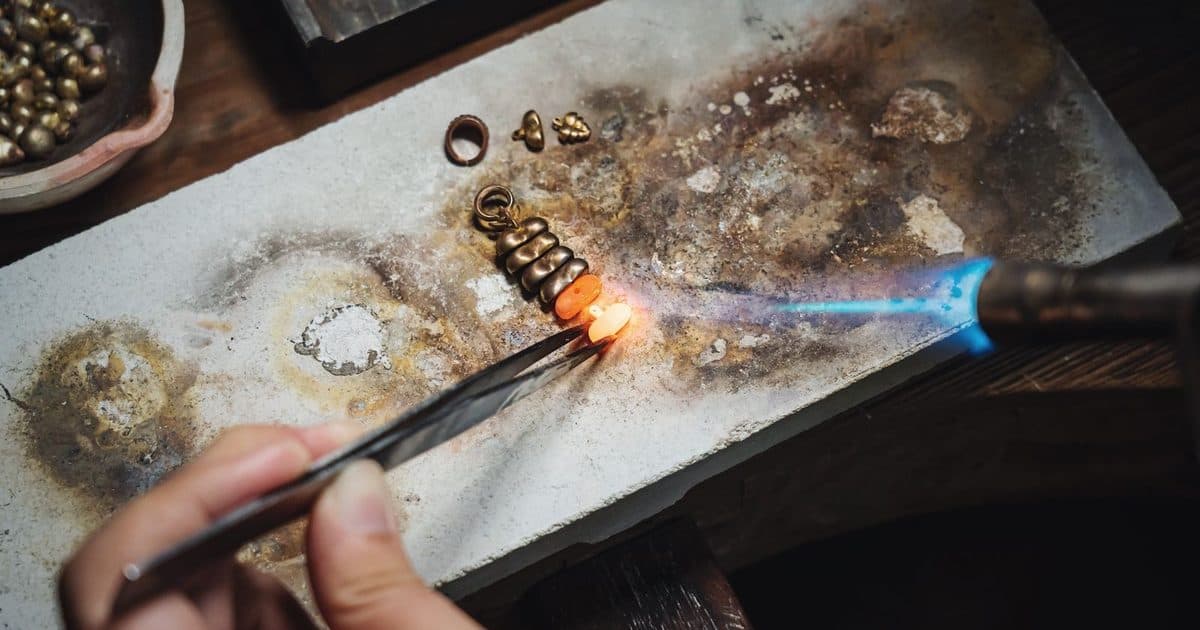
Filigree begins with wire. Silver is drawn thin, twisted and run through a rolling mill until it becomes a flat ribbon with a faint ribbed texture: that tiny relief is what catches the light. With tweezers, the ribbon is bent into curls, spirals and S-shapes that fill a frame of heavier wire, the outline of the object. Once everything sits where it should, the piece is dusted with powdered solder and heated with a torch; in seconds every point of contact fuses and the silver lace becomes a single body. Then an acid bath, a wash, a polish. In Campo Ligure the work is left open, with no backing sheet: light passes straight through it, and that transparency is what makes the local style recognisable. If your search keeps surfacing the handmade paper of Fabriano, that is a homonym: in Italian the watermark in a sheet of paper is also called filigrana.
At the bench, for a beginner, filigree is an exercise in patience rather than strength. The wire yields to the slightest pressure, and the whole job is deciding where each curl goes and making it touch its neighbour without leaving gaps. The torch moment is short and delicate, because wire this fine melts before you notice: in beginner workshops it is almost always the teacher who runs the flame. In an afternoon you get to a pendant, a pair of earrings or a small flat shape, finished and wearable.
What chasing is, and why repoussé comes with it
Chasing does not start with wire but with sheet. A plate of silver, or copper and brass while you learn, is set into a bed of warmed pitch, which supports the metal and gives just enough under the blows. You work from the front with small steel punches, driven by a light hammer in short, continuous taps: lines, textures, crisp edges and low relief appear. Repoussé is its inseparable partner, the same sheet pushed from the back to raise volumes that chasing then refines from the front, which is why the two words almost always travel together in course descriptions.
Here the gesture is rhythmic and physical, and the workshop is audible: the tap-tap of hammer on punch is the soundtrack of the day. The skill lies in keeping the rhythm even and the punch at the right angle so the line runs without steps, and in judging depth without punching through the sheet. Beginners take home a small plaque with a raised motif, a textured pendant, a plain cuff. There is technical time to budget for: the pitch has to be heated to hold the metal and again to release it.
Filigree or chasing: how to tell which workshop is yours
- The gesture. Filigree: tweezers, minimal pressure, eyes close to the work. Chasing: hammer and punch, rhythm, an arm that works. If precision bores you, choose chasing; if noise wears you down, choose filigree.
- The object. Filigree gives an open, weightless piece that lives on light. Chasing gives a solid surface with relief that lives on shadow. Look at the photos and ask which of the two you would actually wear.
- The typical mistake. In filigree it is a curl that fails to touch, or a wire that melts under the torch, and it shows immediately. In chasing it is a blow too hard or a line that wanders, and it can partly be recovered.
- How much you depend on the teacher. Soldering filigree is the one step no beginner does alone; in chasing, once the gesture clicks, you work independently. A small group matters more in the first case.
- The words in the listing. Twist, weave, curls, torch soldering: filigree. Hammer, punches, pitch, relief, sheet: chasing or repoussé.
What to check before you book
The checks to make before paying are few. That the object leaves finished the same day, or that the listing says what you collect later. That the metal is stated: silver, or copper and brass for practice, as long as you know in advance. That the group size is given, because in filigree the torch step needs the teacher at every bench. And that it is clear the piece you take home is the one you made. On Handsome dates are booked and paid online, the cancellation terms apply to everyone; the guide to choosing a workshop covers the rest.
On price, it helps to know what moves it: the metal above all, because an afternoon in silver does not cost the same as one in copper; then duration, group size, how many pieces you take away and, in chasing, the pitch time. Campo Ligure is a day trip from Genoa; in the city, jewellery studios sit mostly in the alleys of the old town. If the workshop is a present, a gift card leaves the choice between wire and hammer to the person receiving it.
Filigree teaches you to wait; chasing teaches you to persist. Neither is easier: they are two temperaments, and one of them is yours.
Frequently asked questions
- What is the difference between filigree and chasing?
- Filigree works silver as fine wire, bent with tweezers into curls that are then soldered together in a single pass of the torch: the result is open and light. Chasing works a sheet fixed on pitch with punches and a hammer, raising relief from the front; repoussé does the same from the back. One is precision and patience, the other rhythm and pressure.
- Why is filigree associated with Campo Ligure?
- In this village of the Stura valley above Genoa, working silver as wire became the local trade, handed down through family workshops, and it has a museum of its own. Campo Ligure is known for open filigree with no backing sheet, so light passes through the work.
- Can a beginner make a filigree piece in one afternoon?
- Yes, if the format is designed for beginners: a pendant, a pair of earrings or a small flat shape. The bending is yours; the torch soldering is done by the teacher or closely guided, because wire this fine melts in an instant. The piece leaves finished the same day.
- Is chasing harder than filigree?
- It is more physical, not harder. You work with hammer and punch in short, continuous taps and your arm feels it; in return, mistakes are easier to recover. Filigree asks for a steady hand and patience and does not forgive a wire melted in soldering.
- How do I tell from a listing whether a course near Genoa is filigree, chasing or bench work?
- Look at the verbs. Twist, weave, curls, torch soldering: filigree. Hammer, punches, pitch, relief, sheet: chasing or repoussé. Saw, file, band ring: basic bench work. If the description stays vague, ask before booking what leaves finished and in which metal.
Filigree, chasing or bench work: every listing says what you make and what you take home. Book and pay online.
Browse jewellery workshops on Handsome