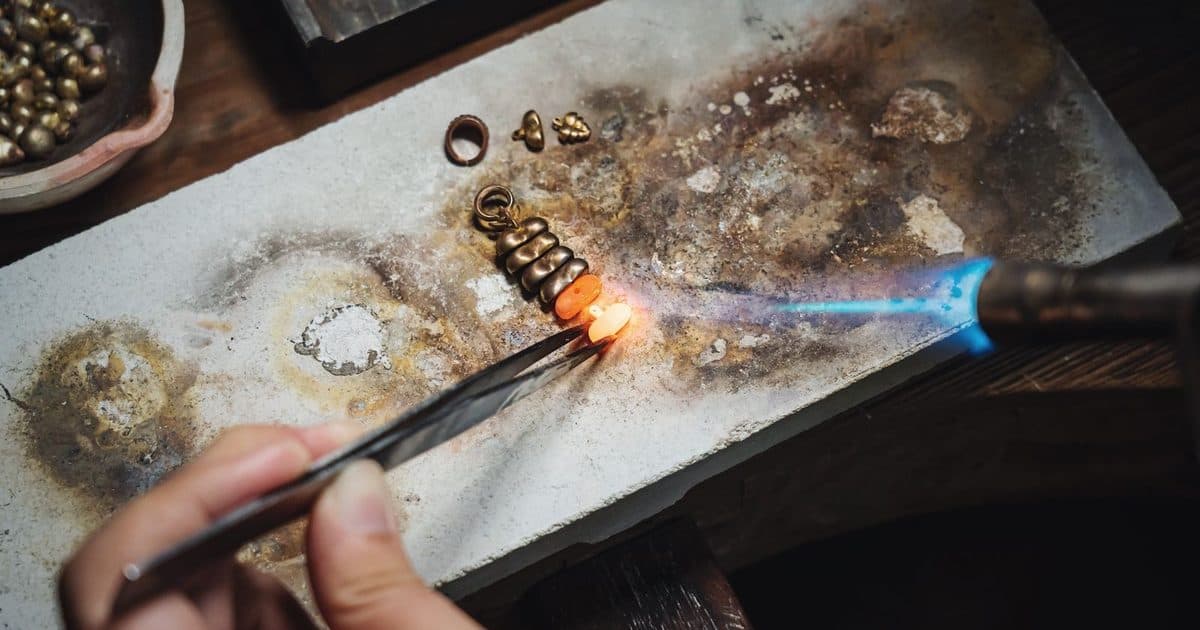
Arezzo doesn't look like a city of gold. In the old town, the gold is mostly a reputation. The gold is real, but it lives on the industrial estates around the city: workshops and factories that draw wire, roll sheet, make chain and finish jewellery for brands across the world, all behind intercoms and closed doors. There are no shop windows. And yet a goldsmith's bench here can be booked much like a table for dinner.
The question we get asked most about Arezzo is a simple one: can you walk into a working goldsmith's workshop and leave the same day with a ring you made yourself? You can, and it is the format goldsmiths who open their doors are keenest to offer: one session at the bench, one object to finish, a Maker beside you from raw metal to final polish. This piece explains what actually happens in those hours, what varies from one experience to the next, and what ends up in your pocket on the train back.
Why Arezzo is a gold city you can't see
The Arezzo goldsmith district is a supply chain, not a row of ateliers with brass signs. Wire is drawn here, metal is cast, chain is made and pieces are finished for other people's labels, in premises you don't enter without an appointment. That's why visitors hunting for "Arezzo gold" often come away puzzled: the jewellers on the main street sell rings much like anywhere else, and the interesting part, the hands and the flames, is somewhere else entirely. The city itself earns the trip regardless: Arezzo has a steep old centre, a Piazza Grande that turns into the arena for the Giostra del Saracino joust, and the Bacci chapel with Piero della Francesca's Legend of the True Cross. But if you want to understand why this place runs on metal, the most direct way is to sit down at a bench.
What actually happens at the bench
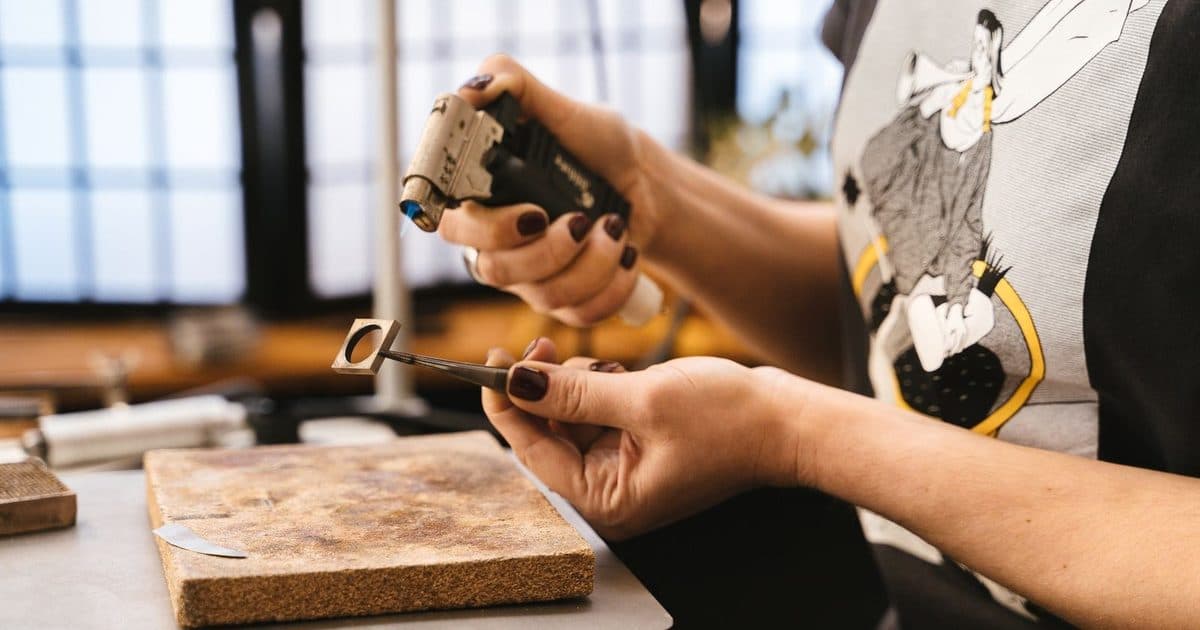
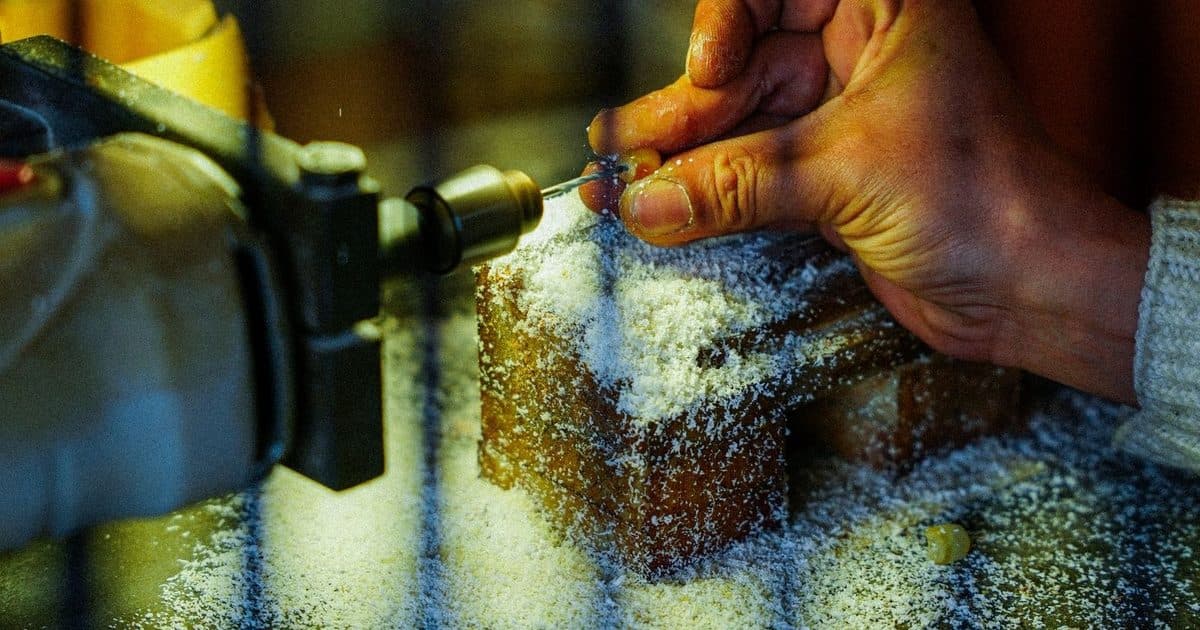
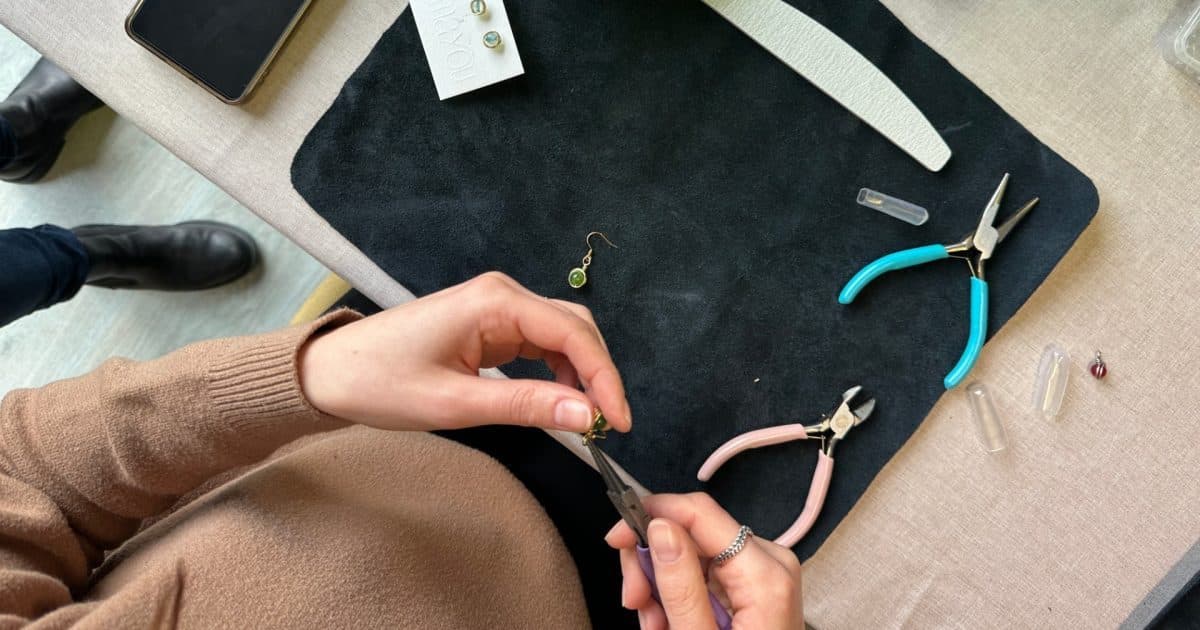
A goldsmith's bench is a table with a half-moon cut-out and a small wooden peg jutting into it, which you rest the metal against to saw and file. Below is a leather skin that catches the filings, because in a goldsmith's shop nothing gets thrown away. Around you: a piercing saw with blades finer than a hair, files of every profile, pliers, a tapered steel mandrel for shaping rings, a mallet, a torch for soldering and annealing, and a bath of diluted acid, the pickle, where the piece comes out clean after the flame.
- Your finger is measured and the length of metal to cut is worked out, allowing for the thickness of the band.
- The wire is sawn to length and annealed with the torch: once heated, the metal softens and lets itself be bent.
- The strip is closed into a circle with pliers until the ends meet with no light between them. This join decides how good the solder will be.
- It is soldered with an alloy that melts at a lower temperature, then pickled and rinsed.
- The ring is rounded on the mandrel with the mallet, the seam is filed until it disappears, then abrasive paper and finally the polishing wheel.
Each step has a knack you only learn by doing it: how long to hold the flame before the metal glows, how to feel with a fingertip whether the seam is flush, when to stop filing. The Maker demonstrates, then hands over: in a well-run session the torch is in your hand. Nearly all beginner sessions work in silver, which forgives mistakes, anneals easily and doesn't turn every speck of filing into a small loss. Gold can be requested, and some experiences offer it on demand, but it is weighed before and after and it changes the cost of materials considerably.
What you take home
A ring, first of all: solid, not plated, in your size, with a surface you choose, mirror-polished, brushed or hammered. If something isn't perfect, a faintly visible seam, one edge slightly thicker than the other, that isn't a flaw: it's proof you made it, and it's usually the part people grow fondest of. Set stones almost never fit into a single session; stone-setting is a trade of its own, and anyone promising it in a few hours is usually doing it for you. Then there's what doesn't show: you can now tell a soldered ring from a cast one, you understand why a wedding band weighs the way it does, you look at the windows on Corso Italia differently.
How to choose the right experience in Arezzo
The differences between listings are bigger than they look. Who runs it matters: a goldsmith with a working shop sits you at their own bench, with their tools and their rhythm; a school has fitted classrooms and a more linear syllabus. Group size matters: one bench each with a Maker moving between stations is a different thing from a shared table where you wait your turn at the torch. Language matters if you're booking for guests who don't speak Italian. And length matters: a half day gets you a simple band, while a full day lets you attempt a wider ring, a texture, a second piece.
On Handsome, workshop listings state these things plainly: who leads, how many people per session, what's included, what you take home. If you've never booked a craft experience before, this guide to choosing the right workshop helps you read a listing without surprises. And if Arezzo is one stop on a longer Tuscan trip, it pairs naturally with artisan experiences in Florence: Arezzo is a short regional train ride away, and it's the day trip almost nobody makes.
Metal doesn't forgive haste. It forgives everything else.
A goldsmith's bench in Arezzo also works as a gift, and it may be the present that most resembles a ring without being one: the person you give it to makes it themselves. With a Handsome gift card they pick the workshop and the date on their own; for more ideas, here is how to give an experience instead of an object.
Frequently asked questions
- Can I make a ring in Arezzo in a single day with no experience?
- Yes. Beginner bench sessions are designed for people who have never held a jeweller's saw: you work on a simple band, usually in silver, following the Maker step by step. In half a day or a full day the ring is finished, polished and in your size.
- Why can't I see goldsmiths' workshops in the centre of Arezzo?
- The Arezzo district works mostly for other brands and for export, in factories and workshops on the industrial estates around the city. They have no shop windows and no public opening hours: you get in by appointment or through a booked experience.
- Can I work in gold instead of silver?
- In some experiences, on request. Gold is weighed before and after and raises the cost of materials, which is why nearly all beginner sessions use silver: it is easier to work and more forgiving of mistakes.
- Do I take the ring home the same day?
- Yes, as a rule you leave the workshop with the ring finished and polished. Only special work, such as a set stone, involves steps that don't fit into a single session.
- What changes the price of a goldsmith's bench experience?
- The metal you choose, the length of the session, the number of people per session, whether the finished piece is included or charged by weight, and whether the bench belongs to a working goldsmith or a teaching classroom. Handsome listings state what is included.
Dates, seats and what's included, bookable online
Find a jewellery workshop on Handsome