In late November, in the hills behind Pesaro, a village of a few narrow streets decides to switch itself off. It is not a power cut: it is the programme. For fifteen minutes the electric lighting goes down and only the flames are left. That is the moment everyone waits for, and it is short. The rest of the day is a Christmas market like many others. The material that gives the village its name, on the other hand, deserves more attention than it usually gets.
What Candele a Candelara is
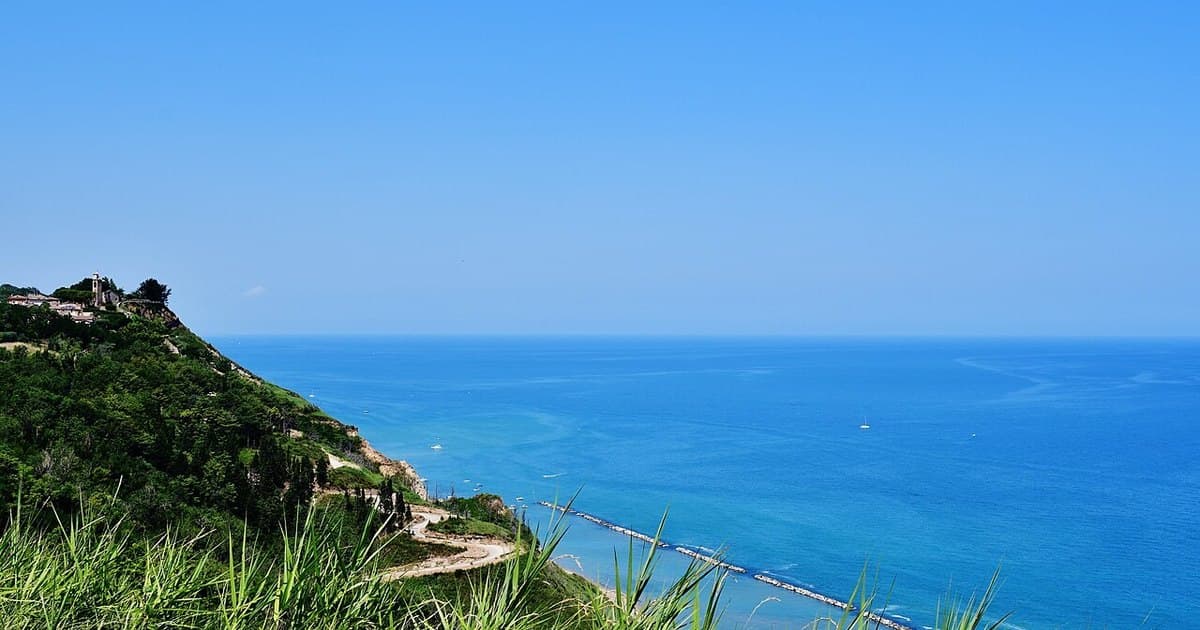
Candelara is a hamlet of the municipality of Pesaro: a hilltop castle village at around 180 metres above sea level, with its walls and gate still clearly readable. On weekends between late November and December it hosts a festival dedicated to candles, run by the local Pro Loco. Stalls, workshops, music along the village lanes. And two scheduled blackouts of the electric lighting, which are the reason people travel in from other regions.
The blackout moment
Fifteen minutes is not long and it goes fast. Be inside the village at least half an hour earlier, with a spot already chosen: a slope, a small square, a view over the walls. In the dark a flame does not light far, it lights close, and it completely changes the way you see the facades and the people around you. If you have small children, take their hand before the lights go down, not after. If you want photographs, rest your phone on a low wall instead of holding your arms above the crowd.
Wax as a craft
On the stalls you will find three families of material, and they do not behave the same way. Beeswax is the oldest: it melts at around 62 to 65 degrees, it is harder, it burns slowly and it has a scent of its own that needs no fragrance added. Vegetable waxes, soy above all, melt much lower, around 50 degrees: they are soft, they hold fragrance well, but they are less forgiving of a badly chosen wick. Paraffin is a petroleum derivative, it is cheap, and it is the base of most industrial candles. A candle is not expensive or cheap because of its shape: it is because of what is inside it.
Pouring, dipping, moulding
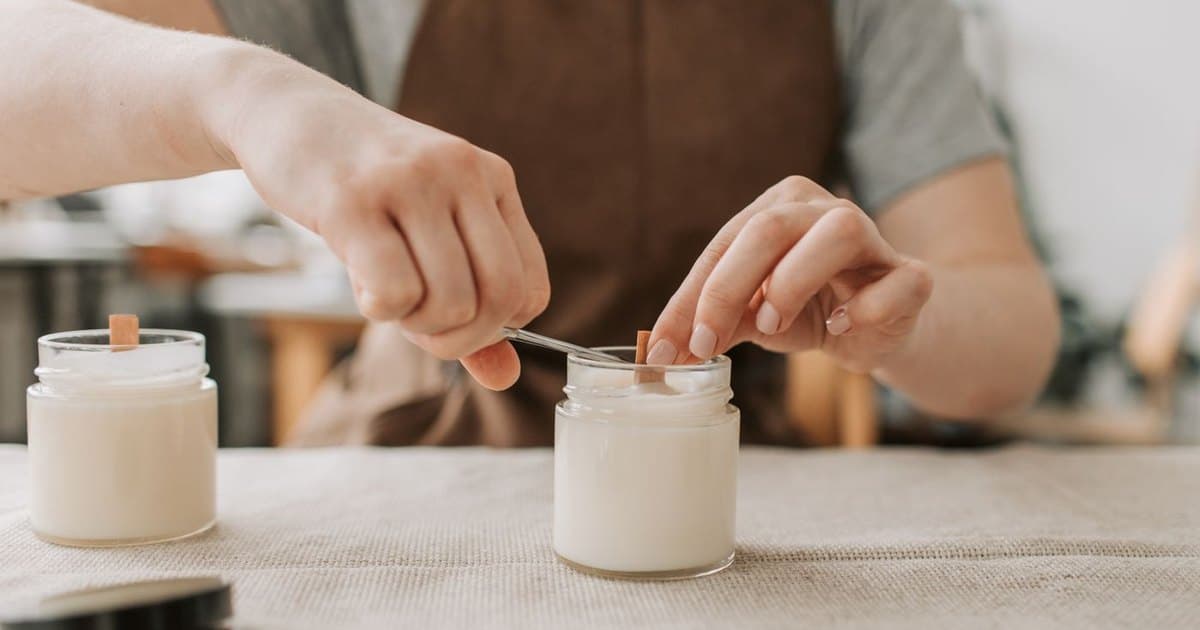
- Pouring: melted wax is poured into a container or a form with the wick already in place. This is the technique behind jar candles, the easiest to learn and the easiest to get wrong if the wax cools too quickly.
- Dipping: the wick is plunged into the wax dozens of times, gaining one layer with every pass. This is how tapers are made. You can see with the naked eye whether the work was done patiently: the layers stay even.
- Moulding: the wax is poured into a rigid or silicone form and released once it has shrunk back. It allows shapes, but it requires knowing how much that particular wax contracts, because every wax is different.
The wick decides almost everything
It is the part visitors look at least and the part that determines the result. The wick has to be chosen in proportion to the diameter of the candle and to the type of wax. Too thin, and it cannot melt out to the edge: the flame digs a tunnel down the middle and leaves the walls standing. Too thick, and the flame runs high, burns through the wax fast and produces soot. People who work wax for a living run burn tests before putting a product on sale. That is the real difference between an object made by hand and an object made at random.
- It smokes and blackens the glass: the wick is oversized, or simply too long. Trim it to a few millimetres before every lighting.
- It drips onto the furniture: almost always a draught pushing the flame to one side. Move the candle, do not blame the wax.
- It sinks a well and leaves the walls: the wick is too thin for that diameter. When the candle is new, leave it burning until the pool of wax reaches the edge.
Planning the visit
- Choose your time slot according to what you came for. The morning is quieter and cheaper, but the blackouts are in the late afternoon: if you come for those, you pay the full ticket.
- Aim for the first blackout at 5.30pm if you have children with you: the second one falls when tiredness has already arrived.
- By car, leave the A14 at Pesaro-Urbino. Do not drive up to the village: the organisers ask you to leave the car in Pesaro near one of the seven free shuttle stops and ride up. Camper areas and coach parking are by advance booking only (info@candelara.com).
- By train, get off at Pesaro. The railway station is one of the free shuttle stops for the village: check the current year's programme for the times, as they change from edition to edition.
- Closed shoes with grip, and one more layer than you think you need. You will be standing still, in the cold, on a slope, in the dark.
The village, beyond the market
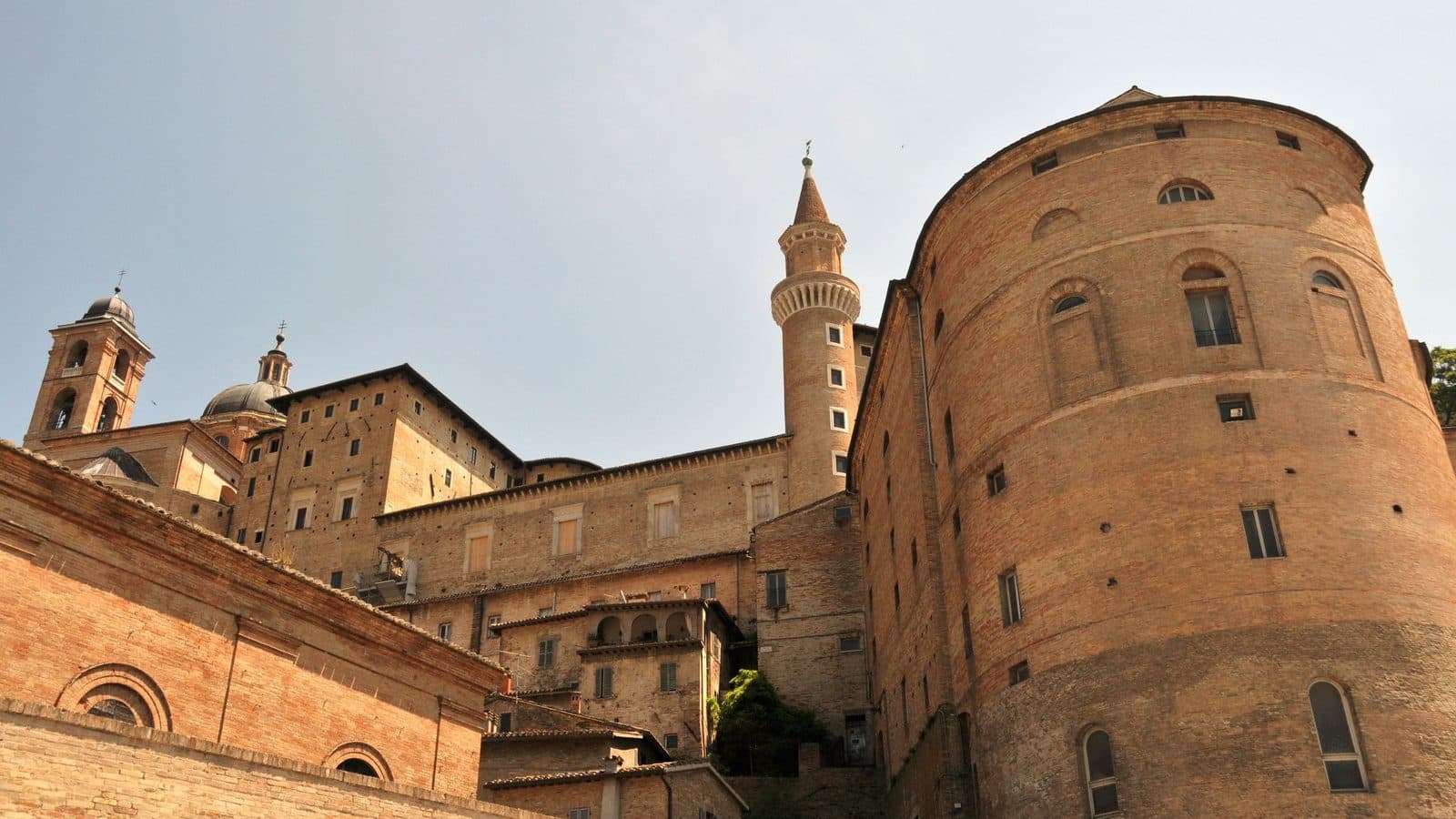
It is worth arriving an hour early and walking around before the crowd builds. Candelara was an independent municipality until 1929, when it was absorbed into Pesaro along with four other hill villages, and the defensive layout can still be read: the walls, the gate, the relationship between the castle and the farmland below. Nearby stands the parish church dedicated to Santo Stefano. Local tradition links the castle to Frederick Barbarossa, said to have taken refuge here after his defeat at Legnano in 1176: an episode the historical record does not support — the emperor withdrew to Pavia — but one the village still tells. Outside the festival dates the village is a quiet place: two different experiences, both worth having.
A craft you can learn in two hours
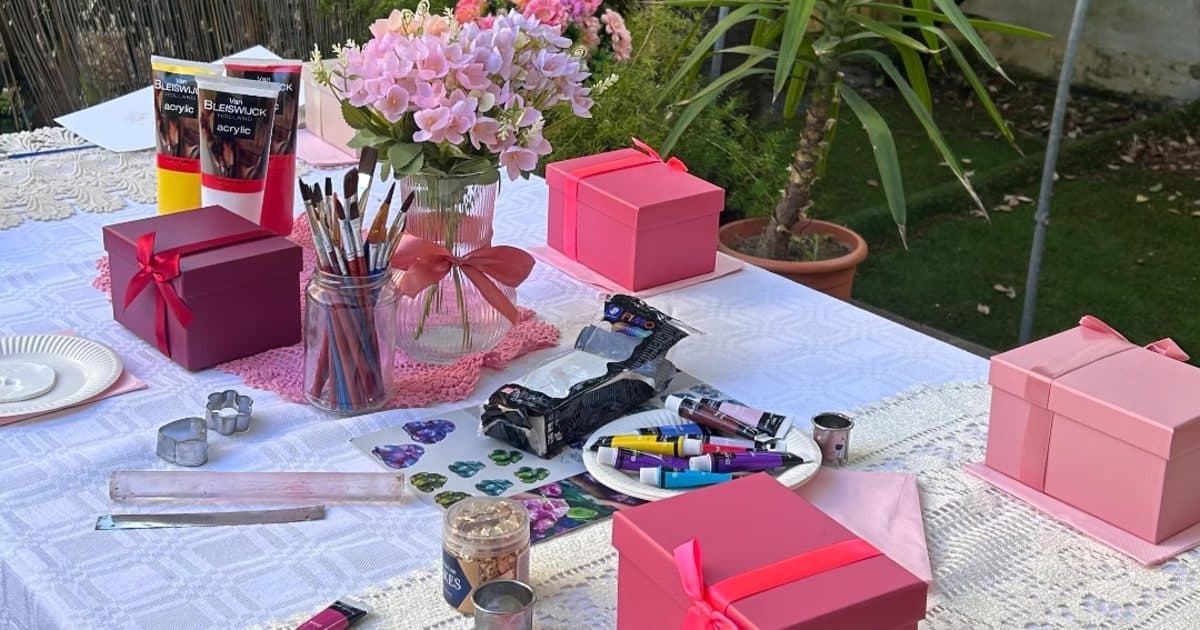
There is a practical reason why wax works so well in workshops open to the public. You do not need a kiln at a thousand degrees, you do not need to wait two weeks for drying, you do not need strength in your hands. You melt, you pour or you dip, you wait for it to set, and you go home with the finished object the same day. It is one of the few crafts where the length of the class matches the length of the result. People who discover this at a December market often come back in March, when the workshop is half empty and there is room to ask the Maker running it a few more questions.
Frequently asked questions
- When do the lights go out at Candelara?
- On every open day there are two scheduled blackouts of the electric lighting, at 5.30pm and 6.30pm, fifteen minutes each. Check the official programme for the current year: it is the only source that counts.
- How much is admission?
- For the 2026 edition the entry contribution is 4 euro for those arriving before 1pm and 6 euro for those arriving after. Children under 10 enter free.
- How do I get there without a car?
- Pesaro railway station is one of the stops on the free shuttle bus up to Candelara. Even if you drive, the organisers ask you to park in Pesaro near one of the stops and take the shuttle. Times change from year to year, so check the programme before you travel.
- Do handmade candles really last longer?
- It depends on the wax and the wick, not on the label. At the same size, beeswax, which melts at a higher temperature, burns more slowly than paraffin. But a well made candle with the right wick will outlast an expensive candle with the wrong one.