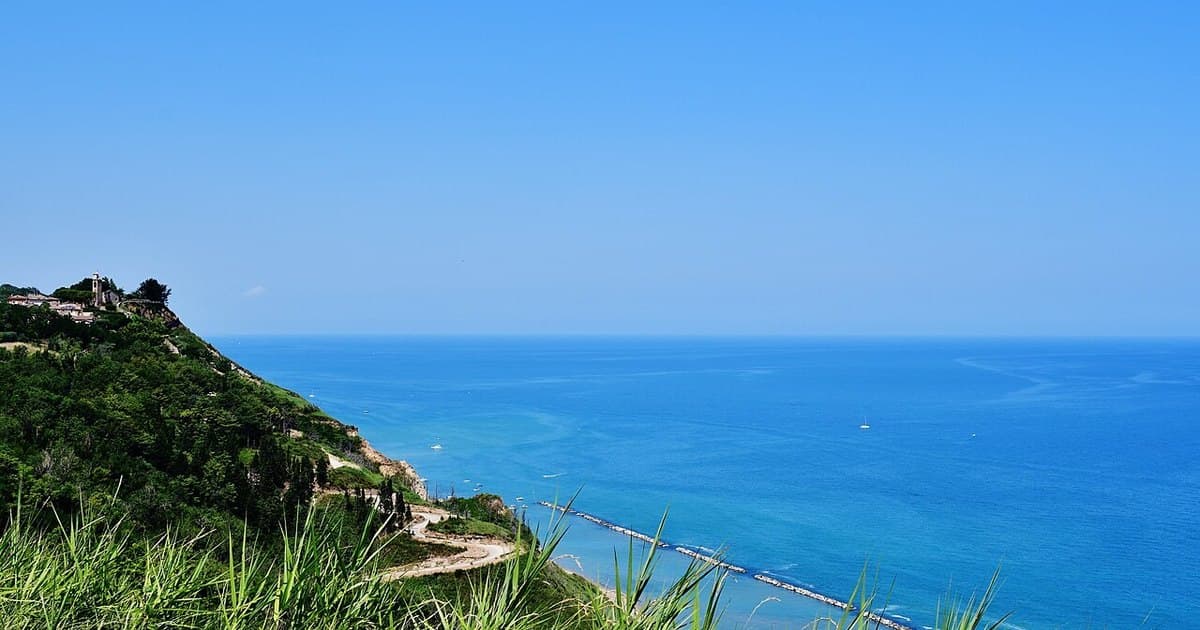
The Adriatic coast is almost always flat: sand, rows of umbrellas, a road running parallel to the sea. Between Pesaro and Gabicce Mare something else happens. The land rises abruptly and drops straight into the water, and for a whole stretch the beach sits beneath a rock face instead of in front of a promenade.
That stretch lies almost entirely inside the Monte San Bartolo regional nature park, established by the Marche Region in 1994, covering roughly 1,600 hectares across the municipalities of Pesaro and Gabicce Mare. It is a day you can plan in three different ways, and none of them looks like a day at the seaside resorts.
Why this coast is unusual
The park's own descriptions keep returning to one point: high coastline with live cliffs is rare along the entire Adriatic. That is not brochure language, it is geography. The Municipality of Pesaro calls it the first promontory of the Adriatic coast, which explains why the landscape changes so sharply the moment you leave the main coastal road.
- Cliffs falling straight to the water, with gravel and pebble beaches at the foot of the rock face
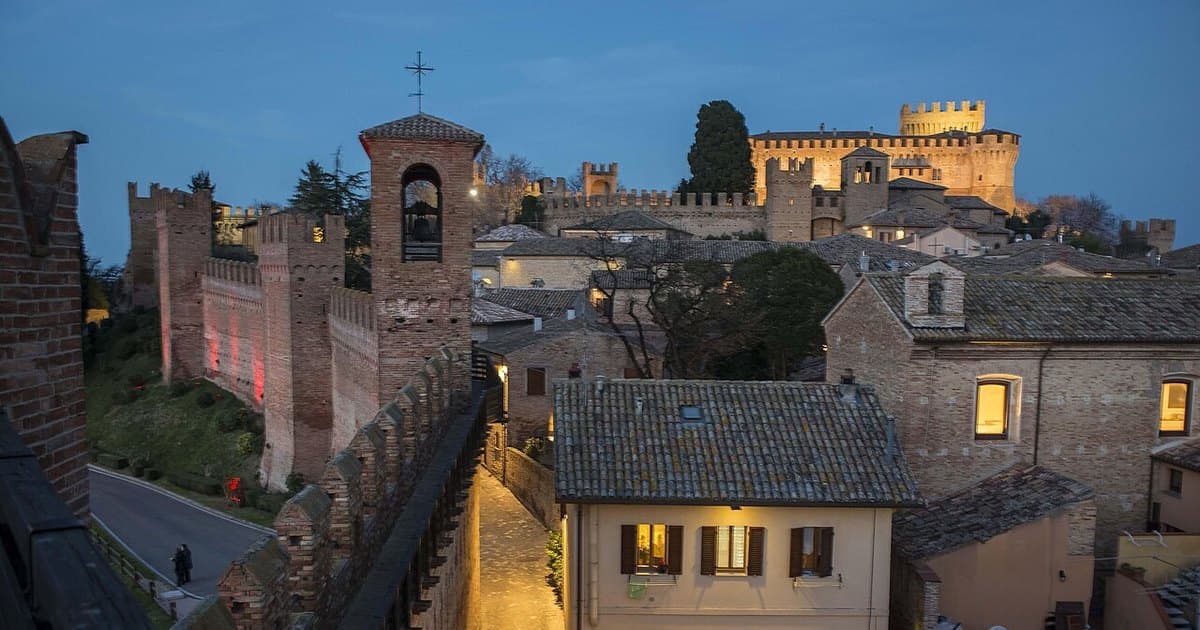
- Medieval villages along the ridge, high up but a short distance from the sea
- An inland slope that stays agricultural: olive groves, vineyards, farmhouses, country lanes
- An important passage for bird migration, with raptors moving through in spring
The villages facing the sea
Gabicce Monte comes first, a natural terrace above the bay: from up there the view takes in the Romagna coast on one side and the Marche hills on the other. In the centre stands the church of Sant'Ermete, which holds a painting of the Madonna del Latte and a wooden crucifix. The rest is short lanes, a few craft shops and the viewpoints.
Casteldimezzo sits on a hill overlooking the sea and carries a border history: it was long disputed between the dioceses of Ravenna and Pesaro, and used as a country residence by the archbishops of Ravenna. The church inside the walls was dedicated to Sant'Apollinare, the Ravenna martyr, and is today the sanctuary of the Santissimo Crocifisso.
Fiorenzuola di Focara rests on a rocky spur high above the water. Dante names it in canto XXVIII of the Inferno, writing that against the wind of Focara neither vows nor prayers will help: that wind still defines the climate of this piece of coast. In 2023 the village was recognised as a guest village of I Borghi più belli d'Italia.
Vallugola, the bay below the park
Vallugola is a small inlet in the municipality of Gabicce Mare, the only natural landing place on this stretch of coast between Pesaro and Cattolica. It is not a recent discovery: a harbour is documented here as far back as Roman times, and the Santa Marina area has yielded finds pointing to an even older landing point. Today there is gravel, moored boats and footpaths climbing back towards the ridge.
Three ways to travel it in a day
By car
The panoramic road links Pesaro to Gabicce across the park, and it is not a road to rush. Tight bends, few places to pull over and, on summer weekends, contested parking in the villages. The best way to use it is to set off early or late in the afternoon and stop at two points only, looking at them properly, instead of getting in and out of the car every few hundred metres.
By bike
The climb is a local classic. In 2020 the Giro d'Italia included it in the stage from Porto Sant'Elpidio to Rimini: San Bartolo was the only categorised climb of the day, fourth category. Translated: it is not a mountain, but the up and down does not end after the first ramp. In summer the road is narrow and busy, so early morning stays the only genuinely comfortable window.
On foot
Trail 151 crosses the park from Pesaro to Gabicce Mare, and smaller paths branch off it, dropping towards the sea or climbing back to the villages. The descents to the beach are the finest part of the park and also the most fragile: steep gradients, moving ground, no sensible shortcuts.
The slow side of the day
People who choose this coast over the resort strip are usually after the same thing: fewer things in a day, done better. A stretch of road driven slowly, one descent to the sea, a table in a village where lunch takes its time. San Bartolo works that way: it has no attractions to tick off a list, it has places worth stopping for.
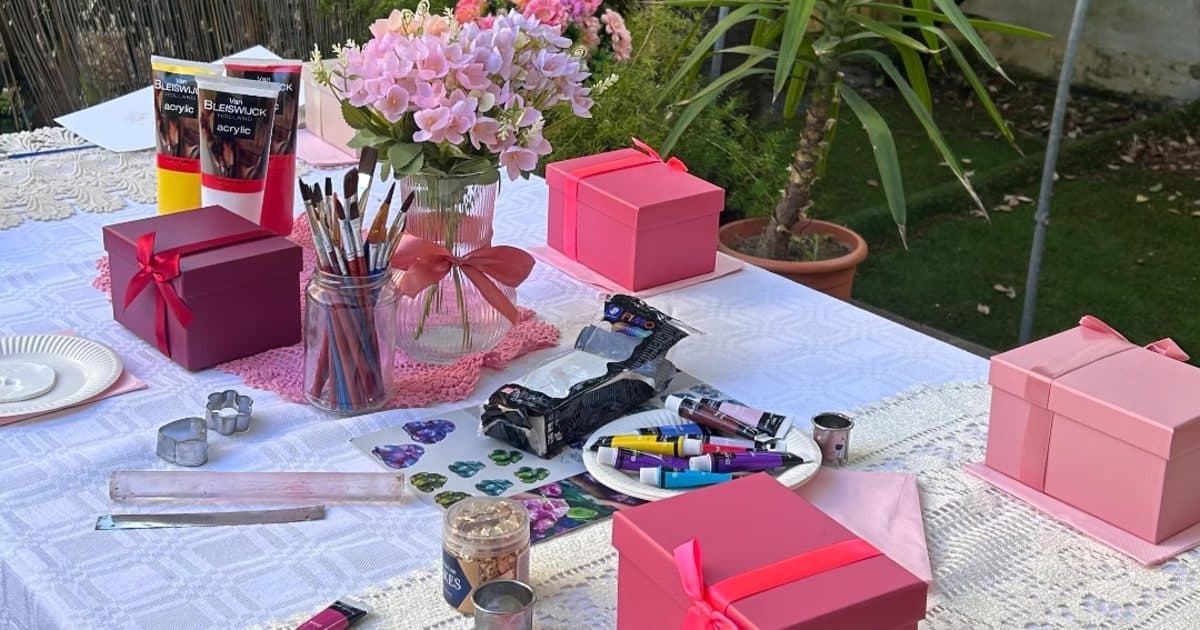
The same goes for the rest of the day. Along the Marche coast the alternative to the beach is often a workshop: two or three hours in a studio with a Maker, dirty hands and an object to take home. It fits well after a morning on the panoramic road, especially when the wind of Focara reminds you that not every day here is a beach day.
Frequently asked questions
- How long does the Pesaro to Gabicce stretch take?
- It depends on how you travel. Half a day by car with two real stops, a morning by bike, a full day on foot if you also want to walk down to the sea.
- Can you get down to the beaches below the cliffs?
- In some places yes, via steep paths starting from the villages. Access depends on the state of the trails, so check the park and municipal notices before setting out.
- When is the best time to go?
- Spring and early autumn, when the light is good and the road is quieter. In high summer, move early in the morning or late in the afternoon.
- Do you need a car?
- No. The park can be covered by bike or on foot starting from Pesaro or Gabicce Mare. Just factor in that the villages are far apart and always uphill.