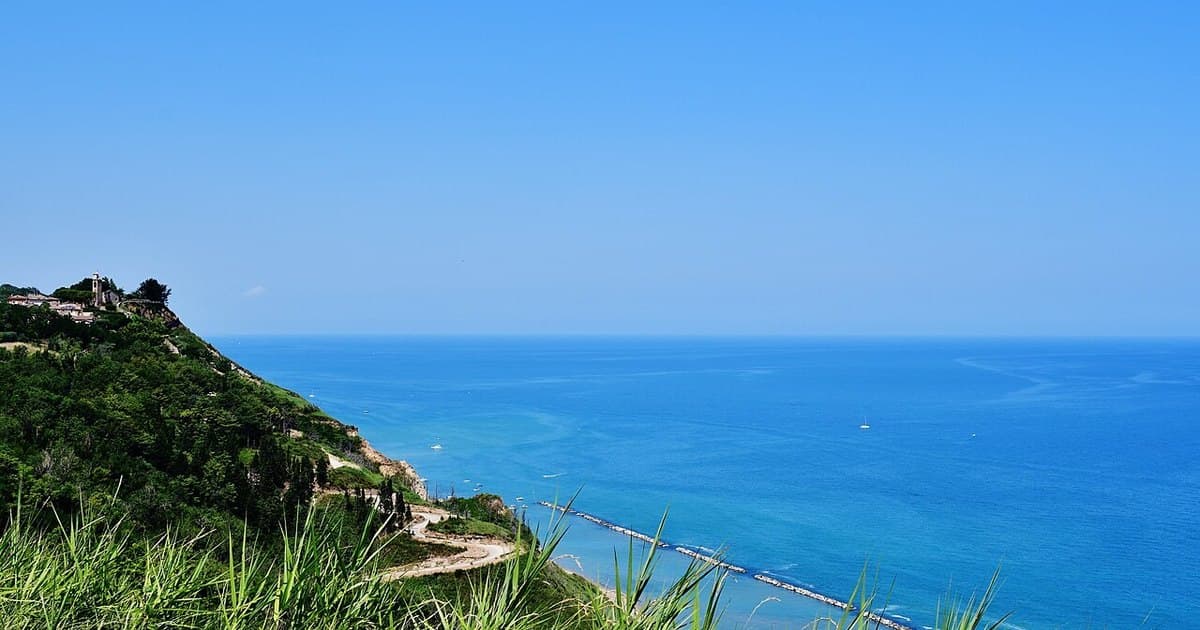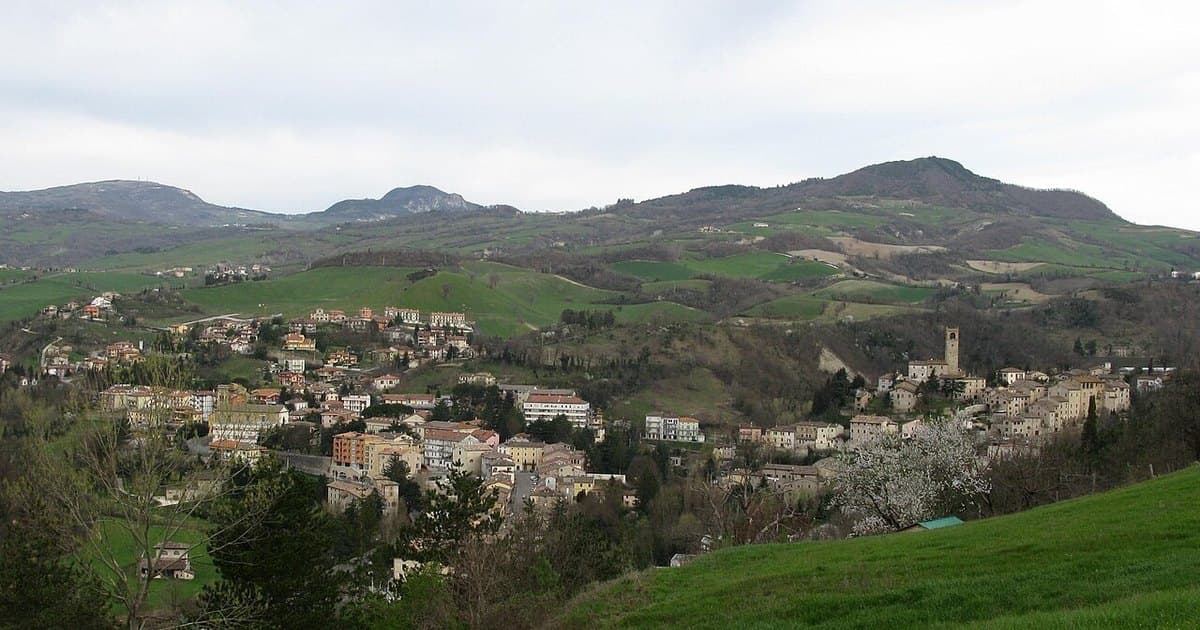
Gradara takes half a day. The problem isn't how long it takes, it's when you get there. The village sits a few kilometres inland from the sea, behind Cattolica and Gabicce Mare, and in summer it receives, all at once, everyone who leaves the beach around half past ten. Queue at the ticket office, main street at walking pace, photos full of elbows.
Move your alarm by one hour and it becomes a different place. This guide is built as a timetable, not as a list: the fortress first, then the walls, then the village on foot once the coaches leave.
A timetable that works
The Rocca di Gradara is a state museum under the Italian Ministry of Culture, and its hours change twice a year. In high season, roughly from early March to early October, it opens every day from 9am to 7pm, with the ticket office closing at 6.15pm. In low season it opens Tuesday to Sunday from 9.30am to 6.30pm, ticket office at 5.50pm, and on Monday mornings only, from 9.30am to 2pm, with the ticket office closing at 1.15pm. Closed on 25 December. Tickets can be bought online in advance. The first hour is the best part of the day: the rooms are almost empty and the light comes in low.
- First hour: the fortress right at opening, with your ticket already bought online.
- Next: the rampart walkways on the walls, which have their own entrance and their own ticket.
- Around midday: the village, while the organised groups are still inside the castle.
- Early afternoon: a late lunch and a walk around the outside of the walls, the part almost nobody does.
- Mid-afternoon: the coaches leave and the main street empties out. This is the moment for the little shops.
One warning that matters more than anything else here: on a Monday in low season this plan does not work. The fortress closes at 2pm and the ticket office at 1.15pm, so the late-afternoon end of the day simply disappears. If you land on a Monday between October and March, compress everything before 1.15pm: fortress at opening, walkways straight after, and the village in the afternoon, with the castle already shut.
The fortress: what to actually look at
It began as a watchtower built by the Griffo family in the second half of the 12th century. The main structure is Malatesta work, between the late 1200s and the first decades of the 1300s. The Malatesta held it until 1463, when Federico da Montefeltro took it for the Church; the Pope then granted it to the Sforza of Pesaro. In 1494, the year after his marriage to Lucrezia Borgia, Giovanni Sforza added two wings to the inner courtyard and a grand staircase to receive her at Gradara. Then there is a more recent layer almost nobody mentions: between 1921 and 1923 the engineer Umberto Zanvettori carried out a restoration that rebuilt in period style. Knowing which parts are 20th century changes the way you look at the rooms.
- The glazed terracotta altarpiece by Andrea Della Robbia, dated to around 1480.
- The frescoes by Amico Aspertini, from the late 15th century.
- The courtyard and staircase added by Giovanni Sforza.
- The room local tradition points to as Francesca's: it is tradition, not documentation, and it deserves to be seen as such.
The rampart walkways
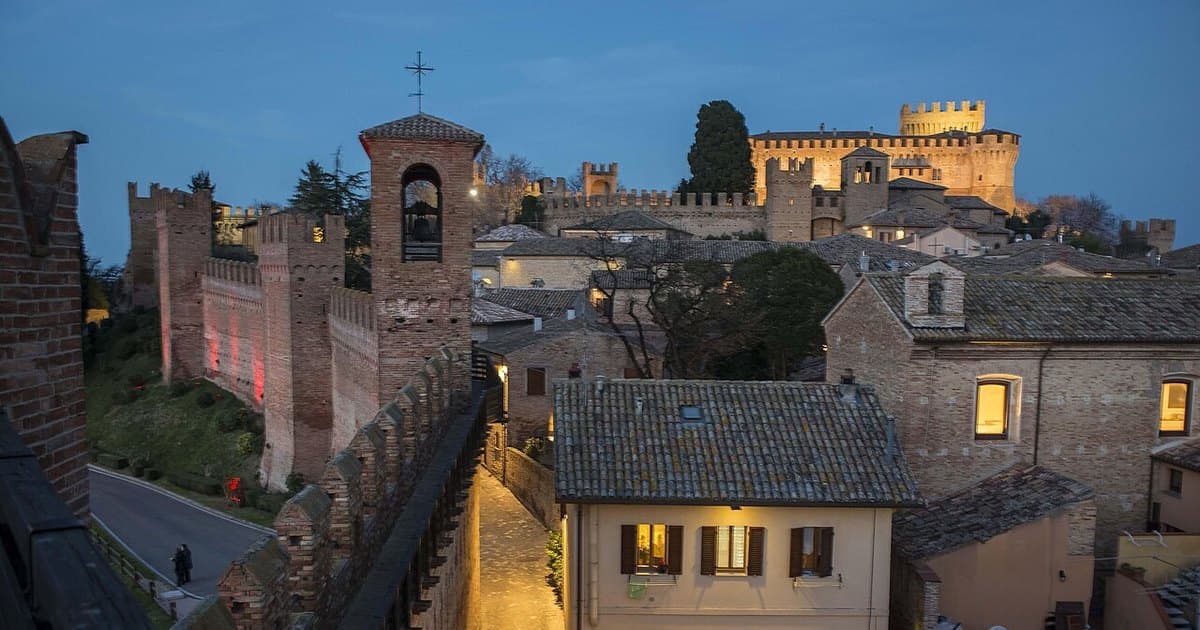
This is a route of roughly 700 metres along the walls, with an entrance and a ticket separate from the fortress: you go up from the alley just past the Porta dell'Orologio, the clock gate. It is the part that makes Gradara different from other visitable castles. On one side the hills of the Marche, on the other the coast and the Adriatic. Below, the village with its roofs and lanes, readable in one go from up there.
Paolo and Francesca, without the romance novel
Francesca da Polenta was the daughter of the lord of Ravenna and was married to Giovanni Malatesta. Paolo was her brother-in-law. Dante places them in Canto V of the Inferno, among the lustful, and lets them stay together in the wind. One thing has to be said, though: Dante never names Gradara. The link between this fortress and the killing of the two lovers is a deep-rooted local tradition, not a line of the Comedy. That said, rereading Canto V the night before genuinely changes the visit.
Love, which absolves no loved one from loving in return
— Dante, Inferno, Canto V
In mid-July the village stages the Assedio al Castello, a reenactment of the siege of 1446, when Gradara belonged to the Malatesta and was attacked by Sforza and Montefeltro troops. Three days inside the walls, with costumed reenactors and fireworks: spectacular, but the opposite of a quiet visit. Choose knowing what you'll find.
The village once the coaches leave
Gradara belongs to the association of Italy's most beautiful villages and in 2018 it won Rai 3's Borgo dei Borghi. That isn't bragging: it means the place is small, well kept and very busy. The main street is short, and the best way to use it is to walk it twice at two different moments. Mid-morning it's a corridor; in late afternoon it's a town. Add the loop around the outside of the walls: it's free, it takes little time, and it gives you the whole outline of the fortress from below.
If it rains
When it rains on the coast, Gradara becomes plan B for everyone who was on the beach between Riccione, Cattolica and Pesaro. The fortress rooms are indoors and hold up well through a wet morning; the walkways don't, and with a slippery surface it's better to skip them. If the forecast is bad, leave even earlier: the timetable rule counts double.
A walled village is a good place to learn to make something by hand
After the fortress and the walls you still have half a day, and that's the window where people usually end up wandering with no plan. Inside a village enclosed by walls, spaces are necessarily small: studios with a handful of places, tables for six, no lecture halls. Someone teaching in a space like that stands next to you for two hours rather than talking at you from a stage.
It's the kind of activity that survives bad weather and ends with an object in your hands instead of one more photo. Ceramics, leather, printing, illustration: the crafts change from studio to studio, and the Makers who run them open on different dates. Worth a look at what's around before you fill the afternoon with something else.
Frequently asked questions
- How much time do you need to visit Gradara?
- Half a day is enough for the fortress, the rampart walkways and an unhurried walk through the village. A full day makes sense if you want to have lunch there, go back on the walls in late-afternoon light and wait for the place to empty out.
- Does the fortress ticket include the walkways on the walls?
- No, they are two separate entrances with their own ticket office and hours. A combined option does exist. Check the current conditions before you go, as they change through the year.
- What's the best time to avoid the crowds?
- Opening time in the morning, and late afternoon. The heaviest wave comes up from the coast between ten and midday and heads back in the afternoon: the worst slot is in between. Watch out for Mondays in low season, though, when the fortress closes at 2pm: there is no late afternoon to use, so put everything on the morning opening.
- Is the fortress open every day?
- In high season yes, every day from 9am to 7pm with the ticket office closing at 6.15pm. In low season it opens Tuesday to Sunday from 9.30am to 6.30pm, ticket office at 5.50pm, and on Mondays mornings only, 9.30am to 2pm with the ticket office closing at 1.15pm. Closed on 25 December.
- Were Paolo and Francesca really killed at Gradara?
- Dante tells their story in Canto V of the Inferno but never names Gradara. Identifying this fortress as the place is a very deep-rooted local tradition, not something written in the poem.