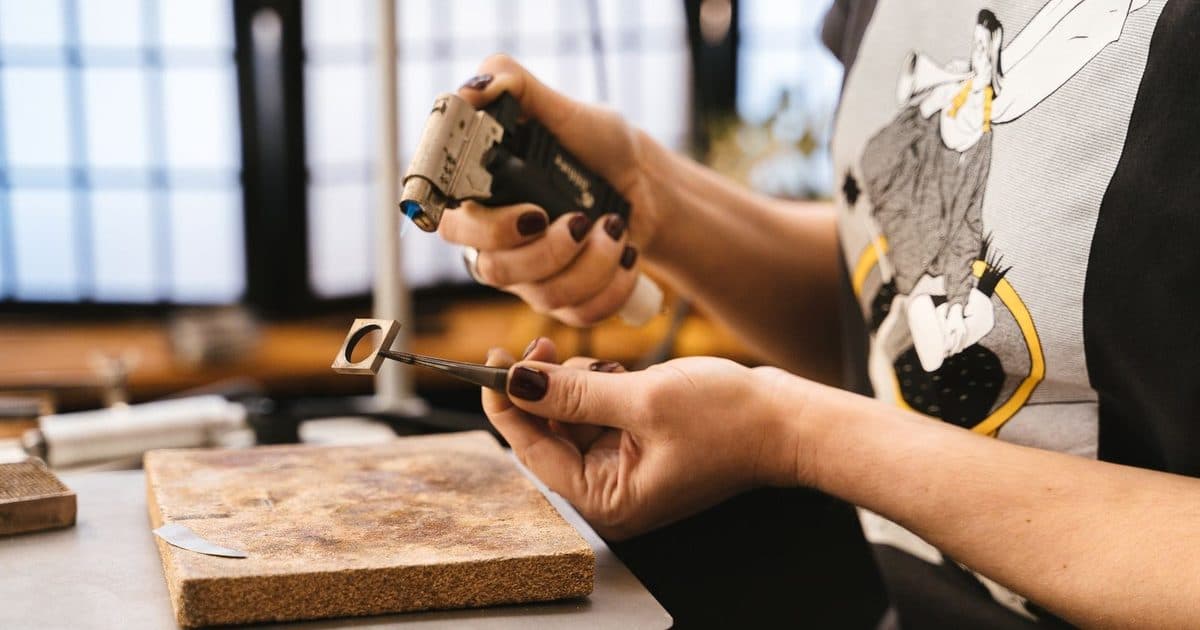
Vicenza wears the title of Italy's city of gold, and you notice it on foot: the shop windows along the main street, the signs of ateliers working precious metal for clients across the globe. So the question comes naturally: can you learn to make a ring here, and do beginner classes actually let you touch gold? The short answer is yes to the first part and almost never to the second. You will make a ring with your own hands in a few hours, but it will be silver or brass. That is not a shortcut the Makers take; it is how the trade is learned.
The paradox is only apparent. Vicenza's gold lives in companies and ateliers with controlled access, precision scales and workflows in which every gram is logged in and out. A studio open to the public is a different animal: a bench with a saw frame, files, a torch and a ring mandrel, and around it people who have never held a pair of pliers. The two worlds share a city and a culture of metal, but they answer different needs.
Why beginners start with silver and brass
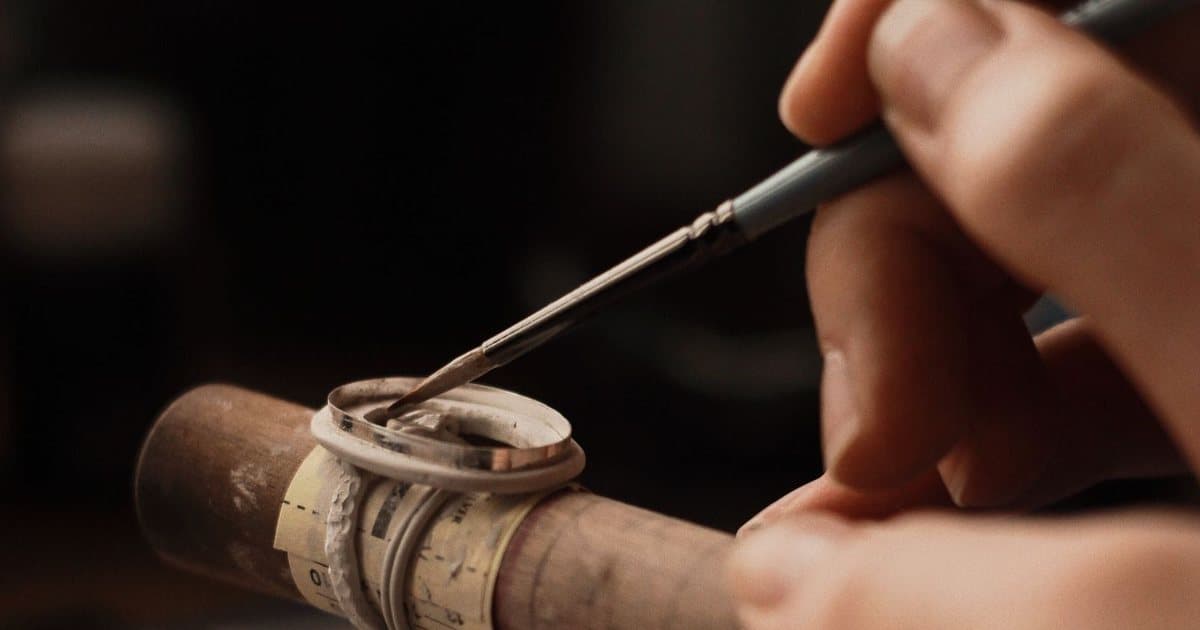
The first reason is teaching. A band ring is born from the same gestures in any metal: measure the finger, cut a length of wire or sheet, anneal it so it turns soft, bend it around the mandrel, solder the seam, file it, then texture or polish. Sterling silver teaches every one of those steps with a response under the file and the flame very close to gold's: whoever closes a clean solder joint in silver already knows how to do it in the nobler metal. Brass, harder and far cheaper, is the dress rehearsal: you practice sawing and texturing without anxiety, and you still end up with a warm, golden-toned object.
The second reason is that beginners waste metal, and that is how it should be. Filings falling on the bench, a crooked cut, a seam that has to be re-soldered: in a studio working gold all of that gets swept up, weighed and sent for recovery, because the value sits in the weight. With silver and brass a Maker can let you get it wrong, try again, change your mind about the width halfway through. Then there is safety and regulation: in Italy, anyone working precious metals for sale follows strict rules on fineness and identification marks, keeps rigorous accounts of the metal and is reluctant to open the safe for a room of strangers. The piece you make is yours and not for sale, but the metal it starts from has to sit inside a system the studio can manage without risk. What can realistically be finished in a short session is covered, from the teacher's side, in our piece on what beginners can make in a few hours.
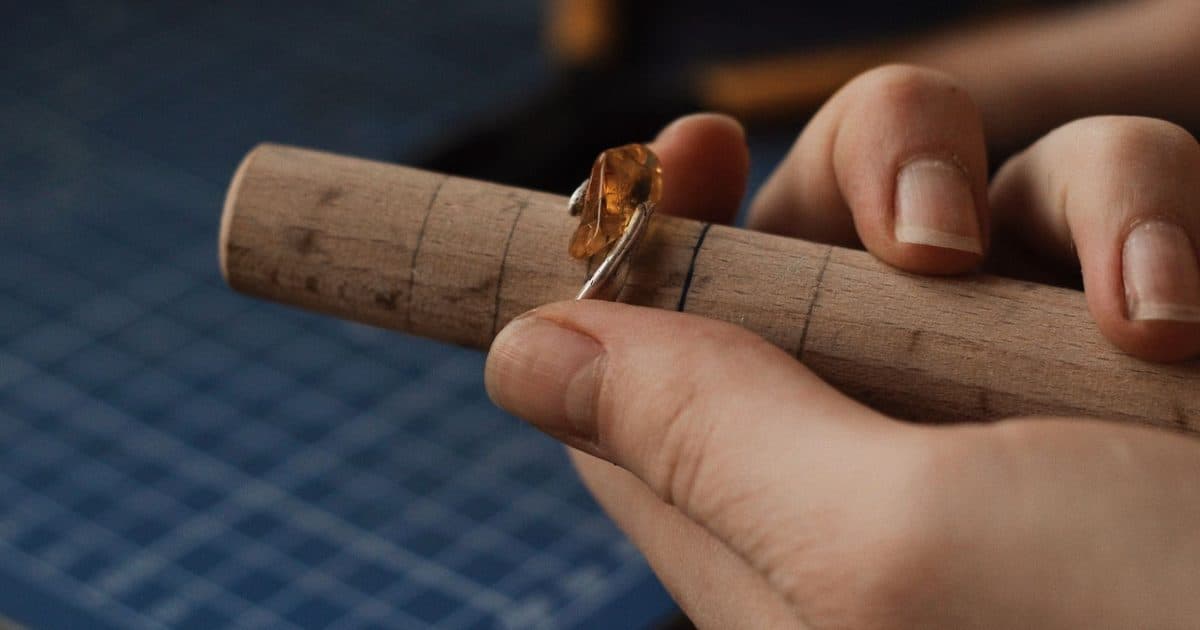
- Sizing your finger with ring gauges, so the band is born in your size
- Sawing the wire or sheet to length with a jeweler's saw
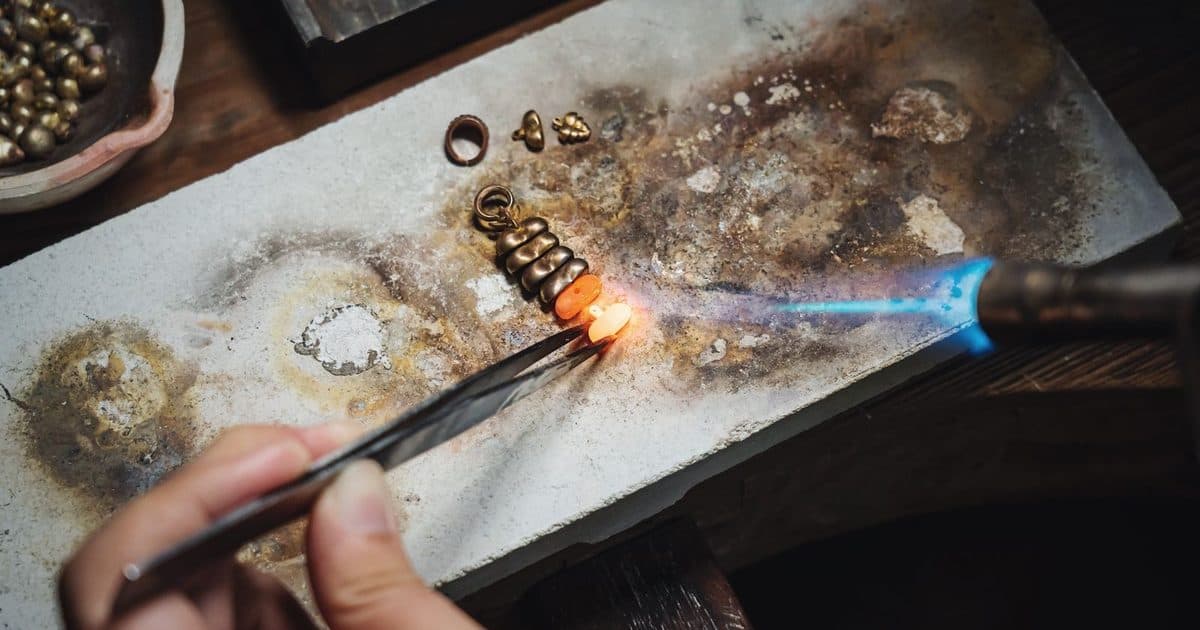
- Annealing with the torch: the metal heats up, softens and bends without cracking
- Closing the band on the mandrel and soldering the seam
- Filing, abrasive papers and choosing the finish: satin, hammered or mirror polish
So what about gold?
Gold is not off the table; it is a different format. Some Makers offer it on request, almost always as a private session: a couple who want to make each other's wedding bands, someone who wants to remake a family ring by hand from the old metal. The material is bought or brought in for the occasion, and the price is driven by concrete things: the weight of the band, the fineness of the gold, the market price on the day, the Maker's hours and the finish requested. It is a longer appointment, agreed with the studio beforehand rather than asked for at the door.
How it differs from buying at a jeweler's
At a jeweler's you buy a finished object: guaranteed, hallmarked, in the right size or resized within days, polished the way only a machine can. A workshop does not pretend to replace that. What it sells is the process. You decide the width, a flat or domed profile, whether the surface stays hammered or becomes a mirror, whether the solder line stays visible or disappears. Every choice is made with the piece in your hand, and by the end you know why that ring looks the way it does.
It is worth being honest: a silver ring made in an afternoon is not a gold wedding band, and it is not the cheap route to owning a ring. It has small asymmetries, and silver darkens over time and wants a polish now and then. But it carries your finger's size taken that day, your decisions and your corrected mistakes, and it changes how you look at Vicenza's shop windows on the way back to the station: now you know what sits behind a well-polished edge.
The jewel you buy tells you who made it. The one you make also tells you who wanted it.
Vicenza in a day: the bench and everything else
Vicenza is a walking city: the main street lined with Palladio's palaces, the Basilica Palladiana, which also houses a museum devoted to jewelry. A half-day workshop sits comfortably alongside all of that, and from Padua, Verona or Venice the regional train makes the trip back easy. On Handsome you search workshops by city and every page states the duration, the metal included and what you take home; the Makers page shows who teaches and where. If Vicenza has no seats on the date you need, the Veneto and the lake have more: in Padua Mayou composes jewelry with natural stones and Murano glass, and on Lake Garda La Vale Handmade in Salò works on necklaces and charms, formats different from the goldsmith's bench but with the same idea of leaving with a piece that is yours. To give it as a present there is the gift card, which covers the whole workshop and leaves the date to the recipient; the rules for changing your mind are on the cancellations page.
Frequently asked questions
- Can I learn to make a ring in Vicenza with no experience?
- Yes. Workshops open to the public are built for people who have never held a saw frame: the Maker guides every step, the tools stay in the studio, and you leave with a finished band in your own size.
- Do beginner classes really work with gold?
- As a rule, no. Group sessions use sterling silver or brass, because the gestures are identical to gold's and the material lets you make mistakes and start again. Gold appears in private formats agreed in advance, usually for wedding bands.
- Why silver and brass, of all places in the city of gold?
- Because beginners waste metal, and with gold every gram has to be recovered and weighed; because anyone working precious metals for sale follows strict rules on fineness, marks and accounting; and because no studio is keen to open its safe to a room of strangers. Silver and brass teach the same gestures without those constraints.
- Is a ring made at a workshop as good as one bought at a jeweler's?
- It is a different object, not a substitute. The bought one is flawless, guaranteed and resizable; the one you make has small asymmetries but carries your choices of width, profile and finish. A workshop is not the cheap way to own a ring; it is the way to understand how one is born.
- Can I make gold wedding bands with a Maker?
- Some Makers offer it as a private session on request. The price depends on the weight of the bands, the fineness of the gold, the market price on the day, the hours of work and the finish, and it is agreed before booking, usually with a trial run in silver first.
Search by city: every page states the metal included and what you take home. Book and pay online.
See jewelry workshops in Vicenza and the Veneto