Which crafts is the Veneto known for, and where can you actually try them? The short answer: glass in Murano, ceramics in Nove, gold in Vicenza, lace in Burano. The Veneto does not have one "regional" craft. It has a geography of districts, and each district grew up around a material. If you are looking for traditional Veneto crafts, you are not choosing a discipline; you are choosing a town. The discipline follows.
For each area we say what the trade is, why it sits exactly there, and what you can genuinely book and do with your own hands, as opposed to what you can only watch. The difference matters, because in the Veneto the shop window is everywhere and the open workshop is rarer. Masks, gilding and the historic textiles of Venice itself are already covered in our guide to Venice crafts beyond Murano; here we leave the city and cross the region.
Glass: Murano and the lagoon
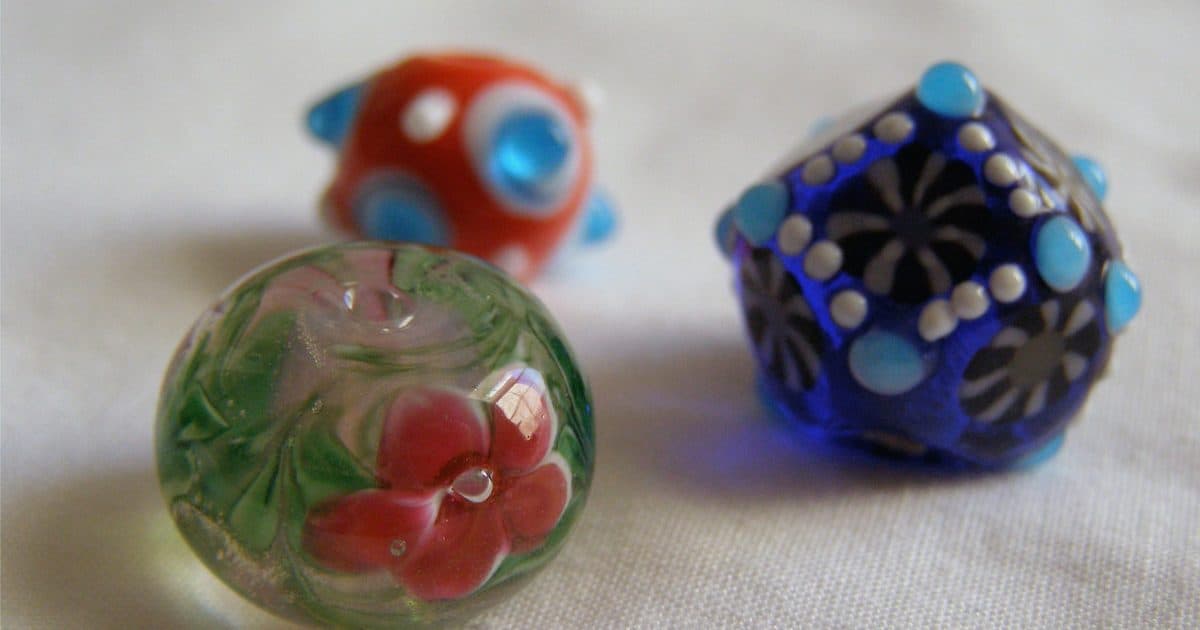
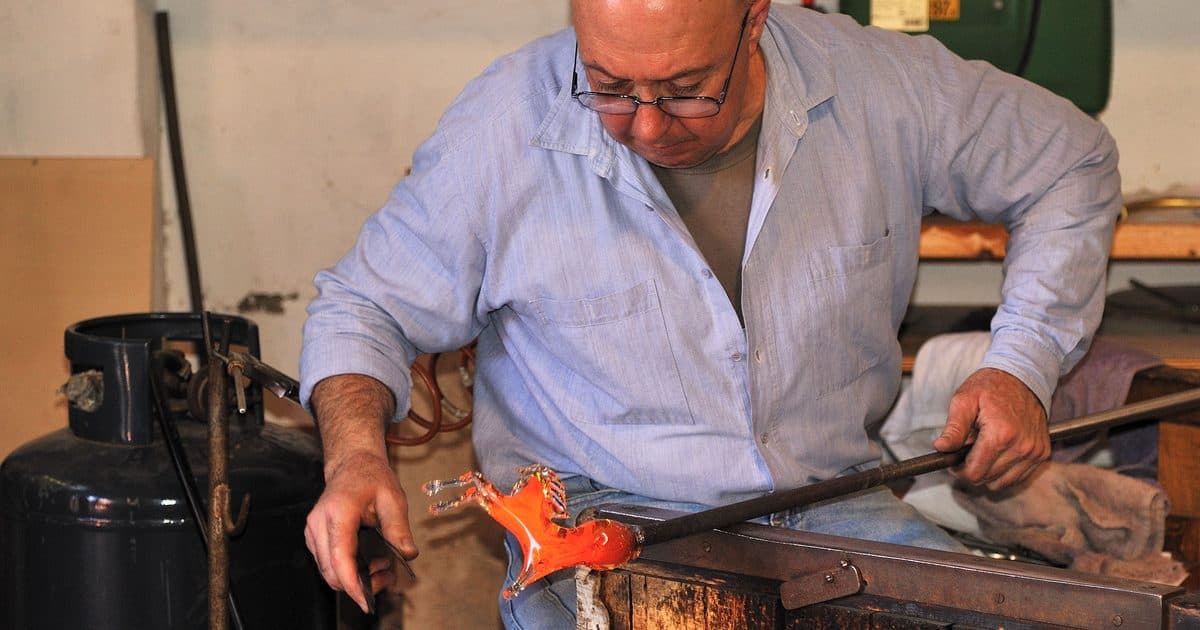
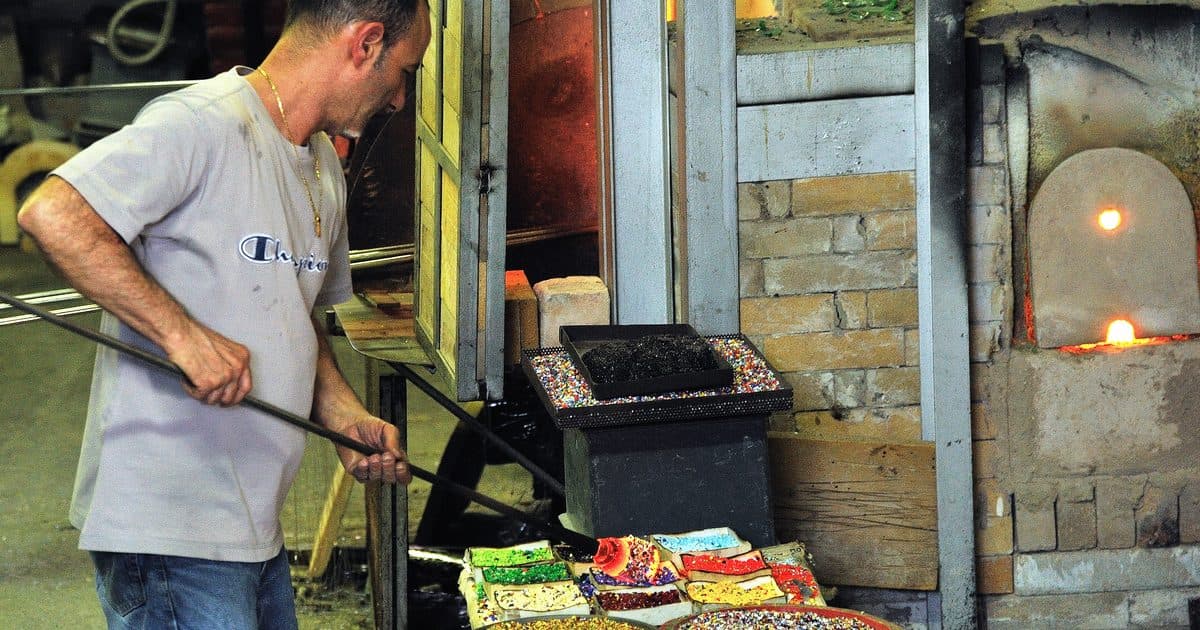
Murano glass is the case everyone knows and the one most misunderstood. The big furnace, with its blowpipe and glowing crucible, is something you visit as a show: the demonstration is short and does not involve you touching anything, for safety and for pace. What you can book, and do yourself, is flamework. Lampworked beads, where a rod of coloured glass melts over a torch and is wound around a metal mandrel, and glass fusing, where you compose a piece cold and hand it to the kiln. In an afternoon you leave with a pendant or a small fused tile. Real experiences are told apart from the "lessons" pinned up outside shops by one question: what do I take home, and when? If it is a piece you worked on yourself, it is a workshop; if it is a finished object from a shelf, it is a sale with a side dish. What actually happens around the torch is in our guide to glass and fusing done safely.
Ceramics: Nove and Bassano
Along the Brenta river, between Nove and Bassano del Grappa, ceramics is a village industry before it is an art form: river clay, water for the mills and the kilns held together a district of manufactories, decorators and throwers that is still at work. What you can book: beginner wheel-throwing, where in one session you centre the clay and raise a bowl; hand-building, which is more forgiving; and brush decoration on an already bisque-fired piece, the quickest way into the local tradition because you leave with something close to finished. In every case the rule of clay applies: the piece has to dry and fire, and weeks pass between your session and the object in your hand. Collection or shipping should be settled beforehand; the rest is in our guide on what to bring to a first ceramics workshop.
Gold: Vicenza, and Padua for hands on the bench
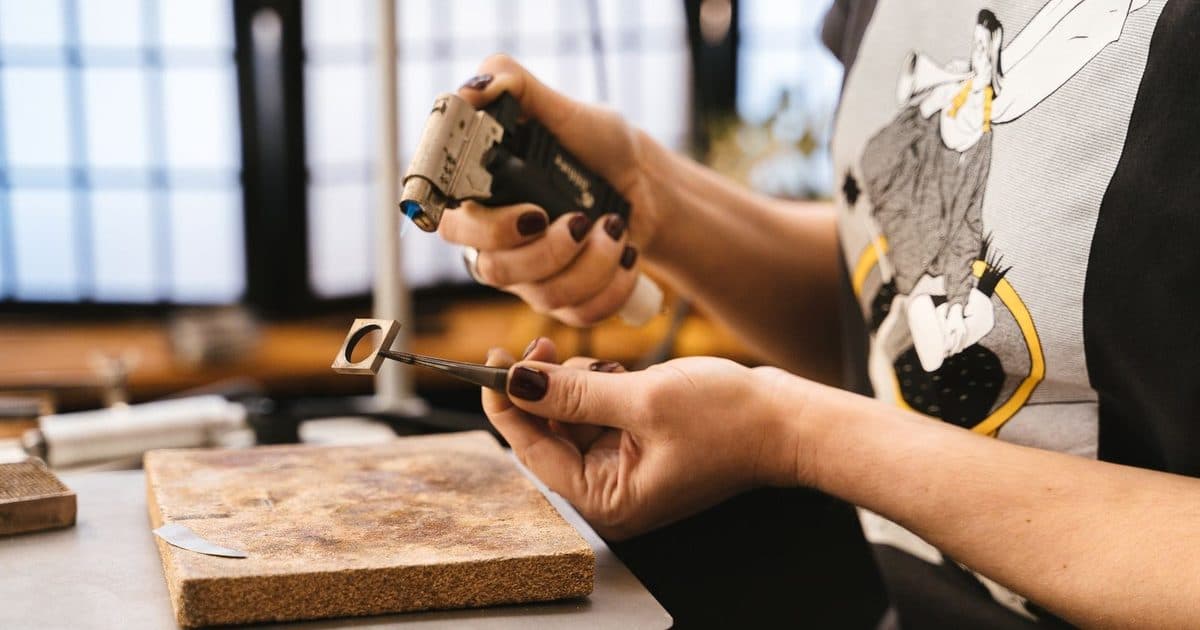
Vicenza is a gold town in the literal sense: around the Palladian centre works a goldsmithing district of workshops, foundries and companies producing chains, settings and finished jewellery. For a visitor, though, the district is almost entirely behind closed doors: it produces, it does not teach. A jewellery workshop for complete beginners does not use gold, and that is no shortcoming: brass and silver are sawn, filed, soldered and polished with exactly the same gestures, at a material cost that lets you make mistakes without drama. In a few hours you build a band ring or a pendant you can wear the same evening, as in our guide to beginner jewellery workshops. Padua is where Handsome already has a Maker doing exactly this: the Mayou experience takes you from raw metal to a finished piece, a short train ride from the Vicenza district.
Textiles: Burano and its lace
Burano lace is textile work without a loom: it is made with a needle, stitch by stitch, over a pattern pinned to a cushion, and every stitch has a name. It is the slowest craft on this map: in one afternoon you do not finish a doily, you learn the basic stitch and you grasp how much time sits behind a border the width of a finger. Authentic lace is recognised from the back, not the front, and that is precisely what an hour at the cushion teaches you to see. If weave interests you more than stitch, the lagoon offers table looms, dyeing and embroidery, and the format to look for is the beginner weaving workshop, which sends you home with a whole piece.
- Murano and the lagoon: glass. Book lampworked beads or fusing; furnace blowing is for watching.
- Nove and Bassano: ceramics. Book the wheel, hand-building or brush decoration; the fired piece follows later.
- Vicenza and Padua: gold and jewellery. The district works behind closed doors; book a ring or pendant in brass or silver.
- Burano: needle lace. Book an introduction to the stitch; a finished doily is not the goal of one afternoon.
Planning the route
Geography helps. Venice, Padua and Vicenza sit on the same railway line, so glass and jewellery combine over a weekend without a car. Murano and Burano are reached by vaporetto from the city, but they are different islands with sailing times to respect: one experience per island. Nove is the only stop that needs a car or the bus from Bassano, and it is worth the detour if ceramics is the reason for the trip. The rule that works is one workshop a day.
On price we can say what moves it, since the figures vary from Maker to Maker: the material (silver or brass, coloured or clear glass), a kiln firing with the shipping that follows, the length of the session, how many people the teacher follows at once and how many pieces you take away. It is the logic of our guide on how to choose the right workshop. On Handsome, workshops in the Veneto can be searched by town or by craft, booked and paid online, with the same refund rules for everyone on the cancellations page. If the trip is a present, a gift card covers the experience and leaves the choice of town to the person receiving it.
The best souvenir from the Veneto is not the one with the town's name printed on it. It is the one you made yourself, in the town where that craft belongs.
Frequently asked questions
- What are the traditional crafts of the Veneto?
- Glass in Murano and the lagoon, ceramics in Nove and Bassano del Grappa, goldsmithing in the Vicenza district and needle lace in Burano. Each craft is tied to a specific place rather than to the region as a whole.
- Can you blow glass at a furnace in Murano?
- As a rule, no: blowing at the pipe is watched as a demonstration, for safety and because of the pace of the work. What you can book is flamework, such as lampworked beads, and glass fusing, both of which produce a piece of your own within a single session.
- Where can I do a ceramics workshop in the Veneto?
- The historic district is Nove and Bassano del Grappa, along the Brenta river. You can book wheel-throwing, hand-building or brush decoration sessions. Weeks pass between the workshop and the fired object: ask beforehand whether collection or shipping is arranged.
- Can I make a gold piece of jewellery in Vicenza?
- The Vicenza goldsmithing district produces rather than teaches, and beginner jewellery workshops work in brass or silver, using the same gestures as gold without the cost of the material. In Padua, on the same railway line, Handsome already lists a Maker offering exactly this kind of experience.
- How long does it take to learn Burano lace?
- Far longer than an afternoon. An introduction of a few hours teaches the basic stitch and how to read real lace from the back, not how to finish a doily. For a finished piece in hand, weaving, dyeing or embroidery are the better fit.
Search by town or by craft: glass, ceramics, jewellery and textiles are booked and paid online, with your place confirmed before you set off.
Browse workshops in the Veneto