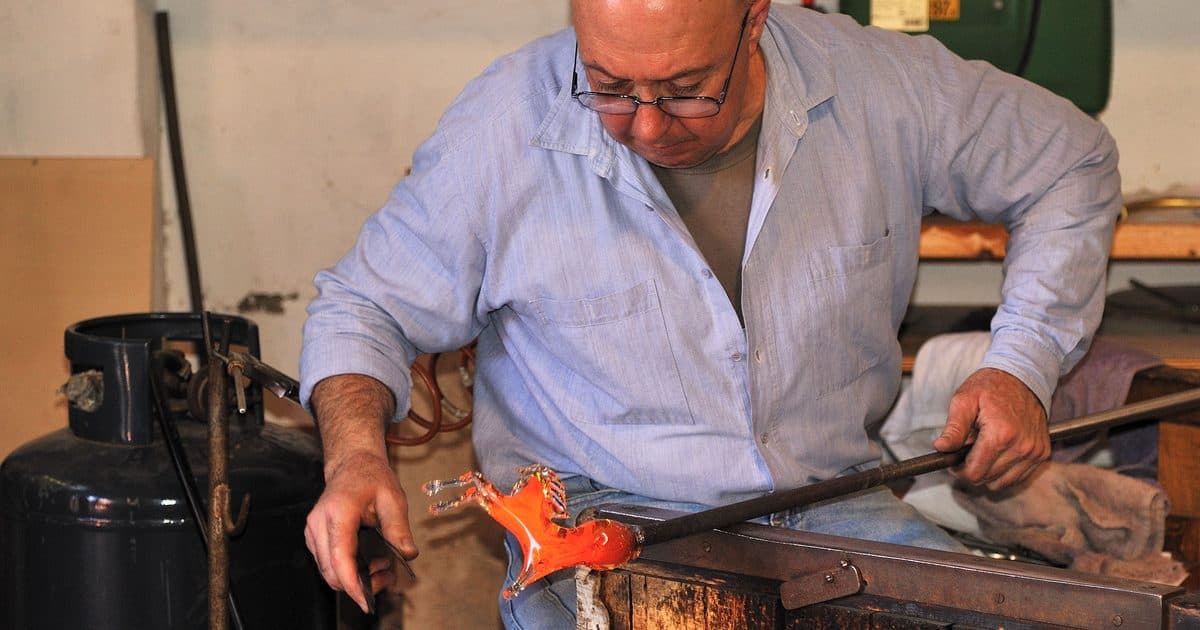
Yes, you can blow glass in Murano with no experience at all. The catch is that the same phrase is used to sell things that have nothing in common. On one side there is the demonstration: you sit on a bench, a master pulls a glowing gather out of the furnace, turns it into a little horse in a handful of moves, and then a door opens onto the shop. On the other side there is the session where the blowpipe is put in your hands, with a master beside you telling you when to blow and when to stop. Almost everyone searching for glassblowing in Murano wants the second and ends up at the former, because it is far easier to find.
The island has lived on glass for centuries and you notice it as soon as you step off the vaporetto: furnaces line the canal-side walkways and nearly every doorway advertises a visit. Murano glass is a brand, a repertoire of techniques and an economy all at once, and most of what is offered to day visitors is designed to be watched rather than done. If you want to understand what you are looking at before you walk into a furnace, the island's Glass Museum lays out objects and techniques with a clarity no showroom has any interest in giving you.
The demonstration: what you see from behind the barrier
A demonstration is a show, and as a show it works. You stand at a safe distance, on tiered seating or behind a railing; the master works at a rhythm he has repeated his whole life and is done within minutes. You watch the gather come out of the crucible, the glass swell at the first breath, the jacks open the mouth of the piece, the tap that knocks it off the pipe. Then the piece goes into the annealing oven and you go into the showroom, which is what the demonstration is for: walking you into the shop with your eyes still full of what you just saw.
The signs are easy to read. Nobody hands you safety glasses or asks you to tie your hair back, because you will not be going anywhere near the furnace. The group has no upper limit, because the master does not have to supervise anyone. And the listing uses precise verbs: "watch", "see the master at work", "furnace visit". All perfectly legitimate, and none of it means you will touch a blowpipe.
With the blowpipe in your hands: what actually happens
A beginner session starts well away from the furnace, with the safety talk: where to stand, what never to touch, how to hold the pipe and why it has to keep turning, because glass that stops rotating sags to one side like honey on a still spoon. Then you sit at the bench, the glassblower's seat with long arms on either side along which the pipe rolls, and the master takes the first gather, collecting on the tip of the pipe the molten glass the piece needs. That move stays his, at least at the beginning. Yours starts right after.
- You blow. The master keeps the pipe turning and tells you when to push air and when to stop; the bubble forms inside the glass and you watch it grow.
- You roll the pipe along the bench while the master opens the piece with the jacks, or the other way round: he turns, you try the tool with his hand over yours.
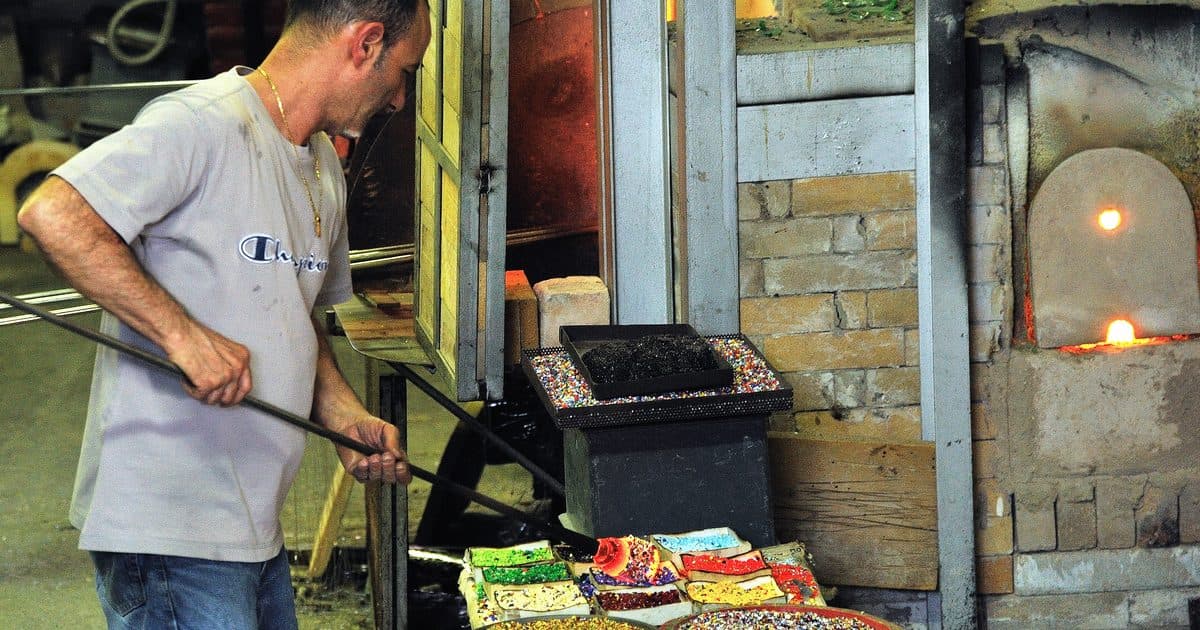
- You bring the piece back to the furnace mouth when it has stiffened, and you pick the colour if the session includes it: chips of coloured glass gathered by rolling the glowing mass over a steel table.
- You knock the piece off the pipe with a sharp, guided tap and watch it go into the annealing oven. The gather, the transfer to the punty and trimming the rim are done by the master alone, and he says so plainly.
What actually comes out of a beginner session
A tumbler with uneven walls, a slightly crooked rim and a base thicker on one side. A small bowl. A solid paperweight, shaped and coloured rather than blown, and therefore often the first piece offered to someone who has never held a pipe. A hanging bauble, in season. Sometimes a small vase, if the session is long and the group small. None of these will look like what is in the shop window, and that is precisely the point: the window is the result of a lifetime of repetition, your tumbler is the result of one afternoon.
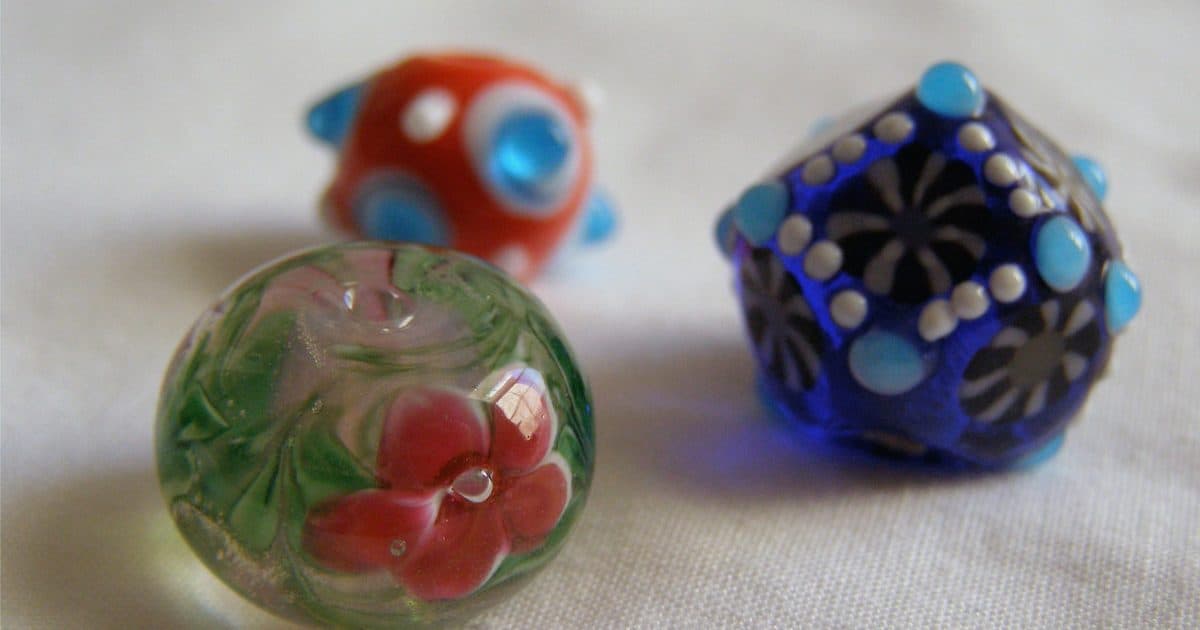
Lampwork beads are a separate case, with a Murano tradition of their own. You sit at a torch and melt a glass rod round a metal mandrel: no big furnace, no blowpipe, and you leave with finished beads the same day. It is a different technique and almost always a different studio, and neither is the lesser version of the other.
How to tell what you are really booking
The listing tells you everything, if you know where to look. Look for the verb: "you blow", "you make", "you create" describe a session; "watch", "observe", "visit" describe a demonstration. Look at the ratio of participants to master, because with a pipe in your hands you work one at a time, and a large group means long waits in front of a lit furnace. Look for what you take home, when, and which language the session runs in: at the furnace, instructions have to land instantly. Prices move for specific reasons: how much furnace time you personally get, how many people the same master follows, whether the glass is coloured or worked with murrine, whether shipping is included and whether the session is private. Without comparing those items, comparing figures tells you nothing, as our guide on how to choose the right workshop explains.
You need no experience, only some care: cotton clothes, closed shoes, hair tied back, no loose sleeves or scarves. Anyone who struggles with intense heat, or is pregnant, should say so beforehand. For children, each Maker sets a minimum age and states it in the listing, because the pipe is heavy and the furnace makes no allowances. On Handsome, glass experiences are published directly by the people who run them, as a Maker with a VAT number or as an Apprentice; you book and pay online, with the same refund rules for everyone, set out on the cancellations page. If the experience is for someone else, a gift card covers the workshop and leaves the date up to whoever receives it. And if there is time left after the furnace, the lagoon has other crafts worth trying with your hands: we cover them in our guide to Venice workshops beyond Murano.
The crooked tumbler you carry home is worth more than the flawless vase from the shop: with your own, you know exactly how hard it is.
Frequently asked questions
- Can beginners actually blow glass in Murano, or can you only watch a demonstration?
- You can genuinely blow glass with no experience, but you have to book a hands-on session rather than a demonstration. In a demonstration you stay behind a barrier and watch the master, usually before being shown into the shop. In a hands-on session you sit at the bench, blow into the pipe while the master keeps it turning, and take part in shaping the piece. The verb in the listing, "watch" versus "make", tells them apart at once.
- What does a beginner actually do during the session?
- You listen to the safety talk, learn to keep the pipe turning, blow when the master tells you to, roll the pipe on the bench while the piece is opened with the jacks and, where included, choose the colour. The gather, the transfer to the punty and trimming the rim stay with the master, because there is no margin for error.
- What do you take home from a beginner session?
- Usually one small object: a tumbler with uneven walls, a small bowl, a solid paperweight, a hanging bauble or, in longer sessions with few participants, a small vase. It is imperfect by definition, and the listing should say in advance which object is planned.
- Can you collect the piece the same day?
- No. After it is worked, the glass has to cool slowly in an annealing oven or it breaks from internal stress. You collect it in the following days or it is shipped to you, on terms the listing should state.
- Can children take part?
- It depends on who runs the session: each Maker sets a minimum age based on the weight of the pipe, the heat and the kind of object, and states it in the listing. Younger children are often offered the paperweight, which does not require blowing.
Every listing says what you do, how many places there are and when you collect your piece. Book and pay online.
Browse glass workshops on Handsome