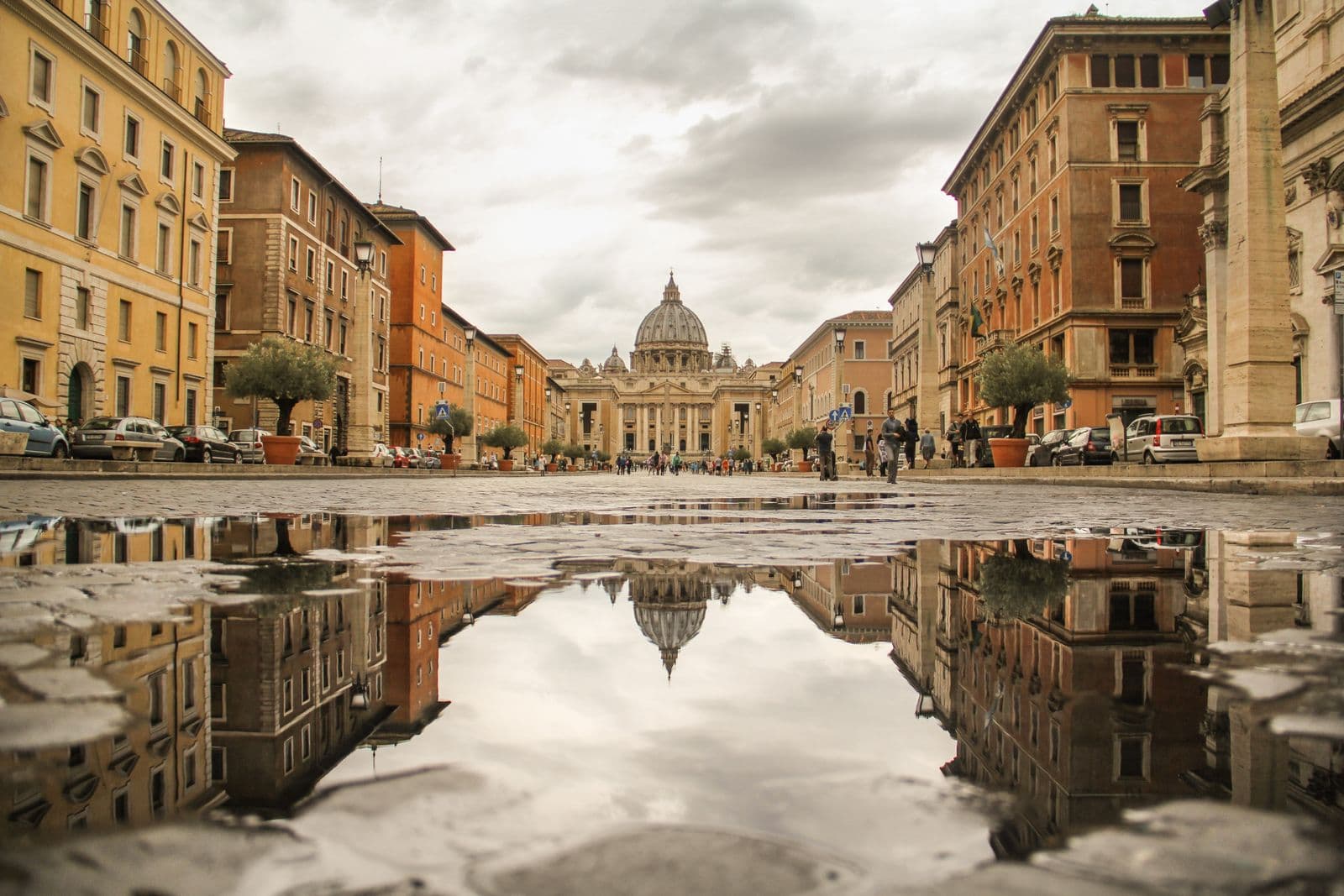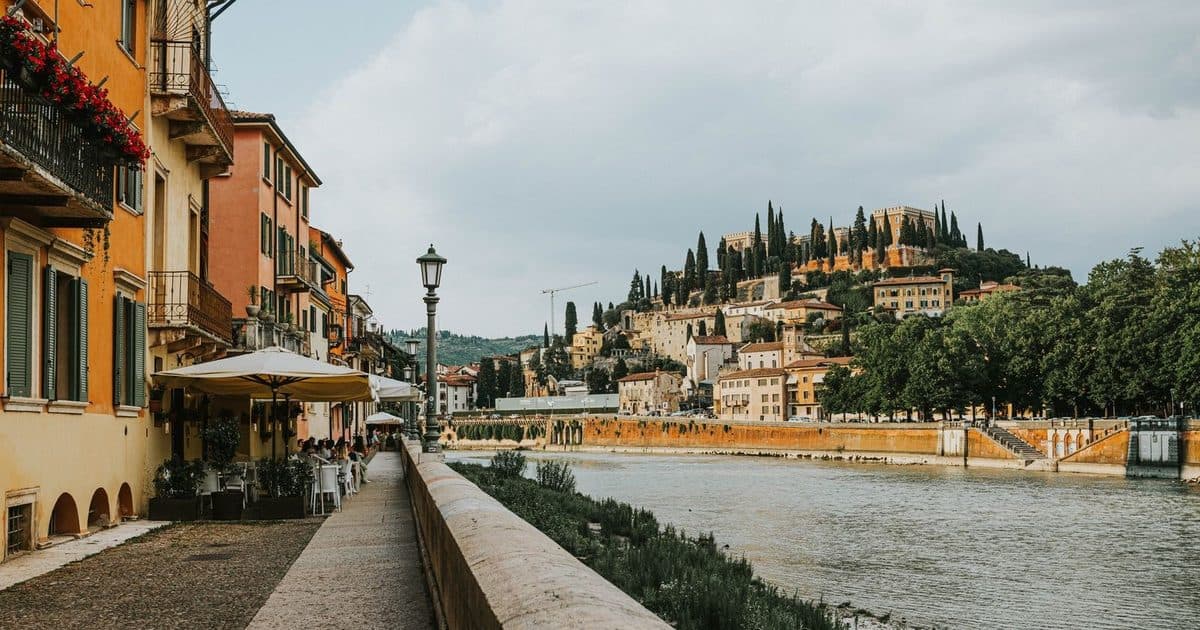
In 2024 Rome hit its all-time record: 51.4 million overnight stays and 22.2 million arrivals, according to figures from the Lazio bilateral tourism body released by Roma Capitale. It is a number you feel on your skin: in the queues, in the tables you have to book three days ahead, in the quarter of an hour it takes to cross a square in July. Then November comes, and the city returns to human scale.
Roman winter is not a fallback. It is the only time of year when the city moves at the pace of the people who live in it: you book at short notice, you walk into museums without fighting for a slot, you eat wherever you happen to be. In exchange it asks two things: accepting that the useful part of the day ends early, and budgeting for a few hours of rain. This guide is about organising the first and not letting the second ruin anything.
How empty Rome actually gets in winter
This is where you should distrust the round numbers that circulate in guidebooks. Percentage drops and average discounts get repeated for years without anyone saying where they came from, and no public statistic measures how crowded a city is month by month. What can be said without inventing anything is the direction, and it is unambiguous: Rome peaks between spring and summer, and the November-to-February window is the bottom of the curve.
The point is that you do not have to take this on trust: you can check it in five minutes before you leave. Open the booking calendar for the Colosseum Archaeological Park or the Galleria Borghese and compare availability in a week of January with a week of April. The gap between slots sold out for weeks and slots free for the day after tomorrow is the most honest data on Roman seasonality there is.
Translated into experience: in the same places where April moves you along in single file, January lets you walk. The minor sites you always skip in summer become visitable again, and the time you spend queueing in May is time you spend indoors in January.
There is also a calendar reason that applies only to the winter now beginning. The 2025 Jubilee closed on 6 January 2026 with the Holy Door of St Peter's (official calendar). What starts now is the first winter fully outside the Holy Year, without the extraordinary calendar of celebrations and pilgrimages that for over a year filled even the traditionally quiet months.
The real climate: how cold is Rome in January
Less cold than people fear. The climate normals for the Rome Ciampino station over 1971-2000 give January an average high of 11.9C and an average low of 3.1C; December 12.6 and 4.2; February 13.0 and 3.5. This is not a cold city: it is a damp one, where you feel the cold through the humidity and the wind funnelled down the long streets rather than through the thermometer. A heavy coat is almost never needed.
Rain, on the other hand, deserves attention. The same historical series gives 804.3 millimetres of rainfall a year spread over about 79 days, with November as the wettest month at 113.3 millimetres. Anyone arriving in November should pack an umbrella and an indoor plan B. January and February are drier on average, but they pay the price in daylight.
Low winter light is the real reason to come now
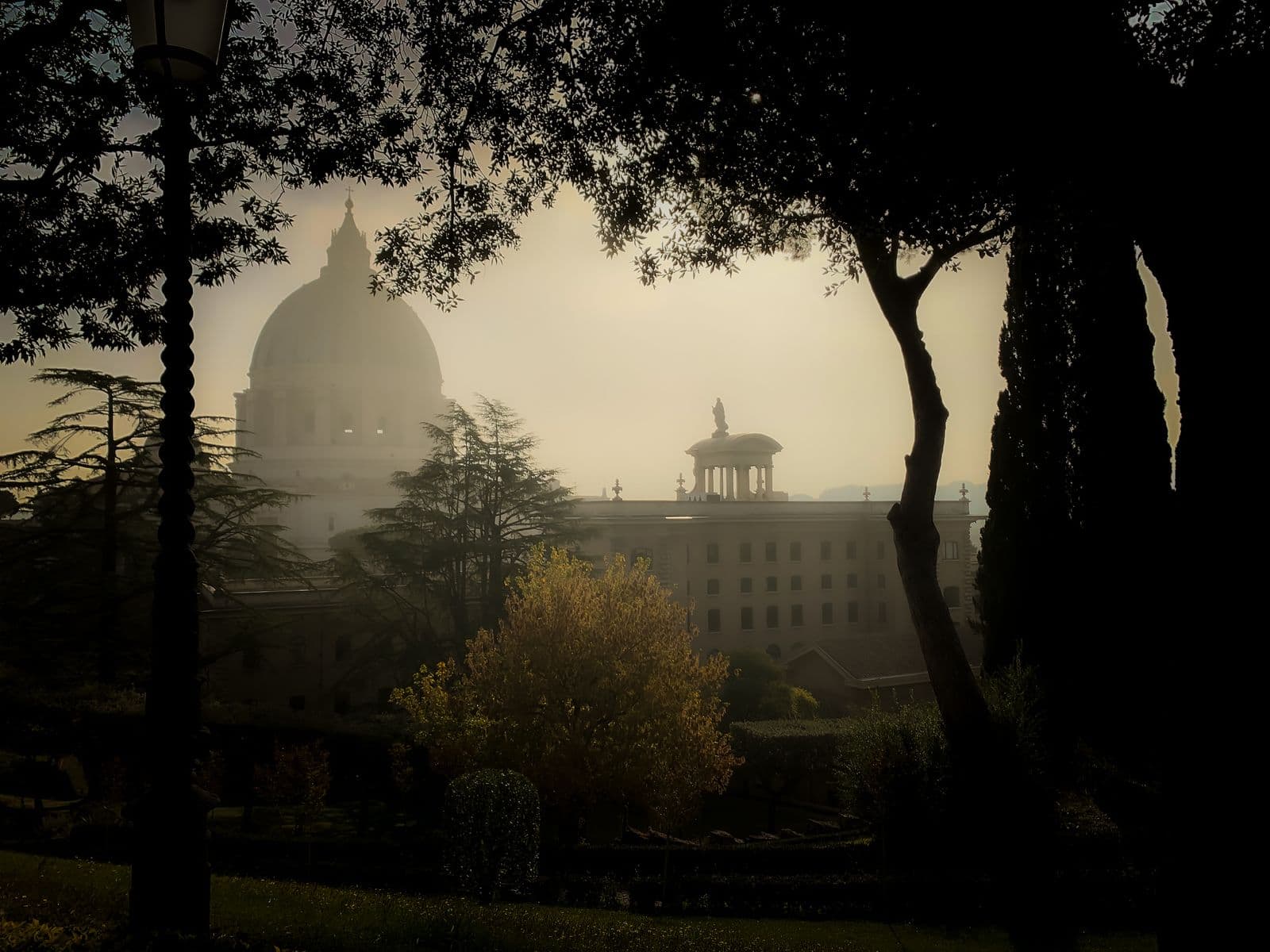
In December the sun sets in Rome just after 4.40pm, and around the solstice on the 21st daylight lasts about nine hours: it rises towards 7.35am and is gone before five. That is a punishment for anyone trying to see everything and a gift for anyone who looks: the sun stays low all day and catches the travertine, the brick and the ochre plaster at an angle. That raking light does not exist in summer.
This changes the order of things. In winter the outdoors belongs in the middle of the day, say between ten and half past three, and everything indoors moves to after that, when the archaeological areas have already closed and the light outside is going. It is the only time of year when spending an afternoon inside takes nothing away from the city: by then, the city has already withdrawn.
The timetable arithmetic: what closes early and what does not open
The classic Roman winter mistake is turning up at the Colosseum at half past three. The Colosseum Archaeological Park runs seasonal hours: in the winter window, which runs from 25 October to 28 February, it closes at 4.30pm with last admission at 3.30pm, and the Park is closed on 25 December and 1 January (official hours). Online booking applies to all areas.
The other rules that make a difference in low season are few, and worth learning before you leave:
- Vatican Museums: closed on Sundays, except the last of the month, when entry is free from 9am to 2pm with last admission at 12.30pm. Also closed on 1 and 6 January (official hours).
- Galleria Borghese: booking is compulsory for every ticket category, free tickets included. Slots start every hour, the visit lasts two hours except for the last slot of the evening, and each slot takes a maximum of 180 people. In January too.
- First Sunday of the month: free entry to state cultural sites, all year round. It is also the one day when you find April's crowds again: skip it if you want empty rooms.
- Colosseum tickets: they go on sale 30 days before the date of your visit on the official platform. In winter it is not the scramble it becomes in spring, but the mid-morning slots still go first.
- Winter sales: in Lazio they start in the first days of January, around Epiphany. The exact date is set year by year, so check it before you build a shopping weekend around it.
November, December, January and February are not the same winter
Filing everything under low season means missing the interesting part: the four months have different characters, and which one to pick depends on what you are after.
- November is the wettest month of the year and also one of the quietest: the choice for people who want the museums almost to themselves and do not mind getting wet.
- December is the one winter month when Rome fills up again, mostly with Romans: dinners, presents, shops open late. The nativity scene and the tree in St Peter's Square stay up for the whole festive period.
- January is the real emptiness: once Epiphany is past the city deflates all at once and nobody is competing for a table. The clear days that follow a front are the best of the year for walking.
- February stretches the days and brings the Carciofo Romanesco del Lazio IGP to the market stalls, which its production rules require to be harvested by hand and whose season runs from January to May. If you come for the food, come now.
And what about prices?
Here it pays to be precise, because this is where you read the most hot air: there is no official public price list saying what a room in Rome costs month by month, and anyone promising an average discount of so many per cent is making it up. What does exist is the demand curve, with the exception of the Christmas and New Year weeks, which in Rome stay full. Compare the same dates on the same place to stay, in January and in April, before deciding.
Why a workshop beats a queue in winter
There is a category of things to do that nobody picks in summer and that becomes the best part of the day in winter: two or three hours at a table, with a material in front of you and someone teaching you how to work it. At half past four, when the archaeological areas close and the sun has only minutes left, the difference between a wasted afternoon and a full one is exactly there.
It works for practical reasons before romantic ones: it has a stated start time, it sits in a closed and heated room, and it does not depend on the weather. And it is the only activity of the day at the end of which you hold something that did not exist before. Plenty of crafts fit into a single session: ceramics, mosaic, jewellery, bookbinding, screen printing, leatherwork, cooking.
One honest warning: ceramics almost never goes home with you the same day, because the piece has to dry and go through the kiln. Usually you collect it a few weeks later or have it shipped, and it is worth knowing before you book, especially if you are in Rome for three days.
Whatever the craft, here is what to ask before you confirm:
- How long the session really lasts, from welcome to the moment the table gets cleaned.
- What comes out of your hands and when you physically have it: same day, later collection or shipping.
- How many people are at the table: under eight you work, over eight you watch other people work.
- Whether the space is heated and how you get there: in winter the journey in the dark counts as much as the workshop.
- What the price includes: on Handsome the figure you see is the figure you pay, with nothing added at checkout.
And here is something you almost never read in a guide: on Handsome, today, there is not yet a single Maker with a studio in Rome. The densest catalogue is between Marche and Romagna, and we are opening the big cities now. The Rome page shows in real time what is there: if the craft you are looking for is not listed, check again in a few weeks.
The Roman catalogue is still being built: this is what is bookable in the city right now.
See the Rome page on HandsomeHow to plan a winter weekend in Rome
- The night before, fix one single time: your Colosseum slot, your Galleria Borghese slot or your Vatican Museums entry. The rest is built around it.
- Outdoors from ten in the morning: the light is high enough to warm you and low enough to make the stone beautiful.
- Lunch where you are, not where you had imagined: every extra journey eats into the daylight you have left.
- From half past three treat the archaeological sites as closed and move indoors: a museum, a church, a covered market, a workshop.
- Evening: from November to February you walk the dark city without shouldering your way through, and that is the best part.
If you end up in Rome in the opposite month, the mirror guide is what to do in Rome in August. To work out where craftspeople still work there is our map of Rome's artisan neighbourhoods, and anyone who would rather stay at the table can read how to recognise a serious Roman cooking class.
Frequently asked questions
- When is the least crowded time to visit Rome?
- The November-to-February window, with the exception of the two weeks between Christmas and Epiphany, which in Rome stay full. The quietest moment of all runs from mid-January to the end of February. To see it for yourself before booking, compare the availability of Colosseum or Galleria Borghese slots between a week in January and a week in April.
- Is Rome too cold in January?
- No. The climate normals for Rome Ciampino over 1971-2000 give January an average high of 11.9C and an average low of 3.1C. The issue is not the thermometer but the humidity and the wind down the long streets: dress in layers and leave the heavy coat at home.
- What do you do in Rome when everything closes at 4.30pm?
- The open-air archaeological areas close early, the city does not. The winter late afternoon is the moment for what sits indoors: museums, exhibitions, covered markets and craft workshops, which last two or three hours and do not depend on the weather. Then you eat early and walk: lit-up Rome in January is half empty.
- Is it still worth booking ahead in low season?
- Only where entries are capped: the Colosseum Archaeological Park requires online booking for all its areas and the Galleria Borghese makes it compulsory, with two-hour slots and a maximum of 180 people. For everything else, winter is the one period when Rome lets you decide at short notice.
Final price, nothing added at checkout: what you see is what you pay.
Browse all workshops on Handsome