
Cooking classes are advertised everywhere in Rome: at the hotel desk, on the big tour-booking sites, on the flyer under the door of your rental. They all promise the same thing, a carbonara made with your own hands. The trouble is that the same label covers experiences that have nothing in common. On one side, a format designed to fill banquet halls in rotating shifts. On the other, the kitchen of someone who cooks for a living and, for one morning, makes room for you at the counter.
Here is the short answer to the question you are asking: a real Roman cooking class is recognisable by who runs it, by how many hands touch the ingredients, and by what you actually do with yours. If the dough comes out of the fridge already rolled, if the group is the size of a school trip, and if the person at the front is delivering the same script they delivered yesterday, you are inside a cruise-ship product. If you knead, get it wrong, taste, and the person guiding you has a name, a kitchen and a reason for every move, you are in the right place.
The cruise-ship format: how it really works
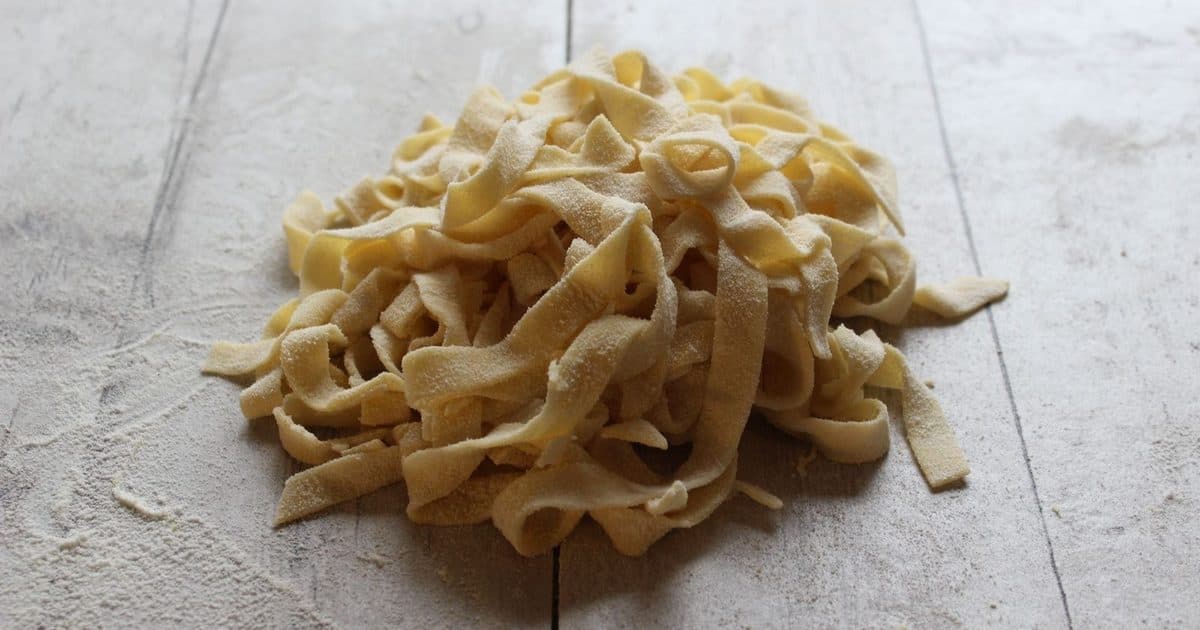
The industrial model exists to handle volume: ships docking at the port, coaches unloading groups in the centre with a few hours to spare. To make it pay, the experience gets chopped into shifts. Every shift has the same menu, the same ingredients pre-weighed into little bowls, the same joke when the pepper comes out. The egg pasta is often already rolled, because kneading takes time and time is the one thing missing. The person in the apron may be a great entertainer, but they are not necessarily someone who cooks that dish for a living.
- The group fills a reception hall and the host needs a microphone: nobody will ever correct your dough.
- Ingredients are pre-measured and the pasta is pre-rolled or bought in: you assemble, you do not cook.
- The menu is identical every day of the year, whatever the season or the market has to offer.
- The carbonara has been softened for international tastes: bacon instead of guanciale, a splash of cream to avoid any risk of scrambling.
- The photo in a chef's hat is the real product, and the listing says so.
- You book through a middleman who never tells you who will teach or where.
Someone who really cooks: the signs you cannot fake
People who work in a kitchen every day behave in ways that cannot be scripted. They make you knead, even if it comes out badly, then show you where it went wrong. They explain why guanciale is cut into thick strips and why no oil goes in the pan. They change the menu if the greens at the market were not good that morning. They know your name, because the group is small enough to allow it. Above all, they answer the awkward questions: what happens when the egg seizes, why nobody in Rome reaches for parmesan. On Handsome, every teacher is a Maker or an Apprentice with a name, a face and a profile that tells you what they do when they are not teaching. That is the first check you can run, before you even read the class description.
If your hands are clean at the end, you watched someone cook. That is not the same thing as having cooked.
The carbonara test
Carbonara is the perfect test because it has very few ingredients and every one of them is recognisable: guanciale (cured pork cheek), pecorino romano, eggs and black pepper. Its origins are still disputed, and the encyclopedia entry lays out the theories without picking one. What nobody in Rome argues about is what does not belong: cream, smoked bacon, garlic, onion. A serious class tells you this straight away and then teaches you the hard part, which is bringing the sauce together off the heat. The egg-and-cheese cream binds with the warmth of the pasta and a little of its cooking water; if the pan is too hot, you get scrambled eggs. If your host skips that step, or solves it by pouring in cream, they are selling you a dish nobody in Rome would call carbonara.
- You cut the guanciale yourself and render it slowly, with no oil, until the fat turns translucent.
- You grate the pecorino and whisk it with the yolks and pepper in a bowl before the pasta even goes in the water.
- You drain the pasta al dente and keep some of the cooking water.
- You combine pasta and guanciale in the pan off the heat, then add the cream and stir until it coats.
- You loosen with cooking water if it is too thick, and add pecorino if it is too thin.
What to read in the listing before you pay
An honest workshop listing answers your questions before you ask them. It says where it takes place: a home kitchen in Testaccio, a studio in Monti, a trattoria kitchen with the shutters down. It says who leads it, with a name and a story. It says what you do with your hands and what you take away. It says what happens if you can no longer come: on Handsome the same cancellation policy applies to everyone, with no surprises. If you want to know where else in the city artisans still work by hand, we have written about the Rome neighbourhoods where you find authentic workshops; and if your doubt is more general, there is a guide to choosing the right workshop.
A word on price, without figures. What pushes the cost of a real class up is a small group, the quality of the guanciale and pecorino, a possible visit to the neighbourhood market before cooking, wine at the table, and the time the Maker spends on you. An industrial format is cheaper for the opposite reasons: many people per shift, cheap ingredients, compressed timing. A low price is not a bargain if you are paying to watch. If the class is a gift, a Handsome gift card lets the person receiving it pick the date.
Frequently asked questions
- How do I know if a cooking class in Rome is taught by someone who really cooks?
- Look at who leads it and what you do. If the listing names a person, describes a real kitchen and promises that you knead and finish the sauce yourself, it is a real class. If the teacher is not named, the group is huge and the pasta arrives pre-rolled, it is a format for passing tourists.
- What are the ingredients of a Roman carbonara?
- Guanciale, pecorino romano, eggs and black pepper, plus the pasta and its cooking water. Cream, smoked bacon, garlic and onion are signs the recipe has been adapted to play it safe with an international crowd.
- How many people should a serious cooking class have?
- Few enough that the host can see your dough, fix it and call you by name. If a microphone is needed or the room is a banquet hall, the class is organised for volume, not for you.
- Do I need to know how to cook to join?
- No. Roman cooking workshops are built for complete beginners, which is exactly why the host must be able to follow you closely. If you only get to assemble, you have not had the experience.
- What happens if I have to cancel?
- Handsome applies one cancellation policy to every workshop, and you see it on the listing before paying. Operators selling rotating shifts often apply different rules depending on the middleman you bought from.
- Where do real Roman cooking classes take place?
- In real kitchens: private homes, studios, trattorias outside service hours. The listing should name the neighbourhood and the kind of space; an anonymous room in the centre with no mention of who cooks is the industrial-format signal.
Every class is led by a named Maker or Apprentice with a profile. You book and pay online, and the listing tells you everything up front.
See cooking workshops in Rome