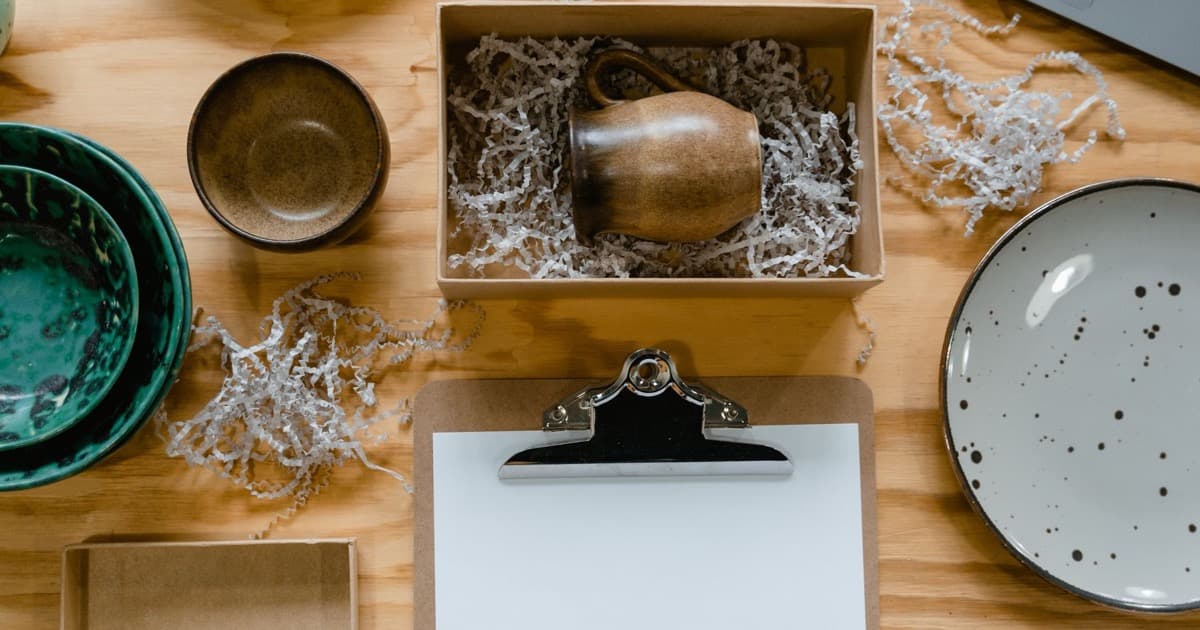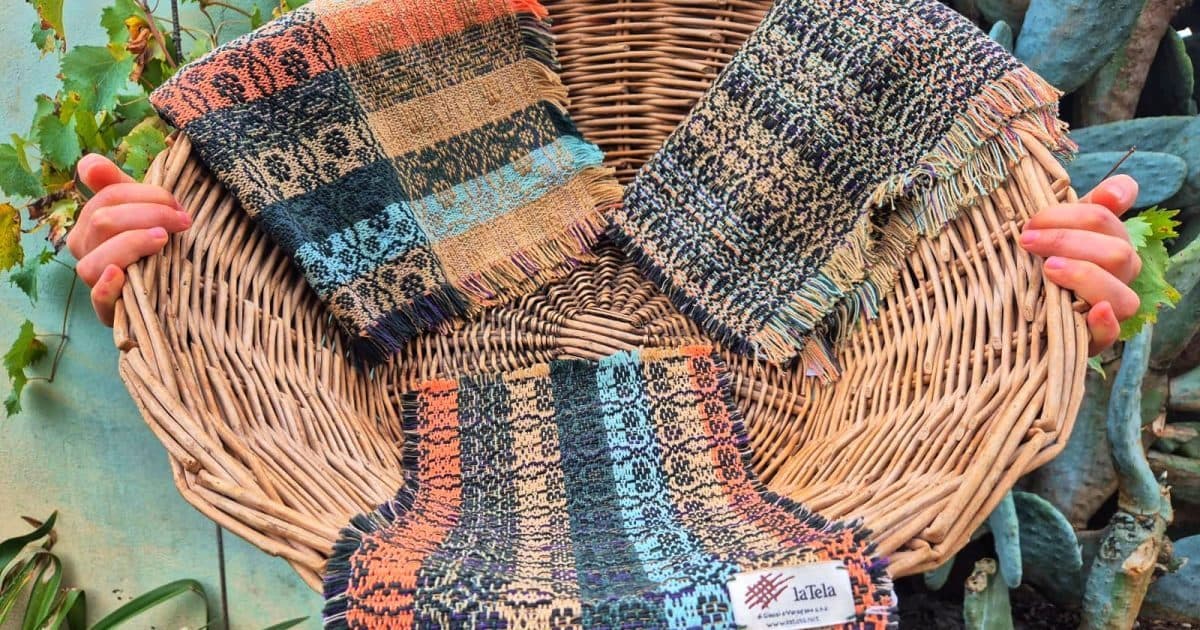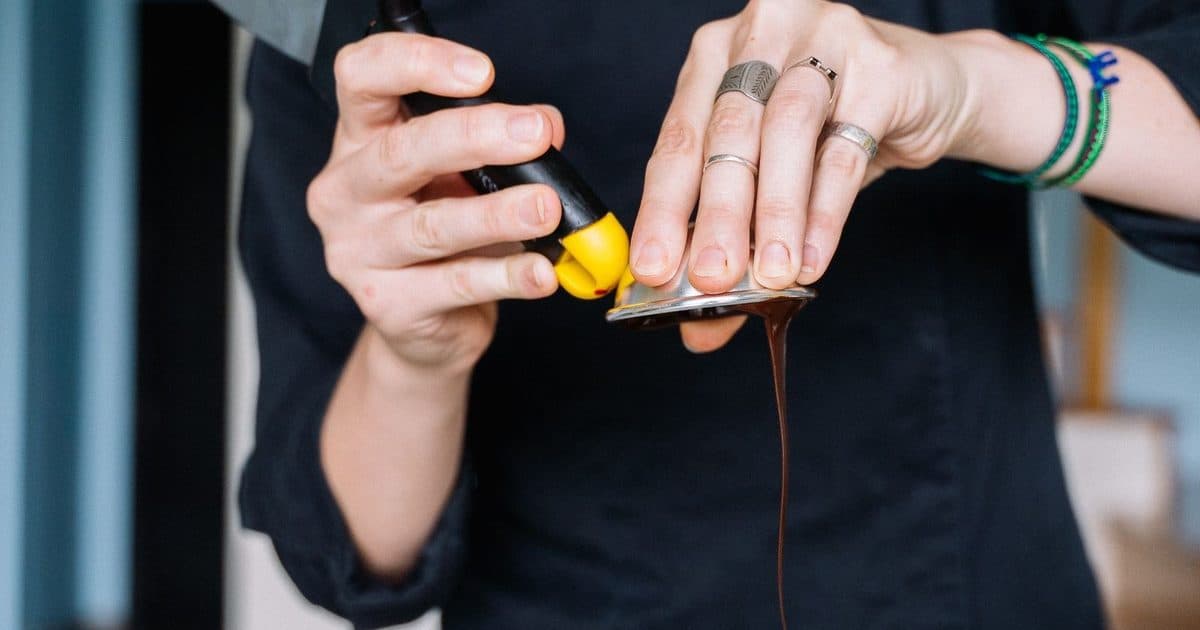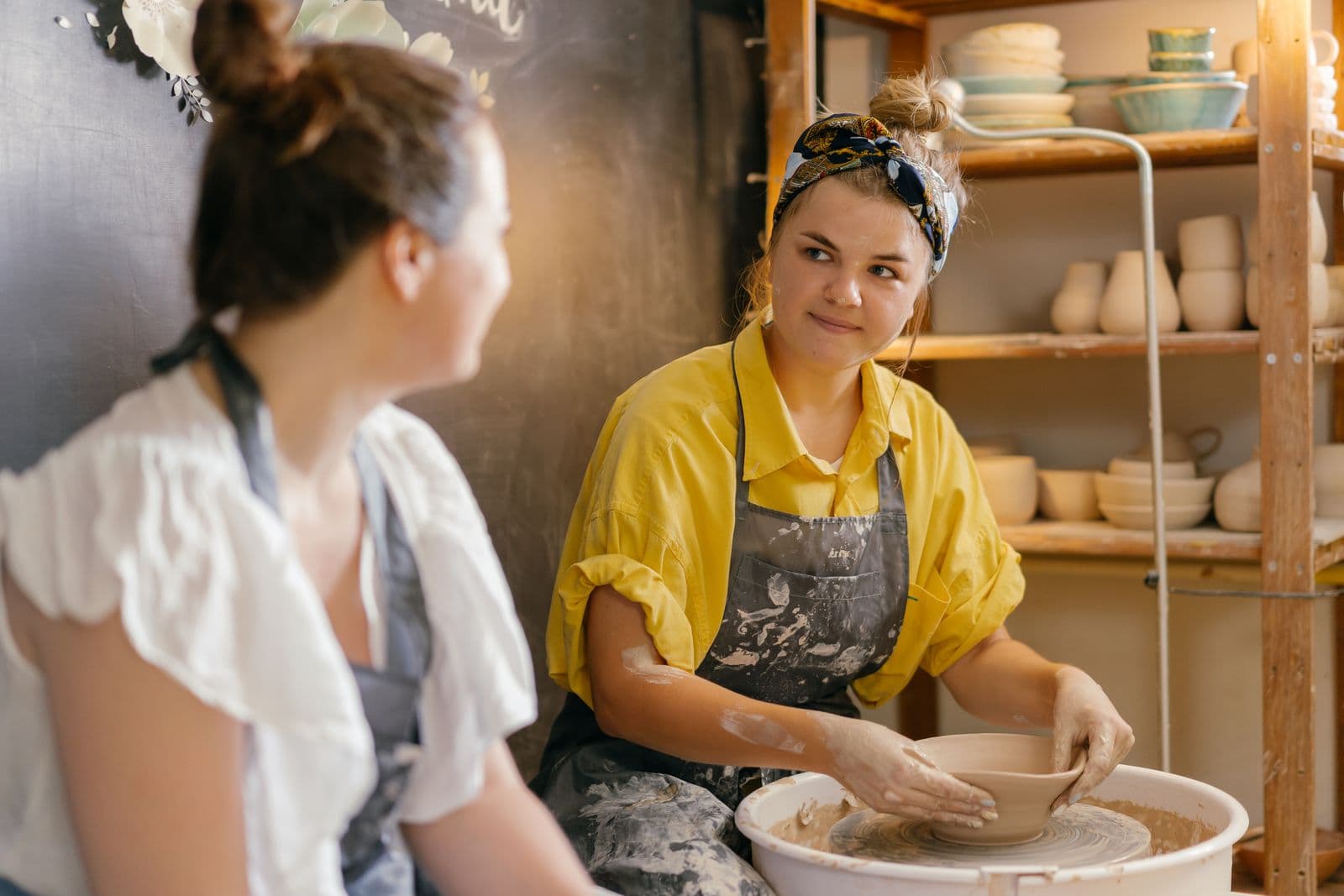

The streets of central Rome are a list of trades. Via dei Cappellari, via dei Baullari, via dei Giubbonari, via dei Chiavari, via dei Cestari: in the historic centre the street names still carry, street by street, the trade of the people who made things there. A city that named its streets after the people who made things sends, in December, a hamper.
That is not an accusation, it is a calendar problem. Every November, in a city the size of Rome, thousands of offices ask themselves the same question with the same budget and the same hurry — and they ask it late. This guide is here so you can ask it earlier.
The hamper isn't ugly: it's mute
The Christmas hamper has one virtue nobody credits it with: it works. It takes half an hour to order, it arrives packaged, it offends nobody. The problem is a different one: it says nothing about who sent it. Two days later it has been shared out in the office, and by March nobody remembers which supplier it came from.
If that budget was meant to signal presence, it did its job. If it was meant to make you memorable — to a client receiving twelve identical parcels, or to someone on the team weighing up another offer — it did no work. The handmade gift works for the opposite reason: it forces a choice, and the person receiving it can tell. In exchange it asks for the one thing you can no longer buy in November: time.
Object or experience: two gifts that fail in different ways
The first decision is not which object, it is object or experience. A handmade object arrives where it is needed without asking anything of anyone: it sits on a desk, it is seen every day, it works for people who work remotely. In exchange you have to guess right, and if you get the taste wrong you have got it wrong for everybody at once.
A gifted experience turns the relationship around: there is no wrong size, no parcel stuck at reception, and the recipient chooses the craft, the date and the studio. The price is that it demands movement, and in Rome movement is a cost to be calculated.
- Object: when people are spread across different offices or work remotely, and when the gift also goes to clients.
- Experience: when people are in a few reachable places and you would rather not guess tastes, sizes and allergies.
- Both together: one large office plus people scattered elsewhere is the most common case in Rome.
- Neither, until you have a deadline in writing: without one, every choice becomes a December scramble.
Real handmade lead times: why by November the choice has already narrowed
The basic misunderstanding is treating craft production as a slow version of industrial production. It is instead production with physical waiting built into it: the Maker is not slow, the material has its own timing, and it does not shorten because you pay more.
- Ceramics. A freshly shaped piece air-dries for five to seven days before it goes into the kiln. In the first firing, bringing the temperature up alone takes eight to twelve hours, then the kiln has to be left to cool — usually around a day — before it can be opened. Only then come glazing, decoration and a second firing.
- Soap. A cold-process soap stays in the moulds for 24 to 48 hours and then cures for four to six weeks: ordered in November it is not ready for Christmas, and that is a chemical constraint, not a scheduling one.
- Candles. Even a soy wax candle wants its rest: at least 24 to 48 hours after pouring, five to seven days if you want the fragrance to settle.
- Personalisation. Engravings, initials, a logo: every piece becomes a different piece, so the time multiplies by the number of people, not of orders. A logo on a hundred and twenty objects is a hundred and twenty operations. That engraving is a serious trade in Rome is not a matter of opinion: the Scuola dell'Arte della Medaglia, attached to the state Mint, was established by law no. 486 of 14 July 1907.
And there is one step that always vanishes from plans made late: the sample. Someone has to see a finished piece, say that the blue is not the company blue, and have it remade: one or two weeks, and it is what separates a beautiful gift from a gift that will do.
In Rome the bottleneck isn't only the workshop: it's the delivery
Rome is Italy's largest municipality by area: around 1,287 square kilometres. Between one office in EUR, one near Tiburtina and one inside the walls there are journey times no courier compresses: if the gift is an object, the delivery plan is written alongside the production plan, not after it.
Then there is the centre. From 7 September 2026 loading and unloading goods inside the city-centre ZTL follows new rules, with time windows narrower than a plan drawn up at a desk imagines: before promising a delivery inside the walls, get the supplier to tell you which slot they fall into, and check the rule currently in force with Roma Servizi per la Mobilità. Then there is the Fascia Verde, where the most polluting classes — Euro 0, 1 and 2 petrol and diesel, plus residents' Euro 3 diesel — cannot circulate from Monday to Saturday: that concerns the courier's vehicle, not yours. On the opposite problem — moving people instead of boxes — we wrote creative team building in Rome: at the office or off-site.
- Ask the supplier which time slot they deliver in within the centre: "in the afternoon" is not an answer.
- Concentrate deliveries: one shipment to one office, distributed internally afterwards, costs less than three coordinated deliveries.
- If people are scattered, consider shipping to home addresses: in December offices close early and parcels sit at reception.
How many pieces a workshop can really make
The second question almost nobody asks is the most obvious one: how many can you make? Whoever makes the work also answers the emails, packs the boxes and keeps the books: asking for twice as much does not double the capacity.
The bottleneck is not the hands: it is the equipment. A kiln has a volume, and that volume decides how many pieces fit into one firing; a working day usually yields a single useful firing, because the kiln has to come down in temperature in between. Real weekly capacity comes from there.
- How many finished pieces do you deliver per week, personalisation included?
- What is the first free week in which you can start — not finish, start?
- Does the volume fit into a single run, or does it need splitting into staggered deliveries?
- If a piece breaks in the kiln, how long does it take to remake?
An honest Maker will say no when the number is not sustainable, and that no in September is worth more than an enthusiastic yes that becomes a problem in December. If the volume exceeds one workshop, you split the order between several Makers on coordinated variants or move some of the group onto an experience.
A handmade gift is not bought: it is commissioned. And a commission has a start date, not just a delivery one.
The per-person budget is set after the accountant, not before
You need to know this before you write a figure into the brief. In Italy, gifts to clients fall under entertainment expenses: the cost of goods given away is fully deductible if the unit value does not exceed 50 euros (art. 108, paragraph 2, of the income tax code), and under the same threshold the VAT is recoverable; above it, it is not. The 2025 Budget Law also tied the deductibility of these expenses to payment by traceable means: cash no longer qualifies.
Gifts to employees are not entertainment expenses but employment costs, and for the person receiving them they count as fringe benefits. The 2025 Budget Law set, for the three-year period 2025-2027, an exemption threshold of 1,000 euros a year, raised to 2,000 for workers with dependent children. The mechanism has a sharp edge: if the year's total benefits exceed the threshold even slightly, the entire amount becomes taxable, not just the excess.
The backwards calendar for a Roman December
With real dates instead of vague talk about planning ahead, the whole plan comes down to a few hours of work.
- September. Decide the shape of the gift, the number of people and the budget. You do not need a supplier: you need an internal decision.
- Late September, early October. Send the brief and collect proposals: a workshop that still has room in October has it by choice, not by bad luck.
- October. The sample: an actually finished piece, with the real personalisation, approved by the person who decides.
- End of October. Order confirmed and production started: from here on, changes cost time rather than money.
- November. Production and a mid-run check: seeing one piece from the run in progress prevents almost every surprise.
- First week of December. Delivery, with margin on the date of the party and the loading windows agreed.
And if you are reading this in November? Change the shape of the gift, not the supplier: experiences and gift codes need no production, only free places, and those open up right until the last minute.
Who holds the pieces together
Coordinating two or three workshops with different materials and timelines is a job in itself, and it lands on someone who already has plenty to do. That is where we can be useful: with Handsome for companies you send a single request — people, deadline, type of gift, budget — and we look for the Makers who can handle that volume in that time. If the number does not fit the calendar we tell you while you can still change your mind.
One last note of honesty: there are no Roman Makers on Handsome yet, and today the network is denser across Marche, Romagna and Emilia. For an object to be shipped, geography counts for little; for an experience in the city it counts for a lot, so it is worth looking at what is on the Rome page now and checking back in a few weeks. If you are curious about a technique with a long history here, we wrote about why Roman mosaic is not Byzantine mosaic.
Frequently asked questions
- When should you start organising handmade corporate gifts?
- September for the internal decision, late September to October for the brief to the workshops. October is the last month in which you can approve a sample and start production calmly. From November what remains practical is mainly experiences and gift codes.
- Why is November late for a handmade object?
- Because craft work contains waiting that cannot be compressed: a ceramic piece dries for five to seven days before its first firing, the kiln has to cool for around a day before it can be opened and then a second firing is needed; a cold-process soap cures for four to six weeks. Add the sample and November is past the limit.
- How many pieces can a craft workshop produce?
- It depends on the equipment more than on the hands: the kiln decides how many pieces fit into one cycle and how many cycles fit into a day. Ask for real weekly capacity with personalisation included, and for the first free week in which the Maker can start.
- Are there limits on deliveries in Rome's historic centre in December?
- Yes. From 7 September 2026 loading and unloading goods inside the city-centre ZTL follows new rules, with restricted time windows, and the Fascia Verde also applies, excluding the most polluting vehicle classes from Monday to Saturday. Do not assume the afternoon: get the supplier to confirm the slot they deliver in, and check the rule currently in force with Roma Servizi per la Mobilità.
People, deadline and type of gift: we handle the rest
Ask for a proposal for your companyFor an object to be shipped, distance counts for little: today the network is denser across Marche, Romagna and Emilia
Browse the Makers on Handsome