Every April, for one week, Milan becomes the busiest place in world design. The Salone del Mobile alone closed its 2026 edition with 316,342 attendances from 167 countries; outside the halls, at the same time, the city fills up with events for days. If you run a workshop and make things by hand, one question asks itself: is any of this for me? The answer is yes, but almost never in the way you imagine, because Design Week is not one thing: it is two events working by opposite rules. One costs as much as an advertising campaign; the other can cost very little.
Salone and Fuorisalone: two different events under one name
The Salone del Mobile is a trade fair: halls, stands, tickets. The first edition opened on 24 September 1961 in halls 28 and 34 of the old Fiera Campionaria grounds, with 328 companies, 11,860 square metres and 12,100 visitors, 800 of them from abroad. The idea came from the Italian federation of wood and cork industries, today FederlegnoArredo, and its purpose was to get Italian furniture exported. The fair is now held at Fiera Milano Rho: the 2026 edition recorded 316,342 attendances from 167 countries.
The Fuorisalone was never founded: it simply happened. It grew spontaneously in the early 1980s, when furniture and design companies began showing in the city, in their showrooms, whatever would not fit inside the fair; in 1991 the magazine Interni published the first guide to those scattered appointments. In 2001 came fuorisalone.it, today the reference guide, a project by the Milanese studio Studiolabo, which has also curated the Brera Design District since 2010.
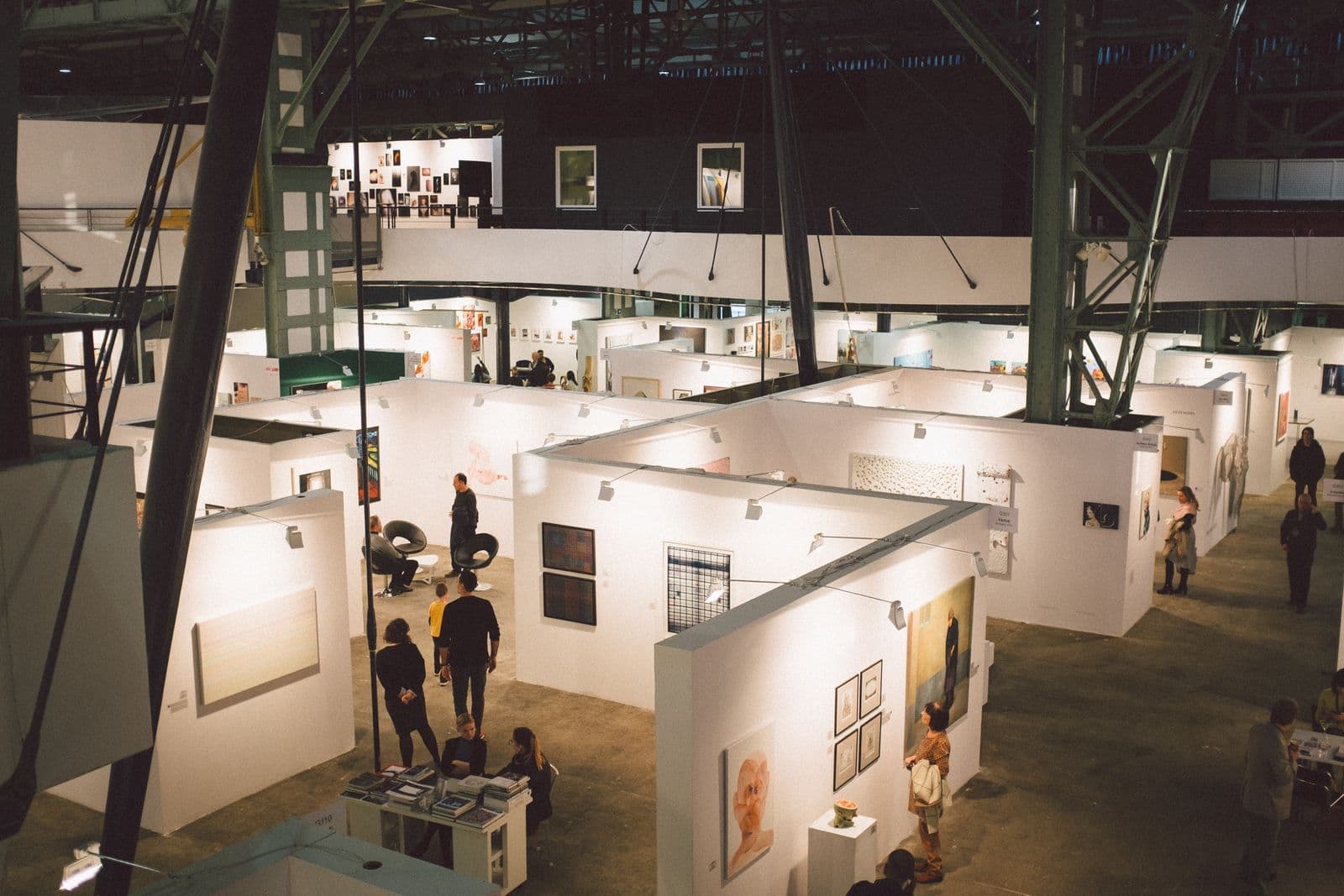
Add the two together and you get Milano Design Week: the fair at Rho and, running alongside it, hundreds of events scattered through showrooms, courtyards, palazzi and workshops. The city-wide half, the one you can visit free of charge on foot, is also the one you can enter without a stand.
What you actually need to take part
Stripped to the bone, taking part in the Fuorisalone rests on three things: something to present, somewhere to present it, and communication telling people where you are. None of the three requires a hall at the fairground.
- Content. A new piece, a technique, a material study. Not the catalogue: something you can describe in one sentence and look at for ten minutes.
- A venue. Small is fine: your own workshop, a shop that hosts you, a courtyard, a share of a space split with other Makers.
- Communication. The listing in the guide, a sign legible from the street, materials in English as well, and an easy way for people to get back in touch.
- What you do not need: a stand, a press office, a designer set. What you do need is the calendar: the circuits close applications months in advance.
The ways in, from cheapest to most demanding
1. Listing your event on the official guide
This is the first rung, and it is the one almost no workshop bothers with. On fuorisalone.it there is a procedure for publishing your own event in the official guide: it goes into the event list and onto the digital map the public uses to plan its route. Alongside the basic listing there are paid communication plans, with a dedicated page and promotion, rising in cost. Terms, submission windows and prices are published on the site and change every year: they open well before April, so autumn is when to go and look.
2. Getting into the City of Milan's official programme
Every year the City of Milan publishes an open public notice to gather the projects that make up the official Milano Design Week programme. It is not reserved for the big names: businesses, associations, foundations and self-employed professionals can all apply, individually or through collective entities. It is the route that turns a private event into an entry in the city's own programme.
Projects in the programme are promoted through the city's channels, starting with YesMilano. If your project occupies public land, puts up a structure or involves music, sales or catering, separate permits are needed: they go through the city's single events desk, and the application has to be filed weeks in advance, so it belongs in the calendar alongside your submission, not after it.
3. The districts
Districts are neighbourhood circuits with a shared map, shared communication and an audience that arrives already pointed in your direction. Brera Design District is the largest and gathers hundreds of events each year; alongside it sit Tortona, Isola, 5VIE, Porta Venezia and many independent projects, each with its own rules.
- Brera has been curated since 2010 by Studiolabo, the same studio behind fuorisalone.it: getting into the circuit runs through the district's paid communication packages. It is the most visited and the heaviest on the wallet.
- 5VIE, in the historic centre, is a cultural network working on art, author design and fine craftsmanship, with a different theme each edition.
- Isola Design District runs international open calls for independent designers and creatives, with curated group shows: the right route for anyone bringing a piece rather than a whole set.
- Outlying districts and independent projects cost less: the distance costs you footfall, but you get it back in the minutes each visitor gives you.
4. Curated open calls
These are the genuine shortcut for anyone without a budget: somebody else provides the space, the set-up and the communication, you bring the piece and pass a selection. BASE Milano, with its We Will Design programme, is the best-known example: the 2026 edition turned on the theme "Hello, Darkness" and gathered projects chosen through an international open call open to emerging designers, schools and universities from around the world. Alcova, founded in 2018 by curators Valentina Ciuffi and Joseph Grima, occupies unconventional locations each year: in 2026 the former Baggio Military Hospital and Villa Pestarini, with more than 130 selected exhibitors.
If you are under 35 there is also a door inside the fair itself: SaloneSatellite, created in 1998 on the initiative of Marva Griffin Wilshire for emerging designers. The application asks for very little — a few images of completed projects and a short description in English — but it closes many months before the edition, on the Salone's own site: another deadline to mark down in autumn.
5. Opening your own workshop
If your workshop is in Milan or nearby, the cheapest form of participation is also the truest to what you do: open the doors. A working bench, published hours, two demonstrations a day at fixed times, a sign legible from the street. In those days local word of mouth works harder than social media.
If it is far away, the workable route is a shared space: splitting one venue three or four ways for a week changes both the maths and the workload, because the bench is never left unattended. We have a separate guide on assessing a space by the hour or by the week in the city: renting a workshop space in Milan.
The cost lines people forget
- Transporting the pieces there and back, packing that survives the journey twice, and a minimum set-up: lighting, a decent work surface, extension leads.
- Insurance on the space and the pieces, permits if you open to the public, play music, sell or serve drinks, and food and lodging in Milan's most expensive week of the year.
- A second person on the bench: seven days alone is not sustainable, and the moment you step away is the moment the buyer walks past.
- The production time taken away from April's commissions: the largest cost, and the one almost nobody puts in the budget.
Before: the months that decide the week
- September-October. Decide the content and write one sentence explaining why a stranger should stop. In parallel, check on fuorisalone.it and on the city's site when submissions open and close.
- October-December. Apply to the curated open calls: they close first, and they are the only route that can hand you a space without renting one.
- December-January. Lock down the venue: a written agreement, opening hours, power, who opens in the morning and who closes at night.
- January. List the event on the official guide as soon as the window opens: a title a stranger can understand, a real photograph of the piece, the exact address and hours.
- February-March. The city programme and any permits, if you need public land, music, sales or catering. In parallel: the sign, descriptions in two languages, prices and lead times.
- The week before. A dress rehearsal in the space: how much material an hour consumes, where the tools live, where people actually stop.
During: how you collect real contacts
The risk is mistaking footfall for results: huge numbers of people go past, nearly all of them moving and with another address in mind. The aim is not to be seen by everyone, it is to go home with twenty names worth calling.
- Actually work, at fixed and published times: someone using their hands stops passers-by, an exhibitor sitting behind a table does not.
- Qualify while you talk: buyer, journalist, designer or passer-by? It changes the next question, not the tone.
- Make the note immediately, on the back of the card or on your phone: what they asked and by when. By evening you will not remember.
- Have prices and lead times ready in English too: a large share of the audience comes from abroad, and those are the first two questions they ask.
- Photograph and film every day, even badly: that footage feeds the following twelve months.
Design Week is never short of an audience: it is short of the time that audience gives you. Everything you prepare is there to buy three more minutes.
After: the week almost nobody bothers with
This is where the Fuorisalone turns into work, or stays an expensive memory. Within seventy-two hours of closing, write to everyone, one by one, referring to what you actually discussed: an email that reads as if a person wrote it is worth ten newsletters.
- Split the contacts into three lists: those who can buy now, those who can talk about you, those who might collaborate later.
- To the first send a concrete proposal with a price and a timescale, not a catalogue.
- To the second your best high-resolution photographs and two lines ready to publish.
- To the third write again in September, when planning restarts: in April everyone is full.
- Do the real arithmetic: total cost divided by useful contacts. That number tells you whether you go back next year, and in what form.
One last thing: Design Week is among the most expensive channels and it is not the only one. You also need circuits that work all year round, starting with markets: how to apply to craft markets.
On Handsome, Makers publish their own workshops with zero commission on bookings. In Milan the catalogue is only just taking shape.
Handsome's Milan pageFrequently asked questions
- Do you really need a stand to take part in the Fuorisalone?
- No. The Fuorisalone is the city-wide half of the week: you need something to present, somewhere to present it and some communication. Stands belong to the Salone del Mobile, the trade fair at Fiera Milano Rho, which is a different event with trade fair costs and trade fair rules.
- How much does it cost to list your event on the official guide?
- It depends on the level of visibility you choose. On fuorisalone.it there is the basic listing in the guide and on the digital map, and alongside it paid communication plans with a dedicated page and promotion. Prices and submission windows are published on the site every year, well before April: check them in autumn.
- Is it worth it for a Maker who works to commission and does not sell a product line?
- Yes, if the aim is collaborations rather than takings. Those days bring design studios, architects, buyers and manufacturers to Milan, all looking for people who can execute: the piece on display proves what you can do.
See what Makers publish across Italy.
Discover craft experiences on Handsome