People who abandon a sign-up halfway almost never do it because they changed their mind. They stop because at some point the form asks for something they do not have to hand — their tax code spelled correctly, a decent photo of the studio, an IBAN — and they put it off. Later never comes. This guide lists in advance everything you will be asked for, so you open the form once and finish it.
1. Personal and tax details
This is the part that scares people most and actually takes three minutes. It is needed because after a workshop somebody has to issue a valid document to whoever paid: that is not platform bureaucracy, it is Italian law.
- Name, surname, Italian tax code: the real ones, as printed on your ID. A tax code that is one letter off will block the receipt months later, when you have forgotten all about it.
- VAT number, if you have one, with your tax regime (flat-rate or standard). If you do not have one you can still join: there is a dedicated path, explained in Hobbyist or artisan? Which profile to choose.
- Registered address, which can be your home.
- Date and place of birth: only asked of those working on an occasional basis, because that type of receipt requires them.
2. The public profile: who you are, in two lines
This is the part customers see. It matters more than everything else combined, and it is almost always filled in quickly, at eleven at night, with a generic sentence. That is a shame, because it is your only chance not to look like everyone else.
- Your studio name: the one people know you by, not your legal entity name. If the legal name is Rossi Maria Grazia but everyone says La Maiolica, write La Maiolica.
- A 4-6 line introduction: how long you have done this, what you are best at, why you started showing it to others. No brochure adjectives: readers want to know whether they will feel at ease with you, not whether you are excellent.
- A photo of you, the person. Not the logo, not a vase. Someone booking a workshop is choosing who to spend three hours with: no face, no booking.
- The town where you work, which is how nearby customers find you.
3. Photos: how many, and above all which ones
Photos are the second reason sign-ups stall: people think they need professional ones and postpone until they have time. They do not. You need real photos, taken on your phone, in daylight. A perfect stock photo is worth less than a crooked shot of your messy bench, because the second one proves you exist.
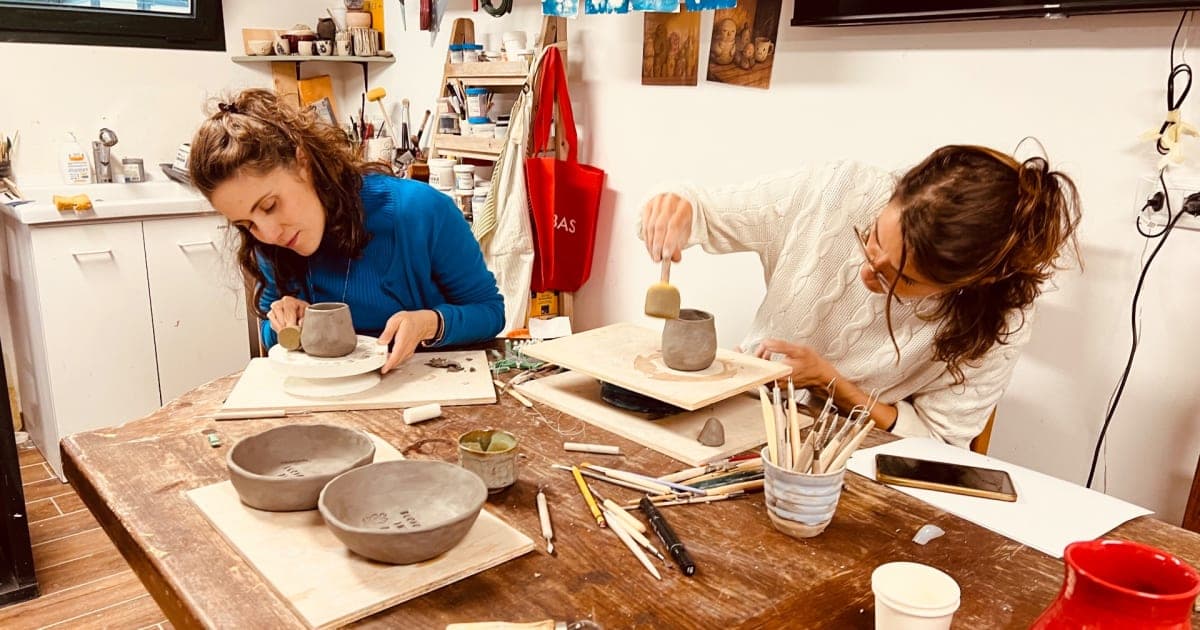
- Your space: where the workshop happens, as it really is. Even if it is the kitchen table.
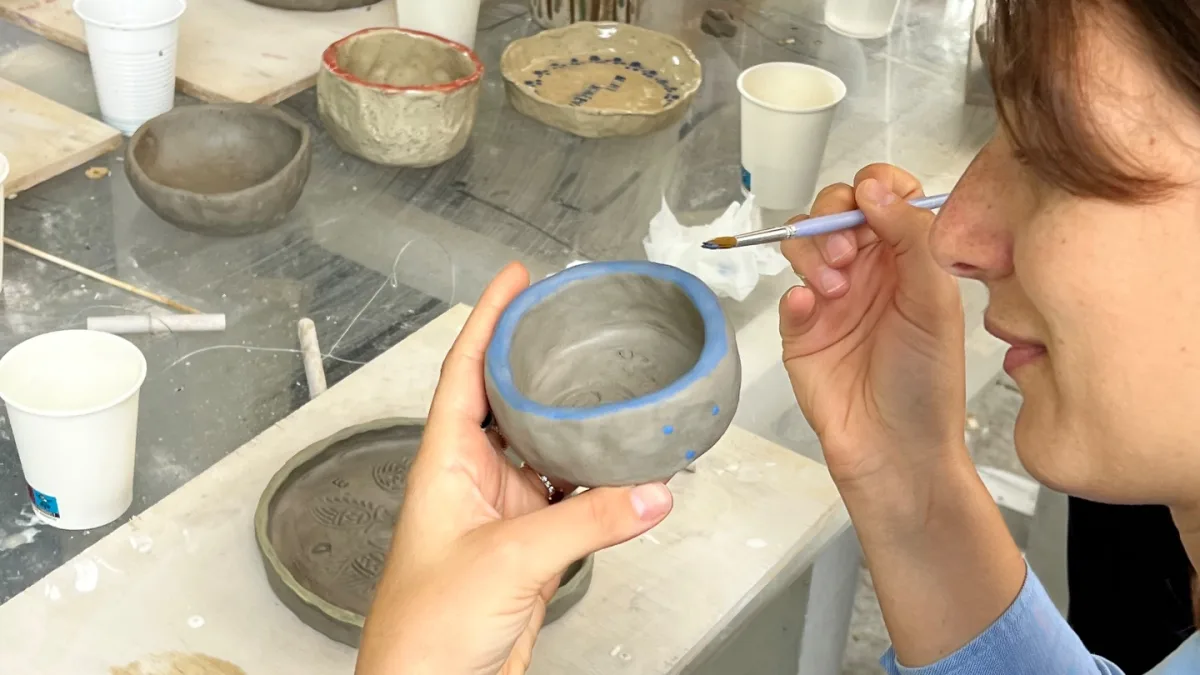
- Hands at work: the gesture of the craft. This is the photo that gets bookings.
- Finished pieces, especially those made by beginners rather than your masterpieces. People want to know what they will take home, not what you can do.
- The group: people laughing around a table. If you have already run courses, you will have something in your photo library.
4. The craft you work in
You are asked to pick your category from a fixed list — ceramics, textiles, wood, cooking, jewellery and so on — and then to say more precisely what you do inside it. It looks like paperwork and it is in fact what decides whether people find you. There is a separate guide: how to choose your craft and sub-crafts.
5. The account your money lands in
Last step, and the only one you cannot skip if you want to be paid. Customer deposits do not sit in a common pot: they land in an account in your name, connected during sign-up. You need an IBAN and an ID document for the anti-money-laundering check, which is mandatory for anyone taking card payments in Europe. The whole process is covered in Connecting Stripe to get paid for workshops.
What you do NOT need (and still stops half of people)
- A qualification or certificate. There is no licence required to teach your own craft in an experiential workshop.
- A shop or a street-level studio. You can run a workshop at home, in a space rented by the hour, in a garden: see where to run a workshop with no studio.
- Your own website. The profile is already a public page with dates and a booking button.
- A ready catalogue. You start with one workshop. In fact that is the right way to start.
- A photographer, a designer, a social media manager. Those come later, if ever.
How long it really takes
With your documents to hand, your part takes about twenty minutes. Then there are two waits outside your control: our check on your tax details and the identity check by the payment service. Meanwhile you can already draft your workshop: that time is not wasted.
The basic profile is free and stays free: there is no subscription to be listed, and we take no commission on workshop takings — only the payment network's own fees remain, which anyone accepting cards pays. There is an optional paid plan with extra tools, but it is for later, not for signing up.
Frequently asked questions
- Can I join without an Italian VAT number?
- Yes. There is an Apprentice path designed for occasional work: you can publish up to 5 workshops per calendar year and stay within 5,000 euro gross per year in fees. Above those thresholds a VAT number is required.
- How much does opening a profile cost?
- Nothing. The profile is free, has no subscription fee, and no platform commission is taken on workshop takings. The payment network's card fees still apply.
- Do I need workshops ready before joining?
- No. You can complete your profile and build your first workshop later, saving it as a draft. You publish when it is ready.
- What is the minimum number of photos?
- One photo of you as a person and a few photos of your space and your work. The more you upload, the more convincing the page: pages with a full gallery get booked more than those with a single image.
- What happens if I get a tax detail wrong?
- You correct it from your profile. The problem is noticing late: a wrong tax code blocks the receipt to the customer, so it is worth double-checking it straight away.
Twenty minutes with your documents to hand. Free profile, zero platform commission on takings.
Open your free profile