You already know Calcata even if you have never set foot there: the tuff crag rising out of the woods, the houses clinging to its edge, the caption "the artists' village" under every photo. The postcard is accurate, but it does not tell you much. If you are planning a day out from Rome you want other things: whether the community of painters, sculptors and craftspeople who repopulated the place still exists or only its backdrop survives, which workshops are actually open, where you leave the car and how long you really need. Here are the answers, in the order you will ask them along the Via Cassia.
How Calcata became the artists' village
In short, without the mythology. The old village sits on a spur of tuff, the soft volcanic rock of this part of Lazio, above the Treja valley, and tuff crumbles. In the last century an order declared the village unsafe and its inhabitants were moved a short distance away to a new settlement built along the road. The houses were left empty, doors open, roofs giving way. It was artists, craftspeople and people looking for a different life, many from Rome and from abroad, who bought them for very little and rebuilt them with their own hands. By the time the order was withdrawn, the village already had a new population.
What is left of that community? More than you would expect, less than the story promises. Some of the people who arrived back then still live here; others have handed house and studio on to children or pupils; younger people have joined them, drawn by the same idea of living somewhere slow and working with their hands. Open-air museum and theme village are both the wrong label. Calcata is a tiny place where the workshops are also homes, where the person selling you a cup made it downstairs, and where the rhythm follows the residents, not the tourists.
What you see and do inside the walls
There is a single gate, and from there the village opens on foot in every direction: a square with the church, a handful of lanes dropping towards the terraces over the valley, steps, arches, cats everywhere. A full loop without stopping takes almost no time; stopping is the point. The open doors are workshops, galleries, tea rooms and spaces carved out of old stables and cellars, and the person inside is almost always the one who makes the things. Walk in, say hello, ask. Opening hours here are elastic, many places open when their owner is at home, and if there is a light behind a closed pane, a polite knock is simply how the village works.
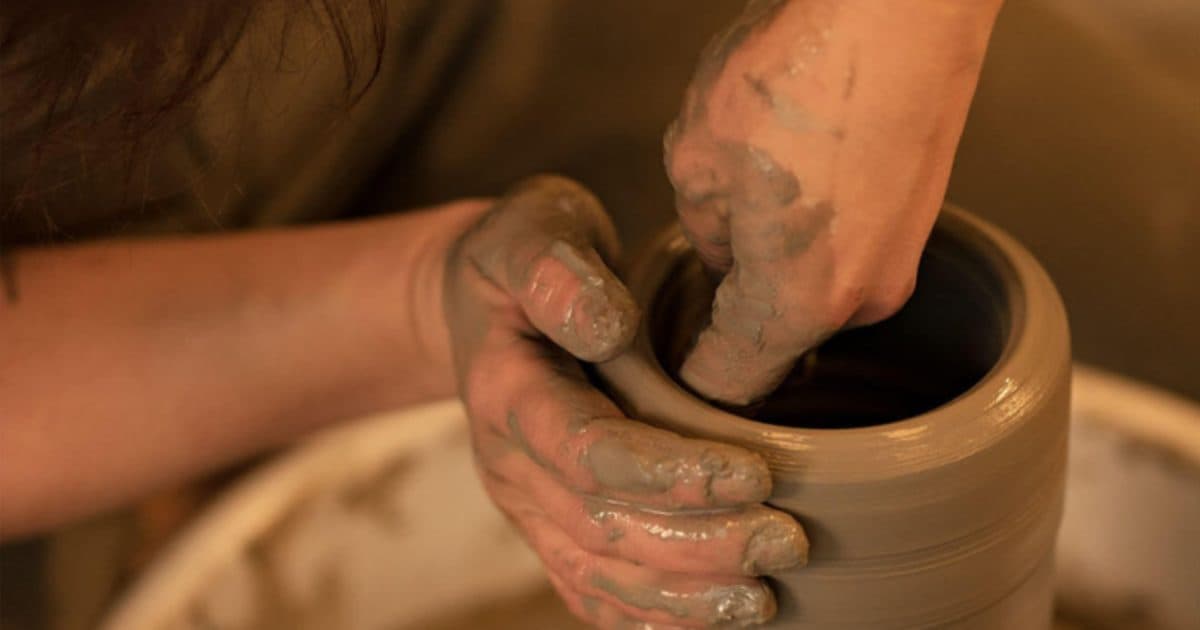
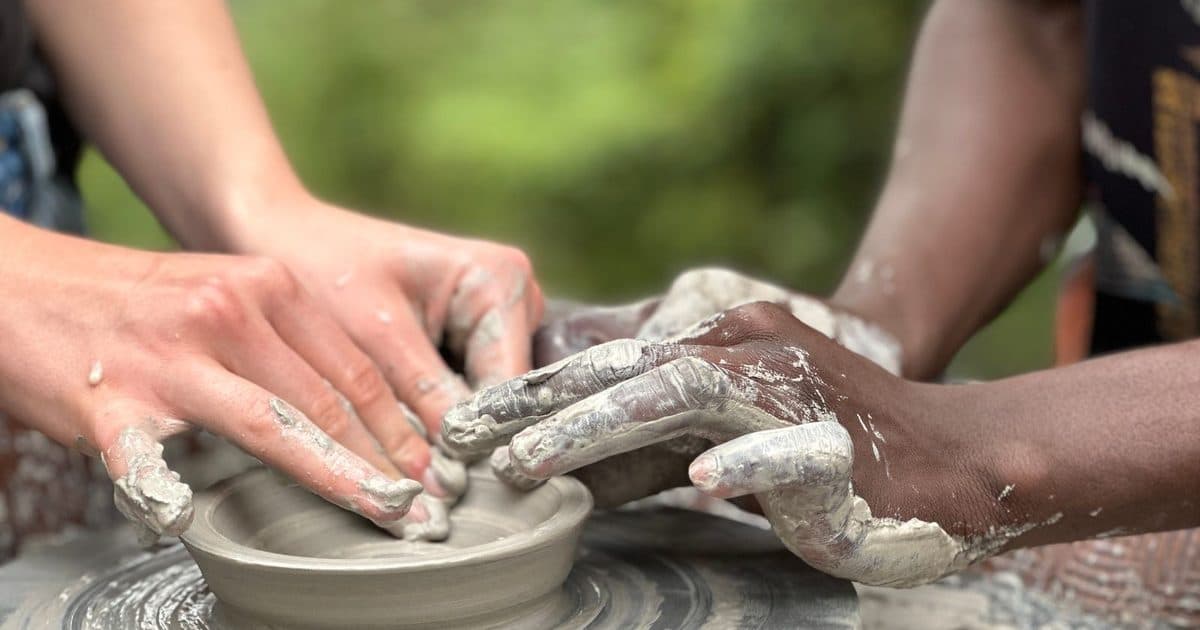
- Ceramics: studio-shops where you see pieces in progress, often with the kiln in view or in the next room.
- Leather and textiles: bags, belts, hand-dyed garments, with the sewing machine or cutting bench in view.
- Sculpture, painting, printmaking: studios that double as galleries, where the artist keeps working while you look and nobody pushes you to buy.
- Jewellery and small objects: tiny windows, often open only at weekends.
- Tea rooms, osterie and terraces: the places where you sit and look at the valley, which in Calcata counts as an activity in its own right.
Getting there from Rome, parking, and how long it takes
By car you take the Cassia bis towards Viterbo and leave it following the signs for Mazzano Romano and Calcata; from there a road drops through the woods and comes out in the new village. From the north of Rome it is an hour's drive, a little more in traffic. The old village is closed to cars: you leave yours in the new village, along the road or in the marked parking areas, and walk down to the gate. It is a short downhill walk, and the crag appears all at once behind a bend. On fine-weather weekends the spaces fill early and the road turns into a queue of parked cars: arriving mid-morning changes the whole day. Without a car there are regional buses from the Saxa Rubra terminus in northern Rome, infrequent and even more so on Sundays and holidays: check the timetable before you leave and plan the return with some margin.
Half a day in Calcata: a plan that holds up
- Arrive mid-morning, park in the new village, walk down. Coffee in the village square before anything else.
- A slow loop of the lanes and terraces, going through every open door. This is where most of your time goes.
- Lunch in one of the osterie or tea rooms inside the walls: simple dishes, small tables, and booking ahead does no harm at weekends.
- Afternoon of your choice: a second pass through the workshops that were closed in the morning, or a walk down into the valley and the park.
- Back to Rome before sunset, ahead of everyone returning from the lakes.
The walk is what distracted visitors miss. Calcata lies inside the Valle del Treja regional park, a wooded gorge cut by the river between Calcata and Mazzano Romano, with trails starting from the village and waterfalls within easy walking distance. The afternoon light down in the valley justifies the trip on its own. For the full historical and geographical picture, the encyclopaedia entry on Calcata is a good place to start.
You can tell an artists' village by one thing: behind the open doors, somebody is working.
Looking at workshops, or getting your hands in
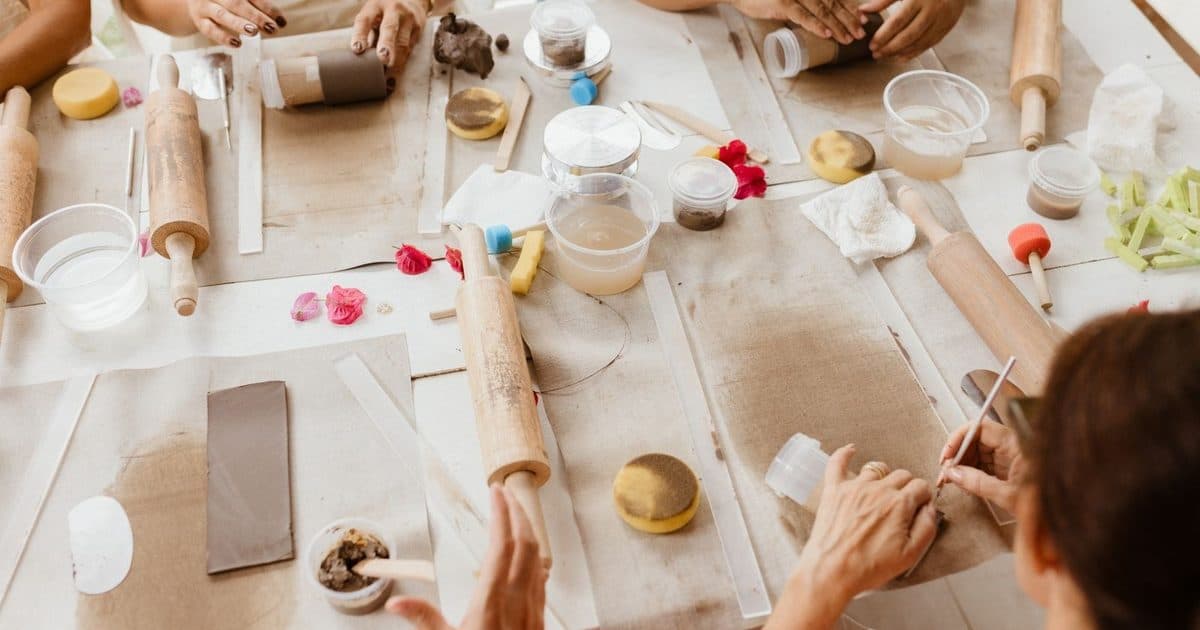
After Calcata a predictable thing happens: you go home wanting to try. You have watched the wheel turn and the leather cut on the bench, and you have wondered what it would feel like to do it yourself. Looking at a workshop is a visit; sitting at the bench for a few hours with someone who really does that trade is a different experience. That is the idea behind craft workshops: hands-on sessions run by Makers and Apprentices, booked and paid online and chosen by craft and by city. In Rome, for instance, artisans still work in neighbourhoods the tours skip, and the catalogue of workshops on Handsome is growing in Lazio too. If you are not sure where to begin, there is a guide on how to choose the right workshop; and if the trip to Calcata was a present, a gift card is the way to make it last.
Frequently asked questions
- Is Calcata worth a half-day trip from Rome?
- Yes, as long as you go at the right pace. The village is small and quickly walked; the value is in stopping at the workshops, sitting on a terrace over the valley and, if there is time, heading down into the park. Treated as a box to tick it disappoints; given a slow half day it pays you back.
- Are the workshops in Calcata open every day?
- No. Most open at weekends and on public holidays, with flexible hours that depend on whoever runs them. Midweek many doors stay closed: if the workshops are your reason for going, choose a Saturday or Sunday.
- Where do you park in Calcata?
- The old village is pedestrian only. You park in the new village, along the road or in the marked areas, and walk down to the gate. On fine-weather weekends the spaces run out fast, so aim to arrive mid-morning.
- Can you reach Calcata without a car?
- Yes, on the regional buses from the Saxa Rubra terminus in the north of Rome. Services are sparse, especially on Sundays, so check the timetable in advance and plan the return journey with a margin.
- Is Calcata suitable for children and for people with limited mobility?
- Children love it: lanes, cats, steps and the valley below. For anyone with mobility issues it is harder: the walk down from the parking is on a slope, inside the walls there are steps and uneven paving, and pushchairs struggle.
- What else is there to do around Calcata?
- The walk through the Valle del Treja park to the waterfalls, the neighbouring village of Mazzano Romano and, further north, the small towns of the Tuscia area around Viterbo.
Ceramics, leather, textiles and other trades: book online, in Lazio and across Italy.
Find a craft workshop near you