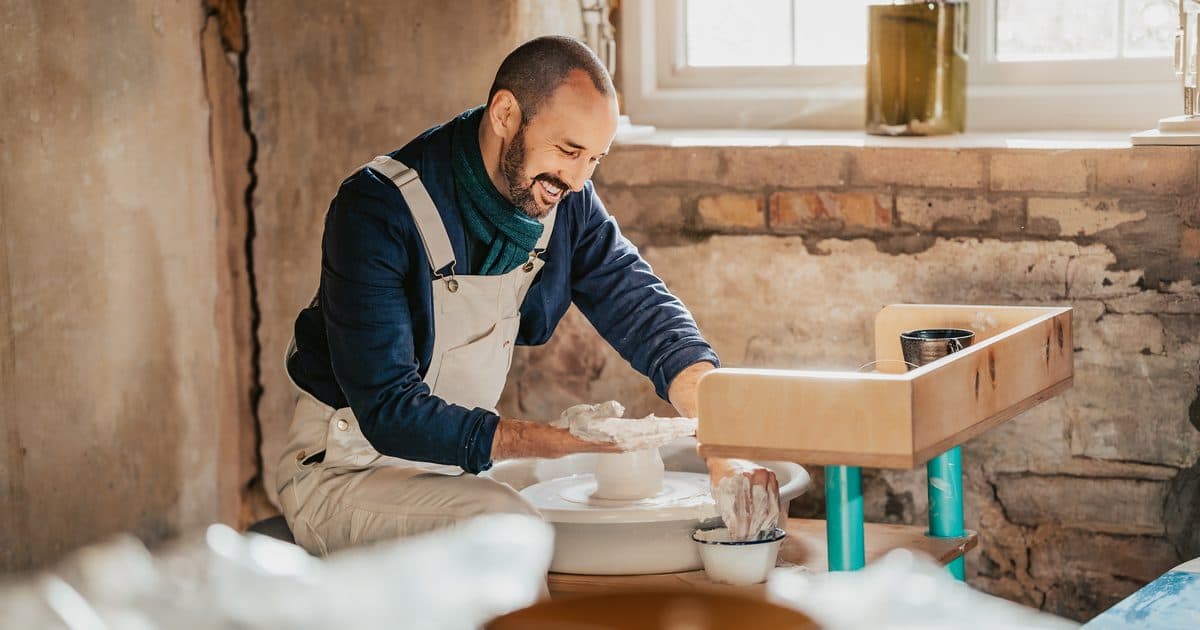
In a ceramics studio in Milan, rent and fixed costs run the same whether the wheels are turning or standing still on a Saturday morning or a Tuesday evening. The most direct way to make those hours pay is to turn them into one-session workshops: dates people book online, with a deposit paid at booking and the balance settled at the studio on the day. This guide covers how to spot the empty hours, which format to put in them and how to handle firings, pick-ups and cancellations.
The customer's side is in how much a ceramics class in Milan costs. Here the same market is seen from the other side: by whoever keeps the studio open, pays for the kiln and knows by heart the hours when nobody walks in.
Where the empty hours are in a ceramics studio in Milan
Every studio has a different calendar, but the gaps tend to fall in the same places. If you make your living from term courses, they are the evenings with no regular group and the weeks between one cycle and the next: September before enrolment restarts, June and July after it ends. If you make your living from production work, it is the weekend, when the studio is closed but the rent keeps running. Leave August alone: Milan empties.
Before opening a date, take stock of three resources, because the scarcest of the three decides the format:
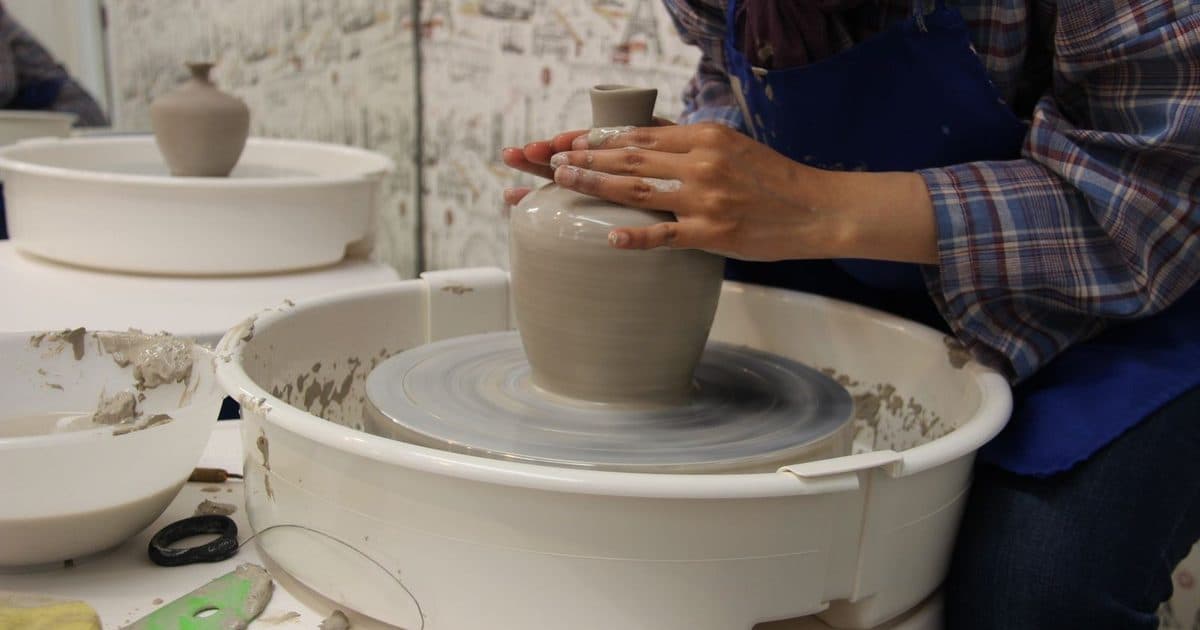
- The wheels: how many there are and when nobody uses them. A wheel takes one person at a time, so their number is the ceiling on places for a wheel workshop.
- The benches: the real seats around a work table. Hand-building needs no wheels and usually fits more people.
- The kiln: when you fire and how much room is left in each load. Workshop pieces should not need extra firings: they should fill the ones you already do.
Some studios fill the same hours by renting out wheels by the hour to people who can already throw: it pays, but it sells machine time. A workshop sells an experience to people who have never centred clay, a much wider audience that in Milan moves mostly in the evening and at weekends. Weekday daytime slots are the ones companies sometimes ask for as a group activity: those requests go through Handsome, which handles the relationship with the company, and they are reserved for Makers with a VAT number.
Hand-building or the wheel: which one-session format
The format is decided by the resource you have free, not by the technique you prefer to teach.
- Hand-building (pinch, coil, slab): everyone at the table, each person makes a mug, a bowl or a plate. Places are set by the length of the bench and how many people you can follow, not by the number of wheels. It suits evenings best, because the piece is finished within two and a half hours.
- Wheel taster: one participant per wheel, with you moving from one to the next during centring. It is the format people picture when they think of ceramics, and also the most tiring for beginners: keep the group small. There is a separate guide on length and structure, the wheel-throwing workshop for beginners.
- Mixed rotation: half the group at the wheel, half at the table, swapping halfway through the session. With four wheels you can take eight people without anyone waiting around.
- Decorating bisque: pieces already fired once, to be decorated and glazed. Participants do not shape anything, but the piece still goes back in the kiln and is collected after the second firing.
- Private session: a couple, a birthday, a small group of friends who want the studio to themselves. On Handsome it is set up for groups of up to six people, priced per person, with a deposit of 25 euro per session; it is reserved for Makers with a VAT number.
You set the number of places yourself, date by date: the same workshop can have six places on Tuesday and eight on Saturday, if on Saturday you also open the second table. To choose the right number between quality and margin, see how many places to offer in a workshop. And if a single session feels too short, there is also a format with several meetings: we cover it in how to turn a workshop into a mini-course.
Firings and pick-ups: say it upfront, handle it afterwards
This is the main difference between ceramics and almost any other craft: participants do not leave with a finished piece. The clay has to dry, goes in the kiln once, is glazed and fired again, and between one stage and the next you wait for a full kiln. The result is that pick-up comes a few weeks later, and it is where most misunderstandings start if it is not written down beforehand.
In the workshop listing you choose how people will get their piece back: pick-up at the studio after a while or shipping, with an approximate number of days. The public page shows a clear line, such as “You pick it up at the studio after firing, about 21 days later”, so people know before they pay. Better to state a generous number of days and deliver early than the other way round.
Once the pieces are out of the kiln, under that past date in the bookings section of your dashboard there is a “Pieces ready” button: it sends a single email to every confirmed participant of that date, with the pick-up point (already filled in with the studio's address), the days and times to come by, the deadline and any notes. If someone has a question of their own, they write it in the booking chat, inside Handsome.
After the office or Saturday morning: when to schedule them in Milan
In Milan the weekday evening is the most natural slot for a one-session workshop: people leave the office, cross the city by metro and look for something that ends at a reasonable hour. Distance from the station counts: a studio a few minutes' walk from an M1, M2, M3, M4 or M5 stop sells better than one that needs a bus change after ten at night, and one near an interchange such as Loreto (M1 and M2), Cadorna (M1 and M2), Garibaldi FS (M2 and M5) or Zara (M3 and M5) can be reached from more neighbourhoods without changing. Put the nearest stop in the arrival notes. On how people think about an activity after work, see evening craft workshops in Milan.
At weekends the audience changes: couples, friends, people spending the weekend in the city. Mornings suit hand-building, afternoons the wheel. And there are a few dates in the year worth marking: the weeks before Christmas, when a workshop becomes a gift, and the Sant'Ambrogio long weekend, Milan's patron saint's day, which in 2026 falls on Monday 7 December and runs straight into the Immaculate Conception holiday on Tuesday 8: four days in a row, from Saturday 5.
Once you have found the right slot you do not need to enter it by hand every time: in the listing's calendar, the repeat-every-week button copies the same date and time for as many weeks as you choose, up to twelve. And three days before each date, participants automatically receive a reminder with the address and how much is left to pay at the studio.
What happens if someone cancels
Cancellation rules on Handsome are fixed, shown on every workshop page and the same for everyone, so you never have to negotiate case by case:
- Group workshop: anyone who cancels at least 3 days (72 hours) before gets the deposit back in full; after that, the deposit is not refunded.
- Private session: the threshold is 7 days, because you block the whole studio for a single group and need more time to resell the slot.
- If you cancel (a broken kiln, a bout of flu), every participant is refunded in full. Where you can, it is better to move the date: participants get the notice by email and in the chat, and anyone who cannot make the new date is entitled to a full refund.
For a studio, the three-day threshold has a practical advantage: a place freed in time goes back on sale while there is still room to fill it. Anyone who simply does not turn up does not get the deposit back, and never pays the balance at the studio. All the cases, including when your money arrives, are in when a client cancels.
From empty slot to published date: the steps
- Mark the free slots for the next two or three months, keeping wheels, benches and firing days separate.
- Match a format to each slot: hand-building for evenings, the wheel or mixed rotation for Saturdays.
- Set an all-inclusive price per person: clay, firings, glaze, pick-up. Participants see a single figure: if the workshop costs 60 euro, they pay 10 online and 50 at the studio. A Tuesday evening with six places filled at 60 euro is worth 360 euro: 60 arrives online as deposits, less Stripe's payment fees, and you collect 300 at the studio.
- Fill in the listing: at least one real photo of your own (the first becomes the cover; without it the listing stays a draft), how it runs in three to five stages, what people learn, what they take home, when the piece is collected.
- Add the dates with the places for each one, and repeat the fixed ones weekly.
- Connect the account you get paid into: without it the listing cannot be published. The deposit lands in the studio's Stripe account, and the bank payout starts about five days after the workshop.
- Publish, and when the pieces come out of the kiln, use “Pieces ready”.
If your VAT number was opened for production, ask your accountant before publishing whether teaching needs an extra activity code under Istat's ATECO classification (page in Italian). For the city's rules on craft businesses, the reference is the Fare Impresa section of the Comune di Milano (page in Italian).
Why publish now, in Milan
Today Milan has no bookable workshops on Handsome yet. Whoever publishes first is the first to appear when someone filters by the city, without having to stand out among dozens of similar listings. It does not mean bookings arrive by themselves: the audience of a new city is built together with the Makers who publish there. It means starting with nobody ahead of you. Look at the Milan workshops page: today it is empty, and that is where your dates would appear.
The profile is free and has no subscription fee. Handsome takes no commission on the price of your workshops: the deposit goes to the studio's account, and only Stripe's fees on the online payment remain. There is an optional paid plan with extra tools, but you do not need it to publish your first date.
Frequently asked questions
- How do you fill the empty hours in a ceramics studio?
- By turning them into one-session workshops designed for people who may never have worked with clay. You start from the slots when wheels, benches and kiln are free, choose a suitable format (hand-building in the evening, the wheel or a mixed rotation at the weekend) and publish them as dates people can book online, with a deposit paid at booking and the balance at the studio.
- How many people can you teach at the wheel in one workshop?
- One person works at a wheel at a time, so the number of wheels is the ceiling on places. With beginners it is best to keep groups small; to offer more places you can use a mixed format, with half the group at the wheel and half at the table, swapping halfway through the session.
- When do you collect pieces from a ceramics workshop?
- Usually a few weeks later, because the clay has to dry and go through the kiln twice, before and after glazing. The approximate time should be written in the workshop listing before anyone books; when the pieces are ready, the Maker notifies every participant with a single email from the dashboard.
- What happens if a participant cancels a ceramics workshop?
- On Handsome, for a group workshop anyone who cancels at least 3 days before gets the deposit back in full, while after that the deposit stays with the studio. For a private session the threshold is 7 days. If the Maker cancels, every participant is refunded in full.
- Do you need a VAT number to run ceramics workshops in your own studio?
- If the studio is already an established business, with rent, courses and sales, you normally have a VAT number already, and on Handsome you sign up as a Maker: no limit on workshops, plus private sessions and company requests. Someone who only does ceramics now and then, without an organised business, can start as an Apprentice on an occasional-work basis: up to 5 workshops per calendar year, within 5,000 euro gross a year in fees and group workshops only. If in doubt, check your own case with an accountant.
- How much does it cost to publish a ceramics workshop on Handsome?
- The profile is free with no subscription fee, and Handsome takes no commission on the workshop price: the deposit paid by the customer goes to the Maker's Stripe account. Stripe's fees on the online payment still apply. There is an optional paid plan with extra tools.
Free profile, no subscription fee. Prepare the workshop as a draft and publish the dates when your calendar is ready.
Open your studio's free profile