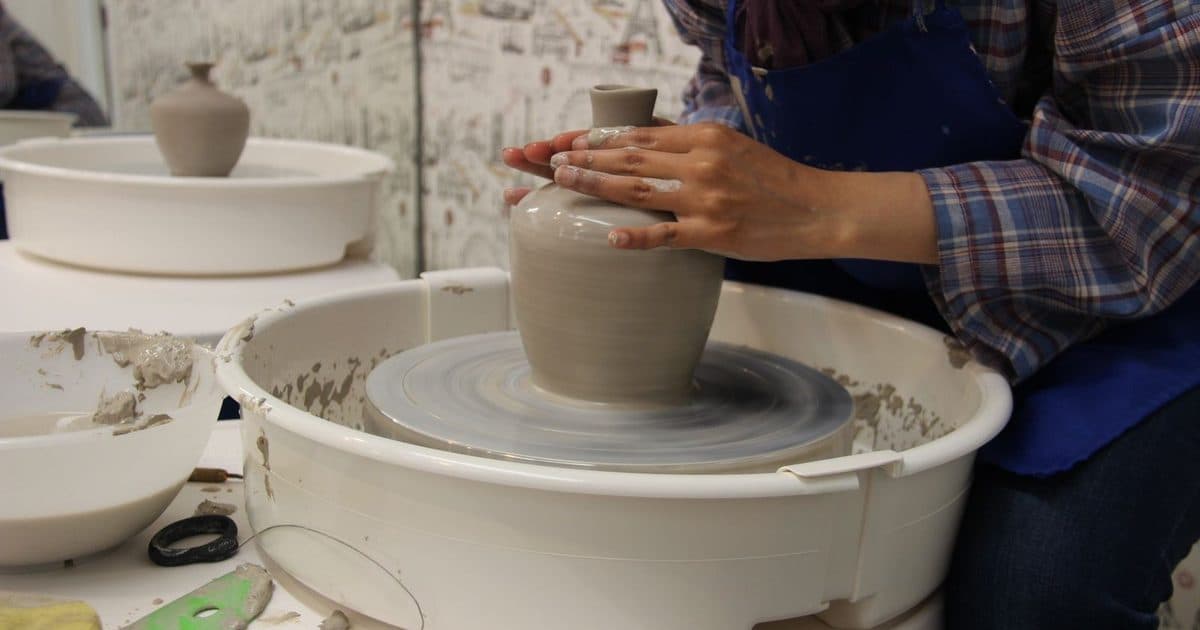
The two offers you are comparing are not the same product: a one-off session sends you home with a finished piece after an evening, a term enrolment sells you access to a studio for months. Lining them up by price is the fastest way to choose badly. In Milan the gap is wider than elsewhere, because many studios run on a school year: enrolment opens in autumn, fees are charged by term or by block of hours, and anyone arriving mid-season may find the groups already formed.
You will not find a price list here. There is no average price for ceramics in Milan: it depends on the space and what it costs to keep it open in this city, on how many kilns the studio owns, on how many people share the table, on how much clay you may use. What you can control is what the fee covers, and how many usable hours you are dividing it by.
What you are actually buying
A continuing course sells time and access. You pay to enter an equipped space on a regular basis, to have someone correct the angle of your hands, and to repeat the same movement until it stops being clumsy. The pieces you carry home are a by-product: in the early weeks plenty go back into the clay bin, which is how it should work. It makes sense if the wheel genuinely interests you and you can defend the same weekday evening for months.
A single session sells a result and an evening. The person teaching prepares the clay, keeps the group small and paces the time so everyone leaves with something finished. It makes sense if you want to test whether clay suits you before committing, if you are buying a gift, if you are in the city for a few days, or if your calendar cannot hold a fixed weekly appointment.
What the fee has to include
- Clay: unlimited, capped by weight, or billed separately. This line moves the total most by the end of a season, because the better you get the more you use.
- Firings: the raw piece goes into the kiln once, the glazed piece goes in again. Studios often include one and charge for the other.
- Glazes and colours, free to use in some studios, charged by consumption in others.
- Use of the wheel and the tools, which in some programmes is reserved for later levels while beginners work by hand.
- Open studio hours outside class, where they exist: this is what makes a long enrolment worth the money.
- A membership fee, since many Italian studios are set up as cultural associations.
- Collection of the finished piece, and shipping if coming back is not realistic.
Firing is the line quotes hide best, and it is why you go home empty-handed on the night. Shaped clay has to dry, then goes through a first firing and becomes biscuit; only then is it glazed and fired again. Between stages the studio waits until the kiln is full, because heating it for a handful of objects wastes money someone has to cover: that is why collection slips by a few weeks. On the technical side, the Italian Treccani encyclopaedia entry on ceramics sets out how bodies, temperatures and finishes differ.
Divide the fee by the sessions you will really attend
Dividing by the classes printed on the calendar is optimism. Divide by the ones you will actually reach: subtract the week you are away, the dinner you will not move, the evenings you leave the office after the studio has locked up. In Milan, add the journey, which you pay every week rather than once: a studio two changes away on public transport is a weekly decision, and by November it weighs more than the fee. Ask what happens to missed classes.
A price can only be judged once you know what it contains; until then it is a number without a unit of measurement.
A long enrolment pays off when you want the craft: the wheel, the repetition, access to the space outside class hours, room to fail without guilt. A single session pays off when you want a different evening, a present or something to do as a couple, and there it is the right purchase rather than a downgrade. The trouble starts when people buy one while picturing the other: enrol for a year out of curiosity and you quit in January.
Questions to ask before you pay
- Is clay included? Up to what point, and what happens if I use more?
- Are both firings included, or only the first one?
- Are glazes available to use, or charged separately?
- How many people share the table, and how many wheels does the group have?
- Can missed classes be made up, and how much notice do you need?
- When can I collect my piece, and can you ship it if I cannot come back?
The lowest-risk way to spend is to reverse the order: first a session with someone who works clay for a living, then, if the smell of the studio stays with you, the long programme. On Handsome, ceramics workshops are booked and paid online, with the date confirmed straight away and what the session includes written up front. If you have never touched clay, what to bring to a first ceramics workshop removes the awkward questions, and how to choose the right workshop helps you read a listing without being steered by the photographs. If clay is not your material, the city has plenty of thread too: sewing and couture workshops in Milan.
Frequently asked questions
- How much does a ceramics class in Milan cost?
- There is no single figure, because the cost depends on the format and on what is included. What moves it: whether you book a one-off session or enrol for a term, how many people share the table, whether clay, both firings and glaze are covered, whether the studio grants open practice hours, and whether a membership fee is charged at the door. Get those lines in writing before comparing two offers, because identical figures can cover very different things.
- Is a trial lesson better than enrolling for the full year?
- It depends on what you want to take away. If you want an experience, a gift or a different evening, a one-off session is designed so you finish a piece in a few hours. If you want to learn the wheel and repeat the movement until you control it, you need a continuing course, because ceramics is learned by accumulation. Try first, enrol afterwards.
- Are firings included in the price of a ceramics course?
- Not always, and it is the first thing to ask. Pieces go through the kiln twice, once raw and once after glazing, and some studios include only the first pass or bill firing by the volume the piece occupies. Ask explicitly whether both are covered and whether glaze is included: that is where two apparently identical quotes stop being identical.
- When do I get the piece I made?
- A few weeks later, not the same evening. The clay has to dry, then be fired, glazed and fired again, and the studio waits for a full kiln before switching it on. If you are leaving the city, ask before booking whether the piece can be shipped and on what terms.
- Do I need experience for a first ceramics class?
- No. Beginner sessions almost always start with hand building, using coils or slabs, which produces a finished object without needing to centre clay on a wheel. The wheel comes later because it is a matter of posture and finger pressure rather than talent. Turning up having never touched clay is the norm.
- Can I give a ceramics class in Milan as a gift?
- Yes, and it is usually the better option when you do not know the recipient's calendar. A gift card lets them pick the date and even the craft, instead of pinning them to an evening that may not work. If you would rather book a specific date, check the rescheduling and cancellation terms first.
Book and pay online, get the date confirmed immediately, and know what the session includes before you go.
Browse ceramics workshops