The office empties around 6:30pm, and what’s left is a narrow window: the stretch of a Milan weeknight in which something can still happen before it gets late. Whether an evening class survives contact with your calendar is decided inside that window, and it comes down to arithmetic rather than willpower. A session running from 7 to 10, plus twenty minutes of metro at each end, takes the entire evening. The only question worth asking is whether it is worth the entire evening.
The traditional way to learn a craft in this city is the term course: a block of weekly lessons starting in autumn, paid upfront, holding the same slot until spring. If you genuinely want to throw on a wheel or solder silver, nothing replaces it. It also assumes a regularity that most people working in Milan do not have, because three weeks out of four 6:30pm still has a call attached to it. A one-evening workshop answers a different question. It will not teach you a trade; it lets you carry one process through from beginning to end.
How long an evening really is
Three hours in the calendar are not three hours with your hands on the material. Some of it goes to arriving and settling in, some to the briefing that stops you ruining the piece, and the last stretch to cleaning up, which in a working studio is never optional. Hands-on time is shorter than the listed duration, and that is not a flaw: it is why evening formats only work on small objects and one technique at a time. Listings written by people who know their craft say so.
Getting home is the smaller constraint: the Milan metro keeps running past midnight, and surface lines cover what it does not reach. The start time is the real one. A 7pm start rules out anyone crossing the city at rush hour; 7:30 or 8 makes it reachable but pushes the ending later. Read the start time and the location together, never one without the other.
Crafts that fit into one evening
The useful question is not which craft is easiest, but which one does not have to wait. Every material carries dead time: clay has to dry before it fires, glue has to set, a finish has to cure, hot glass has to cool slowly. Where the waiting sits inside the session, one evening is enough and the piece leaves with you. Where the waiting comes afterwards, the piece stays in the studio. That is the whole criterion.
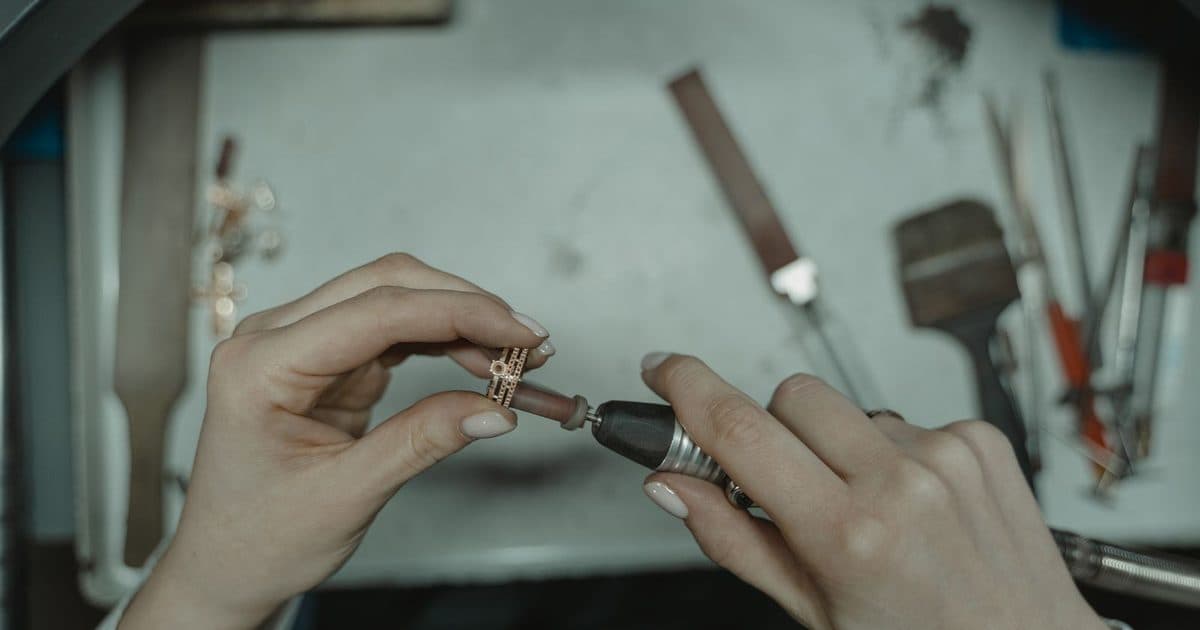
- Jewellery: a ring, a pendant or a pair of earrings in brass or silver can be sawn, filed, soldered and polished in one sitting. It is the craft that handles the short format best, as beginner jewellery workshops show.
- Cooking: fresh pasta, quick doughs, chocolate. The waiting is the cooking, and the cooking is already dinner.
- Paper and bookbinding: a hand-sewn notebook or a small print is finished in the evening and travels home dry.
- Painting and drawing: a small canvas or a watercolour sheet is done in a single session, as in these watercolour classes for beginners.
- Leather: keyrings, card holders, small pouches. Cutting, edge finishing and hand stitching fit into a few hours.
- Mosaic and textiles in small formats: a coaster, a small panel, a tabletop loom, an embroidery hoop. It works as long as the final step happens on site, as in mosaic workshops for beginners.
What one evening cannot hold
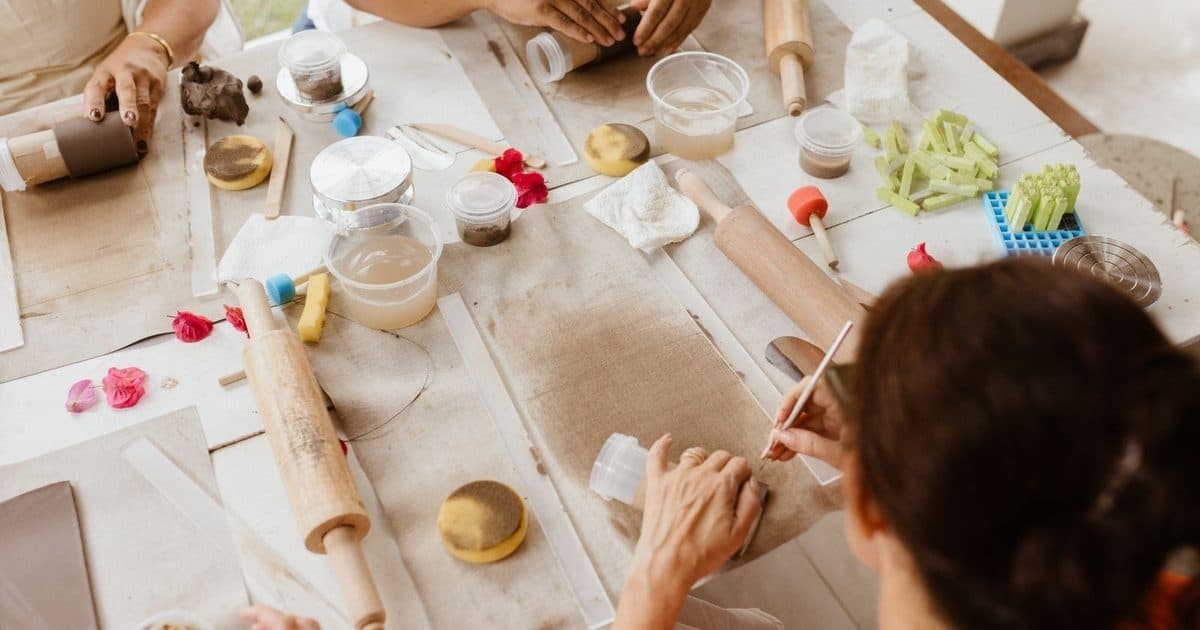
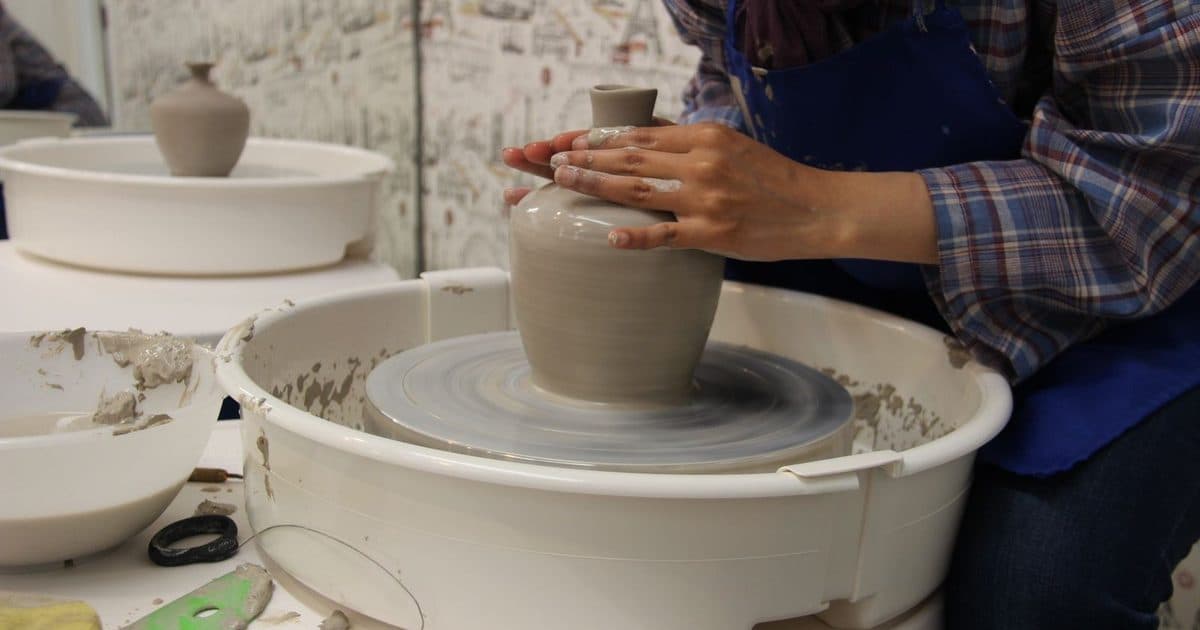
Ceramics is the textbook case. In one evening at the wheel you can centre the clay and raise a first form, and that on its own is worth going for. What follows is drying, a first firing, glazing and a second firing. Those are weeks, and they have nothing to do with how good the teacher is: they belong to the kiln and to the physics of clay. Collection or shipping is part of the deal and should be settled when you book, along with the practical details covered in what to bring to a ceramics workshop.
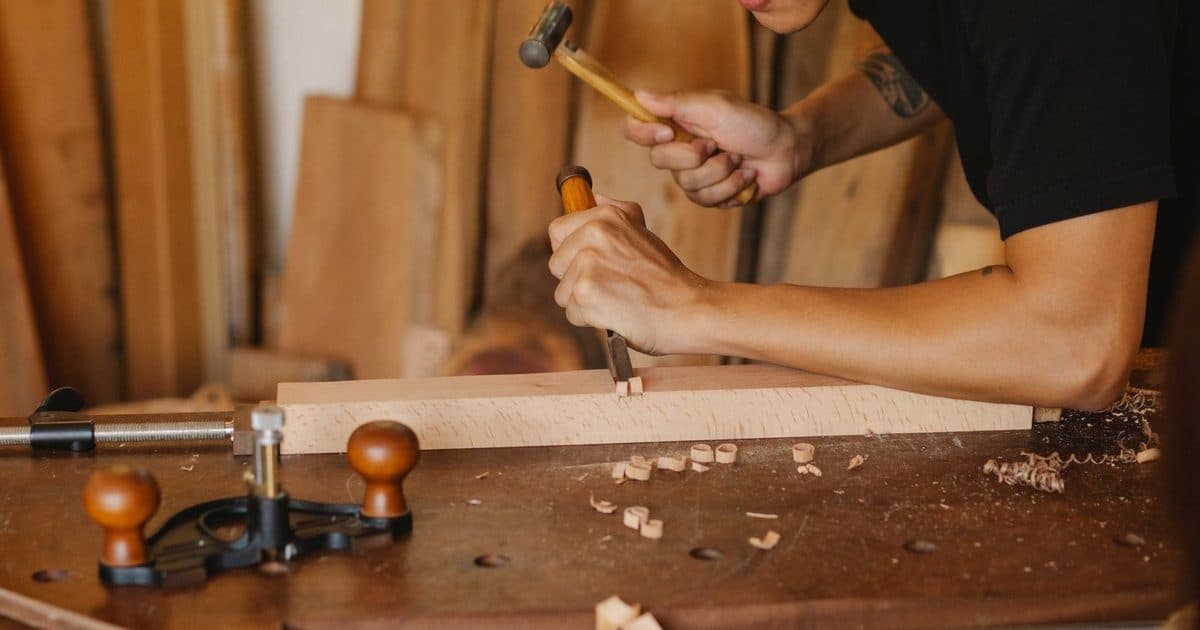
The same logic applies to glass, which needs slow controlled cooling after fusing, to wood whenever glue and finishes have to dry, and to sewing: a full garment is not cut and stitched in three hours, and anyone promising otherwise is simplifying. Evening sewing works on an accessory or a single technique, while more ambitious projects live across several sessions, a difference that is easy to see across sewing and couture workshops in Milan.
Choosing an evening that actually works
Three filters, in this order. Geography first, measured from the office rather than from home: the right area is the one you reach in half an hour on the line you already take every day. Group size second, because on techniques that need the teacher’s hands close to yours, such as soldering, centring or cutting, a crowded bench shortens the share of attention that reaches you. What is included third: materials, tools, the finished object. On Handsome you can filter workshops by city and date, and the listing states all three before you pay.
On price, it is more useful to know what moves it than to compare figures blind. Material matters, since silver does not cost what brass costs, and so do kiln time, duration, how many people one teacher is following and how many pieces you take home. Two evenings sharing the same title can be very different experiences for those reasons, and comparing them only makes sense once those elements match, which is the same reasoning behind the guide on how to choose the right workshop.
An evening is enough to learn a gesture and to find out whether it is for you. It is not enough to learn a trade, and anyone promising otherwise is selling something else.
Frequently asked questions
- Are there craft workshops in Milan in the evening after work?
- Yes. The weeknight format exists precisely for people leaving the office: sessions usually begin between 7 and 7:30pm and end around 10, built around one object you can complete. On Handsome the dates are filtered by city, then booked and paid online, so your place is confirmed before you leave work.
- Which crafts can genuinely be finished in a single evening?
- The ones where the material does not have to wait: brass or silver jewellery, cooking, paper and bookbinding, painting and watercolour, small leather goods, and mosaic or textile work in small formats. Ceramics and glass do not qualify, because firing and cooling put days or weeks between the making and the finished piece.
- How long is an evening workshop, and how much of it is hands-on?
- Two to three hours is typical, but part of that goes to arriving, the opening briefing and cleaning up at the end. Hands-on time is shorter than the listed duration, which is why these evenings are built around one small object and one technique.
- Are these workshops taught in English?
- It depends on who is teaching, so it is worth asking before booking rather than assuming. Craft teaching also leans heavily on demonstration: a large part of any evening is watching a pair of hands and copying them, which travels across languages better than a lecture would.
- Do I need any experience?
- No. Evenings like these are designed for people who have never touched the material: the teacher walks you through every step and the tools stay in the studio. Bring clothes you do not mind marking and, for some crafts, tied-back hair and short nails. Materials are usually included, and the listing says so explicitly.
- What happens if work kills the evening at the last minute?
- The terms are stated before payment: there is a window in which cancelling gets your money back, and past it the place stays booked because the materials have already been prepared for you. The rules that apply to every booking are on the cancellations page.
Filter by city and date. Weeknight sessions are booked and paid online, so your place is confirmed before you leave the office.
Browse evening workshops in Milan