When a customer chooses your workshop at €85 over a competitor's at €55, they are not choosing ceramics: they are choosing YOU. Storytelling is what makes your 'YOU' impossible to replicate. It is the difference between being one of many and being recognisable.
Why storytelling beats price
Neuromarketing has shown (studies by Lieberman 2013, Zak 2014) that the brain releases oxytocin when listening to structured stories. Oxytocin builds trust. Trust breaks down resistance to price. In practice: a well-written narrative bio is worth €20-30 of extra willingness to pay for the same technical experience.
The 6 narrative elements for your studio
1. The origin (why you do this work)
Not 'I have been a ceramicist for 15 years'. But 'at 8 years old I used to watch my grandmother kneading clay in a courtyard in Faenza. My room was full of her lopsided bowls. I carried on because I realised that every imperfect curve tells of a human hand'. The first sentence is identity, the second is memory.
2. The turning point (why now, in this place)
What led you to open YOUR studio? A journey? A loss? A revelation? The arrival of a child? The pandemic that made you quit an office job? The moment of decision is what makes you human.
3. The method (what you do differently)
Not 'I use quality clay'. But 'I only use red Faenza clay, naturally dried for 6 months, because it has a porosity that industrial stoneware will never have'. Specific, factual, NOT compared with competitors (never 'others use...').
4. The ritual (what makes workshop day special)
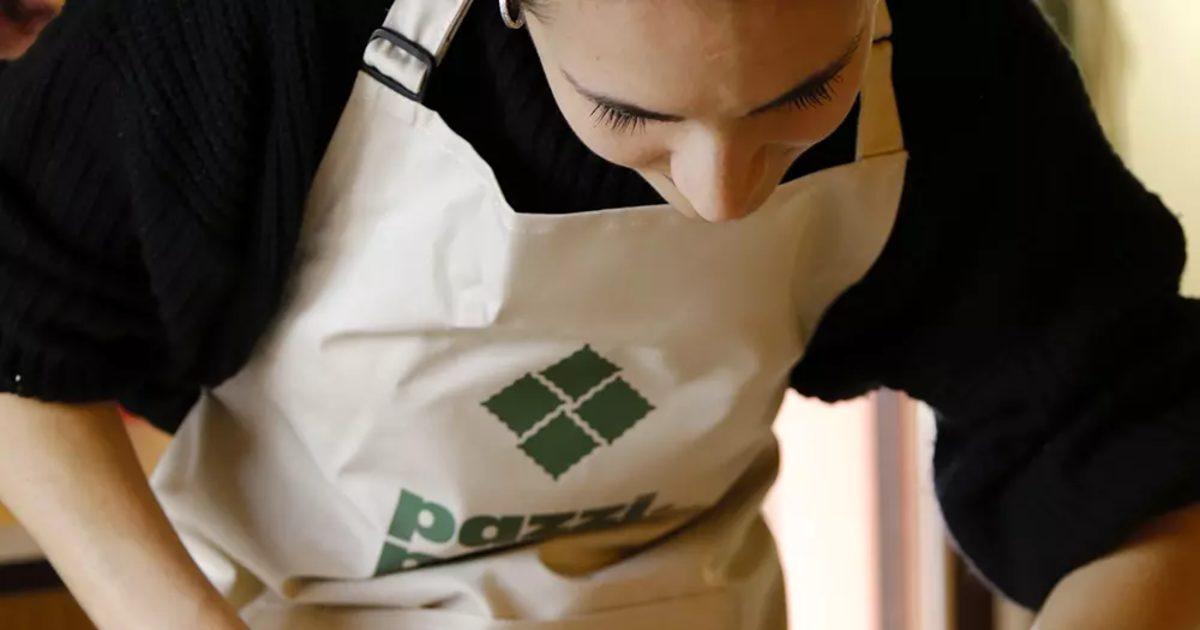
What happens in your studio when a customer walks in? Coffee on arrival? An apron with their name embroidered on it? Signing the piece with the date and place? The small ritual is what the customer talks about at home.
5. The philosophy (what you stand for)
Radical sustainability? An anti-industrial tradition? Slowness as a value? Inclusion (workshops for blind people, for older people)? Ethics first? The philosophy in 1-2 strong sentences, NOT in 10 vague values.
6. The promise (what the customer takes home)
Not 'you take home a bowl'. But 'you take home an object made with your own hands that you will remember every morning over breakfast. And perhaps, after a few months, you will want to make another'. The promise speaks of transformation, not of an object.
3 common storytelling mistakes
Mistake 1: emphasis on qualifications
'Academy graduate, 20 years of experience, exhibited in Milan'. CVs don't sell. Stories sell. Qualifications go at the end, in one line; they don't open the bio.
Mistake 2: brochure-style people-pleasing
'We love craftsmanship, we believe in tradition, we are committed to quality'. Sentences anyone could sign = sentences nobody remembers. Be specific or stay silent.
Mistake 3: the wrong length
Handsome profile bio: 400-700 characters (~80-120 words). Instagram bio: 150 characters. Website bio: 200-300 words. A full 'about us' page: 600-1,000 words. Each format has its own dose: copy-and-paste = a mistake.
A before/after example
BEFORE: My name is Giulia, I have been a ceramicist in Faenza for 10 years. I run ceramics workshops for groups and private clients. My workshops are suitable for all levels.
AFTER: As a little girl I was always breaking cups: my grandmother told me I would have to make new ones. I started in the courtyard at 8 years old with her red Faenza clay. Today I teach my students the same technique she handed down to me: clay dried for 6 months in the sun, natural glazes, no rush. When you leave my studio, you have a bowl that isn't perfect. Because no human hand is.
How to write your story in 30 minutes
- Answer the 6 questions above out loud, recording yourself on your phone (5 minutes)
- Transcribe everything, even the odd words (10 minutes)
- Cut 50%: keep only the sentences with concrete details (10 minutes)
- Read it aloud: if it sounds like a brochure, rewrite it (5 minutes)
Publish your story on Handsome
On Handsome the artisan profile bio is the first thing the customer reads: use those 400-700 characters for your story, not for your CV. Sign up free and complete your profile: narrative bio + 5 photos + sub-crafts = a high discovery ranking from day one.
Frequently asked questions
- Do I need a 'strong' story, such as an illness or a rebirth, to be interesting?
- No. The most effective stories are often ordinary ones told with specific detail: 'My grandmother in the courtyard in Faenza' says more than 'I left Goldman Sachs for ceramics'.
- How do I tell my story if I practise several crafts (ceramics + painting + weaving)?
- Find the common thread: what do the 3 have in common? For example: 'I work humble materials that become beautiful'. A single narrative is worth more than 5 separate specialisations. Those who jump from one thing to another without a thread lose credibility.
- Can I use ChatGPT to write my bio?
- Use it to edit (cut, rewrite more briefly, suggest synonyms), NOT to generate. A bio written by ChatGPT sounds like a brochure: zero specific details. Record yourself speaking and have ChatGPT edit it, not the other way round.