In Milan, buying an object is the easiest thing in the world. Between the Quadrilatero, the kilometre and a half of shop windows lined up along corso Buenos Aires and same-day home delivery, anything you can think of can be in your hands by tomorrow. And that is precisely why gifts work so badly here: not because there is too little choice, but because there is far too much, and the person receiving already owns almost everything they need.
There are two ways out of the problem, and they often get muddled. The first is the handmade gift: an object made by a person, not by a production line. The second is the experience gift: something to do, rather than something to keep. They are not the same thing, they do not solve the same problem, and they are not chosen by the same criteria. This guide separates the two routes and says when each one makes sense.
What the research says about gifts you do rather than gifts you own
This is not a marketing line: it is an established strand of research in consumer psychology. In 2003 Leaf Van Boven and Thomas Gilovich published one of the reference studies on the subject in the Journal of Personality and Social Psychology, «To do or to have? That is the question»: once basic needs are met, purchases made in order to live an experience make people happier than purchases made in order to own an object.
On gifts specifically, the reference work is by Cindy Chan and Cassie Mogilner, published in the Journal of Consumer Research in 2017. Analysing real gift exchanges, the two researchers found that experiential gifts strengthen the bond between giver and recipient more than material gifts do. And they found two details that matter a great deal when you are choosing: the effect holds even when the experience is enjoyed alone, without the person who gave it; and it does not arise at the moment the parcel is opened, but at the moment the experience is lived, through the intensity of the emotion that moment produces.
There is a third useful finding, from the study «Waiting for Merlot» by Amit Kumar, Matthew Killingsworth and Thomas Gilovich, published in Psychological Science in 2014: even the waiting changes character. Waiting for an experience is a wait made of excitement; waiting for an object is a wait made mostly of impatience. A gift handed over in December for a date in March, then, is not half a gift: it is three extra months of gift.
The handmade gift: in Milan you can spot it, if you know what to ask
Milan built its reputation on design rather than on the hand, but it never lost the hand. The Veneranda Fabbrica del Duomo still works Candoglia marble, the quarry Gian Galeazzo Visconti granted it in 1387 along with free transport along the waterways; the stonemasons' yard is still active, and squared blocks, architectural elements and statues for the cathedral still come out of it. More than six centuries on, things are still made by hand in this city. The problem is not that they do not exist: it is telling them apart from what imitates them.
The first tool is public and free. The Lombardy Region keeps a register of historic businesses — shops, venues and artisan workshops with at least forty years of continuous trading — searchable online, with a dedicated page for each recognised business. In the Metropolitan City of Milan alone there are more than eight hundred of them. It is not a list of gift ideas, but it is a list of places that have survived forty years of the Milanese market: as a starting point it beats any ranking.
The second tool is three questions to ask at the counter, and they work anywhere.
- «Who made it?» If the answer is a name and a place, you are on the right track. If it is «it's from our collection», you are buying an industrial product wearing an artisan look.
- «What is it made of?» People who actually make things answer precisely — the type of clay, the tanning of the leather, the silver standard — because the material is half the trade. People who merely resell answer with an adjective.
- «If it breaks, can it be repaired?» A handmade object is usually repairable, and whoever made it can tell you how and at what cost. It is the question that exposes a fake workshop fastest.
The limit of the handmade gift, however, is the limit of every object: it takes up space. In a city where square metres cost what they cost, giving a bulky object to someone living in forty square metres is not a kind thought: it is a logistical problem changing hands.
An experience gift is chosen for the person, not for the craft
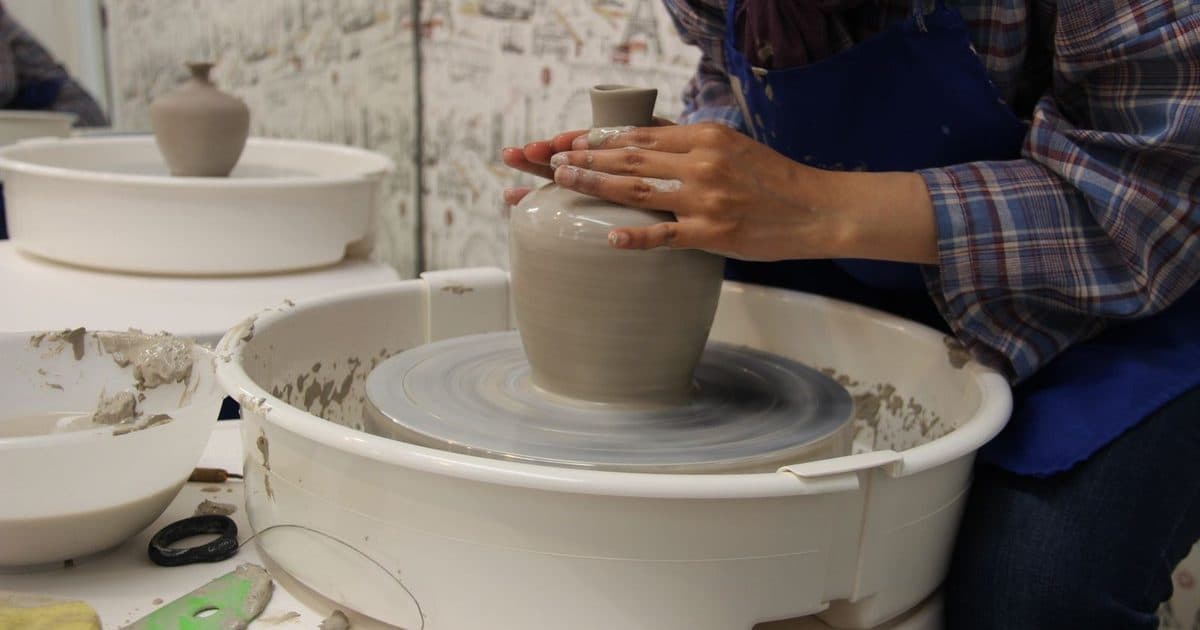
The commonest mistake here is starting from the craft you happen to like. A wheel-throwing ceramics workshop is a wonderful gift for someone patient and a terrible one for someone who gets frustrated when a thing does not work first time. The person comes before the material: five questions narrow the field in a couple of minutes.
- How patient are they? The potter's wheel, engraving and bookbinding demand repetition and a tolerance for getting it wrong. Cooking, natural cosmetics, mosaic and floral arranging pay off much sooner.
- Do they want to take something home? For some people the finished piece is half the gift. Be careful, though: not every material leaves with you on the day, ceramics has to dry and be fired, and collection can slip by weeks. Say so before, not after.
- Are they going alone or with someone? One place and two places are two different gifts. If the recipient is shy, two places are worth far more than a longer course.
- How much time do they genuinely have? Someone with small children or shift work does not need an eight-session course: they need three hours on a date that will actually hold.
- Are there physical limits or allergies? Hands, wrists and backs do real work in a studio. Latex, resins, flours and essential oils come up constantly: one question in advance saves an unusable gift.
A fixed date or a gift card: when each one wins
A fixed date wins when you know the person's tastes well, when the occasion already has a day of its own — a birthday, an anniversary, a graduation — or when you have decided to go together. In those cases you do the booking, and the gift is finished: there is a place, a time and a reserved seat.
A gift card wins in the opposite situation: you do not know their availability, the gift is being given well in advance, it is a group gift where everyone chips in, or the choice is so personal that the best part is letting the recipient make it.
On Handsome the gift card is built for that second case: you choose the amount, the recipient gets the code by email, and it is valid for twelve months from purchase on any workshop on the platform. When it covers the full cost of the chosen experience, the recipient pays nothing, neither at booking nor on the day of the workshop.
One honest caveat, since we are talking about Milan: Handsome started on the Adriatic coast and Lombardy is still being built out, so the Milanese listings are shorter than the ones in Romagna or the Marche. It is worth looking at what is there before you decide, and the gift card stays useful precisely because it does not tie the gift to a single event or a single city.
If the right date isn't there right now, a gift card lets the recipient choose.
Search craft experiences in MilanWhat to actually expect on the day
An experience gift has a side that glossy gift boxes never mention, and it is better to mention it to the recipient: it prevents disappointment and makes the date get taken seriously.
- You do not leave with a perfect piece. You leave with your own piece, which is a different thing: a year later it is the one you remember.
- You will get messy. Clay, dyes, wax and resins do not come out of everything: wear clothes you don't mind ruining.
- It is not a lecture. In many studios you stand around a table, watch the Maker do a step, then do it again with your own hands.
- Groups are small. A craft studio works with a handful of places at a time, and that is also why the gift works: nobody is left watching from the back.
- Symbolic dates get taken early. Around Christmas and in the run-up to Valentine's Day demand concentrates on the same weekends: if you are aiming for a precise date, move in advance.
Four mistakes that ruin an experience gift
- Giving your own passion. It is the most elegant way of buying yourself a present. If you care about that craft, offer to go together.
- Handing over a code and hoping. An experience has to be booked. If it stays an unopened email, the only thing it produces is guilt with an expiry date.
- Choosing a long course for someone with no time. Eight evenings are a commitment, not a gift. One session actually attended beats a course abandoned after the second lesson.
- Saying nothing so as not to spoil the surprise. The surprise can hold until you hand it over, but after that you need a conversation about when to go, or the date slips forever.
The thread running through all of this is simple, and it holds for the object as much as for the experience: a handmade gift is not a more expensive gift, it is a gift with a person inside it. With an object, that person made it for you; in a workshop, that person teaches it to you. The difference is that in the second case, six months later, the person who received the gift can still tell you about the day.
Frequently asked questions
- Is it better to give a handmade object or an experience?
- It depends on the person and on the space they have. An object stays and is in front of you every day, but it takes up room and risks duplicating something they already own. An experience takes up nothing and, according to gift research (Chan and Mogilner, Journal of Consumer Research, 2017), strengthens the bond between giver and recipient more than a material gift does. For someone who already has everything, an experience is almost always the better call.
- What if the gift card never gets used?
- That is the main risk with this kind of gift, and you prevent it by talking about it. Hand the card over saying explicitly that a date needs choosing, and if you can, offer to book together in the following days. The Handsome gift card is valid for twelve months from purchase, so there is time, but time alone is not enough: it takes a conversation.
- Can I give a workshop to two people?
- Yes, by booking two places on the same event. For a couple or a close friendship, two places at a single session almost always beat one place on a long course. Check the listing for how many places are left, because craft workshop groups are small by nature.
- Are there craft workshops in Milan on Handsome?
- The Lombardy listings are still being built: Handsome started on the Adriatic coast and Milan is one of the cities we are working on, so availability changes over time. The honest answer is: look at the Milan page and see what is there for your dates. If you don't find what you want, the gift card doesn't expire straight away and lets the recipient choose.
If you don't know the right date yet, a Handsome gift card is valid for twelve months from purchase on any workshop on the platform.
Explore craft experiences on Handsome